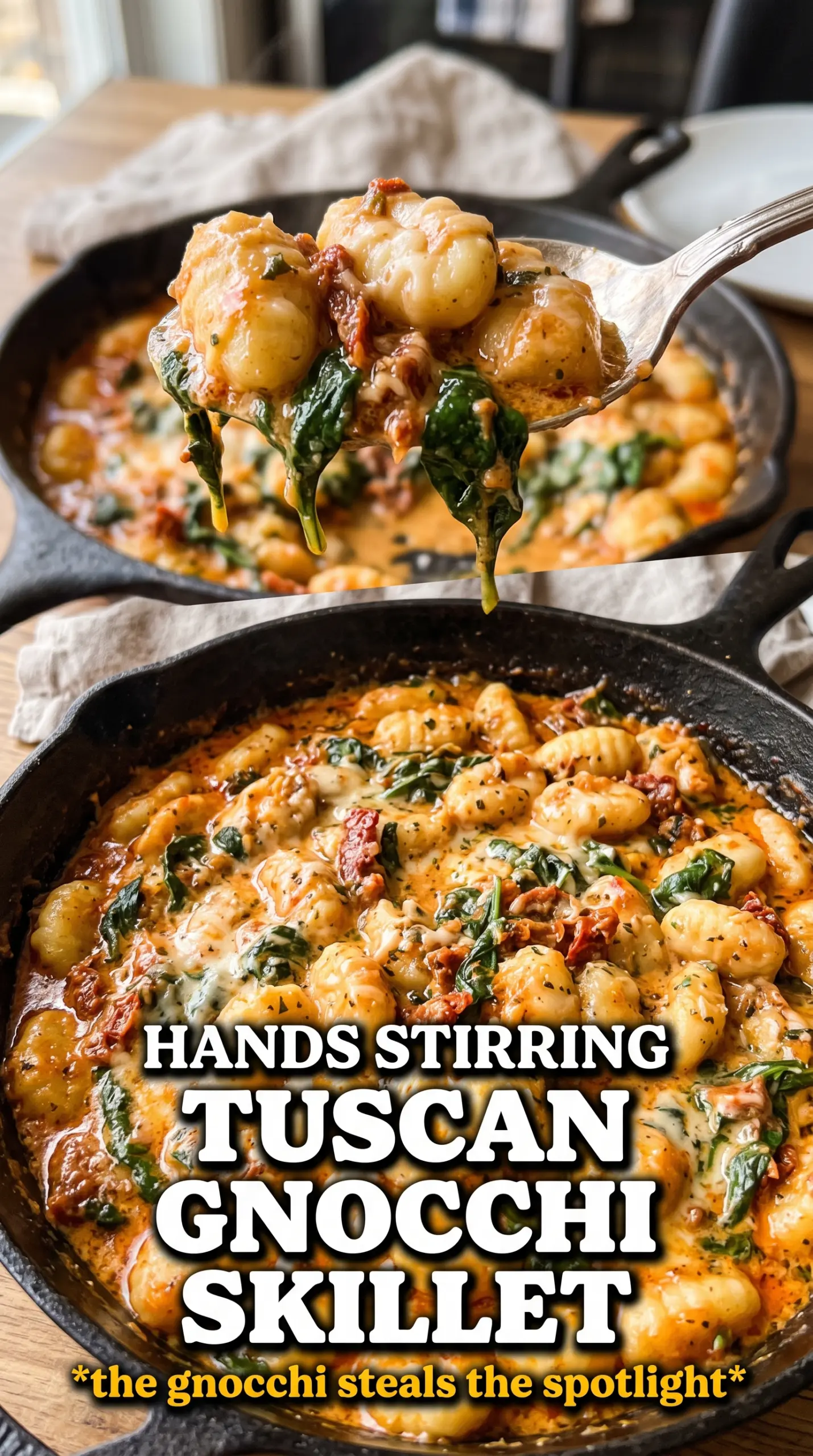
Golden-seared gnocchi, cradled in a creamy sauce with sun-dried tomatoes, wilted spinach, and Italian sausage, is the kind of dinner that disappears fast because every bite hits a little differently. The gnocchi stay tender but pick up a light crust when they hit the skillet, and the sauce clings instead of sliding off the plate. It tastes like the pan did some serious work, because it did.
The trick here is building the sauce in the same skillet used for the sausage. Those browned bits and the oil from the sun-dried tomatoes give the cream a deeper, more savory base without needing a long ingredient list. The parmesan goes in after the cream has had a minute to simmer, which keeps it smooth instead of grainy. And when the spinach goes in at the end, it just wilts into the sauce instead of turning dull and overcooked.
Below, I’ll walk through the part that matters most: how to keep the sauce silky, how to get the gnocchi lightly crisped, and what to change if you want to make it a little lighter or skip the sausage.
The sauce got thick and glossy right after I stirred in the parmesan, and the gnocchi held up without turning mushy. My husband kept going back for seconds because the sausage and sun-dried tomatoes tasted like they belonged together.
Save this Tuscan gnocchi for the nights when you want a creamy skillet dinner with crisp edges, sun-dried tomatoes, and barely any cleanup.
The Gnocchi Need a Little Color Before They Hit the Sauce
Most one-pan gnocchi recipes skip straight to simmering everything together, and that’s where the texture gets flat. Gnocchi taste better when they pick up a little color first, even if it’s just a quick sear in the same skillet after the sausage comes out. That browned surface gives you a light chew and keeps them from tasting like they were simply boiled and dumped in.
The other thing that matters is heat control once the cream goes in. If the sauce boils hard, the dairy can separate and the parmesan can turn sandy. Keep it at a gentle simmer and let it thicken slowly; the sauce should coat a spoon before the cheese even goes in.
- Italian sausage — This is the main seasoning base, so choose one you actually like eating on its own. Mild or hot both work. If you use turkey sausage, keep a little extra sun-dried tomato oil in the pan so the sauce doesn’t taste lean.
- Sun-dried tomatoes in oil — The oil carries a lot of flavor, and that’s what helps the garlic bloom without scorching. Drain them only if there’s an excessive amount of oil; otherwise, use some of it.
- Potato gnocchi — Shelf-stable or refrigerated gnocchi both work. Don’t overcook them in water or they’ll fall apart in the sauce; pull them as soon as they float and finish them in the skillet.
- Heavy cream — This is what gives the sauce body. Half-and-half can work in a pinch, but it won’t cling as well and is more likely to look thin before the parmesan melts in.
What Each Ingredient Is Actually Doing in This Recipe
- Primary ingredient (the star) — Quality matters most. Choose the best you can find.
- Cooking medium (oil, butter, or broth) — This carries flavors and prevents dryness.
- Seasonings (salt, pepper, spices, herbs) — Layer flavors so nothing overpowers. Build depth gradually.
- Aromatics (garlic, onion, herbs) — Cook with fat to bloom flavors. Become the foundation.
- Supporting ingredients — Complement the main ingredient without overpowering it.
- Sauce or liquid (if applicable) — Brings flavors together. Balance richness with acid.
- Acid (lemon, vinegar, wine, or other) — Brightens and prevents flat-tasting results.
- Final finish (garnish, glaze, or sauce) — Prevents one-dimensional taste and adds visual appeal.
Building the Sauce Before the Gnocchi Go In
Brown the sausage first and get rid of the excess grease if the pan looks flooded. You want enough fat left behind to sauté the garlic and sun-dried tomatoes, but not so much that the sauce turns greasy. The tomatoes should sizzle and soften in the oil for a minute or two until the garlic smells sweet, not sharp.
When the cream, broth, seasoning, and red pepper flakes go in, let the mixture simmer until it starts to look slightly thicker around the edges. That’s the point where the parmesan will melt in smoothly. Stir it off the heat if your skillet runs hot, because cheese added to a screaming pan is the fastest way to get a gritty sauce.
Brown the Sausage First
Cook the sausage in a large skillet over medium heat until it’s deeply browned and no pink remains. Break it into small pieces as it cooks so it distributes through the finished dish instead of landing in big chunks. If there’s a lot of rendered fat, drain some off, but leave enough behind to flavor the skillet.
Wake Up the Garlic and Tomatoes
Add the garlic and chopped sun-dried tomatoes to the sausage drippings and cook just until fragrant, about 2 minutes. The garlic should smell mellow and the tomatoes should look glossy, not dry. If the garlic starts browning fast, lower the heat right away; burnt garlic will take over the whole dish.
Let the Sauce Thicken Gently
Pour in the cream and broth, then add the Italian seasoning and red pepper flakes. Let it simmer slowly for about 4 minutes until it looks slightly reduced and a little more velvety. The sauce should still move in the pan, not hold a heavy paste-like texture yet.
Finish With Cheese and Greens
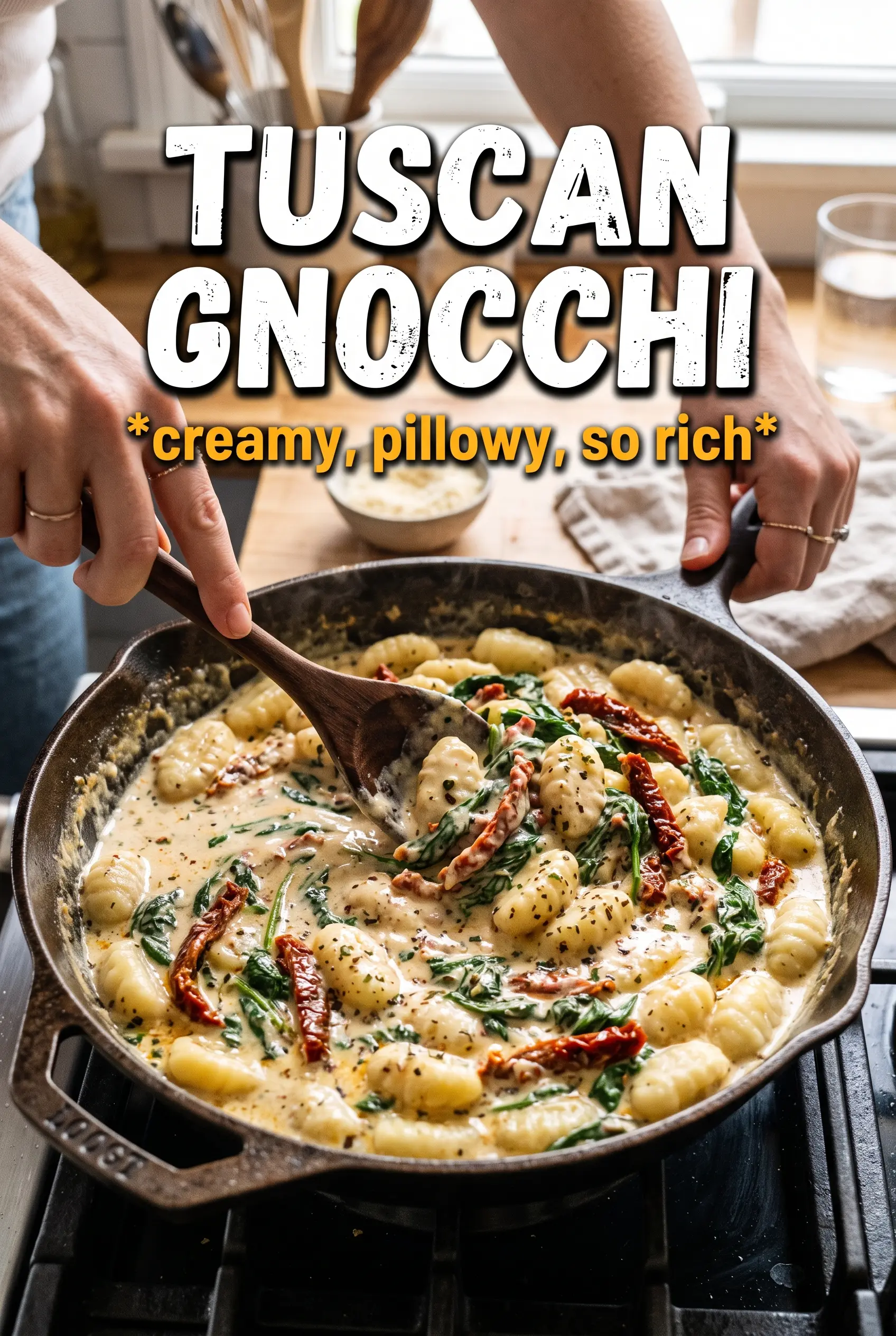
Stir in the parmesan until it melts completely, then add the cooked gnocchi, sausage, and spinach. Toss until the spinach wilts and the gnocchi are coated all the way through. Taste at the end and season with salt and pepper only after the parmesan has gone in, because the cheese adds plenty of salt on its own.
How to Adapt Tuscan Gnocchi Without Losing the Creamy Skillet Feel
Swap in chicken sausage for a lighter version
Chicken sausage keeps the same savory, Italian-style seasoning but cuts the richness a bit. Because it releases less fat, use a spoonful of the sun-dried tomato oil to help the garlic and tomatoes bloom properly.
Make it vegetarian with white beans
Skip the sausage and add a drained can of cannellini beans when the gnocchi goes in. You’ll lose some of the meaty depth, so lean harder on the sun-dried tomatoes, parmesan, and a pinch more Italian seasoning to keep the sauce full-bodied.
Use gluten-free gnocchi if needed
Gluten-free gnocchi works well here as long as you handle it gently. It can soften faster than standard gnocchi, so add it to the sauce at the very end and toss just until heated through.
Storage and Reheating
- Refrigerator: Store leftovers in an airtight container for up to 3 days. The gnocchi will soften a bit as it sits, but the flavor holds well.
- Freezer: I don’t recommend freezing this one. Cream sauces and gnocchi both tend to turn grainy or mushy after thawing.
- Reheating: Reheat gently on the stove over low heat with a splash of broth or cream to loosen the sauce. High heat can split the dairy and make the gnocchi too soft before the center is warm.
Questions I Get Asked About This Recipe
Tuscan Gnocchi
Ingredients
Equipment
Method
- Heat a large skillet over medium-high heat and add Italian sausage. Cook until browned, then drain and set aside.
- In the same skillet, sauté garlic and sun-dried tomatoes in the sun-dried tomato oil for 2 minutes. Stir until fragrant with light sizzling.
- Add heavy cream, chicken broth, Italian seasoning, and red pepper flakes, then bring to a simmer. Simmer for 4 minutes, keeping a steady bubble around the edges.
- Stir in parmesan until melted and the sauce looks smooth. The sauce should thicken slightly as it coats the back of a spoon.
- Cook potato gnocchi according to package directions. Then add the cooked gnocchi directly to the sauce.
- Return the browned sausage to the skillet, then add baby spinach. Toss until the spinach wilts, 1-2 minutes.
- Season with salt and pepper to taste, then top with fresh basil. Serve immediately while the sauce is creamy.