Golden roasted potatoes turn this salad into something people go back for before they’ve even finished the first serving. The edges stay crisp long enough to catch the spicy-sweet gochujang dressing, while the centers stay fluffy and warm enough to drink up the sauce instead of turning heavy or gluey. It eats more like a bold side dish with personality than a picnic afterthought.
The trick is giving the potatoes enough space in the oven and letting them cool before dressing them. If you toss hot potatoes in the gochujang mixture, the mayo loosens too fast and the coating slides off instead of clinging in that glossy, red layer. The vinegar keeps the dressing lively, the honey smooths the heat, and the sesame oil gives the whole bowl that unmistakable toasted finish.
Below, I’ll walk through the part that matters most: how to keep the potatoes crisp, how to balance the dressing so it doesn’t taste flat, and a few swaps that still keep the salad bright and satisfying.
The potatoes stayed crisp around the edges even after tossing them with the dressing, and the gochujang-mayo mix coated everything without getting greasy. I served it at room temperature and it disappeared fast.
Crispy gochujang potato salad is the one to pin when you want a side dish with crunchy edges, a creamy-spicy dressing, and no bland bite in the bowl.
Why the Potatoes Need to Cool Before the Dressing Goes On
The biggest mistake with a potato salad like this is dressing it while the potatoes are still steaming hot. Heat loosens the mayonnaise, softens the crisp edges, and can make the whole bowl taste a little muddy instead of sharp and glossy. Cooling the potatoes for about 30 minutes gives you a better texture and helps the dressing cling instead of sliding off.
You’re looking for potatoes that are warm, not hot, with enough structure left in the exterior to hold the coating. The oven does the hard work first, but the rest period is what turns roasted potatoes into a salad that eats cleanly. If you skip it, the flavor is still there, but the texture drops fast.
What Each Ingredient Is Doing in the Bowl
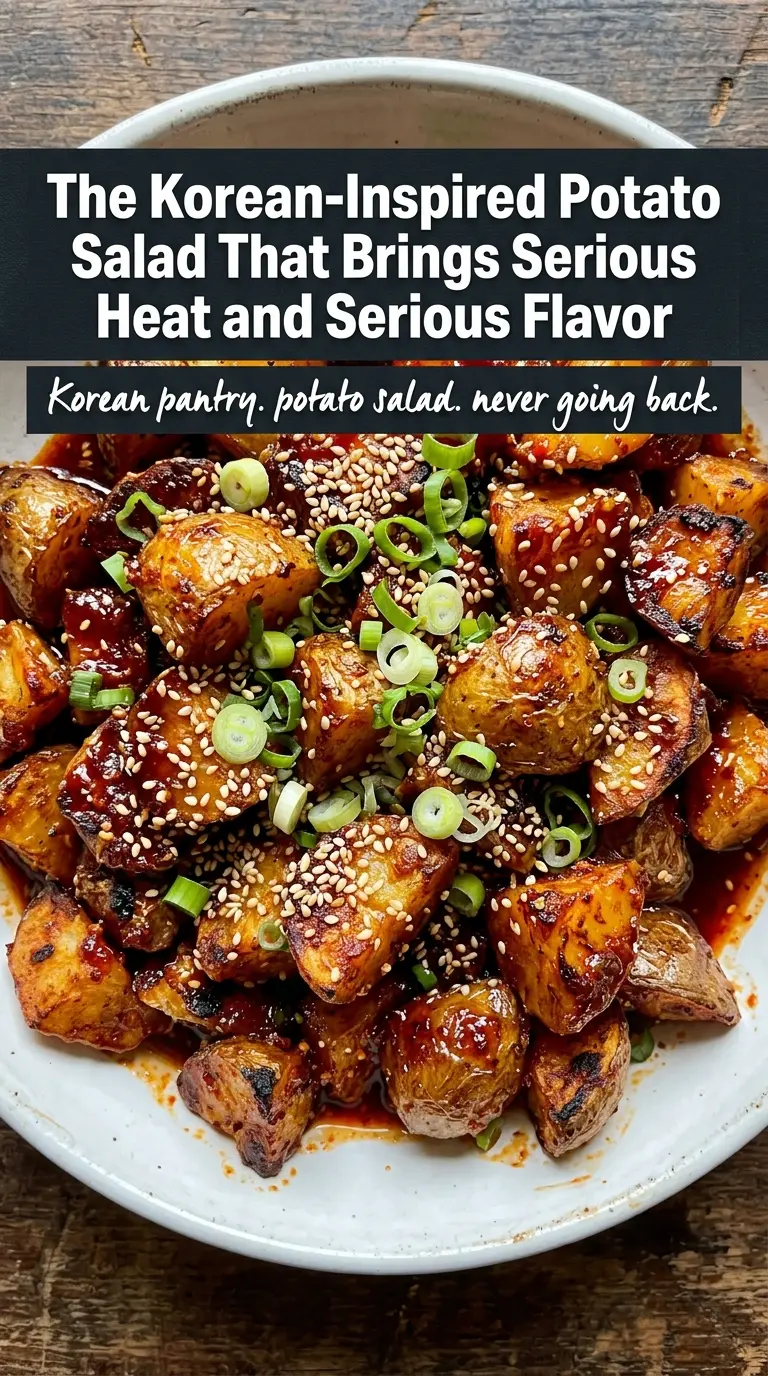
- Baby potatoes — Their waxy-to-starchy middle-ground gives you creamy centers and crisp edges after roasting. Halving them creates more surface area, which matters more here than it would in a boiled potato salad.
- Gochujang — This is the backbone of the dressing. It brings heat, salt, fermented depth, and a little sweetness all at once, and there isn’t a substitute that tastes exactly the same. If you need a milder result, use less gochujang rather than swapping it out entirely.
- Mayonnaise — Mayo softens the heat and helps the dressing coat the potatoes in a thick, clingy layer. Light mayo works in a pinch, but full-fat mayo gives a richer finish and a smoother texture.
- Rice vinegar and honey — These keep the dressing from feeling heavy. The vinegar sharpens the heat, and the honey rounds it out so the sauce tastes balanced instead of one-note.
- Sesame oil and seeds — Sesame oil adds aroma more than volume, so a little goes a long way. The seeds bring a toasty bite and a finish that makes the salad taste complete.
- Green onions — Slice them thin so they stay crisp and fresh against the warm potatoes. They cut through the richness and give the bowl some needed lift.
Getting the Crisp Potatoes to Hold Up in a Creamy Dressing
Roasting in a Single Layer
Spread the potatoes out with room around each piece. If they’re piled on top of one another, they steam instead of browning, and you lose the crunchy edges that make this salad worth making. A hot oven at 425°F gives the cut sides enough heat to blister and turn deep gold before the insides dry out.
Mixing the Dressing Until It Looks Smooth and Red
Stir the gochujang, mayonnaise, rice vinegar, honey, and sesame oil until the dressing turns glossy and evenly colored. If you see streaks of mayo, keep mixing; those streaks usually mean the honey or gochujang hasn’t fully dispersed yet. Taste it before it goes on the potatoes so you can catch it while it still needs a pinch more salt or a small splash of vinegar.
Tossing After the Rest
Once the potatoes have cooled, add the dressing and toss gently but thoroughly. The goal is a thin, even coating on every piece, not a thick paste sitting in the bottom of the bowl. Finish with sesame seeds and green onions right before serving so the top stays fresh and the potatoes keep their texture at room temperature.
How to Adapt This for Different Tables
Make It Dairy-Free Without Changing the Texture
This recipe is already naturally dairy-free if you use a standard egg-based mayo. The dressing still turns creamy and stable, and you don’t lose any of the cling that makes the potatoes coat evenly.
Swap in Sour Cream for a Tangier Salad
You can replace part of the mayonnaise with sour cream if you want a sharper, lighter-tasting dressing. The result is less rich and a little looser, so it works best if you’re serving the salad the same day.
Turn Down the Heat for a Milder Crowd
Start with one tablespoon of gochujang and taste before adding the second. You’ll keep the fermented depth and color without pushing the salad into full heat-forward territory, and the honey will stand out a little more.
How to Make It Gluten-Free
Use a certified gluten-free gochujang, since some brands include wheat. The rest of the recipe is naturally gluten-free, so this is mostly about checking the paste label before you start.
Storage and Reheating
- Refrigerator: Store leftovers in an airtight container for up to 3 days. The potatoes soften a little, but the flavor stays strong.
- Freezer: I don’t recommend freezing this salad. The potatoes turn mealy and the mayo-based dressing separates when thawed.
- Reheating: Serve it cold or let it come back to room temperature. If you warm it, do it gently and briefly; high heat will melt the dressing and wipe out the crisp texture you worked for.
Answers to the Questions Worth Asking
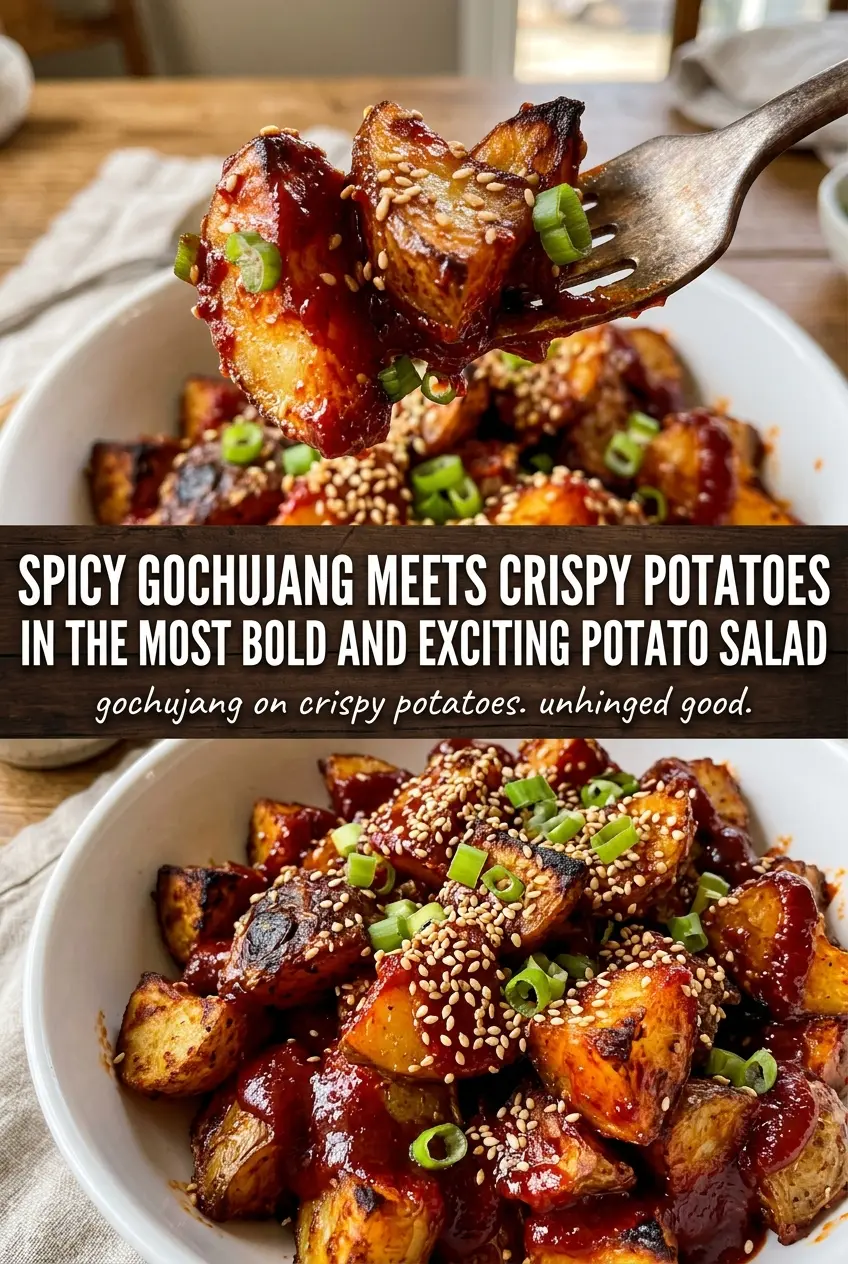
Crispy Gochujang Potato Salad
Ingredients
Equipment
Method
- Preheat the oven to 425°F and position a sheet pan on the middle rack. The oven should reach temperature before roasting so the potatoes start crisping right away.
- Toss the baby potatoes with olive oil, salt, and pepper in a bowl until evenly coated. You want every cut surface to look lightly glossy with seasoning.
- Spread the potatoes cut-side down on the sheet pan in a single layer. This helps the bottoms get golden and crispy during roasting.
- Roast for 30-35 minutes at 425°F, flipping once halfway if needed, until deeply golden and crisp. Look for browned edges and a firm, crunchy exterior.
- Let the potatoes cool for 30 minutes to room temperature. They should firm up so the dressing clings without turning the crust soggy.
- Mix gochujang, mayonnaise, rice vinegar, honey, and sesame oil in a bowl until smooth and glossy. The sauce should look thick and pourable enough to coat the potatoes.
- Toss the cooled potatoes with the dressing until the spicy-sweet glaze coats every piece. You should see red-orange sheen on the crisp surfaces.
- Top with sesame seeds and sliced green onions for a fresh, crunchy finish. The sesame should look scattered and slightly toasted-looking after mixing.
- Serve at room temperature. The textures stay crispy outside while the potato interior stays tender.