Crispy smashed potato salad hits the sweet spot between a warm potato side and a cold picnic salad. The potatoes stay tender in the middle, but the flattened edges turn deeply golden and crackly in the oven, so every bite gives you creaminess, crunch, and just enough tang from the dressing to keep it from feeling heavy.
The trick is giving the potatoes time to steam dry after boiling, then roasting them hard enough to build real color before they ever meet the dressing. If you dress them too soon, the crispy edges soften fast. Let them cool for those 30 minutes, and the texture stays much more interesting when everything gets tossed together.
The potatoes stayed crisp on the edges even after tossing, and the Dijon-dill dressing gave it that creamy, tangy bite we kept going back for.
Love the crispy edges and creamy Dijon dressing? Save this smashed potato salad for the next cookout, potluck, or weeknight side that needs a little extra texture.
The Crisp Edge Is the Whole Point Here
The mistake with smashed potato salad is treating the potatoes like they’re destined for a regular creamy salad from the start. They’re not. The potatoes need a hard roast first so the broken surfaces turn browned and blistered, because that rough texture is what keeps this dish from sliding into soft, heavy territory.
Cooling matters just as much as roasting. If the potatoes are tossed while they’re steaming hot, the mayonnaise and sour cream loosen too much and the crispy ridges collapse almost immediately. Letting them sit for 30 minutes keeps the texture intact and gives the dressing a chance to coat instead of melt.
- Baby potatoes — Their thin skins and creamy centers make them ideal for smashing. Waxy potatoes hold their shape better than russets here, which means you get distinct pieces instead of a mashed-up pan of bits.
- Olive oil — This is what helps the smashed surfaces brown and crisp in the oven. A neutral oil works in a pinch, but olive oil brings a little more flavor to the edges.
- Mayonnaise and sour cream — The mayo gives the dressing body and cling, while the sour cream keeps it lighter and sharper. Greek yogurt can replace the sour cream, but it will taste tangier and a little less plush.
- Dijon mustard — Dijon cuts through the richness and wakes up the potatoes. Yellow mustard won’t give the same depth or bite.
- Fresh chives and dill — Fresh herbs matter here because they keep the dressing bright against the roasted potatoes. Dried herbs read flat in a salad like this.
- Bacon — The salty crunch on top adds a final layer of texture. If you want a vegetarian version, skip it and add extra herbs plus a pinch of smoked paprika to bring back some of that savory edge.
What Each Ingredient Is Actually Doing to Create That Crisp Edge
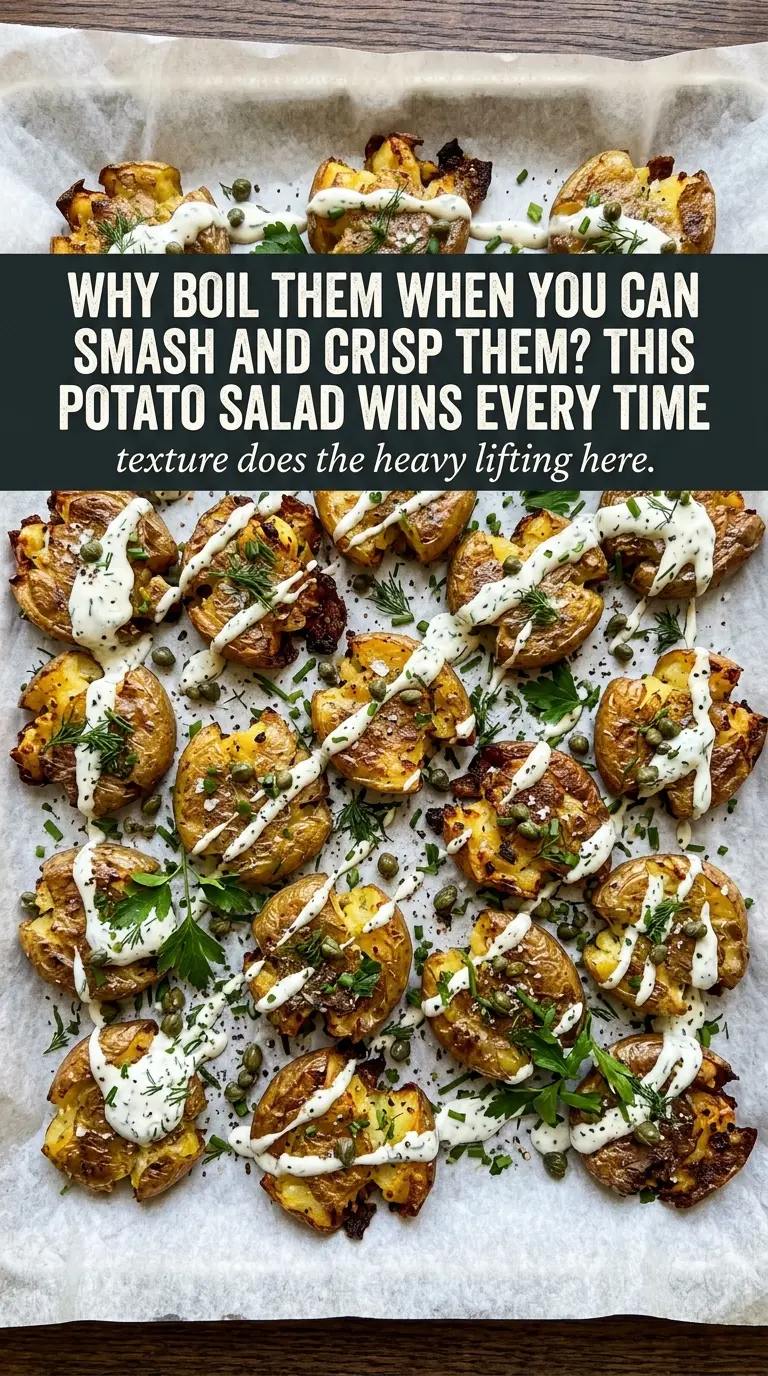
- Oil on the potatoes — Enough oil to coat every surface is essential for crisping. Without adequate oil, the potatoes steam instead of roast.
- High oven temperature (425-450°F) — High heat creates the caramelization that builds flavor and crispness. Medium heat just roasts without the crispy exterior.
- Even potato sizes — Cut potatoes into similar-sized cubes so they all crisp at the same rate. Mixed sizes means some are done while others are still pale.
- No crowding on the baking sheet — Potatoes need room so steam can escape. Crowded potatoes steam instead of roast, and they never get crispy.
- Salt on the potatoes before roasting — Salt draws out moisture slightly and helps the exterior crisp and brown. It also seasons the inside as the potatoes cook.
- Optional: aromatics like garlic or rosemary — These roast along with the potatoes and become caramelized and fragrant, adding flavor to the crispy exterior.
- Tossing midway for even browning — This ensures all sides get that crispy, caramelized edge. Untossed potatoes only brown on the bottom.
- Cool completely so the crisp stays — Hot potatoes can lose their crispness as they cool. Complete cooling preserves the texture you worked to build.
Getting the Potatoes Crispy Before They Meet the Dressing
Boiling Until Tender, Not Falling Apart
Start the potatoes in salted water and cook them just until a knife slides in with little resistance. If they overcook, they’ll split before you smash them and turn crumbly in the oven. Drain them well and let the steam escape for a minute or two so the skins dry out instead of clinging to moisture.
Smashing for More Surface Area
Spread the potatoes out on the baking sheet with space between them, then press each one firmly with the bottom of a glass until it flattens but still holds together. The goal is cracks and broken edges, not potato pancakes. Those rough edges are what turn shattery and crisp in the oven.
Roasting Hard Enough to Brown
Roast at 450°F until the edges are deep gold and the thin bits look lacy and crisp. If the pan feels crowded, the potatoes will steam instead of roast, and you’ll lose the texture that makes this salad special. Rotate the pan once if your oven runs uneven, and don’t pull them too early just because the tops look dry.
Tossing at the Right Moment
Let the potatoes cool for 30 minutes before you add the dressing. They should still be warm enough to take on flavor, but not hot enough to loosen the mayo mixture. Fold gently so the crispy pieces stay mostly intact, then finish with the bacon on top so some of it stays crunchy.
How to Adapt This for Different Tables and Diets
Make it vegetarian without losing the savory punch
Leave out the bacon and add a little smoked paprika or a sprinkle of toasted sunflower seeds for contrast. You’ll lose the salty chew of bacon, but the salad still lands with plenty of richness and texture.
Swap in Greek yogurt for a lighter dressing
Use Greek yogurt in place of the sour cream for a brighter, tangier dressing. It tightens the texture a little more than sour cream does, so the salad feels less rich and a touch more tart.
Use vegan mayo for a dairy-free version
Swap in vegan mayonnaise and a dairy-free sour cream if you need the dressing to be fully dairy-free. The texture stays close to the original, though the flavor will depend a lot on how tangy your substitute is, so taste before tossing.
Hold the dressing if you’re making it ahead
Roast the potatoes and mix the dressing separately, then combine them close to serving. That keeps the edges crisp and gives you the best texture, especially if the salad will sit on a buffet table.
Storage and Reheating
- Refrigerator: Store leftovers for up to 3 days. The potatoes will soften as they sit, but the flavor holds up well.
- Freezer: I don’t recommend freezing this salad. The dressing separates and the potatoes turn grainy once thawed.
- Reheating: Eat it cold or let it come to room temperature. If you want to bring back some crispness, reheat the potatoes before dressing them, not after, because once the mayo mixture is on them the oven will break the texture.
Questions I Get Asked About This Recipe
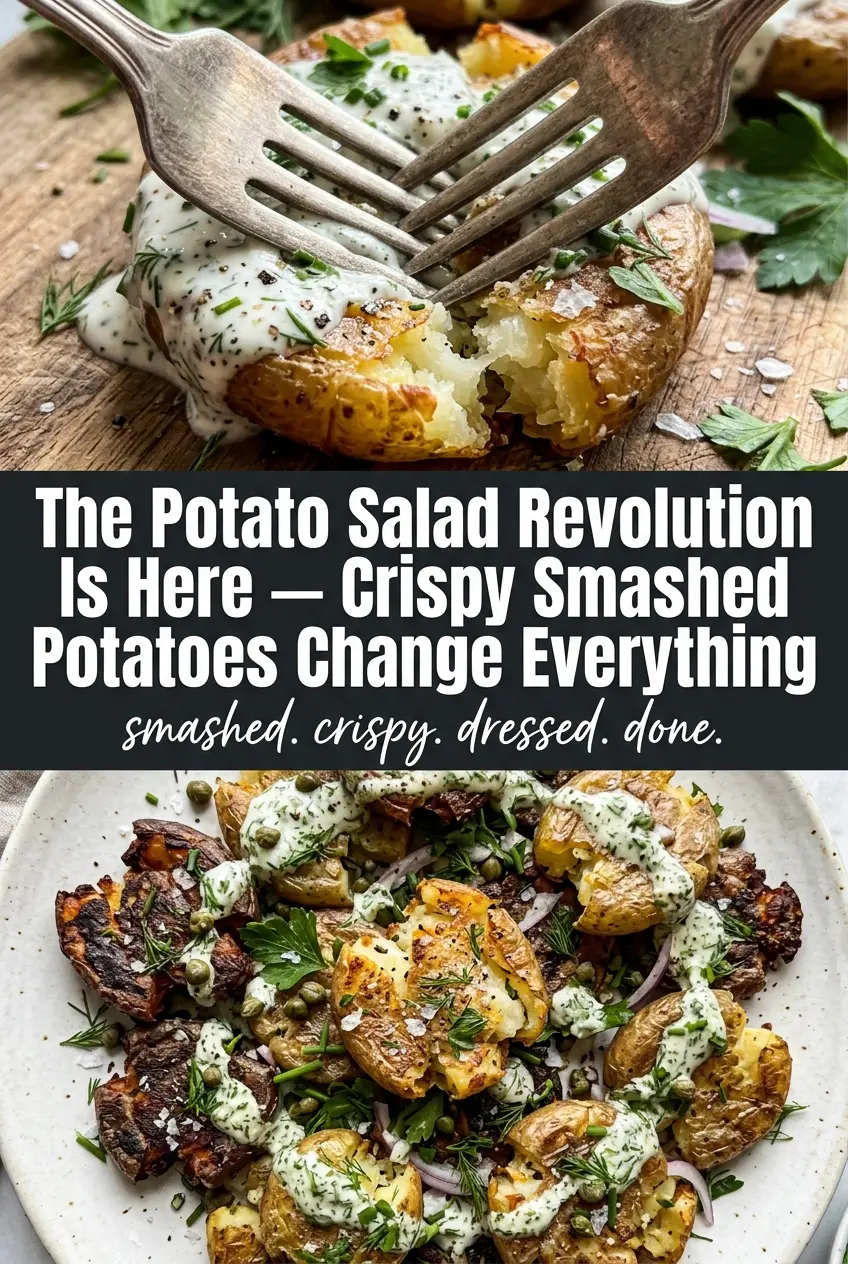
Crispy Smashed Potato Salad
Ingredients
Equipment
Method
- Boil baby potatoes in salted water until tender throughout, about 15–20 minutes depending on size, so a knife slides in easily.
- Drain potatoes thoroughly and let steam off for 2–3 minutes so the surface dries for roasting.
- Preheat the oven to 450°F so it reaches full heat before the potatoes go in.
- Transfer drained potatoes to a baking sheet and smash each with the bottom of a glass to create uneven ridges for crispy edges.
- Drizzle the smashed potatoes with olive oil and season with salt and pepper, then spread into a single layer.
- Roast for 25–30 minutes until crispy and golden, flipping once halfway for even browning and visible crunchy edges.
- Let the roasted potatoes cool for 30 minutes so they stay crisp and don’t steam-soften when tossed.
- Mix mayonnaise, sour cream, and Dijon mustard until smooth, then stir in chopped chives and dill for an herb-speckled dressing.
- Toss the cooled crispy potatoes with the creamy dressing until the potatoes are coated but still look crunchy.
- Top with cooked and crumbled bacon so each serving has salty bits and extra texture.