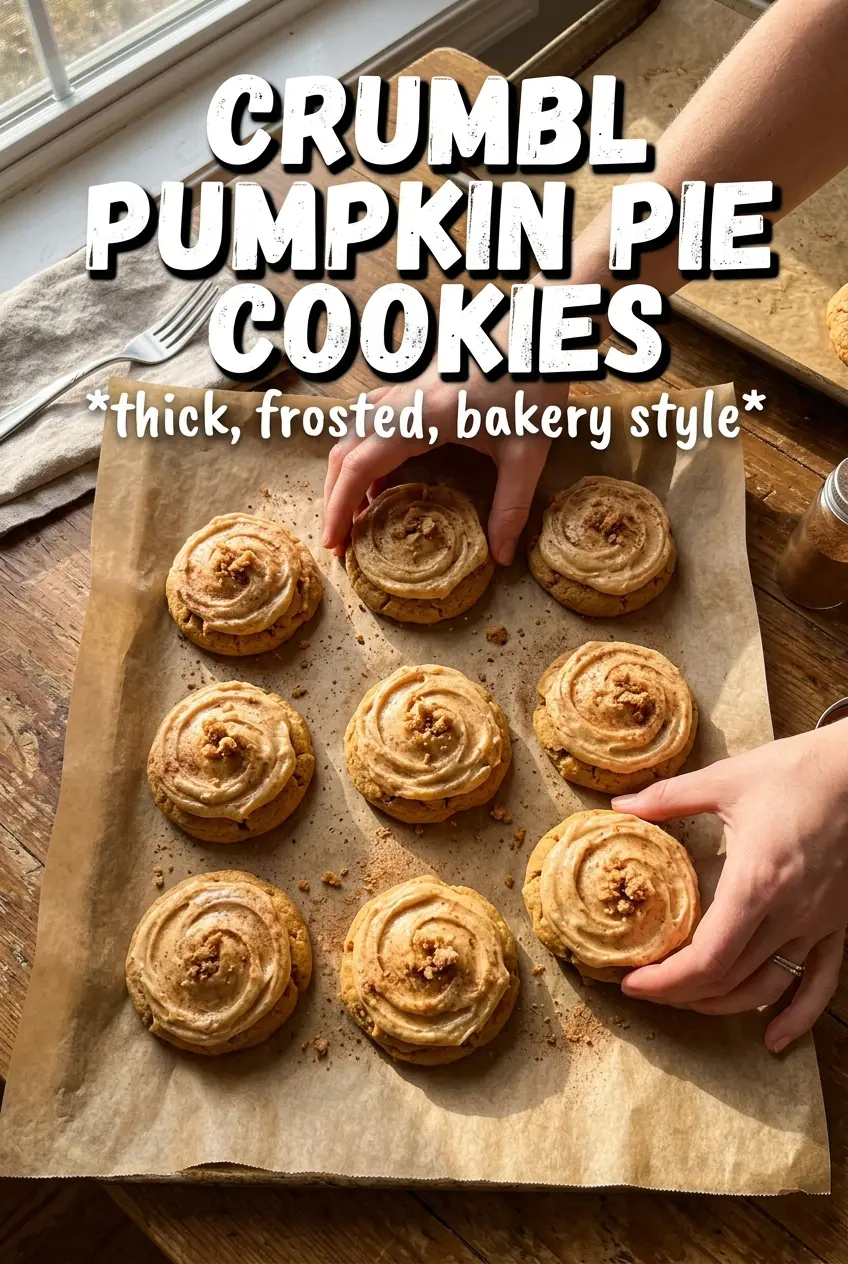
Pumpkin pie cookies hit that sweet spot between bakery-style and homemade: thick, soft centers, lightly crisp edges, and a cream cheese frosting that tastes like the best part of a pie slice without the fuss of rolling dough. These are the kind of cookies that disappear fast because they eat like something from a display case, but they’re built on a straightforward sugar-cookie base that holds its shape and still stays tender after baking.
The trick is in the pumpkin. Pumpkin puree brings moisture, but too much of it makes cookie dough cakey and sticky, so blotting it dry first matters more than most people think. That little step keeps the cookies thick instead of puffing and collapsing, and it lets the pumpkin pie spice come through clearly instead of getting lost in excess water. The frosting is classic cream cheese frosting, but the cinnamon dusting on top gives these their pumpkin pie finish.
Below, I’ve laid out the part that matters most for getting that Crumbl-style look at home: how to keep the cookies from spreading too much, how to tell when they’re baked just enough, and what to do if you want a stronger spice note or a slightly less sweet finish.
Blotting the pumpkin made all the difference — the cookies stayed thick, the centers were soft, and the frosting didn’t slide off.
Love these thick Crumbl Pumpkin Pie Cookies? Save them to Pinterest for the days when you want soft pumpkin spice cookies with cream cheese frosting and a cinnamon finish.
The Pumpkin Puree Mistake That Makes Cookie Dough Spread
Most pumpkin cookies fail for one simple reason: the pumpkin adds too much water. That extra moisture loosens the dough, encourages spreading, and leaves you with cookies that bake up more like cake than a thick bakery cookie. Blotting the pumpkin puree dry changes the texture before the dough ever goes into the oven, which is why this recipe keeps its height.
The other thing that matters is how you bake them. These cookies should come out when the edges are set and the centers still look a little soft. If you wait until the tops look fully done, they’ll overbake as they cool and lose that soft, pillowy middle.
- Blotted pumpkin puree — This is the non-negotiable step. Press it between paper towels until it feels less wet and more like a thick paste.
- Room-temperature butter — It creams properly with the sugars and traps air, which helps the cookies stay thick.
- Parchment-lined pans — They help the cookies release cleanly and reduce excessive browning on the bottoms.
What Each Ingredient Is Actually Doing in These Cookies
- All-purpose flour — This gives the cookies their structure. Bread flour would make them tougher; cake flour would make them too delicate for the thick frosting.
- Brown sugar and granulated sugar — Granulated sugar helps the edges set, while brown sugar adds a little chew and a deeper caramel note that plays well with pumpkin spice.
- Butter — Unsalted butter lets you control the salt level and creates the rich, bakery-style base. Melted butter won’t give the same thick texture, so keep it softened, not liquid.
- Pumpkin pie spice — This is the easiest way to get the right warm spice balance. If you don’t have it, use cinnamon with a little ginger and nutmeg, but the flavor won’t be as rounded.
- Cream cheese — Full-fat cream cheese gives the frosting its tang and body. Low-fat versions can work in a pinch, but they tend to be looser and less plush.
Building the Thick Cookie Base and Finishing the Frosting
Blotting and Creaming
Start by blotting the pumpkin puree until it no longer leaves a wet mark on the towel. Then beat the butter, both sugars, and pumpkin together until the mixture looks lighter and a little fluffy, not greasy or streaked. Add the egg and vanilla next. If the mixture looks split at this stage, keep beating for another minute; it usually comes back together once the flour goes in.
Bringing the Dough Together
Whisk the dry ingredients separately so the baking powder, baking soda, salt, and spice distribute evenly. Fold them into the wet mixture just until no dry streaks remain. Overmixing at this point tightens the dough and makes the cookies denser than they should be. The dough will be thick, soft, and scoopable, not runny.
Shaping for a Bakery-Style Bake
Scoop large 3-tablespoon portions and press them slightly flat before baking. That small flattening step helps them bake into wide, thick rounds instead of staying too domed in the center. Leave room on the tray because these spread a little as the butter warms. If your dough feels sticky, chill it for 15 minutes instead of adding more flour.
Baking, Cooling, and Frosting
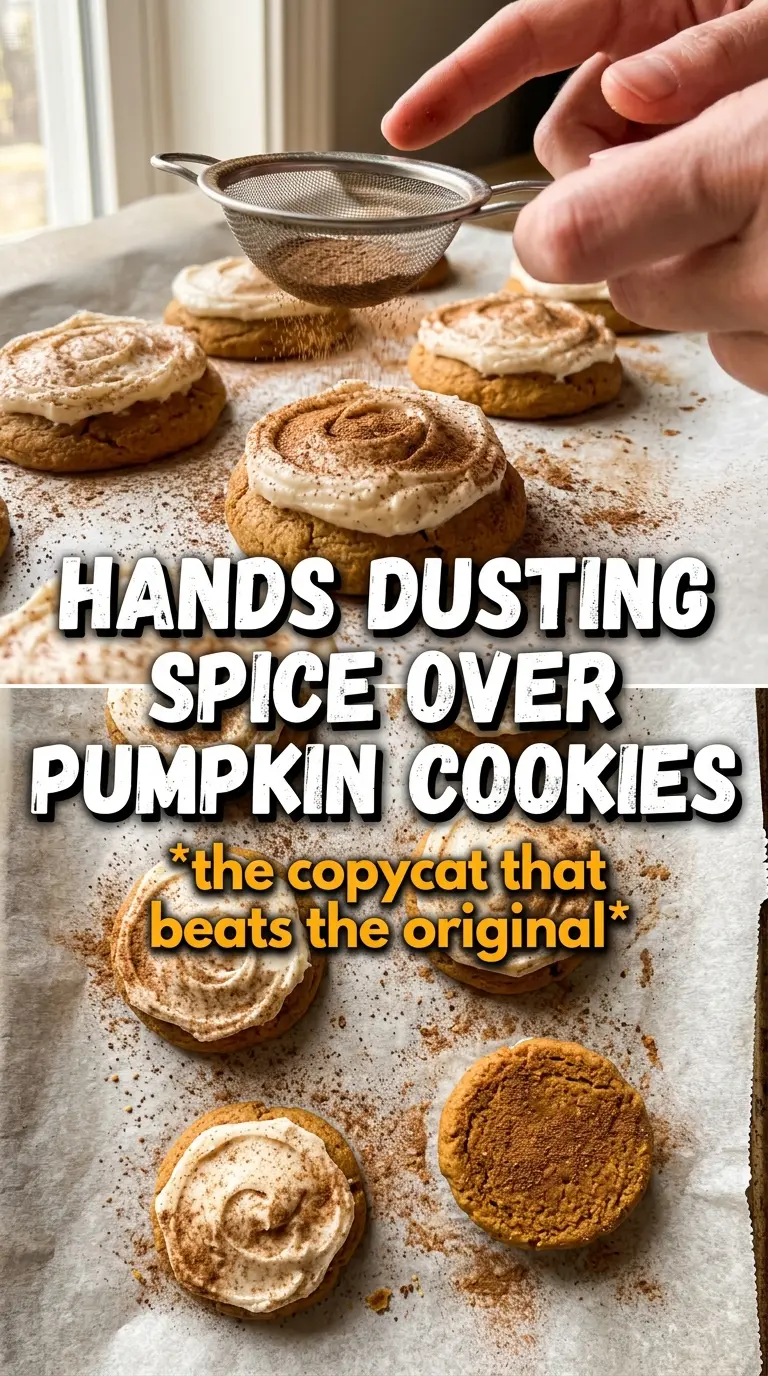
Bake until the edges look set and the centers still appear soft and a little underdone. They’ll finish setting on the pan as they cool. Let them cool completely before frosting, or the cream cheese frosting will melt and slide. Beat the frosting until smooth and pipe it generously, then finish with a dusting of cinnamon for that pumpkin pie look.
How to Adapt These Cookies Without Losing the Soft, Thick Texture
Make Them a Little Less Sweet
Cut the frosting in half if you want the pumpkin cookie itself to lead. The cookies are sweet enough on their own, and a lighter swirl still gives you the cream cheese tang without turning each one into a dessert overload.
Gluten-Free Version
Use a cup-for-cup gluten-free flour blend that includes xanthan gum. The texture will be a little more delicate, but the cookies still bake thick if you keep the pumpkin well-blotted and don’t overmix the dough.
Dairy-Free Swap
Use plant-based butter in both the cookies and frosting, plus a dairy-free cream cheese that’s designed for baking. The frosting may be slightly softer, so chill the finished cookies briefly before serving if the kitchen is warm.
Extra-Spiced Pumpkin Pie Cookies
Add another 1/2 teaspoon of pumpkin pie spice to the dough and a little extra cinnamon on top. This gives the cookies more of that classic pie aroma, but don’t push the spice too far or it will overpower the cream cheese frosting.
Storage and Reheating
- Refrigerator: Store frosted cookies in an airtight container for up to 4 days. The frosting firms up a bit, but the cookies stay soft.
- Freezer: Freeze the unfrosted cookies for up to 2 months. Thaw at room temperature, then frost after they’re fully defrosted for the cleanest look.
- Reheating: These are best served at room temperature. If you want to soften a chilled cookie, let it sit out for 15 to 20 minutes; the microwave will melt the frosting and ruin the texture.
Answers to the Questions Worth Asking
Crumbl Pumpkin Pie Cookies
Ingredients
Equipment
Method
- Preheat the oven to 350F and line baking sheets with parchment for easy release and clean edges.
- Blot the pumpkin puree dry thoroughly so the cookie dough stays thick instead of wet.
- Beat the softened butter, granulated sugar, brown sugar, and blotted pumpkin until fluffy and lighter in color.
- Add the egg and vanilla extract and beat until fully incorporated and smooth.
- Whisk the all-purpose flour, baking powder, baking soda, salt, and pumpkin pie spice, then fold into the butter mixture until no dry streaks remain.
- Scoop dough into large 3-tablespoon balls and press slightly flat so the cookies bake up thick but even.
- Bake for 13-14 minutes at 350F until the edges are set and the centers still look soft.
- Cool the cookies completely before frosting so the swirl holds its shape.
- Beat the softened cream cheese, softened butter, powdered sugar, vanilla, and cinnamon until smooth and pipeable.
- Pipe a generous swirl of frosting onto each cooled cookie.
- Dust with cinnamon to finish, then let stand briefly so the frosting sets on top.