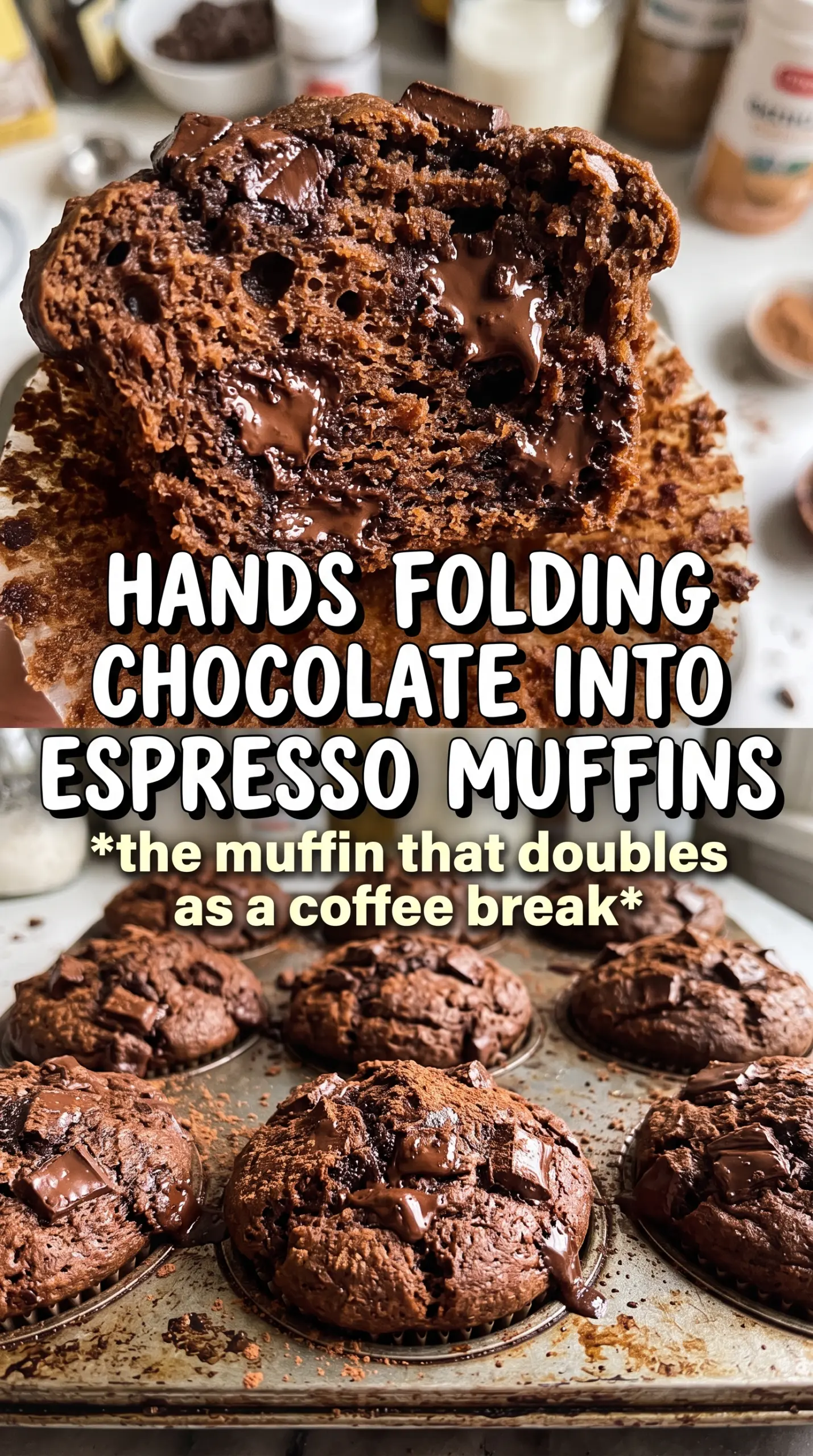
Deeply chocolatey muffins with a coffee kick and bakery-style domes don’t need to be fussy to get right. These bake up with a tender crumb, glossy pockets of melted dark chocolate, and that first bite of espresso that makes the cocoa taste even richer. The tops rise high and crack just enough to look like they came from a good cafe case, not a rushed weekday batch.
The trick is starting hot. That first blast of 425°F pushes the muffins upward before the batter has time to spread, then the oven drops to finish the centers gently. I also use both buttermilk and a little brewed coffee, which keeps the crumb moist and deepens the chocolate without making the muffins taste like straight coffee. The batter stays thick on purpose, and that’s what helps the muffins hold a tall dome instead of sinking flat.
Below, I’ll show you how to keep the muffins from turning dry, why the espresso powder goes both in the batter and on top, and how to store a batch so the chocolate stays soft when you come back for one later.
The high heat at the start gave me those tall muffin tops I always try to get, and the centers stayed soft without being gummy. I loved the little espresso crunch on top with the melted chocolate chips inside.
Save these double chocolate espresso muffins for the mornings when you want tall domes, melted chocolate, and a real mocha flavor in every bite.
The Hot Start Is What Gives You Those Bakery Domes
Most muffin recipes fail at the same point: the batter warms too slowly, spreads before it lifts, and bakes into a flat top. Starting these at 425°F changes the structure fast. The outer edge sets almost immediately, the center keeps expanding, and that short burst of heat gives you the domed crown you want before the oven drops to finish the inside.
The other thing that matters here is batter texture. This is not cake batter, and it should not pour like one. Once the dry ingredients go in, stop as soon as the flour disappears and the batter still looks a little rough; if you beat it smooth, the muffins turn tighter and less tender. Chocolate chips help with the structure too, because they give the batter a little more weight and keep the crumb from feeling thin.
- Espresso powder — This deepens the chocolate without turning the muffins into coffee muffins. A little goes a long way, and the topping gives a sharper espresso finish right on the first bite.
- Buttermilk — The acidity softens the crumb and works with the baking soda for lift. Regular milk will work in a pinch, but the muffins won’t taste as plush.
- Strong brewed coffee — Use it cooled, not hot, so it doesn’t start cooking the eggs. It adds depth without making the batter watery.
- Dark chocolate chips — These melt into little pockets instead of disappearing into the crumb. Semi-sweet chips work too, but dark chocolate keeps the muffins from turning overly sweet.
What Each Ingredient Is Actually Doing in This Recipe
- Primary ingredient (the star) — Quality matters most. Choose the best you can find.
- Cooking medium (oil, butter, or broth) — This carries flavors and prevents dryness.
- Seasonings (salt, pepper, spices, herbs) — Layer flavors so nothing overpowers. Build depth gradually.
- Aromatics (garlic, onion, herbs) — Cook with fat to bloom flavors. Become the foundation.
- Supporting ingredients — Complement the main ingredient without overpowering it.
- Sauce or liquid (if applicable) — Brings flavors together. Balance richness with acid.
- Acid (lemon, vinegar, wine, or other) — Brightens and prevents flat-tasting results.
- Final finish (garnish, glaze, or sauce) — Prevents one-dimensional taste and adds visual appeal.
Mixing the Batter Without Losing the Tender Crumb
Whisk the dry ingredients first
Whisk the flour, cocoa, baking powder, baking soda, espresso powder, and salt until the mixture looks uniform and there are no cocoa streaks. Cocoa tends to clump, and if it isn’t broken up now, you’ll get dry pockets in the baked muffins. This dry mix is also where the espresso powder gets distributed evenly, which keeps the coffee note from landing in one bitter spot.
Build the wet mixture until it looks smooth
Whisk the sugar, brown sugar, eggs, buttermilk, oil, cooled coffee, and vanilla until the mixture looks glossy and fully combined. The brown sugar adds a little chew and helps the muffins stay moist after baking, while the oil keeps the crumb softer than melted butter would. If the coffee is still warm, let it cool first; warm liquid can make the eggs streaky and change the batter texture before it even goes into the flour.
Fold, don’t beat
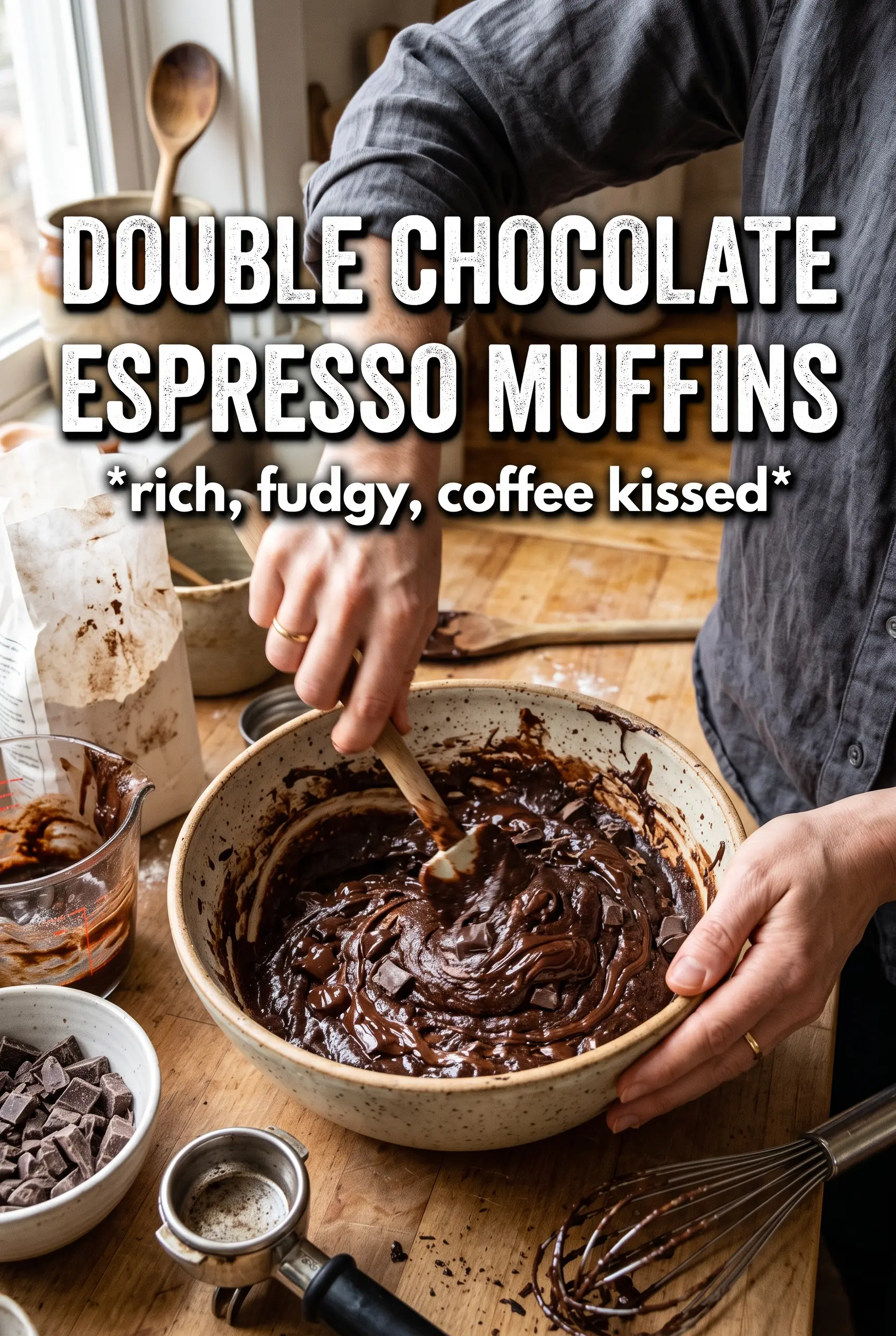
Add the dry ingredients to the wet and fold just until the flour disappears. A few streaks of cocoa are fine at this stage, but a smooth, overmixed batter is how you lose that tender muffin texture. Fold in the chocolate chips at the end so they stay distributed instead of sinking into one heavy layer at the bottom.
Fill the cups to the top
Spoon the batter into the muffin tin all the way to the top of each cup. That full fill matters here because the hot oven needs enough batter mass to build tall tops before the centers set. Finish with a light sprinkle of espresso powder over each muffin for a little bitterness against the chocolate and a stronger coffee finish on the crust.
Make Them Less Sweet
Use a little less granulated sugar and choose a darker chocolate chip. The muffins will taste more like deep chocolate and coffee, with a sharper edge and less dessert-like sweetness. Don’t cut the sugar too far or you’ll lose moisture and the tops won’t brown as well.
Dairy-Free Version
Swap the buttermilk for a dairy-free milk mixed with 1 tablespoon vinegar or lemon juice. Let it sit for a few minutes before using so it has that same tangy lift. The crumb will still be soft, though the flavor will be a touch less rich than with real buttermilk.
Gluten-Free Adaptation
Use a 1:1 gluten-free baking blend that includes xanthan gum. The batter may look slightly thicker, but that’s normal, and the muffins will still rise well with the hot start. Avoid almond flour here; it won’t hold the same dome or texture.
Storage and Reheating
- Refrigerator: Store in an airtight container for up to 4 days. The chocolate stays soft, but the crumb firms up a little in the fridge.
- Freezer: Freeze baked muffins individually wrapped for up to 2 months. Thaw at room temperature so the tops don’t get soggy from trapped steam.
- Reheating: Warm in the microwave for 10 to 15 seconds or in a 300°F oven for a few minutes. Don’t overheat them or the chocolate chips will seize up and the muffin crumb will turn dry.
Questions I Get Asked About This Recipe
Double Chocolate Espresso Muffins
Ingredients
Equipment
Method
- Preheat oven to 425°F and line a 12-cup muffin tin. Make sure the pan is ready so you can fill the cups immediately after mixing.
- Whisk all-purpose flour, cocoa powder, baking powder, baking soda, espresso powder, and salt together. Whisk until the mixture looks evenly dark and no streaks remain.
- Whisk granulated sugar, brown sugar, eggs, buttermilk, vegetable oil, strong brewed coffee, and vanilla together. Whisk until smooth and glossy.
- Fold dry into wet just until combined, then fold in dark chocolate chips. Stop when you no longer see dry flour so the batter stays thick.
- Fill each muffin cup to the very top, then sprinkle espresso powder for topping over each. The tops should be visibly dusted, ready for a domed rise.
- Bake at 425°F for 5 minutes, until the muffins begin to rise and set around the edges. Look for domes forming quickly.
- Reduce heat to 350°F and bake 13–15 more minutes, until a toothpick inserted in the center comes out clean. The domed tops should look dry on top and spring back lightly.