Crunchy candied pecans with a glossy cinnamon-sugar shell are the kind of snack that disappear faster than you expect. They’re sweet, lightly spiced, and crisp all the way through, with none of the sticky, soft texture that happens when the coating is rushed or the nuts cool before they’re fully set.
The trick is a frothy egg white, not a heavy batter. That thin layer gives the sugar something to cling to without turning the pecans into clumps, and the low oven temperature dries everything out slowly so the coating hardens instead of burning. Stirring during the bake matters too, because it keeps the nuts separate and helps the sugar finish in an even shell.
Below, I’m walking through the one step people skip too often: cooling the pecans all the way on the pan. That’s when the crunch sets. If you pack them up while they’re still warm, they’ll soften instead of snapping.
The coating baked up crisp and shiny, and the pecans stayed separate instead of turning into one big sugar clump. I had to hide the jar because everyone kept sneaking handfuls.
Save these crunchy cinnamon candied pecans for snacking, gifting, or topping salads and desserts.
The One-Step Mistake That Makes Candied Pecans Sticky
The most common problem with candied pecans is rushing the dry-out. The sugar coating looks done long before it has actually hardened, and if you pull the pan early, the nuts stay tacky instead of crisp. The low oven temp matters here because it gives the sugar time to set around each pecan without pushing it into a hard caramel shell.
Stirring every 15 minutes is what keeps the coating even. If you skip that part, the sugar settles in patches and you end up with some nuts that are bare and others with thick sugary pockets. The goal is a thin, crackly shell that breaks cleanly when cooled.
What Each Ingredient Is Doing in These Candied Pecans
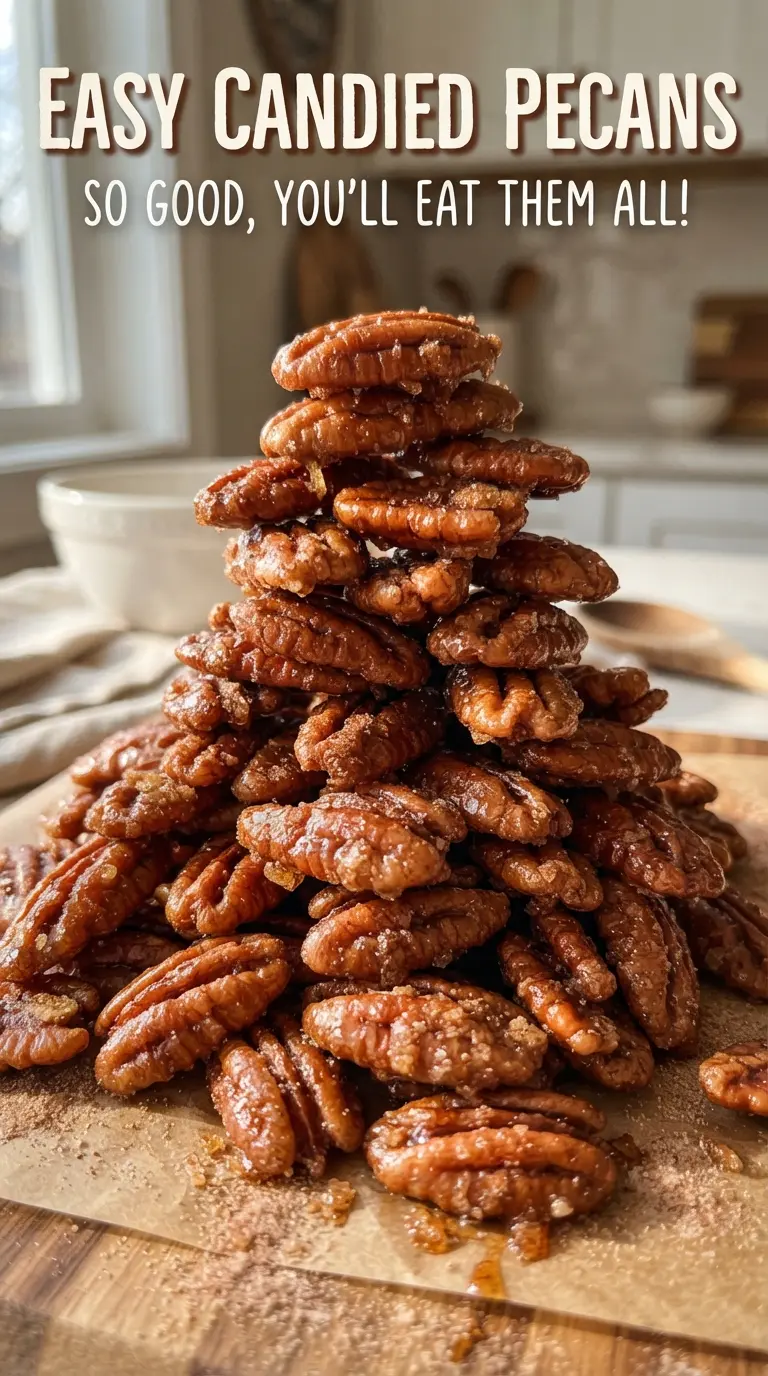
- Pecan halves — Use good pecans here. Fresh nuts taste buttery and clean, and older pecans can taste flat or waxy once they’re coated. Halves work best because they toast evenly and give you those big, snackable pieces.
- Egg white — This is the binder that makes the sugar cling in a thin layer. There isn’t a true substitute that behaves the same way, but if you need an egg-free version, aquafaba can stand in; whisk it until foamy and expect a slightly lighter, less glossy coating.
- Vanilla — It doesn’t just add sweetness. It rounds out the cinnamon and makes the nuts smell warm as they bake. Use real vanilla if you have it; imitation works in a pinch, but the flavor is flatter.
- Sugar, cinnamon, and salt — Sugar gives the crackly shell, cinnamon brings the familiar warmth, and salt keeps the whole batch from tasting one-note sweet. Don’t reduce the salt too much. It’s what makes the nuts taste balanced instead of candy-like.
Getting the Coating Crisp Without Burning the Sugar
Whisk the binder until it turns foamy
Start by whisking the egg white, water, and vanilla until the mixture looks frothy and loose. You’re not trying to whip it into meringue; you just want enough foam to help the sugar stick evenly. If the egg white is still streaky or slippery, the coating won’t cling well and you’ll get patchy nuts.
Coat the pecans before the sugar goes on
Toss the pecans in the frothy mixture until every piece looks lightly wet. A thin coating works better than a heavy one. If there’s a puddle of egg white in the bowl, keep tossing until it disappears, because extra liquid turns into sticky spots in the oven.
Bake low and stir on schedule
Spread the nuts in a single layer on parchment and bake at 250F for one hour, stirring every 15 minutes. The coating should look drier and more matte as it goes, not dark and bubbly. If your oven runs hot, check a few minutes early; the sugar should smell toasted, not scorched.
Cool completely before breaking them apart
When the pecans come out, they’ll still feel soft in spots. That’s normal. Leave them on the pan until they’re completely cool, then break apart any clusters with your hands. If you jar them while warm, steam gets trapped and the whole batch softens.
How to Adapt These Candied Pecans for Different Uses
Dairy-Free and Naturally Gluten-Free
These are already dairy-free and gluten-free, which makes them easy to serve to a crowd. Just check your cinnamon and vanilla for any cross-contamination if that matters for your kitchen. The texture stays the same because the crunch comes from the sugar shell, not from any flour or butter.
Maple-Spice Variation
Swap 2 to 3 tablespoons of the sugar for finely measured maple sugar if you want a deeper, slightly woodsy sweetness. Don’t replace the sugar with liquid maple syrup, or the coating gets sticky and won’t dry properly. This version tastes especially good on salads or over vanilla ice cream.
Less Sweet, More Toasted
Cut the sugar down by 1/4 cup if you want a nuttier result that still clings and crisps. The coating will be thinner and less candy-like, but the pecans will read more toasted than dessert-style. That version works well for snacking straight from the jar.
Storage and Reheating
- Refrigerator: Store in an airtight container at room temperature for up to 2 weeks. The fridge isn’t ideal because it can introduce moisture and soften the coating.
- Freezer: They freeze well for up to 2 months in a sealed freezer bag or container. Thaw at room temperature before opening the container so condensation doesn’t form on the nuts.
- Reheating: Reheating usually isn’t needed. If they soften, spread them on a sheet pan and warm them in a 250F oven for 5 to 8 minutes, then cool completely again. The mistake people make is stopping while they’re still warm; that’s when they seem crisp, then go soft later.
Answers to the Questions Worth Asking
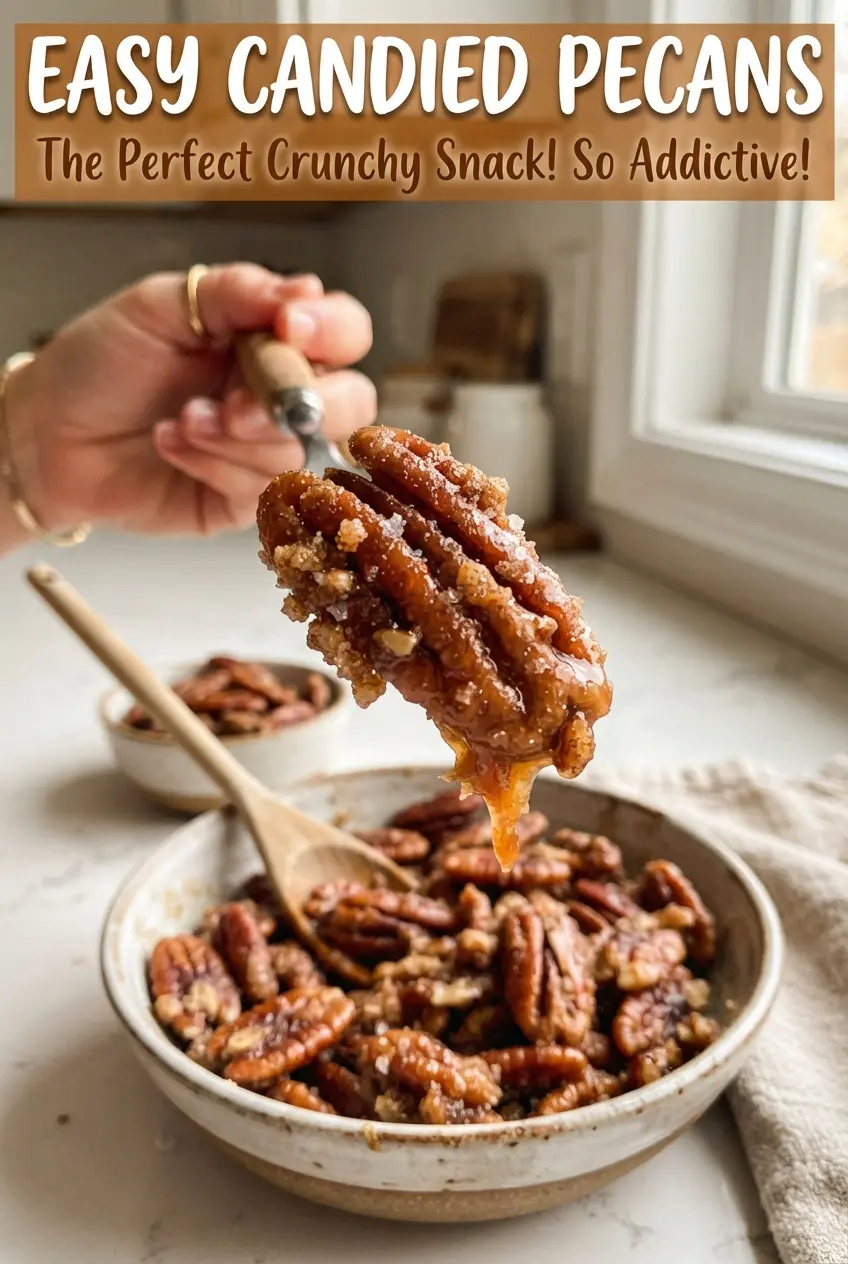
Easy Candied Pecans
Ingredients
Equipment
Method
- Preheat the oven to 250F, then line a sheet pan with parchment to prevent sticking and help the coating crisp.
- Whisk the egg white, water, and vanilla until frothy, using the bubbles to create a sticky binder.
- Toss the pecan halves in the egg white mixture until evenly coated, so every piece gets a thin, glossy layer.
- Mix the sugar, ground cinnamon, and salt, then toss with the pecans until they look evenly dusted and lightly clumped.
- Spread the pecans in a single layer on the parchment so they bake evenly and get a uniform crackly coating.
- Bake for 1 hour at 250F, stirring every 15 minutes so the cinnamon sugar caramelizes without burning.
- Cool completely on the pan until crunchy, then break apart any pieces that stuck together and store airtight.