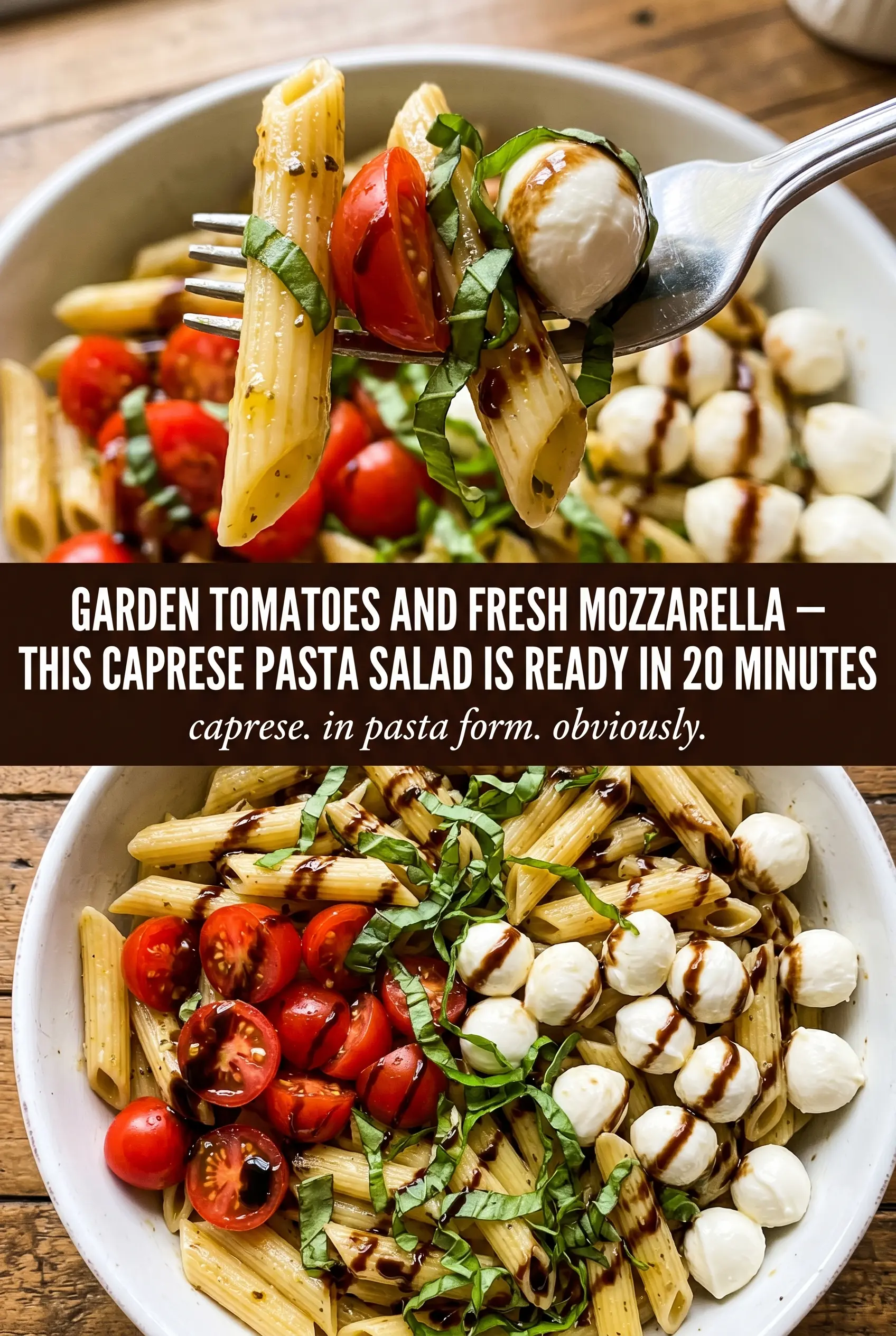
Cold pasta salad should still taste lively, and this one does. The tomatoes stay juicy, the mozzarella turns creamy instead of heavy, and the basil cuts through the balsamic dressing with a clean herbal finish. It’s the kind of side dish that disappears first because it feels fresh, not weighed down.
The trick is keeping the pasta from turning gummy and giving everything enough time to chill. Rinsing the pasta under cold water stops the cooking fast and keeps the noodles separate, while a short rest lets the vinaigrette settle into the pasta instead of sitting on the surface. The result is a salad that tastes better after a little time in the fridge, not worse.
Below, I’ll walk through the small details that matter most here, including the one step that keeps the basil bright and the pasta from clumping together. There are also a few simple swaps if you need to work with what’s already in your kitchen.
I chilled it for 30 minutes like you said, and the pasta soaked up the balsamic without getting soggy. The mozzarella stayed creamy and the basil tasted fresh all the way to the last bite.
Save this Easy Caprese Pasta Salad for a bright chilled side with tomatoes, mozzarella, basil, and balsamic.
The Reason This Pasta Stays Fresh Instead of Heavy
Caprese pasta salad can go bland fast if the pasta is still warm when the dressing goes on. Warm noodles soak up vinaigrette unevenly and can soften the mozzarella too much, which leaves the whole bowl tasting flat after it sits. Cooling the pasta under cold water fixes that problem and gives you a cleaner, more defined salad from the start.
The other thing that matters is restraint. This salad works because the ingredients stay distinct: juicy tomatoes, soft mozzarella, and torn basil instead of tiny chopped leaves that disappear. Toss gently and don’t overwork it. You want everything coated, not crushed.
What Each Ingredient Is Doing In This Salad
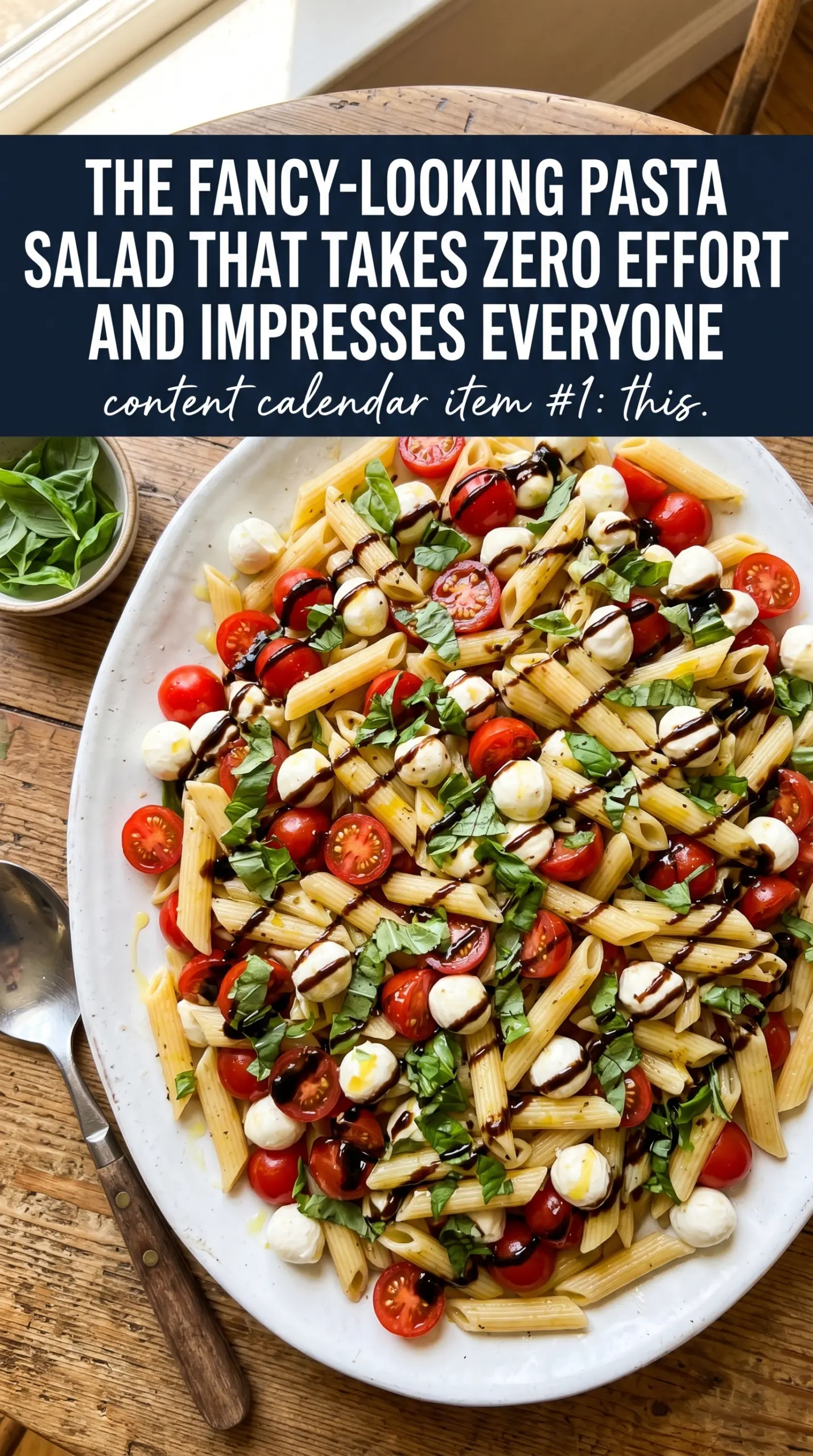
- Farfalle or penne — Both shapes hold onto the dressing well without collapsing. Farfalle gives a little texture and looks especially nice in a bowl, while penne is sturdier if you’re making it ahead.
- Cherry tomatoes — These bring the sweetness and moisture that make the salad taste bright. Halving them is important so their juices mingle with the dressing instead of bursting awkwardly when you bite into whole tomatoes.
- Fresh mozzarella balls — This is the ingredient that makes the salad feel like Caprese instead of just another pasta salad. Use the fresh kind here; shredded mozzarella won’t give you the same creamy, milky texture.
- Fresh basil — Tear it instead of chopping it. Tearing keeps the edges from bruising too badly and gives you bigger fragrant pieces that stand out in each bite.
- Balsamic vinaigrette — It ties everything together and adds the sweet-tangy finish the salad needs. A store-bought version works fine if it tastes balanced, but if yours is sharp, use a little less and add more after chilling.
Building The Salad So It Cools Cleanly And Tosses Evenly
Cooking The Pasta Just Past Firm
Boil the pasta until it’s just tender, then drain it right away. Overcooked pasta turns soft once it chills, and that’s when the salad starts feeling mushy instead of crisp and orderly. Rinse it under cold water until it’s fully cooled, then shake off as much water as you can so the dressing doesn’t get diluted.
Combining The Cold Ingredients
Add the tomatoes, mozzarella, and basil to the cooled pasta in a large bowl. If the pasta is still warm, the basil will wilt and the mozzarella can start to lose its clean, milky texture. Use a bowl with some room to spare so you can toss without smashing the tomatoes.
Letting The Dressing Settle In
Pour on the balsamic vinaigrette and toss gently until everything is lightly coated. Start with the amount listed, then add a little more after chilling if the pasta looks dry. The 30-minute rest matters because it gives the dressing time to cling to the noodles and lets the flavors settle into the bowl instead of tasting separate.
Final Seasoning Before Serving
Taste the salad after it has chilled, then add salt and pepper as needed. Cold food always tastes a little flatter than warm food, so seasoning at the end makes a real difference. Give it one last toss right before serving so the dressing redistributes and the basil rises back up through the pasta.
How To Adapt It For What’s In Your Kitchen
Gluten-Free Pasta Without Losing The Texture
Use a gluten-free short pasta that holds its shape well, then cook it just to tender because it softens a bit more as it chills. Rinse it thoroughly after draining so it doesn’t stick together, since gluten-free pasta can clump faster than regular pasta in a cold salad.
Dairy-Free Version With A Brighter Finish
Swap the mozzarella for a good dairy-free mozzarella-style cheese or leave it out and add a handful of chopped avocado just before serving. You lose the classic milky chew, but the salad still keeps its fresh tomato-basil profile and gets a softer, richer bite from the avocado.
Make It Heartier For A Main Dish
Add grilled chicken, chickpeas, or salami if you want this to eat like a full meal. Chickpeas keep it vegetarian and add a little more bite, while chicken or salami gives the salad more protein and makes it less dependent on the pasta for substance.
Storage And Reheating
- Refrigerator: Store covered for up to 3 days. The basil softens and the pasta absorbs more dressing as it sits, so the salad gets a little less bright by day three.
- Freezer: Don’t freeze this one. Fresh mozzarella turns rubbery and tomatoes lose their texture after thawing, so the salad won’t come back in a useful way.
- Reheating: This salad is meant to be served cold. If it has been in the fridge, let it sit at room temperature for 10 to 15 minutes and toss again before serving so the dressing loosens up and the flavors wake back up.