Warm potatoes soaked in a sharp white wine vinaigrette are what give French potato salad its appeal. The dressing slips into the potatoes while they’re still tender and receptive, so every bite carries mustard, herbs, and a little tang without the heaviness of mayo. It eats clean on the plate and still feels like it belongs next to grilled fish, roast chicken, or anything else that needs a bright side.
The trick is using warm potatoes and a dressing with enough acid to wake them up, but not so much that it tastes harsh after it rests. Fingerlings or baby potatoes hold their shape better than russets, and leaving the skins on adds just enough texture to keep the salad interesting. A little chicken broth rounds out the vinaigrette and softens the vinegar, while Dijon gives it the kind of backbone this salad needs.
Below, I’ll walk through the one timing detail that matters most, plus a few smart swaps if you need to adjust for what’s in your pantry. This is the kind of side dish that gets better as you learn the rhythm of it.
The potatoes soaked up the vinaigrette beautifully, and after the hour on the counter the herbs tasted fresh instead of muddy. It was even better at room temperature than chilled.
Save this French potato salad for the side dish that stays bright, glossy, and herb-filled at room temperature.
The Vinaigrette Needs Warm Potatoes, Not Hot Ones
French potato salad works because the potatoes are warm enough to absorb the dressing, but not so hot that they turn the vinaigrette oily or dull the herbs. If you dress them straight from the pot, the vinegar can taste sharp and the shallots can lose their bite. If you wait until they’re cold, the potatoes stop taking in flavor and the salad ends up tasting like dressed potatoes sitting on top of themselves.
The sweet spot is just after draining, when the potatoes are still steaming but have stopped releasing a lot of surface water. Slice them while they’re warm, then toss gently so the edges catch some dressing without breaking apart. That’s what gives you a salad that tastes seasoned all the way through instead of only on the outside.
What Each Ingredient Is Actually Doing In This Salad
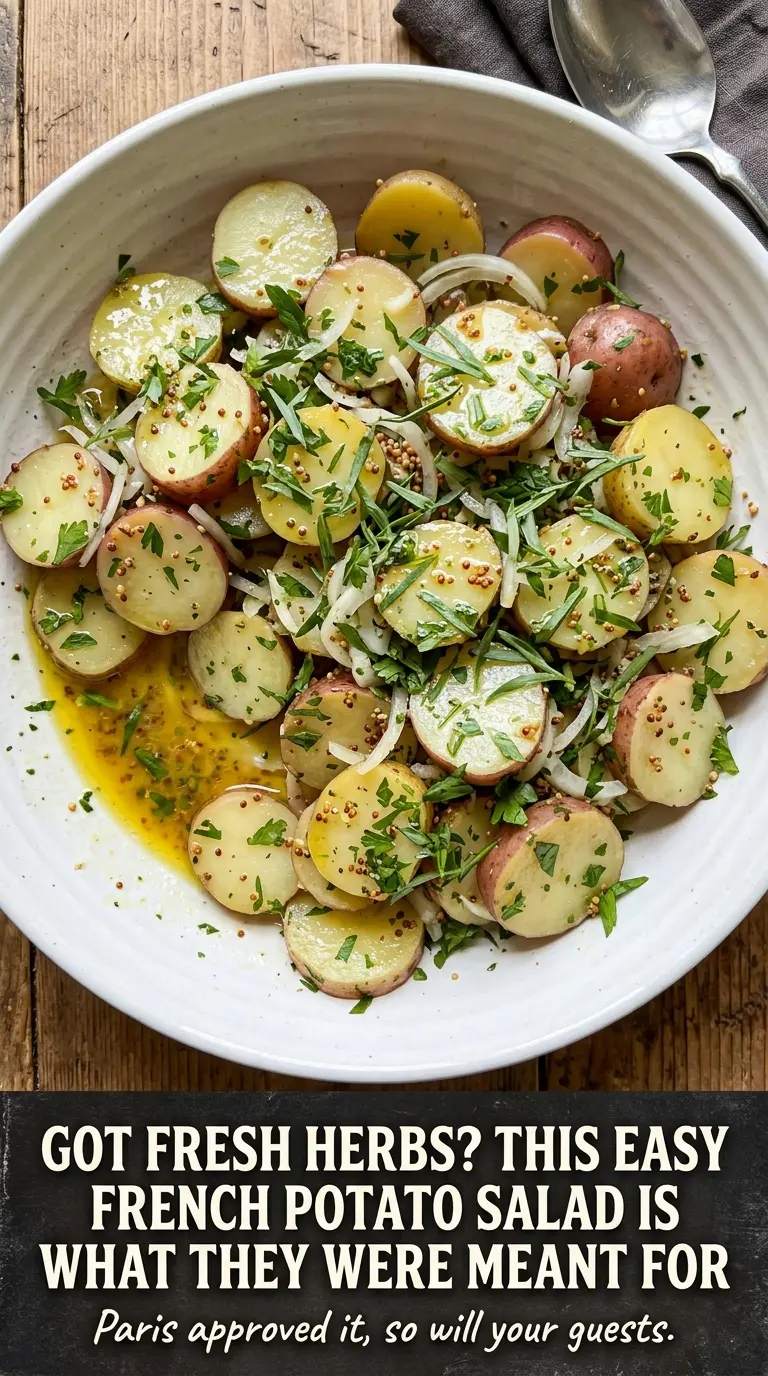
- Fingerling or baby potatoes — These hold their shape and give you clean slices that catch the dressing in the cut edges. Waxy potatoes matter here; floury potatoes tend to crumble and make the salad look pasty.
- White wine vinegar — This gives the salad its signature lift. If you swap in a harsher vinegar, start with a little less and taste as you go, because the acid should brighten the potatoes, not dominate them.
- White wine and chicken broth — Together they soften the vinaigrette and add a rounder, more balanced taste. If you need to skip the broth, use water, but the dressing will taste a little flatter.
- Dijon mustard — This is the emulsifier and the backbone. It helps the oil and vinegar stay together long enough to coat the potatoes evenly instead of separating into slicks and puddles.
- Shallots — Minced shallot gives the salad a gentle onion note without the crunch or sharpness of raw onion. Cut them fine so they melt into the dressing and don’t fight the texture of the potatoes.
- Tarragon and parsley — Parsley adds freshness, while tarragon brings that classic French anise note. Add both at the end so they stay bright; if they sit in the warm vinaigrette too long, they lose their edge.
Getting the Dressing Into the Potatoes Without Turning Them to Mash
Boiling Until Just Tender
Cook the potatoes in salted water until a knife slides in with only a little resistance. You want them fully tender, but not collapsing at the edges. If they cook past that point, they’ll split when you slice them and the salad will start to look rough before you even add the dressing.
Mixing the Vinaigrette While the Potatoes Rest
Whisk the wine, broth, vinegar, olive oil, Dijon, shallots, salt, and pepper until the dressing looks fully combined and a little creamy. Don’t rush this part, because the mustard needs a moment to bring everything together. A broken dressing will still taste fine, but it won’t coat the potatoes evenly.
Tossing While Warm, Then Letting It Sit
Pour the dressing over the sliced potatoes and fold gently with a spatula or spoon. The potatoes should glisten, not get smashed into chunks. Let the salad marinate at room temperature for an hour so the flavor settles in; if you chill it immediately, the dressing won’t absorb as well and the herbs won’t taste as alive.
Adding the Herbs at the End
Stir in the parsley and tarragon just before serving. That keeps the herbs fresh and prevents the tarragon from turning muddy in the dressing. Serve it at room temperature, when the potatoes are soft and the vinaigrette tastes balanced instead of cold and flat.
How to Adapt This French Potato Salad for Different Tables
Make It Vegetarian
Swap the chicken broth for vegetable broth or water. Vegetable broth keeps the dressing rounded, while water gives you a sharper, cleaner vinaigrette. Either works, but the broth version tastes a little more finished.
Use All Olive Oil for a Bolder Salad
If you want a more pronounced olive oil taste, use a good extra-virgin oil and keep the wine vinegar measured carefully. The salad will taste greener and more assertive, which works well with grilled meats or strong cheese.
Swap the Herbs Based on What You Have
Parsley is flexible, but tarragon is what gives the salad its French character. If you don’t have tarragon, use chives or dill for a different finish; the salad will still work, but it won’t taste as classic or as aromatic.
Make It Dairy-Free and Gluten-Free
This recipe is naturally gluten-free, and it becomes dairy-free as written if your broth is dairy-free. The important part is checking the broth and mustard labels, because those are the only places hidden ingredients might sneak in.
Storage and Reheating
- Refrigerator: Keeps for 3 days. The potatoes will firm up a bit as they chill, but the flavor stays good.
- Freezer: I don’t recommend freezing this salad. The potatoes turn grainy and the vinaigrette loses its clean texture.
- Reheating: Serve it at room temperature instead of reheating. If it’s been chilled, let it sit out for 20 to 30 minutes and give it a gentle toss before serving so the dressing loosens back up.
Questions I Get Asked About This Recipe
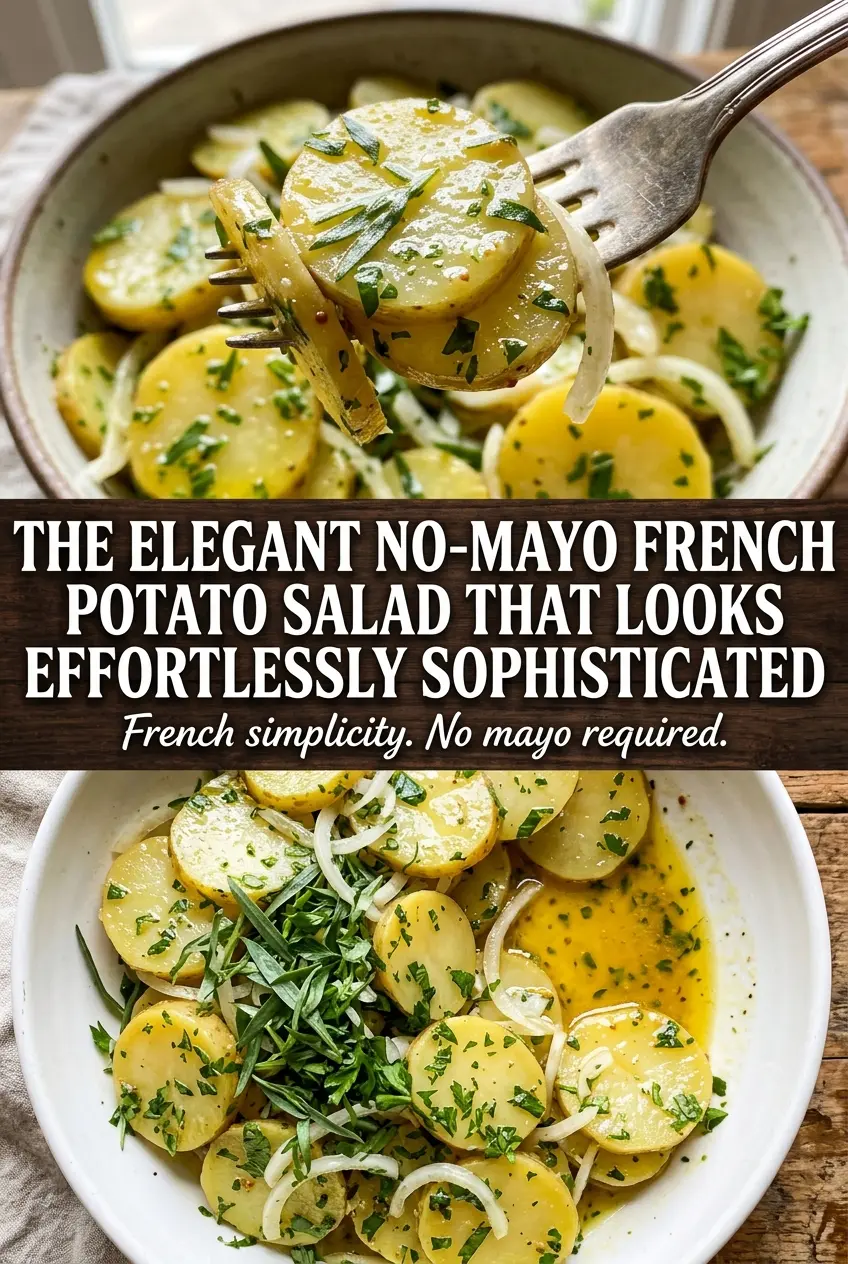
Easy French Potato Salad
Ingredients
Equipment
Method
- Bring a Dutch oven of water to a boil and cook the whole fingerling or baby potatoes until tender, about 20 minutes, with a steady simmer (large bubbles). The potatoes should be easily pierced with a knife.
- Drain the potatoes and slice them while still warm so they can absorb the dressing quickly. Keep them in a single layer to avoid steaming over.
- Whisk together the white wine, chicken broth, white wine vinegar, olive oil, Dijon mustard, shallots, salt, and pepper until the dressing looks smooth and emulsified. The shallots should be evenly distributed.
- Pour the vinaigrette over the warm sliced potatoes and toss gently until every piece looks lightly glossy. Keep the slices intact and avoid aggressive stirring.
- Let the potato salad marinate at room temperature for 1 hour so the flavors soak in and the dressing thickens slightly. The surface should look glistening.
- Add the fresh parsley and fresh tarragon just before serving so the herbs stay bright and fragrant. Toss once more gently to coat.
- Serve at room temperature for the best herb flavor and creamy-tender texture. Plate so the potatoes and herbs are visible on top.