Pasta salad gets a lot more interesting when it eats like an antipasto platter. The rotini catches the dressing in every twist, the salami and pepperoni bring that salty deli bite, and the mix of provolone, mozzarella, olives, peppers, and artichokes gives each forkful a different hit of flavor and texture. Chilled long enough, it turns from a quick side into the kind of bowl people keep coming back to while they “just grab one more bite.”
What makes this version work is balance. The pasta is rinsed cold so it doesn’t keep cooking and soaking up the dressing too fast, and the dressing gets a little help from Parmesan and Italian seasoning so the whole salad tastes seasoned all the way through, not just slick on the outside. The ingredients are bold enough to stand up to chilling, which matters because this is better after the flavors have had time to settle together.
Below, you’ll find the small details that keep the pasta from getting heavy, the one chill time that changes the whole salad, and a few smart swaps if you want to lean it more meaty, more cheesy, or a little lighter.
I let it chill for two hours and the dressing soaked into the pasta just enough without turning it soggy. The mix of salami, pepperoni, and provolone tasted like a real antipasto tray in pasta form.
Save this antipasto pasta salad for the next potluck when you want bold deli flavors in one chilled bowl.
The Chill Time That Keeps the Dressing from Disappearing
Antipasto pasta salad gets better after it rests, but only if you give it enough dressing up front. Pasta drinks in the first hour, especially rotini with all those ridges, so a salad that tastes perfect right after mixing can seem a little dry after chilling. That doesn’t mean you did anything wrong. It means the noodles were thirsty.
The fix is simple: coat everything generously, then give the bowl time in the refrigerator before judging it. Two hours is the sweet spot here. The pasta softens slightly, the salami and pepperoni season the dressing, and the sharp little bites from pepperoncini and olives spread through the whole bowl instead of sitting in pockets. If it still looks tight when you toss it before serving, add a splash more dressing and stir again.
- Rotini — The twists hold onto dressing and tiny bits of Parmesan in a way straight pasta can’t. That shape matters here because this salad needs every bite to carry flavor.
- Salami and pepperoni — Use a good deli-style version if you can. Pre-cubed meats work in a pinch, but slicing them yourself gives you cleaner pieces and better texture.
- Provolone and mozzarella — Provolone gives the sharper, saltier backbone while the mozzarella softens the mix. Fresh mozzarella balls bring the best texture, but if they’re packed in a lot of liquid, drain them well so the salad doesn’t turn watery.
- Marinated artichokes, roasted peppers, olives, and pepperoncini — These are the ingredients that make the bowl taste like antipasto instead of plain pasta salad. The marinated and briny ingredients carry a lot of flavor, so don’t rinse them unless they taste aggressively salty straight from the jar.
Building the Bowl So Every Bite Tastes Like Antipasto
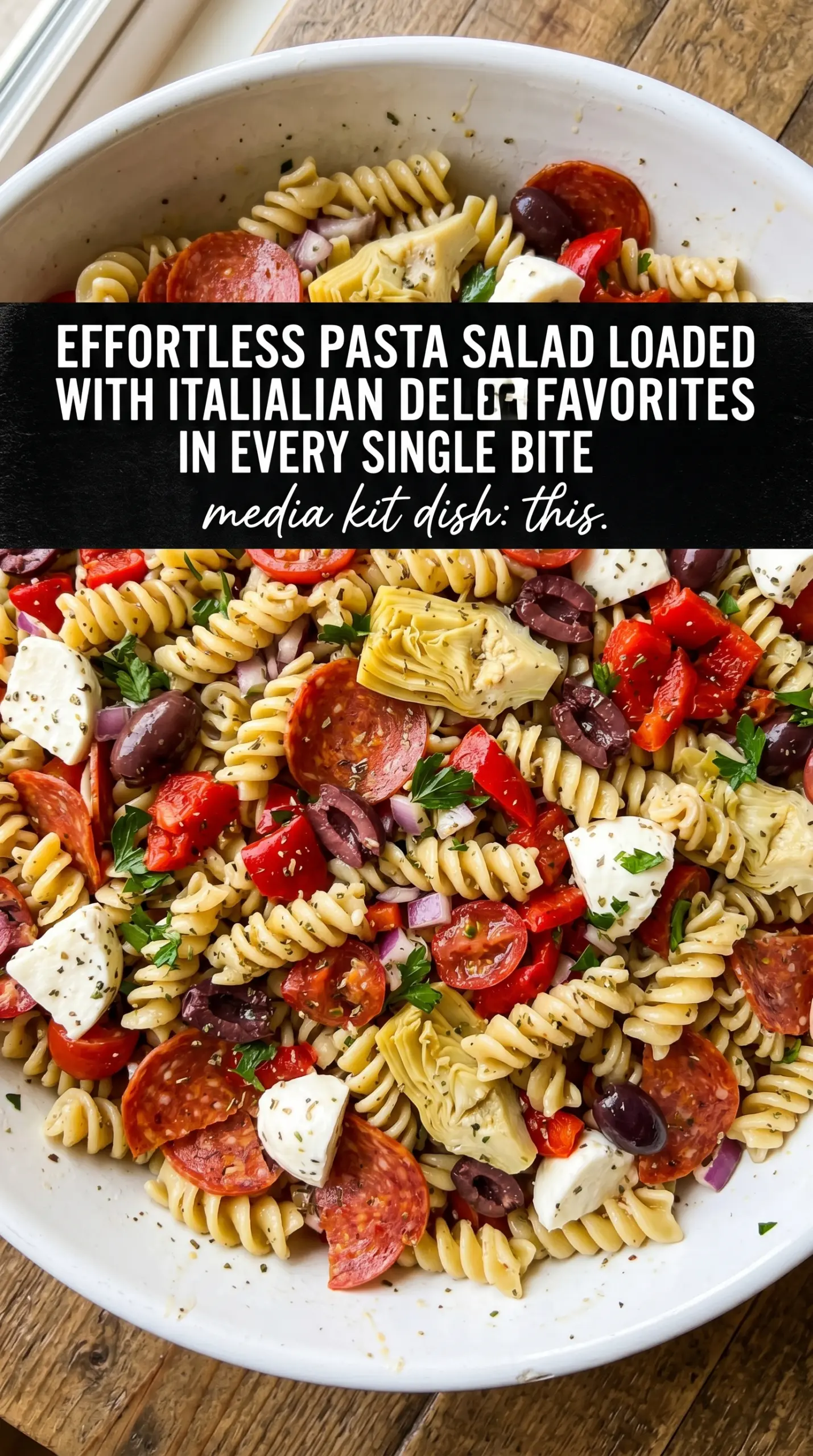
- Italian dressing — This is the base that ties everything together. A good bottled dressing works fine here because the meats, cheese, and pickled vegetables already bring plenty of complexity, but if yours is thin, add it gradually so the salad doesn’t turn slick.
- Parmesan and Italian seasoning — Parmesan gives the dressing a little body and a savory finish, while Italian seasoning boosts the herbs that help the whole salad taste seasoned all the way through. Add the cheese before chilling so it has time to bloom into the dressing.
The Mix-and-Chill Sequence That Gives You the Best Texture
Cooking the Pasta Just Past Tender
Boil the rotini until it’s just tender, then drain it and rinse immediately under cold water. That rinse stops the cooking fast and knocks off surface starch, which keeps the salad from clumping into a heavy mass. If the pasta is left warm, it keeps drinking dressing and the final bowl ends up soft instead of bright and defined.
Layering the Antipasto Ingredients
Combine the cooled pasta with the salami, pepperoni, cheeses, tomatoes, artichokes, roasted peppers, olives, and pepperoncini in a large bowl. Toss gently so the mozzarella doesn’t tear apart and smear through the dressing. The goal is a bowl where every spoonful has contrast, not a chopped-up mash.
Tossing with the Dressing
Add the Italian dressing, Parmesan, and Italian seasoning, then stir until everything is evenly coated. If you pour all of it in at once and the bowl looks flooded, the dressing won’t cling well after chilling. Start with most of it, toss, then add the rest only if the pasta still looks dry around the edges.
Chilling and Final Adjustment
Cover the bowl and refrigerate it for at least two hours. This is when the salad settles into itself and the flavors stop tasting separate. Before serving, toss it again and check the texture; if the pasta absorbed more dressing than you wanted, add a little extra and stir until the bowl looks glossy again.
Three Ways to Adjust the Bowl Without Losing What Makes It Work
Gluten-Free Version
Use your favorite gluten-free rotini and cook it just until tender, because overcooked GF pasta can get fragile once it chills. The rest of the recipe stays the same, but expect the texture to be a little softer after sitting in dressing. Toss gently so the noodles hold their shape.
Lower-Dairy Swap
Cut the provolone in half or leave it out and lean harder on the salami, pepperoni, olives, and artichokes. You’ll lose some creaminess, but the salad still tastes complete because the dressing and marinated vegetables carry a lot of the flavor load. If you skip the mozzarella too, add a little extra Parmesan for a sharper finish.
Make It Heartier for a Crowd
Add another half pound of pasta and bump the dressing up by a few tablespoons so the bowl still tastes fully dressed after chilling. The meats and cheese already make this substantial, so this is the easiest way to stretch it without watering down the antipasto feel. A bigger bowl also needs a longer toss at the end to redistribute the dressing evenly.
Storage and Reheating
- Refrigerator: Store covered for up to 4 days. The pasta softens a little as it sits, and the dressing may settle to the bottom.
- Freezer: Freezing isn’t a good fit here. The cheeses, tomatoes, and dressing change texture too much after thawing.
- Reheating: Don’t reheat this salad. Serve it cold or let it sit at room temperature for 15 to 20 minutes before serving, then toss with a spoonful or two of extra dressing if it looks dry.
Questions I Get Asked About This Recipe
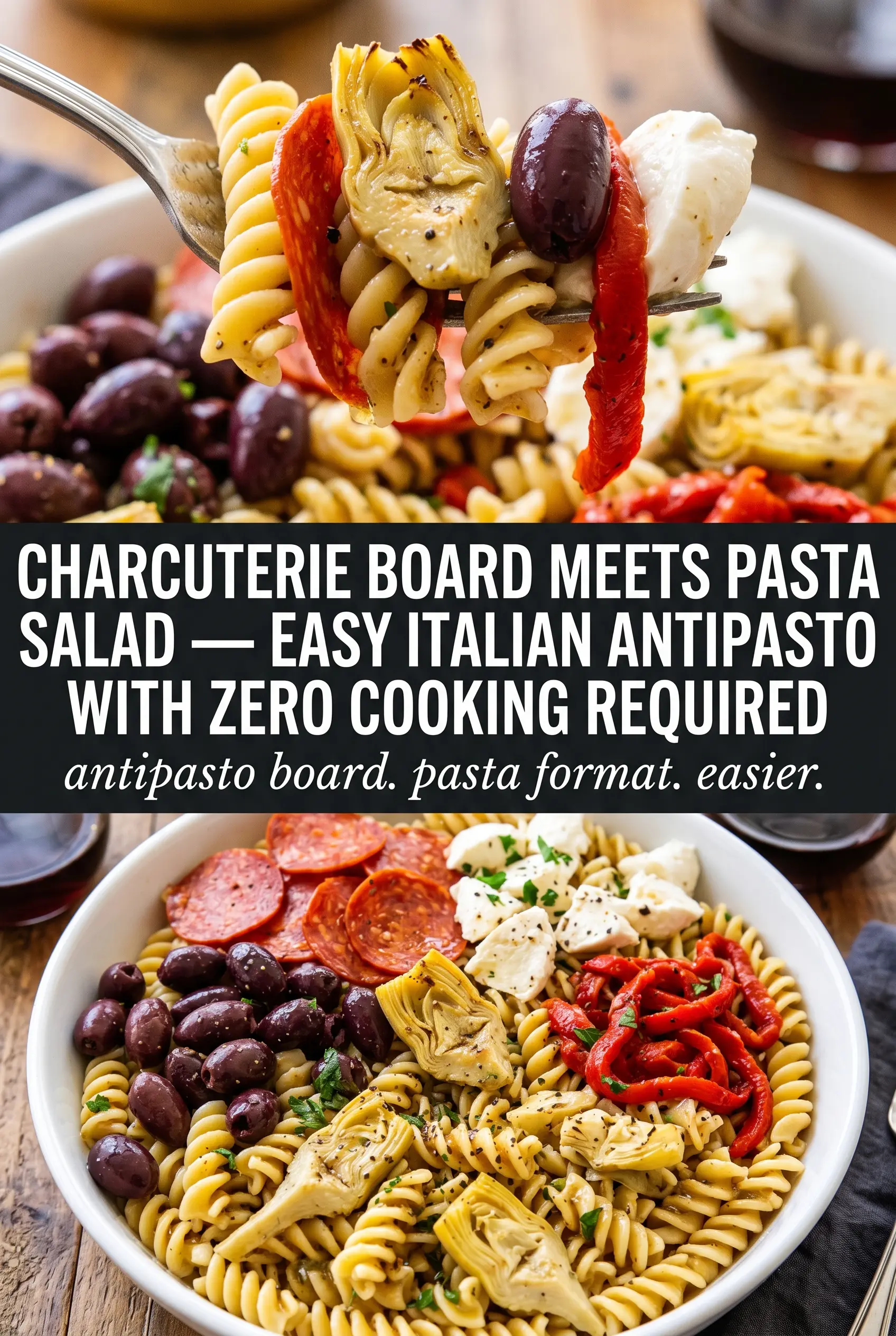
Easy Italian Antipasto Pasta Salad
Ingredients
Equipment
Method
- Cook the rotini pasta according to package directions until tender, then drain and rinse with cold water to stop cooking (aim for no warm spots). Transfer to a flat area so it cools quickly and stays springy.
- Add the cooled rotini pasta, salami, pepperoni, provolone cheese, fresh mozzarella balls, cherry tomatoes, marinated artichoke hearts, roasted red peppers, Kalamata olives, and pepperoncini to a large bowl. Toss gently until the ingredients look evenly distributed like a loaded antipasto platter.
- Pour in Italian dressing, then add Parmesan cheese and Italian seasoning, and toss until every piece is lightly coated. The pasta should look glossy and the mix should be speckled with seasoning.
- Cover and refrigerate for at least 2 hours so flavors meld and the salad firms up slightly. After chilling, the cheeses should feel set and the tomatoes should look juicier but not watery.
- Toss again before serving, adding more Italian dressing if needed to loosen the mix. Serve chilled with a charcuterie-style variety of toppings visible.