Red skinned potato salad hits the table with the kind of creamy, chilled bite that keeps people going back for another scoop. The skins stay on, which gives every forkful a little more texture and keeps the potatoes from collapsing into mush. This version stays straightforward, but it still tastes like someone paid attention.
The trick is cooking the potatoes just until tender and letting them cool before the dressing goes on. Warm potatoes drink up flavor, but if they’re steaming hot, the mayo can loosen and turn greasy instead of clingy. Dijon and white wine vinegar do the quiet heavy lifting here, giving the dressing enough sharpness to cut through the richness.
Below, I’ve included the details that matter most: how to keep the potatoes intact, what each ingredient is doing, and a few easy variations if you want to change the texture or lighten it up a bit.
I loved that the potatoes held their shape and the dressing actually coated everything instead of turning watery after chilling. The Dijon gave it a little tang, and it was even better the next day.
Save this red skinned potato salad for cookouts, potlucks, and make-ahead dinners when you want a creamy side with a little tang.
The Reason Red Potatoes Stay Creamy Instead of Mealy
Red potatoes are the whole point of this salad. Their waxy texture holds together after boiling, which means you get distinct cubes instead of a bowl of mashed potato dressed up as salad. Leave the skins on and you get a little more structure, a little more color, and a finished dish that feels fresh instead of heavy.
The other thing that keeps this salad from going dull is balance. Mayo makes it creamy, but Dijon and white wine vinegar keep it awake. If the dressing tastes flat before it meets the potatoes, it will taste flat after chilling too, so this is the moment to season it with purpose.
- Red potatoes — These hold their shape better than russets, which is why they work here. Cut them into even cubes so they finish cooking at the same time; uneven pieces mean some will break apart before the others are tender.
- Mayonnaise — Use a mayo you actually like the taste of, because it’s the base of the dressing. A full-fat version gives the cleanest texture, but light mayo works if you want a looser, less rich finish.
- Dijon mustard — Dijon sharpens the dressing and helps it cling to the potatoes. Yellow mustard will work in a pinch, but it brings a different, softer flavor and a brighter color.
- White wine vinegar — This is the ingredient that keeps the salad from feeling heavy. If you don’t have it, apple cider vinegar is the best swap, though it adds a slightly sweeter edge.
- Celery and green onions — These add crunch and bite, which matter in a creamy salad. Dice the celery small so it distributes evenly instead of fighting the fork.
- Parsley — Fresh parsley lifts the whole bowl and keeps the color from looking beige. If you skip it, the salad still works, but it loses a little freshness at the finish.
What Each Ingredient Is Actually Doing to Keep Red Potatoes Creamy
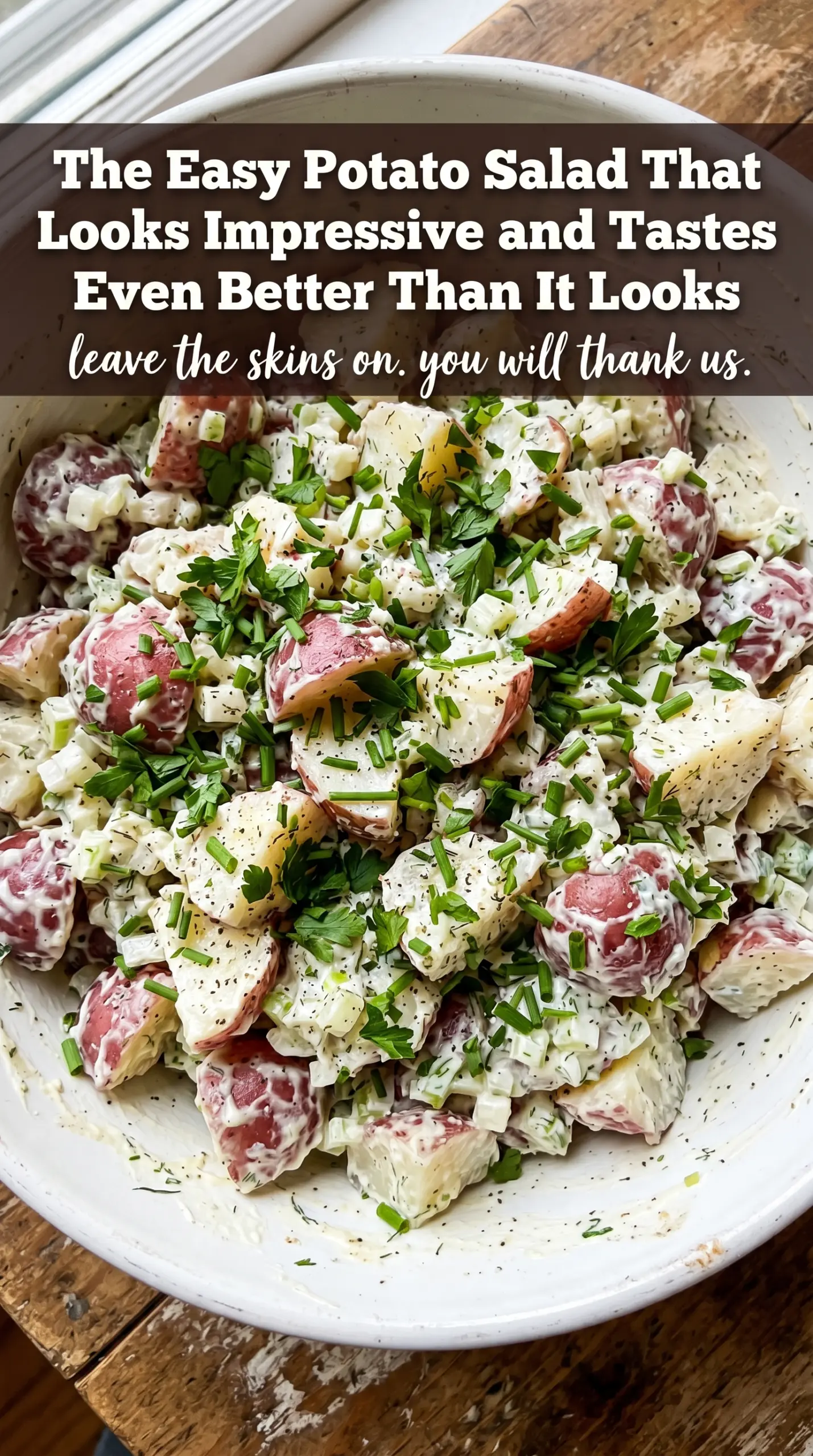
- Red potatoes (waxy variety) — The natural starch in red potatoes is lower than russets, so they stay firm while absorbing dressing. This creates creaminess without waterlogging.
- Skins left on — The skin helps hold the potato together and adds texture. It also looks more rustic and home-style.
- Cooked just until fork-tender — Red potatoes cook faster than russets. Overcooking is easy, so start testing early and pull as soon as they’re tender.
- Immediate ice bath — This sets the structure and prevents further cooking. Red potatoes especially need this because they’re already delicate.
- Mayonnaise-based dressing — The mayo coats the potatoes and creates that creamy mouthfeel. Red potatoes don’t need as much mayo as russets because they’re already waxy.
- Sour cream or buttermilk — These add tang and prevent the dressing from being one-dimensional. They also lighten the mayo-heavy dressing slightly.
- Fresh herbs like dill or parsley — These add brightness and freshness that balances the rich mayo. They should be added late so they stay green and vibrant.
- Salt and pepper to taste — Red potatoes are naturally mild, so bold seasoning is needed. Taste after chilling and add more if needed.
How to Keep the Potatoes Intact From Pot to Bowl
Boiling Until Just Tender
Start the potatoes in well-salted water and cook them until a knife slides in without resistance, but the cubes still hold their edges. If you boil them until they’re falling apart, the salad turns pasty once you stir in the dressing. Drain them right away and let the steam escape so they stop cooking from residual heat.
Cooling Before the Dressing Goes On
Let the potatoes cool before mixing. Warm potatoes absorb dressing unevenly and can break down when you toss them, which is how you end up with a bowl that looks creamy on top and watery at the bottom. You want them cool enough to handle, but not so cold that they’ve turned stiff.
Mixing the Dressing First
Stir the mayonnaise, Dijon, vinegar, salt, and pepper together in a separate bowl before adding anything else. That gives you a balanced dressing that coats evenly instead of leaving pockets of mustard or vinegar behind. Taste it now, because once it hits the potatoes, the seasoning will need to do all its work through the whole bowl.
Folding, Then Chilling
Add the potatoes, celery, green onions, and parsley, then fold everything together gently. Overmixing is what shreds the potatoes and makes the salad heavy. Chill it for at least 2 hours so the flavors settle in and the dressing thickens around the potatoes instead of sitting on them.
Make It with Sour Cream for a Tangier Finish
Swap out half the mayonnaise for sour cream if you want a sharper, lighter-tasting dressing. The texture stays creamy, but the finish is a little less rich and a little more picnic-style. If you go all sour cream, the salad will taste brighter but won’t cling quite as smoothly.
Add Hard-Boiled Eggs for a Heartier Side
Chopped hard-boiled eggs give this salad a more classic deli-style feel and make it a little more substantial. Fold them in gently after the potatoes are coated so they don’t get smashed. The salad gets richer, but the texture stays soft and familiar.
Dairy-Free and Gluten-Free Without Losing the Structure
This recipe is already gluten-free as written, and it adapts cleanly to dairy-free eating because the dressing doesn’t rely on dairy at all. Just use a mayonnaise you trust and check the mustard label if you’re serving someone with strict dietary needs. The result stays creamy and stable after chilling.
Storage and Reheating
- Refrigerator: Store covered for up to 4 days. The potatoes soften a little more as it sits, but the flavor gets better by the next day.
- Freezer: Don’t freeze this salad. The mayo separates and the potatoes turn grainy after thawing.
- Reheating: Serve it cold or let it sit at room temperature for 15 to 20 minutes. Heating ruins the dressing and can make the potatoes break down.
Answers to the Questions Worth Asking

Easy Red Skinned Potato Salad
Ingredients
Equipment
Method
- Bring a pot of water to a boil, add the red potatoes, and cook until tender, 15-20 minutes. Visual cue: a fork should slide into the cubes with little resistance.
- Drain the potatoes and let them cool until just warm, about 10 minutes. Visual cue: surface looks matte and steam has stopped.
- In a bowl, whisk mayonnaise, Dijon mustard, white wine vinegar, salt, and pepper until smooth. Visual cue: the dressing turns creamy and uniform in color.
- Add celery, green onions, and fresh parsley to the cooled potatoes and toss to distribute evenly. Visual cue: green flecks appear throughout the potato cubes.
- Pour the dressing over the potato mixture and toss well until every piece is coated. Visual cue: potatoes look glossy and cling to the creamy dressing.
- Cover and refrigerate for 2 hours before serving. Visual cue: the salad firms up slightly and the dressing thickens.