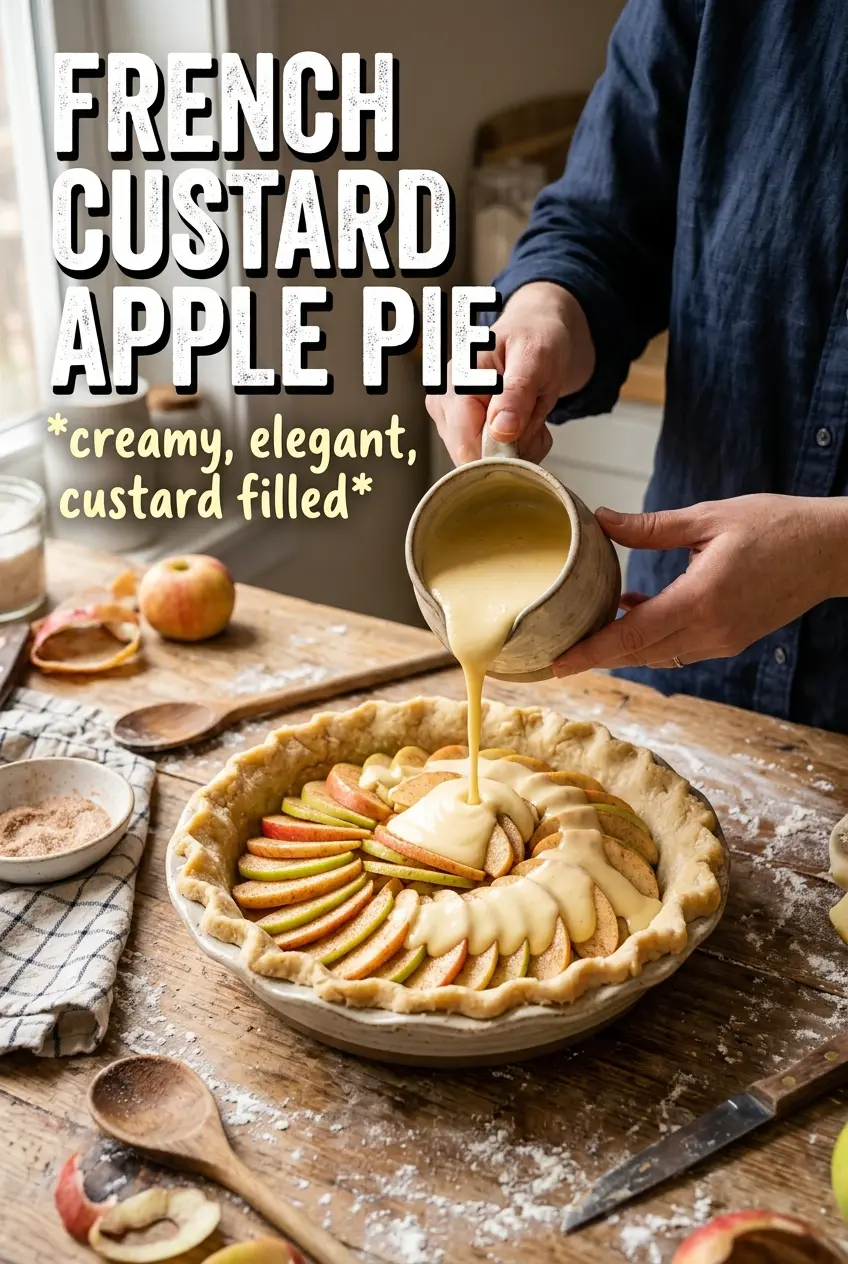
French custard apple pie bakes into something gentler than a classic double-crust pie and more elegant than a simple apple tart. The apples soften just enough to hold their shape, the custard sets into a creamy sliceable layer, and the whole pie finishes with a golden top that smells like vanilla, cinnamon, and warm fruit. It’s the kind of dessert that looks polished on the table but still feels homemade in the best way.
What makes this version work is the balance. Thin apple slices give the custard plenty of places to settle, so every bite has fruit instead of a pudding-like center with apples floating on top. The flour in the custard helps it bake up stable without turning firm or eggy, and a short cooling period after baking keeps the filling from running the moment you cut into it. If you use calvados, it adds a light apple note that deepens the filling without making it taste boozy.
Below, I’ll walk through the parts that matter most: how to keep the custard smooth, why the apples are arranged the way they are, and what to change if you want a slightly different finish.
The custard set up perfectly around the apples and the crust stayed crisp on the bottom. I let it cool like you said and it sliced cleanly without falling apart.
Love the creamy custard and layered apples in this French custard apple pie? Save it to Pinterest for a dessert that slices cleanly and looks bakery-worthy.
The Custard Sets Cleanly When You Don’t Rush the Apples
The most common mistake with custard apple pie is slicing the apples too thick or packing them too loosely. Thick slices don’t soften in time, and loose layering leaves too much open space for custard to pool, which can bake into a softer center than you want. Thin, even slices arranged in overlapping circles help the filling cook at the same pace from edge to center.
The other thing that matters is the bake itself. This pie needs enough time for the eggs to set without hardening, so pull it only when the center has a slight wobble and the top is golden. If the edges of the crust are getting dark too quickly, cover them with foil instead of lowering the oven temperature; a cooler oven can leave the custard underbaked.
- Apple thickness — Aim for thin slices, about 1/8 inch. They soften at the same rate as the custard and give you a tender slice instead of a pie that eats like raw fruit on the bottom.
- Custard consistency — Whisk until completely smooth before pouring. Any flour clumps or streaks of egg will show up after baking.
- Bake cue — The center should jiggle slightly when you nudge the pan, not slosh. That small wobble finishes as the pie cools.
What Each Ingredient Is Actually Doing in the Filling

- Apples — Use a firm baking apple that holds its shape. You want slices that soften but don’t collapse into applesauce under the custard.
- Heavy cream — This gives the filling its lush texture. Milk works in a pinch, but the custard will taste thinner and set less silkily.
- Eggs — They provide the structure. Without them, the pie would never slice cleanly.
- Flour — A small amount keeps the custard from tasting too soft or wobbly. It also helps guard against curdling if the pie bakes a little longer than planned.
- Calvados or apple brandy — Optional, but worth using if you have it. It sharpens the apple flavor and gives the filling a quiet warmth that reads as more complex, not boozy.
- Cinnamon sugar topping — This adds a light crust on top as the pie bakes. It’s a small step that keeps the surface from looking plain.
Building the Pie So the Custard Sinks In, Not Overflows
Setting Up the Crust
Fit the pie crust into the dish and crimp the edges before you start the filling. A cold crust bakes flakier, so don’t let it sit around while you prep the apples. If the dough tears, patch it with a small piece and press it in; that’s better than stretching the crust thin, which can make it shrink or leak.
Layering the Apples
Arrange the apple slices in overlapping circles from the outside in. You’re building structure here, not just filling space, and the overlap keeps the fruit from floating once the custard goes in. Leave only tiny gaps; if the apples are stacked too loosely, the custard will settle unevenly and the finished pie can slice raggedly.
Mixing and Pouring the Custard
Whisk the eggs, cream, sugar, flour, vanilla, spices, and brandy until smooth, then pour it slowly over the apples. It should flow around the slices and disappear into the gaps. If you see flour sitting on top or clumped at the bottom of the bowl, keep whisking before you pour, because those little bits turn into dry pockets in the baked pie.
Baking to the Right Set
Sprinkle the cinnamon sugar over the top and bake until the custard is set and the surface has turned golden. The pie is done when the edges are firm and the center gives just a slight tremble. If you bake until the middle is completely solid in the oven, it usually ends up dry by the time it cools.
Cooling for Clean Slices
Let the pie cool for at least 30 minutes before dusting with powdered sugar and slicing. That rest time lets the custard finish setting and keeps the filling from running across the plate. Cut too soon and you’ll lose the tidy layers that make this pie look special.
Three Ways to Adjust This Pie Without Losing the Texture
Make it dairy-free
Swap the heavy cream for full-fat canned coconut cream. The custard will be a little richer and slightly coconut-forward, but it still sets well and gives you a creamy slice. Use the thick part from the can for the best texture, not a watery carton substitute.
Use pears instead of some of the apples
Replace up to half the apples with firm pears for a softer, more floral filling. Pears bake faster, so keep the slices thin and watch the center closely near the end of the bake. The pie will taste a little more delicate and less tart.
Make it gluten-free
Use a gluten-free refrigerated pie crust and swap the all-purpose flour for a 1:1 gluten-free baking blend. That keeps the custard stable without changing the flavor much. Don’t skip the flour substitute entirely unless you’re comfortable with a softer set.
Skip the brandy for a cleaner apple flavor
Leave out the calvados if you want the pie to taste more straightforward and kid-friendly. The pie still has plenty of depth from the vanilla, cinnamon, nutmeg, and browned top. You’ll lose a little aroma, but the custard structure stays the same.
Storage and Reheating
- Refrigerator: Keep covered for up to 3 days. The crust softens a little, but the filling stays pleasant and sliceable.
- Freezer: Freezing isn’t ideal because the custard can turn watery after thawing. If you must freeze it, wrap individual slices tightly and thaw overnight in the fridge.
- Reheating: Warm slices in a 300F oven for about 10 minutes. The mistake to avoid is microwaving, which makes the custard rubbery and the crust limp.