French onion pot roast turns a good chuck roast into something that tastes slow-cooked in a little neighborhood bistro kitchen: deeply browned beef, jammy onions, and a glossy broth that picks up every bit of flavor from the pot. The real payoff is the texture. The roast goes from firm to fork-tender, the onions melt down into the braising liquid, and the Gruyere on top finishes everything with that salty, nutty pull that makes each bowl feel like a full meal.
What sets this version apart is the way the onions are handled. They don’t just soften; they cook low and slow until they turn sweet, dark, and almost spreadable. That step gives the broth its French onion character without needing a long ingredient list. A dry white wine deglazes the pan and lifts up the browned bits from the beef, while Worcestershire and thyme round out the braise so it tastes layered instead of one-note.
Below you’ll find the small details that matter most here: how dark the onions should get, why the roast needs a hard sear before braising, and when to add the baguette so it stays crisp enough to support the cheese without disappearing into the broth.
The onions cooked down into this rich, sweet base and the roast shredded right into the broth after about 3 1/2 hours. The Gruyere on top made it taste like French onion soup and pot roast had the best kind of dinner table argument.
Love the deep onion gravy and melted Gruyere on this French Onion Pot Roast? Save it to Pinterest for a cozy braise that feels like soup and dinner in one pot.
The Braise Gets Its Depth From the Onions, Not the Beef Alone
Chuck roast brings the body and richness, but the flavor that makes this dish taste unmistakably like French onion soup comes from the onions cooked all the way down. If you stop when they are merely softened, the broth tastes flat and sweet in a thin way. Keep going until the onions are deep golden brown with dark edges and a jammy texture, because that is where the savory-sweet backbone comes from.
The sear matters for the same reason. You want a dark crust on the roast before it ever goes into the braising liquid, because those browned bits dissolve into the onions and wine later. If the pan looks dry and the meat is pale, the sauce will taste one-dimensional no matter how long it cooks.
- Browned beef builds the savory base and keeps the finished broth from tasting boiled.
- Caramelized onions add sweetness, body, and the unmistakable French onion flavor.
- Wine or broth for deglazing loosens the fond in the pan and gives the sauce a little brightness so it doesn’t feel heavy.
What Each Ingredient Is Actually Doing in This Pot

- Beef chuck roast is the right cut here because it has enough connective tissue to turn silky after a long braise. A lean roast won’t give you the same shreddable texture.
- Onions are the main event, so slice them thin and evenly. Yellow onions are the best everyday choice because they caramelize well and taste balanced once they cook down.
- Dry white wine adds a little sharpness and helps clean out the pan. If you skip it, use beef broth instead, but the result will be a touch rounder and less bright.
- Gruyere is worth using if you can get it. It melts smoothly and gives that nutty finish you expect from French onion soup. Swiss cheese will melt too, but it tastes milder and less complex.
- Baguette slices give you the classic top layer and keep the dish from feeling too soft. Toast them well so they hold up under the cheese and broth.
Building the Braise So the Sauce Stays Rich and the Beef Turns Fork-Tender
Start With a Hard Sear
Heat the olive oil until it shimmers, then brown the roast on all sides until the surface is deep brown, not just tan. That crust is where a lot of the final flavor lives, and it also helps the meat hold together during the long braise. If the meat sticks at first, leave it alone a little longer; it will release once the sear is developed. Crowding the pan or rushing this stage leaves you with gray meat and a weaker sauce.
Caramelize the Onions Slowly
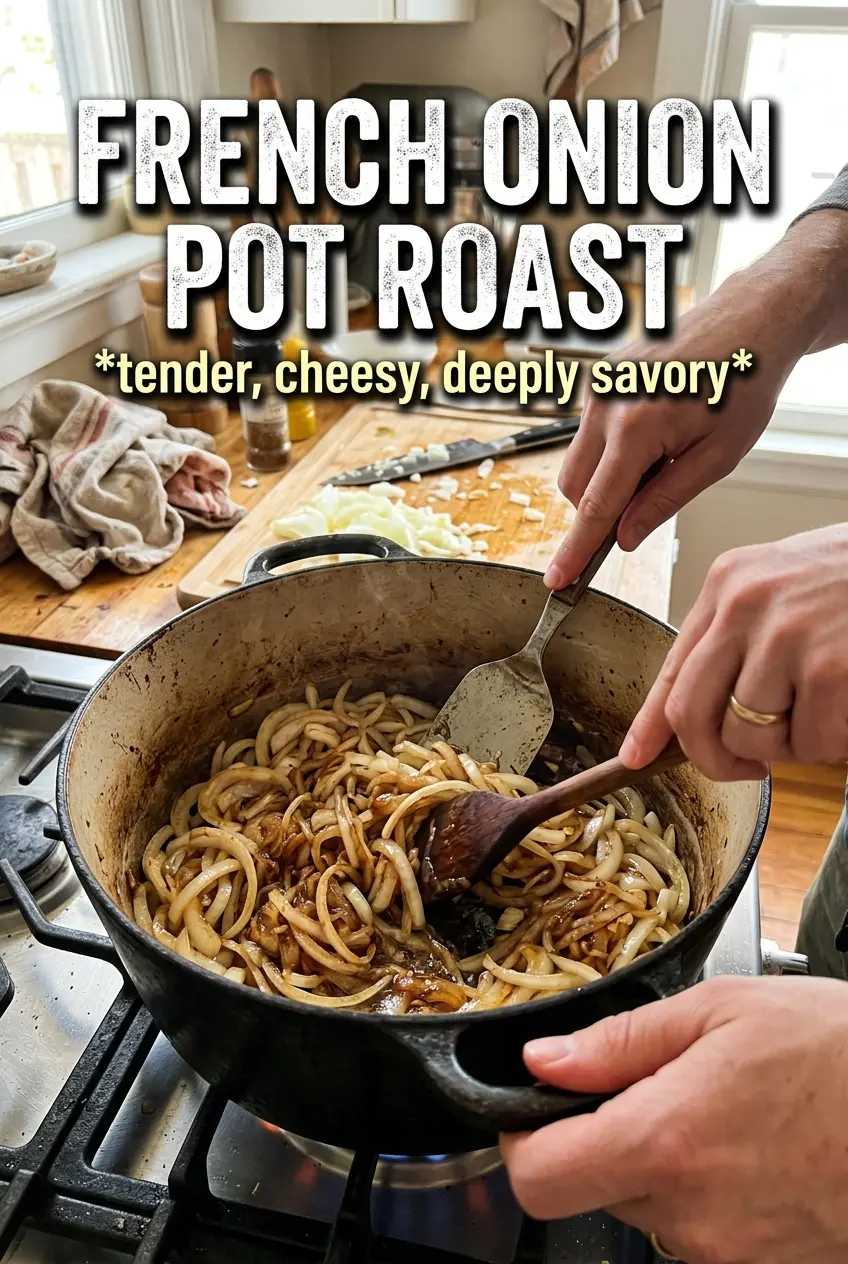
After the roast comes out, add the butter and onions and cook them over medium-low heat for 30 to 35 minutes. They should shrink down, turn deep golden, and smell sweet with a little edge of toasted sugar. If the heat is too high, they’ll scorch before they soften through, and bitter spots will show up in the broth later. Stir often, scrape up the browned bits, and give them time; this is the part that makes the dish taste built, not assembled.
Deglaze and Braise
Once the garlic is fragrant, pour in the wine and stir hard to pull up everything stuck to the bottom of the pot. Add the broth, Worcestershire, thyme, and bay leaves, then return the roast and cover tightly. The liquid should come partway up the meat, not bury it completely. Braise at 325F for 3 to 3 1/2 hours until the roast yields easily to a fork; if it still feels tight, give it more time rather than turning up the heat.
Finish With Bread and Cheese
Shred the beef into the broth after removing the bay leaves, then ladle it into bowls or keep it in the Dutch oven if you’re serving family-style. Add toasted baguette slices on top and cover them with Gruyere, then broil just until the cheese is melted, bubbling, and lightly browned at the edges. Watch closely here, because broilers can go from perfect to scorched in less than a minute. The goal is a molten top with some toasted spots, not dark black cheese.
How to Adapt This Braise for Your Kitchen
Make it dairy-free
Skip the butter and use more olive oil for the onion base, then leave off the Gruyere topping. You’ll lose the classic melted finish, but the braise itself still tastes rich and oniony. If you want a little extra richness, add a small splash of olive oil over the top before serving.
Use beef broth only instead of wine
If you don’t want to cook with wine, replace it with beef broth and add a teaspoon of sherry vinegar or a splash of lemon juice at the end. That gives the pot the brightness the wine would have brought, without making the sauce taste sharp.
Make it gluten-free
Serve the roast over mashed potatoes or gluten-free toast instead of baguette. The braise itself is naturally gluten-free if your Worcestershire sauce is certified gluten-free, and the texture of the meat and onions still carries the dish on its own.
Stretch it for a bigger crowd
Use a 4 1/2- to 5-pound roast and add another onion plus an extra cup of broth. Keep the pot covered and add time as needed, because a bigger roast doesn’t just need more heat — it needs more time for the collagen to break down all the way.
Storage and Reheating
- Refrigerator: Store the beef and onions in their broth for up to 4 days. The flavor gets even deeper on day two.
- Freezer: It freezes well without the bread and cheese. Cool completely, portion into airtight containers, and freeze for up to 3 months.
- Reheating: Reheat gently on the stovetop or in a covered oven-safe dish at 300F until hot. Don’t boil it hard or the beef can dry out and the onions can turn stringy.
Answers to the Questions Worth Asking
French Onion Pot Roast
Ingredients
Equipment
Method
- Preheat the oven to 325F and pat the chuck roast dry. Heat olive oil in a Dutch oven over high heat until shimmering.
- Sear the chuck roast until deeply browned on all sides. Remove the roast to a plate and lower heat as needed to prevent burning.
- Add the butter and sliced onions to the Dutch oven. Cook over medium-low heat for 30 to 35 minutes, stirring occasionally, until deeply caramelized.
- Add the minced garlic and cook for 30 to 60 seconds until fragrant. Pour in the white wine or beef broth and deglaze, scraping up the browned bits.
- Stir in the beef broth, Worcestershire sauce, fresh thyme, and bay leaves. Return the roast to the Dutch oven and bring the liquid to a gentle simmer.
- Cover and braise in the oven for 3 to 3-1/2 hours, until the beef is fall-apart tender. Check once or twice to keep a steady braise, not a hard boil.
- Remove the bay leaves and shred the beef in the broth. Stir to distribute onions and sauce evenly.
- Ladle into bowls and float the toasted baguette on top. Cover with shredded Gruyere so it blankets the surface.
- Broil for 3 to 4 minutes until the cheese is golden and bubbly. Serve immediately while the topping is hot and set.