French onion potatoes hit the table with the kind of contrast that keeps people reaching back for another scoop: crisp-edged potatoes underneath, jammy sweet onions on top, and a layer of melted Gruyere that turns the whole dish into something far more luxurious than the ingredient list suggests. It’s the sort of side dish that quietly takes over the plate and steals attention from the main course.
The key is treating each part on its own. The potatoes need enough space and heat to brown instead of steam, and the onions need patience over medium-low heat so they soften, concentrate, and turn deeply golden without catching. A splash of broth and Worcestershire gives the onions that unmistakable French onion depth, while Gruyere melts into a nutty, stretchy finish that fits the whole dish together.
Below, I’ll show you how to keep the potatoes crisp, how to know when the onions are properly jammy, and the one small adjustment that helps this dish hold up if you’re serving it alongside a saucy main.
The onions turned soft and jammy just like French onion soup, and the potatoes stayed crisp under the cheese instead of going soggy. I served it with roast chicken and there wasn’t a crumb left.
Save these French Onion Potatoes for the night you want crisp roasted potatoes, sweet caramelized onions, and bubbly Gruyere on one skillet.
The Part Most People Get Wrong: Browning the Potatoes Before the Onions Go On
The potatoes need real contact with the pan and enough oven heat to build a crust before anything else gets layered on top. If they go in crowded, they steam. If the onions go on too early, they trap moisture and the bottom loses that roasted edge that makes this dish work. Give them the full 30 to 35 minutes until the cut sides are deeply golden and the edges look crisp and dry.
The onions are a separate job, not a quick stir. You’re looking for deep golden color, a glossy texture, and the smell of sweetness instead of sharp bite. Once they’re jammy, the broth and Worcestershire should reduce to almost nothing, leaving onions that cling together instead of pooling in liquid.
What Each Ingredient Is Doing in These French Onion Potatoes
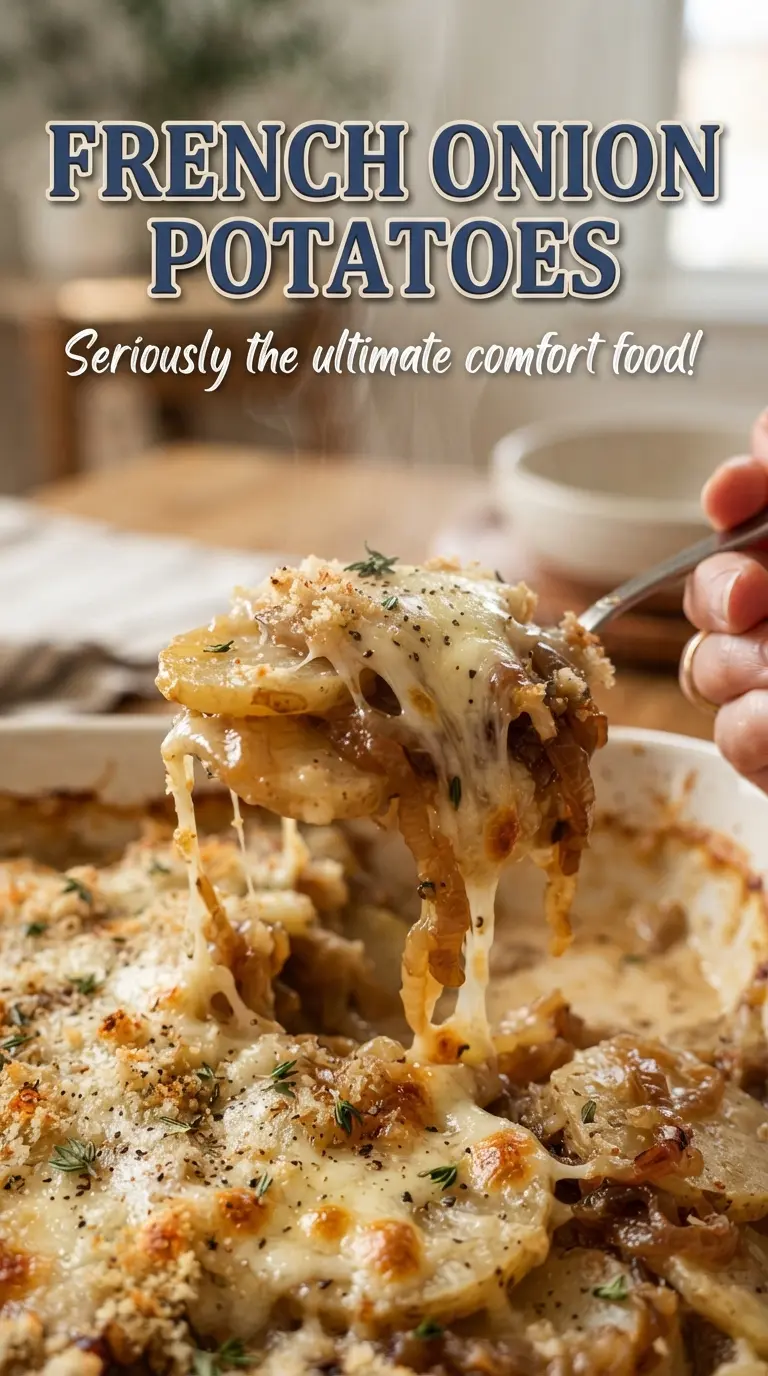
- Baby potatoes — Their waxy texture holds shape after roasting, which matters here because you want crisp edges and tender centers, not fluffy potatoes that fall apart under the onions. Halving them gives more cut surface for browning.
- Yellow onions — These are the backbone of the dish. They soften into sweetness and build the French onion flavor, while a faster onion variety would stay too sharp or collapse before developing that jammy depth.
- Butter — Butter gives the onions their richness and helps them caramelize evenly. Olive oil can work in a pinch, but the flavor won’t have the same roundness.
- Beef broth and Worcestershire sauce — This is where the dish gets its savory backbone. The broth loosens the onions just enough to glaze them, and Worcestershire adds that deep, browned, almost soup-like note without making the dish wet.
- Gruyere — This cheese melts into a stretchy, nutty blanket that tastes built for French onion flavors. Swiss will work if that’s what you have, but it won’t be quite as rich or complex.
- Fresh thyme — Add it to the onions near the end so it stays fragrant. Dried thyme works if needed, but use less because it reads stronger and less fresh.
Building the Layers So the Potatoes Stay Crisp Under the Cheese
Roasting the Potatoes First
Start with an oven-safe skillet so the potatoes can roast and later hold the onions and cheese without being transferred to another pan. Toss them well with oil, salt, and pepper, then spread them in a single layer with the cut sides facing down where possible. You want the edges to turn deep gold and the centers to become tender; if the pan looks crowded or the potatoes are pale after 30 minutes, they need a few more minutes before you move on.
Cooking the Onions Low and Slow
Butter and onions need patience. Keep the heat at medium-low and stir often enough to prevent scorching, but not so often that the onions can’t settle and color. The goal is deep golden, not dark brown bits stuck to the pan. If the pan starts to dry out before the onions soften, lower the heat and give them another splash of time rather than turning the burner up.
Finishing with the Savory Glaze and Cheese
Stir in the thyme, broth, and Worcestershire, then let the liquid cook off until the onions look glossy again and sit close together instead of sliding around in sauce. Spoon them over the potatoes and cover with Gruyere in an even layer. Bake just until the cheese melts and bubbles at the edges; if it stays in too long, the potatoes soften underneath and the cheese can turn oily instead of silky.
Three Ways to Make This Work for Different Tables
Dairy-Free Version
Use olive oil instead of butter and swap in a good melting dairy-free cheese only if you already know it behaves well under heat. The onions will still get jammy and savory, but the final dish will lose the nutty stretch and richness that Gruyere brings.
Vegetarian Swap
Use vegetable broth instead of beef broth and add a small splash of soy sauce or tamari for extra depth. You’ll still get the onion-forward flavor, but the finish will be a little lighter and less beefy.
Make It Ahead for a Dinner Party
Roast the potatoes and caramelize the onions earlier in the day, then assemble and bake just before serving. That keeps the potatoes from losing their edge and gives you the best texture with the least last-minute work.
Cheese Swap in a Pinch
Swiss or fontina will melt nicely if Gruyere isn’t in the fridge. Gruyere still gives the best nutty finish, but those options keep the dish creamy and cohesive without changing the method.
Storage and Reheating
- Refrigerator: Store leftovers in an airtight container for up to 4 days. The potatoes will soften a bit, but the flavor stays strong.
- Freezer: Freezing isn’t ideal here. The potatoes can turn mealy and the cheese texture changes after thawing.
- Reheating: Warm in a 375F oven until hot and the cheese loosens again. The oven keeps the potatoes from going limp; the microwave tends to make the whole dish soft.
Answers to the Questions Worth Asking
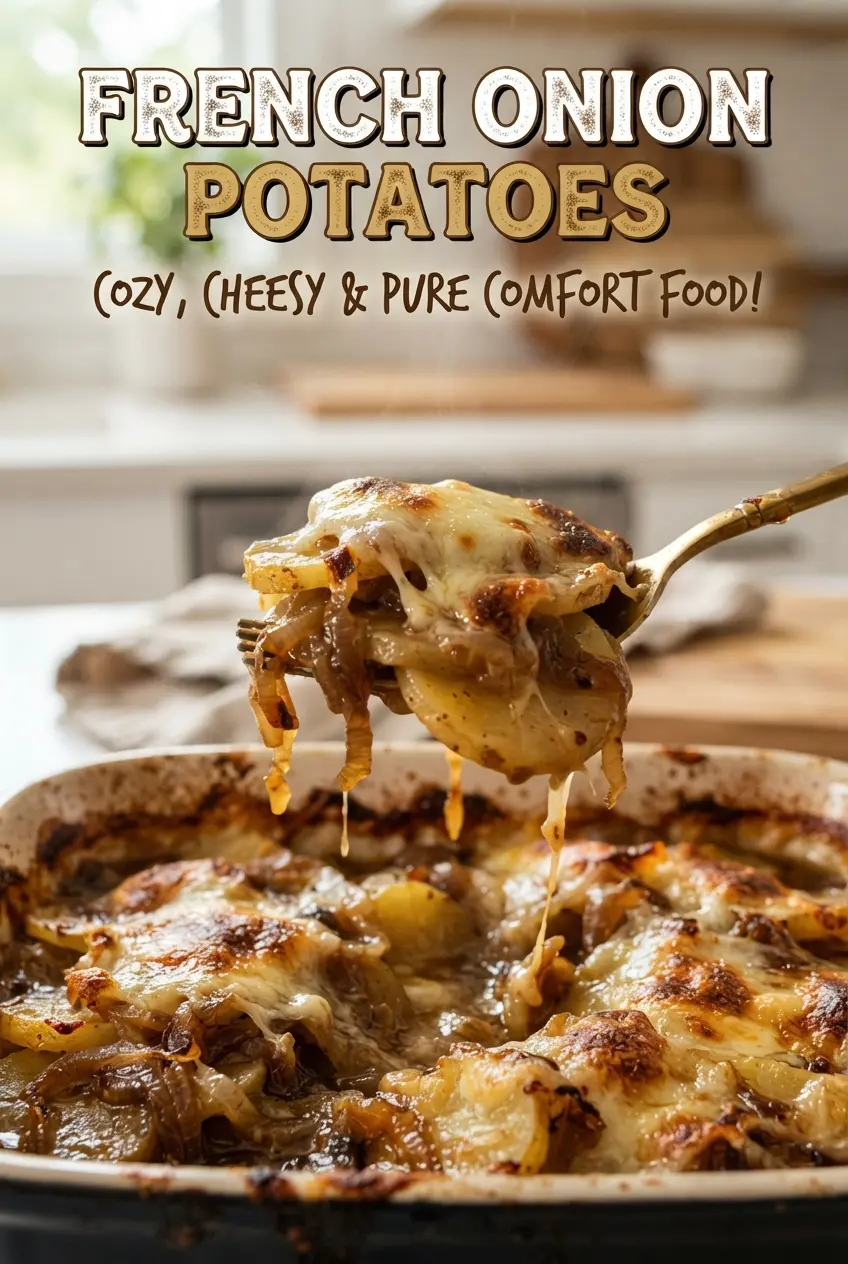
French Onion Potatoes
Ingredients
Equipment
Method
- Preheat the oven to 425F. Toss the halved baby potatoes with olive oil, salt, and black pepper in an oven-safe cast iron skillet.
- Roast for 30-35 minutes, until golden and crispy. Keep an eye on the edges so they turn crisp rather than pale.
- Cook the sliced yellow onions in butter over medium-low heat for 25 minutes. Stir occasionally until deep golden and jammy.
- Stir in the fresh thyme leaves, beef broth, and Worcestershire sauce. Simmer until the liquid is mostly absorbed and the onions look glossy.
- Spoon the caramelized onions over the roasted potatoes. Spread them evenly so each potato gets a portion.
- Bake for 8-10 minutes at 425F until the cheese is melted and bubbly. Look for bubbling at the edges for the best texture.