French potato salad lands on the table with glossy potatoes, a sharp mustard vinaigrette, and herbs that stay bright instead of getting lost under mayo. The best versions taste clean and balanced, with enough richness from olive oil to coat each slice and enough vinegar to keep every bite lively. It’s the kind of side dish that quietly steals attention from the main course.
What makes this version work is timing. The potatoes get dressed while they’re still warm, which lets them drink in the vinaigrette instead of just wearing it on the outside. White wine in the dressing adds a soft, almost rounded acidity, while Dijon helps the oil and vinegar hold together long enough to cling to the potatoes. Shallots bring a gentle bite that mellows as the salad rests.
Below, you’ll find the small details that matter here: how to keep the potatoes intact, why room-temperature marinating makes a better salad than chilling straight away, and which herb swap works if tarragon isn’t in your kitchen.
The potatoes soaked up the vinaigrette while they were still warm, and the salad tasted even better after sitting for an hour. The tarragon gave it that classic French taste without overpowering the dressing.
Save this French Potato Salad for the next dinner when you want a light potato side with white wine vinaigrette and fresh herbs.
The Trick to Keeping the Potatoes Intact After They’re Dressed
French potato salad falls apart when the potatoes are handled like they’re destined for mayo. You want them tender, but not collapsing at the slightest touch. Fingerlings hold their shape well, and slicing them after boiling gives you more surface area for the dressing without turning the bowl into mash.
The warm-potato step matters more than most people think. Warm slices absorb vinaigrette; cold ones resist it. That’s why this salad tastes deeper after resting instead of just tasting dressed. If the potatoes are steaming hard when you add the herbs, wait a few minutes so the parsley and tarragon stay fresh instead of turning dark and limp.
What the Wine, Mustard, and Herbs Are Each Doing Here
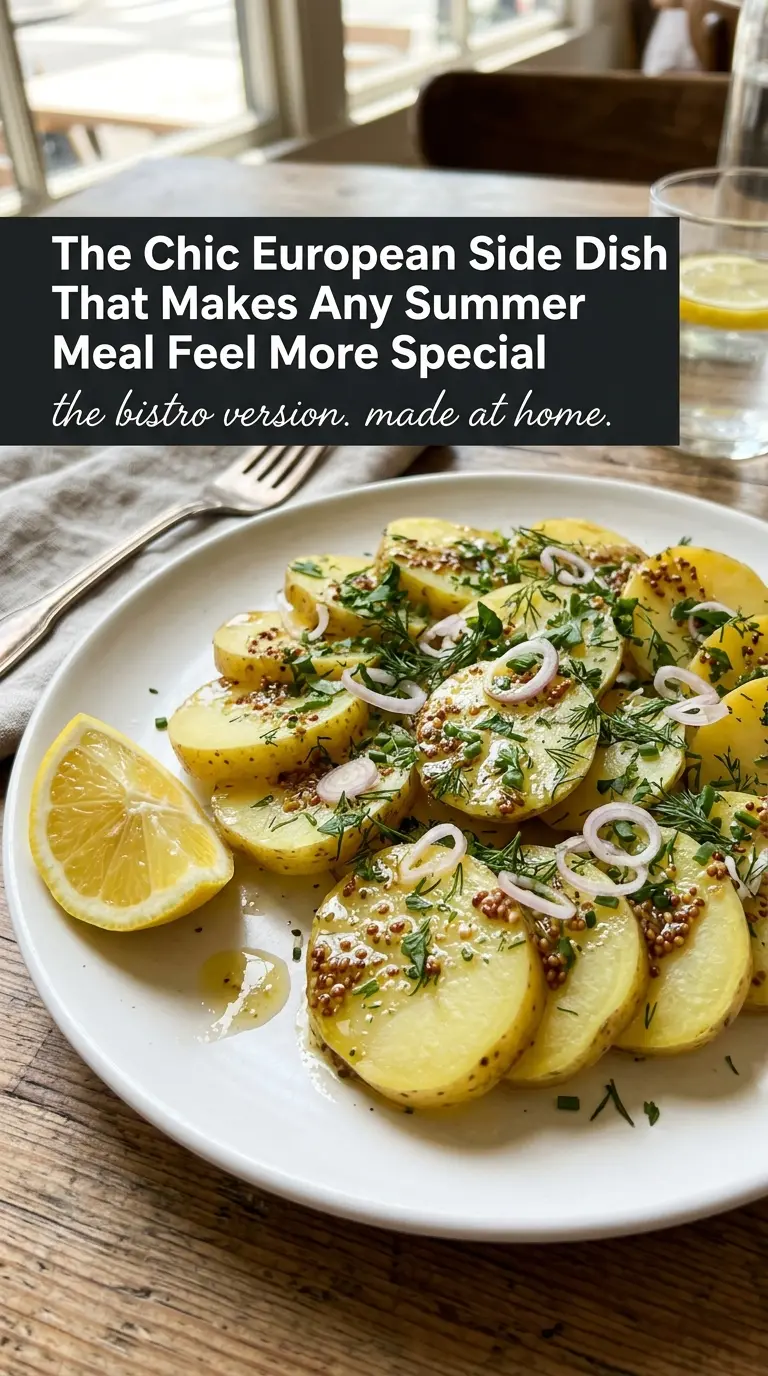
- Fingerling potatoes — Their waxy texture is the reason this salad works. They stay intact after boiling and keep their bite after marinating, which is harder to get from russets or very starchy potatoes.
- Dry white wine — It softens the vinegar and gives the dressing a little depth. If you don’t want to cook with alcohol, use a splash of water plus a touch more vinegar, but the flavor will be flatter.
- Dijon mustard — This is the bridge between oil and vinegar. It helps the dressing cling to the potatoes instead of sliding off, and it adds the sharp backbone this salad needs.
- Shallots — They bring a gentle onion note that works much better than raw yellow onion here. Mince them finely so they marinate into the dressing instead of staying harsh and crunchy.
- Tarragon and parsley — Parsley adds freshness, while tarragon gives the salad its unmistakably French character. If tarragon is too strong for your taste, cut it back and lean on parsley, but don’t leave out the fresh herb finish entirely.
Building the Vinaigrette Before the Potatoes Cool Down
Boiling to Tender, Not Mushy
Start the potatoes whole in well-salted water and cook them until a knife slips in with just a little resistance. If they’re boiling too hard, the outside can split before the inside is done, so keep the water at a steady simmer. Drain them well and let them sit just long enough to handle, then slice while they’re still warm.
Whisking the Dressing Until It Looks Unified
Whisk the white wine, olive oil, vinegar, Dijon, and shallots until the dressing looks slightly thickened and glossy. That means the mustard is doing its job and the vinaigrette will coat instead of pool. If you taste it and it seems sharp, remember the potatoes will mellow it as they sit; the dressing should taste a little aggressive on its own.
Letting the Salad Marinate the Right Way
Pour the dressing over the warm potatoes and toss gently so the slices stay whole. Let the bowl sit at room temperature for an hour. Don’t refrigerate it right away, or the potatoes won’t absorb the dressing as evenly and the olive oil can tighten up. Add the parsley and tarragon at the end so they stay fresh and fragrant.
How to Adapt It Without Losing the Character of the Salad
Make it dairy-free and naturally gluten-free
This recipe already fits both of those needs as written, which is part of why it feels so classic. Just keep an eye on your mustard if you’re serving someone sensitive to additives, and use a clean, simple Dijon with no sweeteners if possible.
Swap tarragon for dill or chives
Tarragon is the most distinctive herb in the bowl, but dill gives a cooler, greener finish and chives keep the flavor gentler. Either swap changes the salad’s personality a bit; dill makes it brighter, while chives make it cleaner and less anise-like.
Use baby Yukon Golds if fingerlings aren’t available
Yukon Golds are a little creamier and softer, so handle them more gently when you toss. They still hold up well, but they’ll give the salad a slightly more buttery texture and a less firm bite than fingerlings.
Storage and Reheating
- Refrigerator: Store in an airtight container for up to 3 days. The herbs soften a bit, but the flavor stays good.
- Freezer: Don’t freeze this salad. The potatoes turn grainy and the vinaigrette separates after thawing.
- Reheating: Serve it at room temperature. If it’s been chilled, let it sit out for 20 to 30 minutes and stir once before serving so the dressing loosens again.
Answers to the Questions Worth Asking

French Potato Salad
Ingredients
Equipment
Method
- Bring a pot of water to a boil, add the fingerling potatoes, and boil until tender, 20 minutes, until a knife slips in easily. Drain the potatoes and slice while warm for better vinaigrette absorption.
- Whisk the dry white wine, olive oil, white wine vinegar, Dijon mustard, minced shallots, salt, and pepper until smooth and slightly thickened, 2 minutes, until the mixture looks emulsified and glossy.
- Pour the vinaigrette over the warm sliced potatoes and toss gently until evenly coated and shiny, 3 minutes. Let the salad marinate at room temperature for 1 hour so the dressing permeates the potatoes.
- Stir in the chopped parsley and chopped tarragon just before serving, 2 minutes, so the herbs stay bright. Serve at room temperature.