Fresh cranberry orange sauce lands on the table glossy, tart, and bright enough to wake up everything next to it. The cranberries soften into a jammy base while the orange juice and zest keep the whole thing lively instead of heavy, and the orange segments at the end add little bursts of juiciness that make each spoonful feel fresh, not cooked flat.
The part that makes this version work is timing. The cranberries simmer just long enough to burst and thicken the liquid, but the orange zest goes in off the heat so it stays fragrant instead of bitter. The orange segments get folded in after the sauce cools a bit, which keeps them intact and keeps the bowl looking clean and bright.
You’ll find the little details that matter below: how to keep the sauce from tasting one-note, what to do if your oranges are extra sweet, and the best way to chill it so it sets with that spoonable, glossy texture people always go back for.
The cranberries broke down into a thick sauce in about 10 minutes, and the orange segments stayed bright instead of turning mushy. It tasted fresh, not canned, and the zest made the whole bowl smell amazing.
Save this fresh cranberry orange sauce for the holidays or any meal that needs a bright, spoonable cranberry topping.
The Part That Stops Cranberry Sauce from Turning Flat
Cranberries need two things to taste good: enough heat to burst, and enough sugar and citrus to keep them from reading as sharp and tinny. If the berries only soften halfway, the sauce stays watery and the fruit tastes raw. If they cook too long, the color dulls and the orange loses its lift, which is why the simmer time matters more than the clock on the wall.
The other piece people miss is balance. Fresh orange juice gives the sauce body and sweetness, but the zest is what makes it smell like actual orange instead of just sweet fruit. Adding the zest after you take the pan off the heat keeps that aroma clean and bright.
- Boiling the orange juice and sugar first — This dissolves the sugar completely before the cranberries go in, so the sauce thickens evenly instead of tasting grainy at the bottom of the pan.
- Letting most berries burst, not all of them — A few intact cranberries give the sauce texture. If every berry breaks down, the result can turn too smooth and jammy.
- Folding in the orange segments at the end — This keeps them juicy and distinct. If they simmer with the cranberries, they lose their shape and turn soft in the wrong way.
What Each Ingredient Is Doing in This Bowl
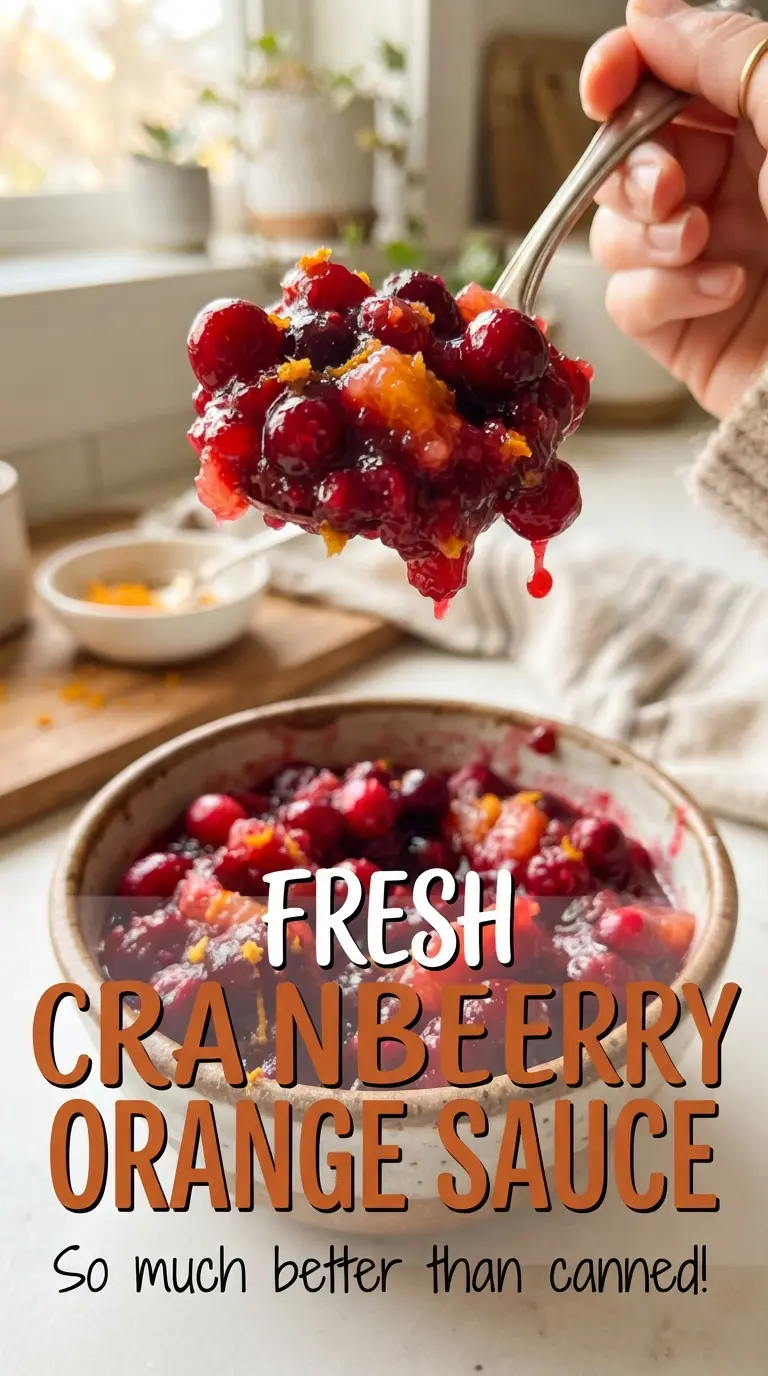
- Fresh cranberries — These are the whole point of the sauce. Frozen cranberries also work, and you can use them straight from the freezer without thawing. Expect the simmer to take a minute or two longer if you do.
- Fresh orange juice — Bottled juice works in a pinch, but fresh juice tastes cleaner and gives the sauce a sharper, more lively finish. If your oranges are especially sweet, add a tiny splash more juice or a few extra cranberries if you want the sauce less sugary.
- Orange zest — This is where the strongest orange flavor lives. Zest the fruit before you juice it, and keep the grater shallow so you only take the bright orange skin, not the bitter white pith.
- Orange segments — These don’t just look pretty. They add fresh bursts of juice and a softer fruit texture against the thick sauce. Cut away the membrane if you want cleaner pieces.
- Sugar — It balances the tart cranberries and helps the sauce turn glossy. I wouldn’t cut it too far unless you like a sharply tart result, because the fruit needs that sweetness to round out.
- Pinch of salt — Small, but important. It keeps the sauce from tasting one-note and makes the citrus stand out more clearly.
Cooking the Cranberries Until the Sauce Glosses Over the Spoon
Build the Syrup First
Bring the orange juice and sugar to a boil before the cranberries go in. That step dissolves the sugar completely and gives you a head start on thickness. If you dump everything in cold, the berries release liquid before the sugar is ready, and the sauce can stay thin longer than it should.
Simmer Until the Berries Give Up
Add the cranberries and salt, then simmer for about 10 minutes. You’re looking for most of the berries to pop open and the liquid to go from watery to syrupy. The sauce should mound slightly on a spoon, but it will still look loose while hot; it thickens as it cools.
Finish with Zest and Fruit
Pull the pan off the heat before you stir in the orange zest. That preserves the fresh citrus scent instead of cooking it flat. Let the sauce cool for a few minutes, then fold in the orange segments gently so they stay whole and don’t bleed into the sauce.
Chill for the Right Texture
Chill the sauce until serving. Cold cranberry sauce always looks firmer than it does in the pot, so don’t panic if it seems a touch loose at first. If you want a sliceable texture for a platter, give it more time in the fridge; if you want it spoonable, serve it once it’s fully chilled but not icy.
How to Adapt This for a Sweeter Bowl, a Brighter Bowl, or a Different Table
Less sweet, more tart
Cut the sugar back slightly if you like a sharper cranberry bite, but don’t remove it entirely. Sugar doesn’t just sweeten here; it rounds out the acidity and helps the sauce set with a smoother texture.
Make it ahead for a big meal
This sauce holds beautifully in the fridge, so it’s one of the easiest side dishes to cross off early. Make it a day or two ahead and it will taste even more integrated after the orange and cranberry have had time to settle together.
Cranberry orange sauce without fresh oranges
If you’re out of whole oranges, use bottled orange juice and skip the segments. The sauce will still taste bright, but it’ll lose that fresh pop of juicy fruit at the end, so add a little extra zest if you have it.
Naturally gluten-free and vegan
This recipe is already both gluten-free and vegan as written, which makes it an easy side for a lot of different menus. The texture and flavor stay the same, so there’s nothing to replace.
Storage and Reheating
- Refrigerator: Store covered for up to 5 days. It will thicken as it chills, which is exactly what you want.
- Freezer: It freezes well for up to 2 months. Thaw overnight in the fridge and stir before serving.
- Reheating: Serve it cold or let it sit at room temperature for a little while. If you warm it, do it gently over low heat just until loosened. High heat can dull the citrus and make the texture loose again.
Answers to the Questions Worth Asking
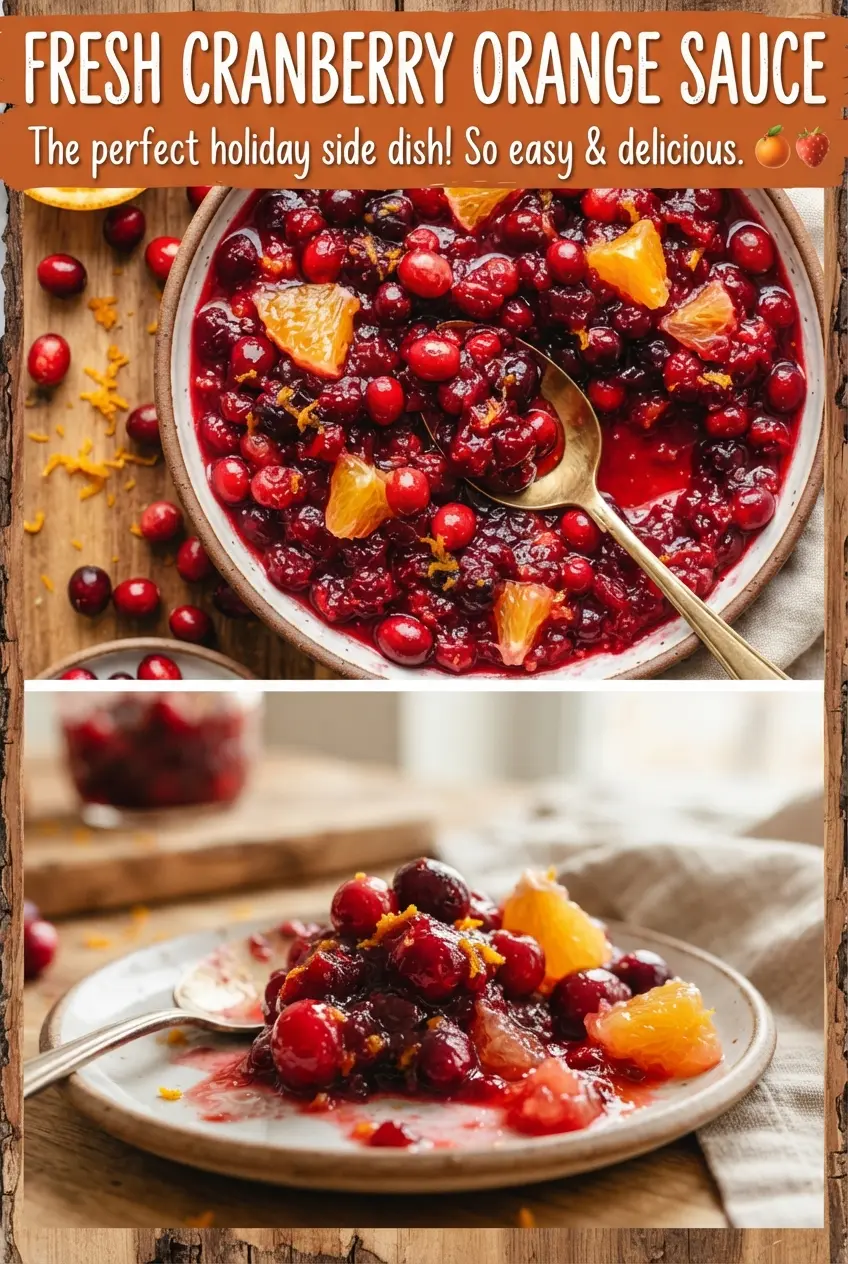
Fresh Cranberry Orange Sauce
Ingredients
Equipment
Method
- Bring sugar and fresh orange juice to a boil in a saucepan over medium-high heat, stirring so the sugar dissolves. Visual cue: you should see active bubbling across the surface.
- Add fresh cranberries and a pinch of salt, then reduce to a gentle simmer. Visual cue: bubbles should be smaller and steady while the berries begin to soften.
- Simmer for 10 minutes, stirring occasionally, until most of the berries burst. Visual cue: the mixture thickens and turns glossy with burst berries throughout.
- Remove the saucepan from the heat and stir in orange zest. Visual cue: the sauce becomes fragrant and slightly speckled.
- Cool slightly, about 5 minutes, then gently fold in the orange segments. Visual cue: the segments stay intact rather than breaking apart.
- Chill until serving. Visual cue: the sauce thickens as it cools and looks set and spoonable.