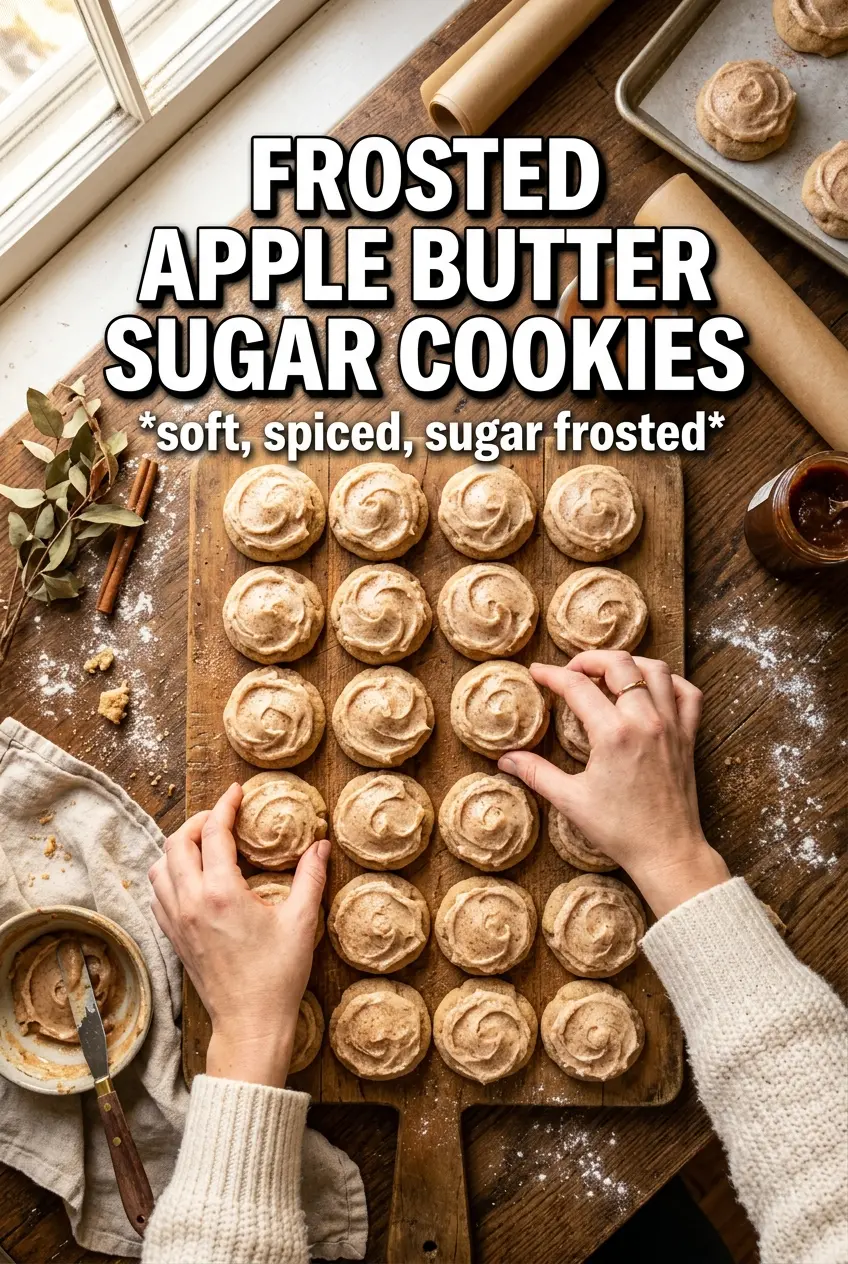
Frosted apple butter sugar cookies bake up soft in the center with lightly crisp edges, then get finished with a tangy apple butter frosting that tastes like a cross between fall spice cake and a classic bakery cookie. The apple butter doesn’t just add flavor; it gives the dough a warm, rounded sweetness that keeps the cookies from tasting flat.
The trick is keeping the dough chilled long enough for the butter to firm back up. That gives you clean cutouts and cookies that hold their shape instead of spreading into soft little blobs. The frosting leans on cream cheese for lift and apple butter for depth, so it spreads easily but still sets up with a plush, spoonable texture.
Below you’ll find the small details that matter most here: how thick to roll the dough, when to pull the cookies from the oven, and how to get that cinnamon sugar and caramel finish without turning the tops sticky.
The cookies held their shape beautifully after chilling, and the frosting had that perfect creamy tang with the apple butter coming through on the finish. I’ll be making these again for the cookie tray.
Save these frosted apple butter sugar cookies for the next time you want soft cut-out cookies with a tangy cinnamon frosting and a caramel finish.
The Chilling Step That Keeps These Cookies From Spreading
The dough needs a full hour in the fridge, and that pause is doing more work than it looks like. Apple butter softens the dough a little more than plain sugar cookies, so chilling brings the butter back to a firm state and gives the flour time to hydrate. Skip that rest and the cookies will spread before the centers are set, which means you lose the clean edges that make cut-outs look polished.
Rolling the dough to 1/4-inch thick is the sweet spot here. Thinner cookies bake too fast and get crisp before the frosting goes on; thicker ones can stay a little doughy in the middle. You want the edges just set and the tops still pale, because they finish setting as they cool on the pan.
What the Apple Butter Is Really Doing in the Dough and Frosting
- Apple butter — This is the ingredient that gives the cookies their deeper apple-cinnamon flavor without adding chunks of fruit or extra moisture from fresh apples. Use a thick apple butter, not a runny applesauce-style spread, or the dough gets loose and the frosting turns thin.
- Unsalted butter — Softened butter creams smoothly with the sugar and helps the cookies bake up tender. Salted butter works in a pinch, but the flavor will be a little less controlled, so keep the added salt in the dough as written.
- Cream cheese — The frosting needs it for body and that gentle tang that keeps the sweetness from getting heavy. Don’t swap it for all butter unless you want a looser, sweeter frosting that won’t spread quite as cleanly.
- Powdered sugar — This is what gives the frosting its spreadable structure. Add the milk slowly; too much too soon makes it slack, and you’ll end up chasing the right texture with more sugar.
Building the Dough, Baking the Edges, and Finishing with Frosting
Mixing the Base Without Overworking It
Cream the butter, sugar, and apple butter until the mixture looks fluffy and a little lighter in color, then beat in the egg and vanilla just until combined. Once the flour goes in, switch to a gentle hand. Overmixing after the flour is added makes the cookies tough instead of tender, and these should have a soft bite.
Rolling and Cutting Clean Shapes
Roll the chilled dough on a lightly floured surface to 1/4-inch thickness. If the dough starts sticking, it’s usually warming up too much, so slide it back into the fridge for a few minutes instead of forcing it through extra flour. Use round cutters or apple shapes, then move the cutouts to the baking sheet with enough space for a little spread.
Baking Until Just Set
Bake at 350°F for 8 to 10 minutes, watching for edges that look set and centers that are still soft and pale. The tops shouldn’t brown much at all. If they come out looking fully baked in the oven, they’ve gone too far, and the texture will turn dry once cooled. Let them sit on the pan for a few minutes before moving them so they firm up without cracking.
Making the Frosting and Finishing the Tops
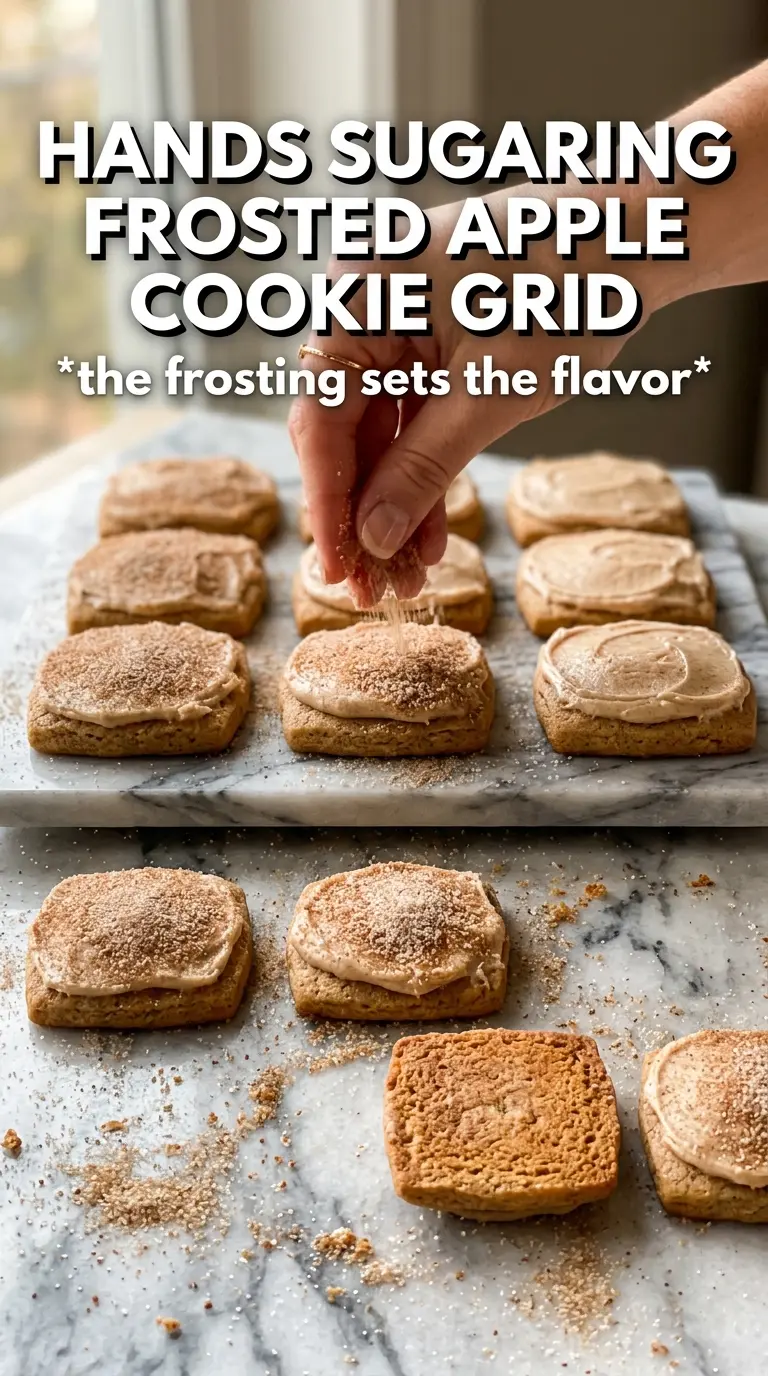
Beat the cream cheese, butter, apple butter, powdered sugar, cinnamon, and just enough milk to make a smooth frosting that spreads without dragging. If it looks grainy, the dairy was too cold or the sugar went in too fast; keep beating until it smooths out. Frost the cookies only after they’re completely cool, then finish with cinnamon sugar and a light caramel drizzle so the topping stays pretty instead of melting into the cookies.
Three Ways to Make These Cookies Fit Your Kitchen
Gluten-Free Version
Use a cup-for-cup gluten-free flour blend in place of the all-purpose flour. The dough may feel a little softer, so chill it well before rolling and handle the cutouts gently. The cookies will still taste like the original, but the texture will be a touch more delicate.
Dairy-Free Frosting Swap
Use plant-based butter and a dairy-free cream cheese style spread. You’ll still get the tangy, creamy finish, though the frosting may be a little softer, so chill the finished cookies briefly before stacking or storing them.
Make Them More Spiced
Add an extra 1/2 teaspoon cinnamon or a pinch of nutmeg to the dough if you want the spice to come forward more than the apple butter. This pushes the cookies toward a warmer, more bakery-style finish without changing the texture.
Storage and Reheating
- Refrigerator: Store frosted cookies in an airtight container for up to 4 days. The frosting stays creamy, though the cookies soften a little under the topping.
- Freezer: Unfrosted cookies freeze well for up to 2 months. Freeze them flat, then thaw at room temperature before frosting so the topping stays smooth.
- Reheating: These are best served at room temperature, not warmed. Heat makes the frosting slide and the caramel finish messy, so let refrigerated cookies sit out for 15 to 20 minutes before serving.