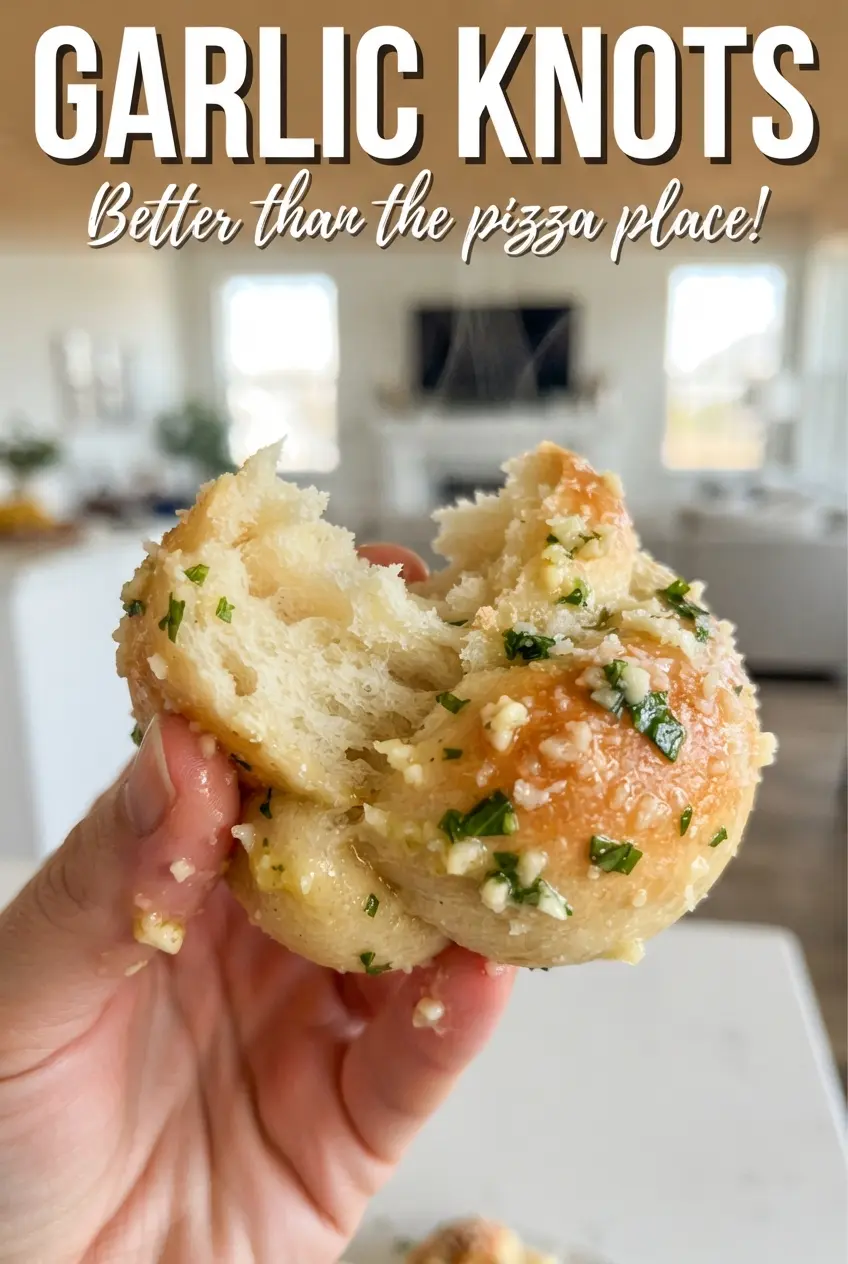
Garlic knots are the kind of side dish that disappears before the main course even hits the table. The outside bakes up golden and lightly crisp, the inside stays soft and chewy, and that final brush of garlic butter sinks into every twist and crease. They look like something from your favorite pizzeria, but they come together fast with refrigerated dough and a hot oven.
What makes this version work is the timing. The knots get a light butter coat before baking so they brown instead of drying out, then they get a second hit of garlic butter the second they come out of the oven. That keeps the garlic from scorching and lets the parsley and Parmesan cling to the warm bread instead of sliding off. The result is rich, fragrant, and just greasy enough in the best possible way.
Below, I’ve included the small details that matter most: how tight to tie the knots, why room-temperature dough behaves better, and what to do if you want to make them ahead without losing that fresh-from-the-oven texture.
The bottoms stayed tender, the tops turned golden, and the garlic butter soaked right into the knots without making them soggy. I served them with marinara and there wasn’t a single one left.
Save these garlic knots for the next pasta night when you want soft, buttery bread with a crisp golden edge.
The Secret Is Keeping the Garlic Out of the Oven
Garlic burns fast, and burnt garlic tastes bitter long before the bread is done. That’s why the knots get their first butter coat before baking and the garlic goes into the second round of butter after they come out hot from the oven. The residual heat softens the garlic just enough to take the edge off without cooking it into bitterness.
The other thing that matters here is the dough temperature. Cold pizza dough fights back and springs around while you’re trying to knot it, which leads to uneven shapes and dense spots. Room-temperature dough stretches cleanly, ties more easily, and bakes up with a lighter, more even crumb.
- Refrigerated pizza dough — This gives you the right chewy structure without mixing your own dough. Let it sit at room temperature until it feels relaxed and pliable; if it springs back hard, give it another 10 minutes.
- Butter — Use real butter here. It carries the garlic and browns the edges just enough to make the knots taste bakery-made. Melted margarine won’t give you the same richness or flavor.
- Fresh garlic — Freshly minced garlic is sharp and fragrant, and it’s what makes these knots taste like garlic knots instead of plain bread with seasoning. Garlic powder won’t give the same punch.
- Parmesan — Grated Parmesan adds saltiness and a dry, nutty finish that sticks to the warm butter. If you can, grate it yourself for the best melt and texture.
- Parsley — Fresh parsley keeps the butter topping from tasting heavy and adds a clean green note. Dried parsley works in a pinch, but use less because it tastes more concentrated and less bright.
What Each Ingredient Is Actually Doing in This Recipe

- Primary ingredient (the star) — Quality matters most. Choose the best you can find.
- Cooking medium (oil, butter, or broth) — This carries flavors and prevents dryness.
- Seasonings (salt, pepper, spices, herbs) — Layer flavors so nothing overpowers. Build depth gradually.
- Aromatics (garlic, onion, herbs) — Cook with fat to bloom flavors. Become the foundation.
- Supporting ingredients — Complement the main ingredient without overpowering it.
- Sauce or liquid (if applicable) — Brings flavors together. Balance richness with acid.
- Acid (lemon, vinegar, wine, or other) — Brightens and prevents flat-tasting results.
- Final finish (garnish, glaze, or sauce) — Prevents one-dimensional taste and adds visual appeal.
Shaping, Baking, and Brushing at the Right Moments
Cutting the Dough Evenly
Divide the dough into 16 pieces that are close in size so they bake at the same rate. Roll each piece into a rope about 7 inches long, then tie it into a simple knot without pulling so hard that the dough tears. If a piece keeps shrinking back, let it rest for a few minutes and it will loosen up.
Giving the Knots Their First Coat
Place the knots on parchment-lined baking sheets with a little space between them, then brush lightly with melted butter. That first coating helps the surface color evenly and keeps the bread from drying out in the oven. Don’t drench them or the bottoms can turn greasy instead of tender.
Baking Until the Tops Turn Deep Gold
Bake at 400°F for 13 to 15 minutes, until the tops are golden brown and the knots feel set when you nudge one gently. If they still look pale and soft in the center, give them another minute or two. Pull them before they go too dark, since the second butter brush will add plenty of color and flavor.
Finishing While They’re Still Hot
Stir the garlic, parsley, and salt into the remaining melted butter, then brush it over the knots the moment they come out of the oven. The heat from the bread wakes up the garlic and helps the butter soak into the cracks. Finish with Parmesan right away so it melts slightly and clings instead of sliding off.
How to Adapt These Garlic Knots for Different Tables
Dairy-Free Garlic Knots
Swap the butter for a good plant-based butter that melts cleanly, then use a dairy-free Parmesan-style topping or skip the cheese altogether. You’ll still get the garlic-parsley finish, but the flavor will be a little less rich and the topping won’t cling quite as thickly.
Extra-Cheesy Knots
Add a little mozzarella or more Parmesan on top during the last 2 minutes of baking. That gives you browned edges and a more pizza-shop finish, but it also makes the knots less crisp on top, so don’t bury them under too much cheese.
Whole Wheat Version
Use whole wheat pizza dough if you want a nuttier flavor and a little more chew. The knots will bake a touch denser, so keep an eye on them and pull them once they’re just golden rather than deeply browned.
Storage and Reheating
- Refrigerator: Store in an airtight container for up to 3 days. The knots soften a bit as they sit, but they still reheat well.
- Freezer: Freeze baked knots in a single layer, then move them to a freezer bag for up to 2 months. Thaw before reheating so the centers don’t stay cold while the outside dries out.
- Reheating: Warm in a 350°F oven for 6 to 8 minutes. The oven brings back the texture better than the microwave, which makes the bread chewy in a bad way and dulls the garlic butter.
Answers to the Questions Worth Asking
Garlic Knots
Ingredients
Equipment
Method
- Preheat oven to 400F and line a baking sheet with parchment for easy release.
- Cut the refrigerated pizza dough into 16 pieces, then roll each piece into a 7-inch rope.
- Tie each rope into a knot and place the knots on the baking sheet.
- Brush the knots lightly with the melted butter so they brown evenly.
- Bake at 400F for 13-15 minutes until golden brown, with visible browning on the twists.
- Stir the garlic, parsley, and salt into the remaining butter until evenly combined.
- Brush the hot knots with the garlic butter mixture so it soaks into the crevices.
- Sprinkle Parmesan over the knots, then serve with marinara sauce for dipping.