Gluten-free Italian pasta salad earns its place at the center of the table when the pasta holds its shape, the dressing gets into every curve, and the mix of salami, mozzarella, and crisp vegetables tastes like it was built for people who actually want seconds. The best versions don’t just swap in gluten-free pasta and call it done. They manage texture. They chill enough for the flavors to settle without turning the noodles soft or gummy.
This version works because the pasta is cooked until just tender, then rinsed cold to stop the carryover cooking that can wreck gluten-free noodles. The dressing goes in after everything is combined so the pasta can soak up flavor without getting heavy, and the cheese, olives, and vegetables are cut small enough to land in every bite. A little extra Parmesan and Italian seasoning give the salad a stronger backbone once it has chilled.
Below, you’ll find the timing trick that keeps gluten-free pasta from falling apart, a few smart ingredient swaps, and the one storage note that matters if you’re making this ahead for a cookout or lunch prep.
The pasta held up after chilling, and the dressing soaked in without making it mushy. I made it the night before a picnic, and it tasted even better after the flavors settled.
Save this gluten-free Italian pasta salad for cookouts, meal prep, and easy make-ahead side dishes that still taste fresh after chilling.
The Trick to Keeping Gluten-Free Pasta from Turning Soft
Gluten-free pasta doesn’t forgive overcooking the way wheat pasta does. Once it goes past tender, it can collapse in the bowl after chilling, which is why the timing here matters more than the ingredient list. Cook it until just done, then rinse it cold right away to stop the heat before the noodles get too soft.
The other mistake people make is dressing the pasta too early with a heavy hand and then leaving it to sit warm. This salad wants enough dressing to coat every piece, but it also needs time in the fridge for the pasta to absorb flavor and firm back up. If it looks a little dry after chilling, that’s normal. A splash more dressing before serving brings it back.
What Each Ingredient Is Actually Doing in the Bowl
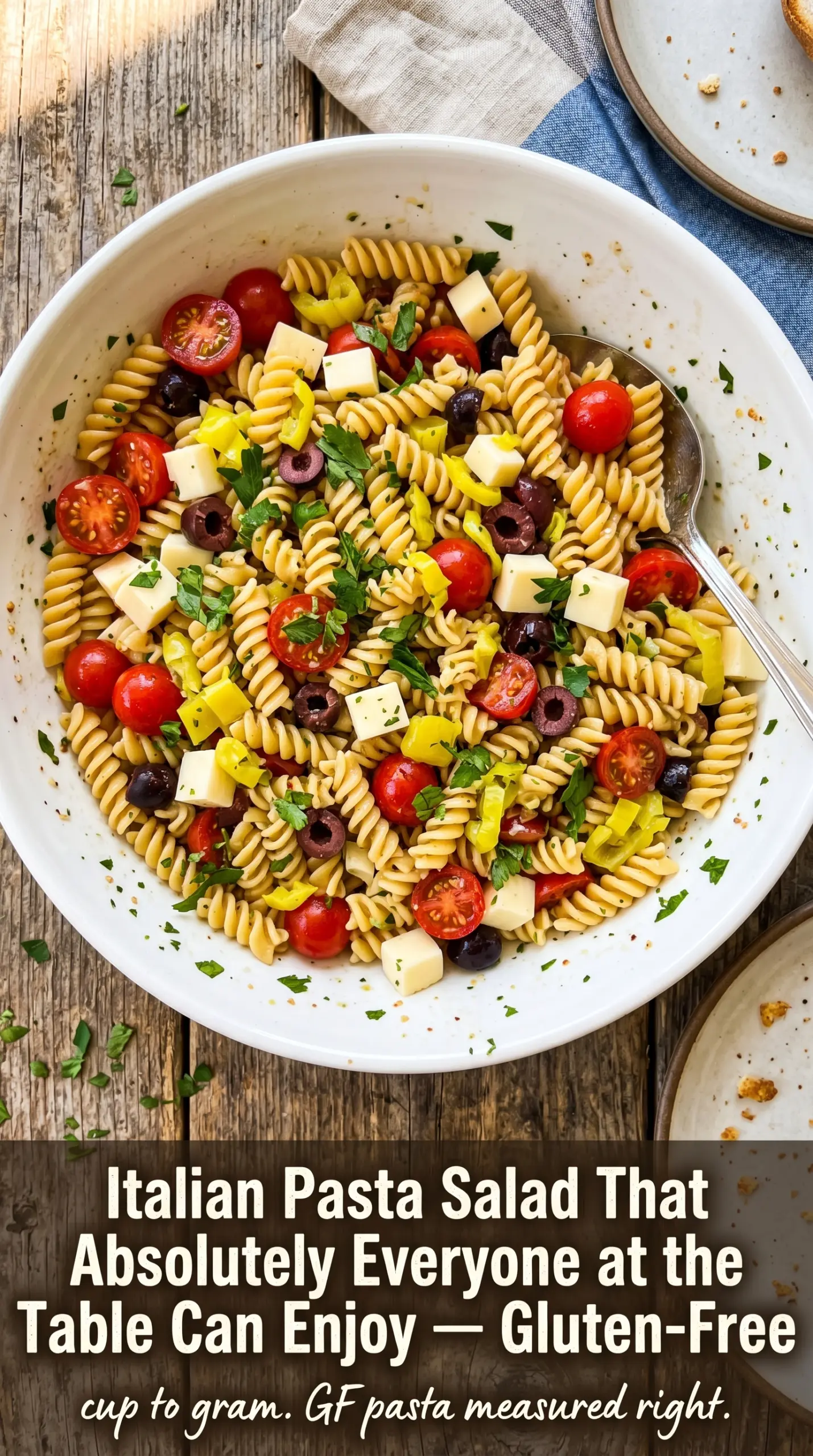
- Gluten-free pasta — Rotini or penne works best because the shape catches the dressing and small bits of cheese. Use a brand you trust, because texture varies a lot in GF pasta. If you can only find a sturdier corn-rice blend, that usually holds up better than a very delicate rice-only pasta.
- Italian dressing — This does the heavy lifting for both seasoning and moisture. A bottled dressing is fine here if it tastes sharp and herb-forward; a bland one makes the whole salad fall flat. Add it in stages so you can stop before the bowl turns soupy.
- Salami and mozzarella — These give the salad its bite and make it eat like a meal, not just a side. Cube them small enough to match the pasta shape so every forkful gets a little of everything. Fresh mozzarella can work, but it sheds more moisture, so a firmer block mozzarella is easier to manage.
- Cucumber, tomatoes, olives, and red onion — These bring crunch, salt, and brightness. Seed the cucumber lightly if yours is watery, and dice the onion small so it blends into the salad instead of overpowering it. The tomatoes should be ripe but not soft, or they’ll collapse once mixed.
Building the Salad So It Stays Fresh After Chilling
Cooking the Pasta Past the Raw Stage, Not Past Tender
Boil the gluten-free pasta according to the package, but start checking a minute or two before the box says it should be done. You want it tender with a little firmness left at the center, because it will continue to soften as it cools and chills. Drain it well, then rinse with cold water until the steam is gone and the noodles no longer feel hot to the touch. If you skip the rinse, the residual heat keeps working and the texture goes from pleasantly chewy to soft fast.
Mixing in the Meat, Cheese, and Vegetables
Combine the cooled pasta with the salami, mozzarella, tomatoes, cucumber, olives, and red onion in a large bowl. Use a bigger bowl than you think you need so the pasta can move freely when you toss it. If the ingredients are crowded, the dressing clumps in one area instead of coating everything evenly. Cut the add-ins to a similar size so the salad feels balanced instead of pick-and-choose.
Letting the Dressing Settle In
Add the Italian dressing, Parmesan, and Italian seasoning, then toss until every piece looks lightly coated. Season with salt and pepper after the first toss, not before, because the salami, olives, and Parmesan already bring salt to the party. Chill the salad for at least 2 hours so the flavor settles and the pasta firms back up a little. Right before serving, toss it again and add a small splash more dressing if the pasta has absorbed most of it.
Dairy-Free Version
Swap the mozzarella and Parmesan for dairy-free versions and choose an Italian dressing that doesn’t use cheese. The salad still has plenty of salt and body from the salami and olives, though the finish will taste a little less rich and a little more sharp.
Vegetarian Pasta Salad
Leave out the salami and add more olives, chopped roasted red peppers, or artichoke hearts for a meatless version. You lose some of the smoky, savory depth, so a stronger dressing and an extra pinch of Italian seasoning help keep the salad from tasting flat.
Lighter Lunch-Box Version
Use a little more cucumber and tomato and a little less cheese for a fresher, less rich bowl that holds up well for weekday lunches. Add the dressing in two rounds, because pasta salad meant for meal prep usually tastes better when it stays slightly underdressed on day one.
Storage and Reheating
- Refrigerator: Keeps well for 3 to 4 days in an airtight container. The pasta will absorb some dressing as it sits, so expect the salad to look a little drier on day two.
- Freezer: I don’t recommend freezing this salad. Gluten-free pasta and fresh vegetables both lose texture after thawing, and the dressing can separate.
- Reheating: This salad is meant to be served cold. If it has tightened up in the fridge, let it sit at room temperature for 10 to 15 minutes and toss in a spoonful or two of extra dressing before serving. Don’t warm it in the microwave or the pasta will turn soft.
Questions I Get Asked About This Recipe
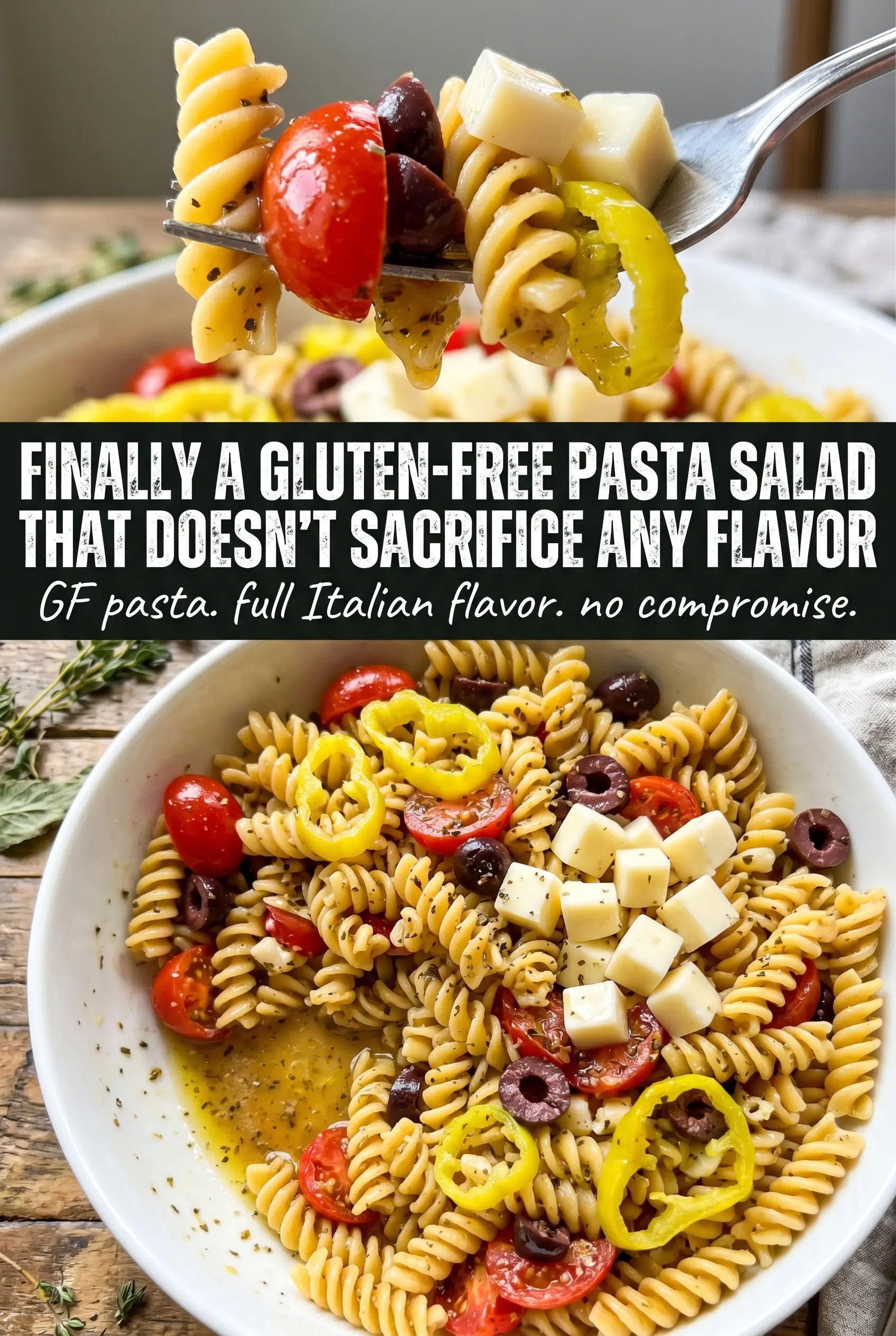
Gluten-Free Italian Pasta Salad
Ingredients
Method
- Bring a large pot of water to a boil, then cook the gluten-free pasta according to package directions (it may take longer than regular pasta). Cook for the time range on the package until tender, then drain.
- Rinse the drained gluten-free pasta with cold water to stop the cooking and cool it quickly. Keep rinsing until the pasta is fully cooled and no longer warm.
- In a large bowl, combine the cooled gluten-free pasta, salami, mozzarella, cherry tomatoes, cucumber, black olives, and red onion. Toss just until everything is evenly distributed.
- Pour in the gluten-free Italian dressing, then add Parmesan cheese and Italian seasoning. Toss until the pasta and vegetables are coated and glossy.
- Season with salt and black pepper. Toss again so seasoning is spread throughout.
- Cover and refrigerate the pasta salad for at least 2 hours to let flavors meld. Chill for 2 hours total in the refrigerator.
- After chilling, toss the salad again and adjust dressing if needed. Rest it back in the refrigerator briefly if you want it extra cold before serving.