Gnocchi chicken pot pie lands in that sweet spot between cozy and smart: creamy filling, tender chicken, soft little dumplings, and a golden top that turns the whole dish into something worth putting in the center of the table. The gnocchi take the place of a bottom crust, so every spoonful comes with a little bite and a little body instead of fading into a basic chicken stew.
What makes this version work is the balance of timing. The vegetables get a head start so they soften before the sauce goes in, the flour cooks long enough to lose that raw taste, and the gnocchi go in uncooked so they finish in the oven without turning mushy. That means the filling thickens properly and still feels light enough to scoop cleanly under a pastry or biscuit lid.
Below you’ll find the step that keeps the sauce from going gluey, plus a few useful swaps if you want to use biscuits instead of puff pastry or stretch the dish for a slightly different pantry situation.
The sauce thickened up beautifully and the gnocchi stayed tender instead of falling apart. I used biscuits on top, and my husband scraped the dish clean.
Love that creamy gnocchi filling under a golden crust? Save this Gnocchi Chicken Pot Pie for the next night you want comfort food that eats like a full meal.
The Trick to Keeping the Gnocchi Tender Instead of Gummy
The biggest mistake in a dish like this is treating the gnocchi like pasta and boiling it first. Don’t. They go straight into the creamy filling uncooked so they can absorb just enough liquid in the oven without collapsing into paste. That also keeps the filling from getting too starchy before it has a chance to bake through.
The other point that matters is thickness. If the sauce is loose when it hits the baking dish, the gnocchi will sink and the whole thing turns soupy. You want the filling to coat a spoon before it goes into the oven, then it finishes thickening as the top browns.
What Each Ingredient Is Actually Doing in the Filling
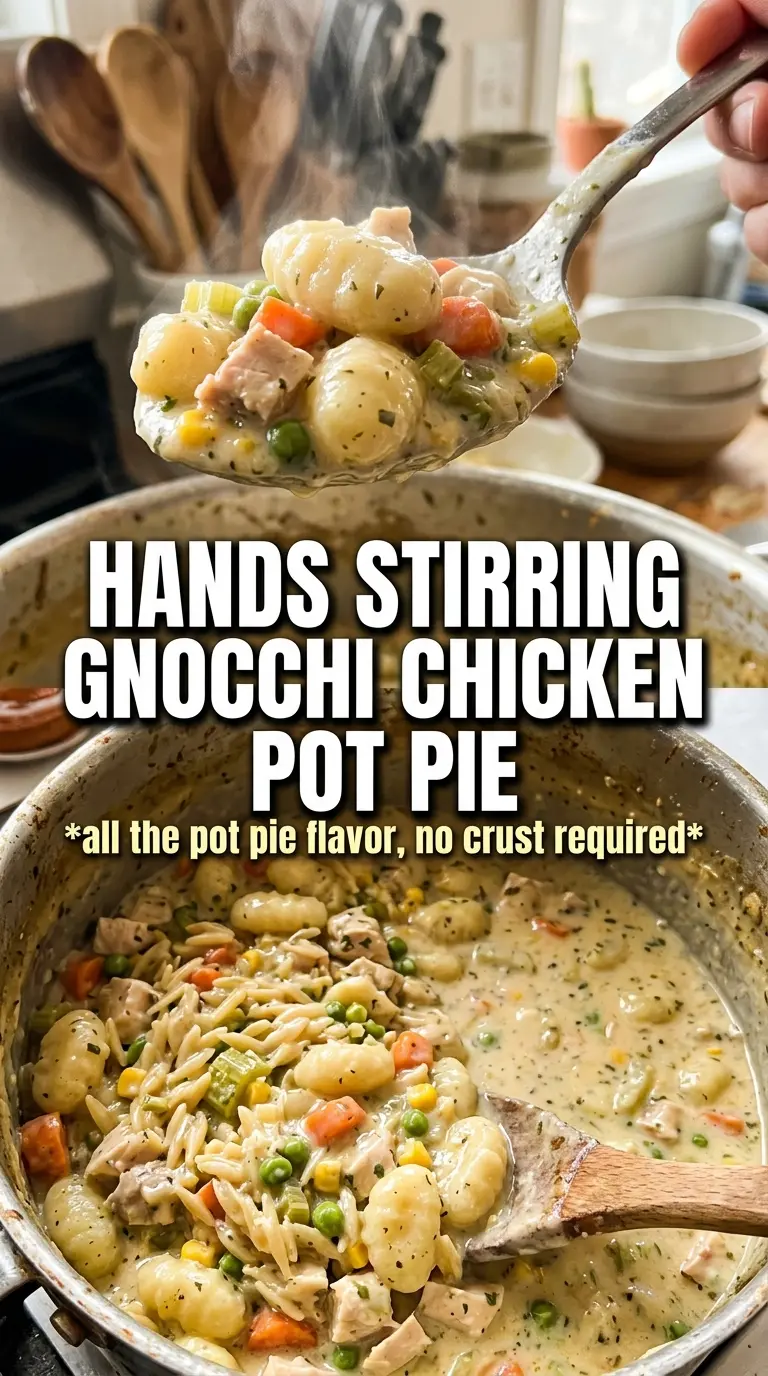
- Potato gnocchi — These replace the usual potato or bottom crust layer and bring the soft, pillowy texture that makes the dish feel complete. Shelf-stable, refrigerated, or frozen all work; just don’t pre-cook them.
- Cooked chicken — Rotisserie chicken is the fastest option and brings good seasoning, but any shredded leftover chicken works. Cut it into bite-size pieces so it distributes evenly through the creamy base.
- Butter, flour, broth, and cream — This is the sauce. The butter and flour need to cook together long enough to lose the raw flour taste, then the broth and cream build a gravy-like filling that sets up in the oven. Half-and-half can stand in for the cream, but the filling will be a little less rich and slightly lighter.
- Carrots, celery, onion, and garlic — These build the savory base and keep the dish from tasting flat. Dice them small so they soften in the short sauté and don’t stay crunchy after baking.
- Puff pastry or biscuits — Puff pastry gives a flaky lid that shatters when you cut into it, while biscuits give a sturdier, more rustic top. Use what you have, but keep the top cold before it goes into the oven so it rises well.
- Egg wash — This is what gives the top its deep golden color. Skip it and the crust can bake up pale even when the filling is bubbling underneath.
Building the Filling So It Bakes, Not Boils
Softening the vegetables first
Start with the onion, carrots, and celery in butter and give them the full five minutes. You’re looking for the onion to turn translucent and the carrots to lose their raw edge, not full browning. If you rush this part, the vegetables stay sharp and the filling tastes undercooked even after the oven time.
Cooking out the flour before the liquid goes in
Once the garlic and thyme are in, whisk in the flour and let it cook for a minute. That short cook time matters because raw flour makes the sauce taste chalky and can leave a pasty finish. When you add the broth and cream, pour slowly and whisk as you go so the sauce stays smooth instead of turning lumpy.
Adding the gnocchi at the right moment
Fold in the chicken, peas, and uncooked gnocchi only after the sauce has thickened. The mixture should look like a loose pot pie filling, not a soup. If it seems too thin, let it simmer for another minute before it goes in the baking dish, because the gnocchi will release a little starch and finish the job in the oven.
Finishing under a golden top
Spoon everything into the baking dish and cover it with puff pastry or biscuits, then brush the top with egg wash. Bake until the crust is deep golden and the filling is bubbling up around the edges and through any vent cuts. If the top browns before the filling bubbles, lay a piece of foil loosely over it and keep baking until the center is hot.
How to Change the Dish Without Losing the Comfort of It
Make it dairy-free with a richer broth base
Swap the butter for olive oil or plant butter and use an unsweetened dairy-free cream. The filling will still thicken, but it won’t taste quite as round, so a little extra thyme or black pepper helps bring back depth.
Use biscuits when you want a sturdier, more casual top
Refrigerated biscuits give you a thicker lid that holds up well to a hearty filling. They won’t flake like puff pastry, but they do soak up a little sauce in the best way and make the dish feel more old-school and rustic.
Make it gluten-free with the right swaps
Use a gluten-free flour blend in place of the all-purpose flour and choose a gluten-free puff pastry or biscuit topping if you can find one. The sauce may need an extra minute or two on the stove to thicken, since some blends take a little longer to hydrate.
Stretch it with extra vegetables
Add mushrooms, corn, or diced green beans if you want more vegetables without changing the spirit of the dish. Just cook watery vegetables long enough to drive off excess moisture, or the sauce will thin out in the oven.
Storage and Reheating
- Refrigerator: Store leftovers covered for up to 4 days. The gnocchi will absorb more sauce as it sits, so the filling gets thicker by day two.
- Freezer: It freezes fairly well without the pastry top, but the texture of the gnocchi softens a bit after thawing. Freeze in a tight container for up to 2 months and add a fresh top if you want the best result.
- Reheating: Reheat covered in a 350F oven until hot in the center. The mistake to avoid is blasting it in the microwave, which makes the gnocchi tough at the edges and turns the sauce uneven.
Answers to the Questions Worth Asking
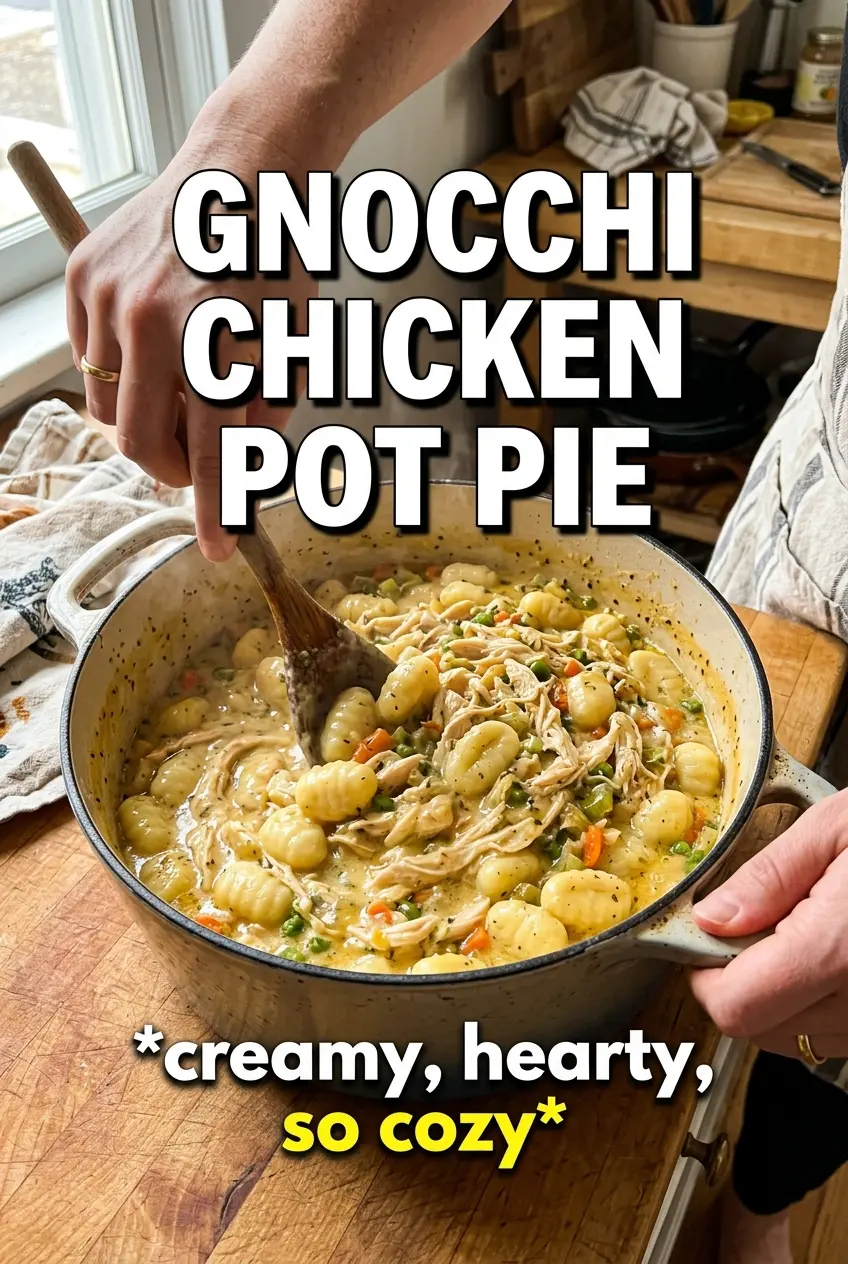
Gnocchi Chicken Pot Pie
Ingredients
Equipment
Method
- Preheat your oven to 400°F, then set out a baking dish and keep it ready for filling.
- In a Dutch oven, sauté the onion, carrots, and celery in the butter for 5 minutes, stirring often until softened.
- Add the garlic and thyme and cook for 30 seconds, then whisk in the flour and cook for 1 minute.
- Gradually whisk in the chicken broth and heavy cream, then simmer until the mixture thickens to a creamy consistency, about 8–12 minutes.
- Fold in the shredded chicken, frozen peas, and uncooked potato gnocchi, then season with salt and pepper to taste.
- Pour the filling into a baking dish and top with the puff pastry sheet or refrigerated biscuits.
- Brush the pastry/biscuits with the egg wash, then bake for 25–30 minutes at 400°F until golden and bubbly with visible steam from the vent.