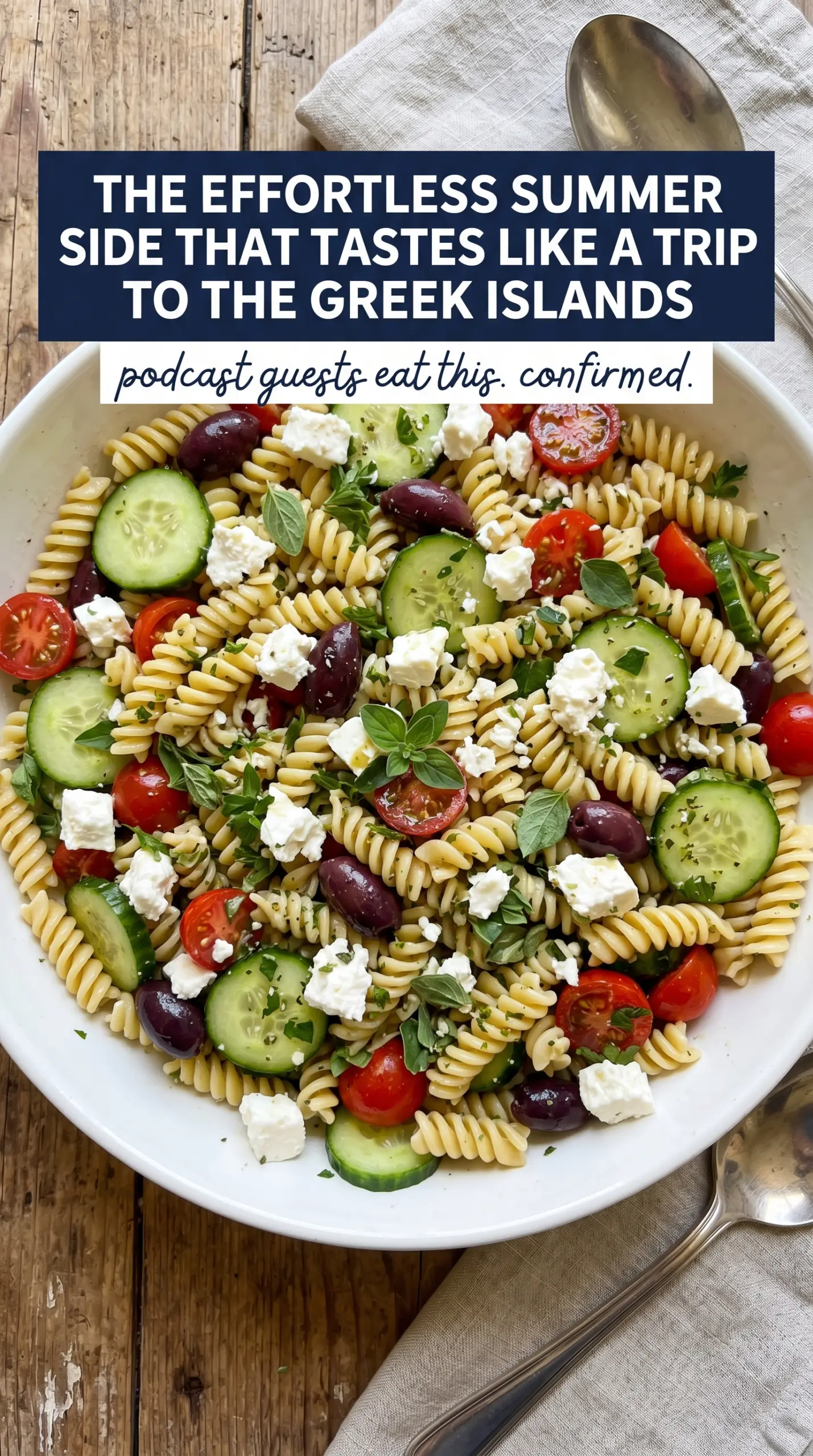
Greek pasta salad earns its place at the table because it doesn’t eat like a soft, soggy side dish. The pasta stays tender but still has shape, the cucumbers bring crunch, the tomatoes burst with juice, and the feta turns every bite salty and creamy. After it chills, the dressing settles into the noodles instead of pooling at the bottom, which is what makes this version worth making again.
The trick is in the balance. A generous lemon-oregano dressing wakes up the pasta, but the salad only works if you cool the noodles before adding the vegetables and cheese. Warm pasta softens the cucumbers and dulls the feta. The other key is using enough salt in the dressing, since cold pasta needs stronger seasoning than you’d use for a hot dish.
Below, I’ll show you why the dressing tastes better after a short chill, how to keep the vegetables crisp, and which swaps work without wrecking the texture. There’s also a storage note for making it ahead, because this one gets even better after it rests.
The pasta held up beautifully after chilling, and the lemon dressing soaked in without making everything soggy. I made it the night before and the feta, olives, and cucumber still tasted fresh the next day.
Greek pasta salad with lemon-oregano dressing is one of those sides that gets better after a good chill, so it’s perfect for make-ahead lunches or potlucks.
The Reason It Stays Fresh Instead of Turning Heavy
Most pasta salads go wrong for one of two reasons: the pasta is overcooked, or the dressing never really reaches the center of the noodles. This version avoids both problems by using a pasta shape with ridges and by rinsing it cold before the vegetables go in. That rinse doesn’t just cool things down. It stops the cooking at the exact moment the pasta is still pleasantly firm, which matters a lot once the salad sits in the fridge.
The other thing that keeps this salad from feeling weighed down is the ratio of sharp to creamy ingredients. Feta brings richness, but lemon juice and red wine vinegar cut through it so the whole bowl tastes bright instead of dense. If the dressing tastes a little aggressive before chilling, that’s a good sign. Cold pasta and feta will soften the edge after they rest together.
- Penne or rotini — Both hold onto the dressing well. Rotini catches a little more chopped onion and feta in the twists, while penne gives you cleaner bites.
- Kalamata olives — Their briny, fruity flavor is part of what makes this taste Greek. Black olives will work in a pinch, but they won’t give the same depth.
- Fresh oregano — Fresh is best here because it gives the salad a greener, cleaner finish. If you only have dried oregano, use less than you think; it blooms as the salad rests.
- Feta — Buy a block and crumble it yourself if you can. Pre-crumbled feta is drier and doesn’t melt into the salad in the same pleasant way.
What Each Ingredient Is Actually Doing to Keep This Salad Vibrant
- Fresh vegetables with structure (celery, bell pepper, cucumber) — These stay firm and don’t release excess water. They maintain the salad’s bright appearance and crisp texture even after hours.
- Acid (vinegar, lemon juice, or mustard) — The acid preserves the vegetables and prevents them from browning or turning dull. It keeps flavors from getting flat or stale.
- Oil-based dressing — This coats the vegetables and prevents oxidation that would turn them brown or gray. It creates a barrier between the vegetables and air.
- Fresh herbs added right before serving — These stay bright and vibrant instead of turning dark or losing flavor. Tender herbs especially need to be added close to serving time.
- Salt and pepper — These season the vegetables so they taste fully flavored instead of bland. Bold seasoning makes the whole salad taste fresher and more alive.
- Cheese (sharp, flavorful varieties) — These add umami and richness without requiring heavy cream or extra mayo. A little goes a long way to make the salad taste substantial.
- Protein that’s already well-seasoned — Bland chicken or beans will make the whole salad feel flat. Season the protein independently so it brings flavor to the bowl.
- Optional: citrus zest or fresh spices — A light zest of lemon or lime, or a pinch of cumin, adds brightness and prevents the salad from tasting tired as it sits.
Building the Dressing Before the Bowl Gets Full
Mix the dressing first and taste it before anything else goes into the bowl. The lemon, vinegar, garlic, and oregano need a chance to settle together, and the flavor should be punchy because cold pasta mutes seasoning. If the dressing tastes flat at this stage, the finished salad will taste flat too.
When you combine everything, add most of the feta and save a little for the top. That keeps the salad from looking dusty and lets the final layer stay distinct. Toss gently so the tomatoes don’t burst and the cucumber keeps its edges. The salad is best after at least 2 hours in the fridge, but it can sit a little longer if the pasta was cooked properly and the vegetables were crisp to start.
Cooking the Pasta to the Right Texture
Boil the pasta until it’s just tender, not soft. You want it to hold its shape after it chills, because cold pasta firms up and can turn chewy if it starts out undercooked. Drain it well, then rinse under cold water until it’s no longer warm. If you skip the rinse, the residual heat keeps cooking the noodles and the cucumber loses its crunch.
Whisking the Dressing Until It Tastes Too Sharp
Whisk the olive oil, lemon juice, vinegar, garlic, oregano, salt, and pepper until the mixture looks emulsified and slightly cloudy. That first taste should be bright and a little assertive. The pasta will pull the dressing down, and the vegetables will round it out. If the garlic seems sharp, that’s normal; it softens after chilling.
Tossing the Salad Without Breaking the Vegetables
Add the pasta, tomatoes, cucumber, olives, onion, and most of the feta to a large bowl, then pour the dressing over the top. Toss with a lifting motion instead of stirring hard. The goal is to coat everything without smashing the tomatoes or turning the feta into paste. Finish with the remaining feta after the salad has chilled so the top looks fresh and the cheese stays chunky.
Ways to Adjust It Without Losing the Greek Salad Character
Gluten-Free Version With the Same Crunch
Use your favorite gluten-free pasta, but cook it just to al dente and rinse it very well. Gluten-free noodles can soften faster than wheat pasta, so this salad is best eaten the day it’s made or the next day while the texture is still pleasant.
Dairy-Free Version That Still Tastes Bold
Leave out the feta and add a handful of chickpeas or extra olives for body. You lose the creamy-salty finish, so add a little more olive oil and a pinch more salt at the end to keep the dressing from tasting thin.
Make It More Filling for Dinner
Stir in diced grilled chicken, canned tuna, or chickpeas. Chicken gives the cleanest blank-slate protein, tuna leans saltier and more briny, and chickpeas keep the vegetarian feel while making the salad more substantial.
Storage and Reheating
- Refrigerator: Up to 4 days. The pasta will absorb more dressing, so it may need a drizzle of olive oil or a squeeze of lemon before serving again.
- Freezer: Don’t freeze this salad. The cucumbers, tomatoes, and feta change texture in a way that doesn’t recover well.
- Reheating: Serve it cold or close to room temperature. If it’s been in the fridge awhile, let it sit out for 15 to 20 minutes and toss once before serving so the dressing loosens up.
Questions I Get Asked About This Recipe
Greek Pasta Salad
Ingredients
Equipment
Method
- Cook penne or rotini pasta according to package directions, then drain and rinse with cold water.
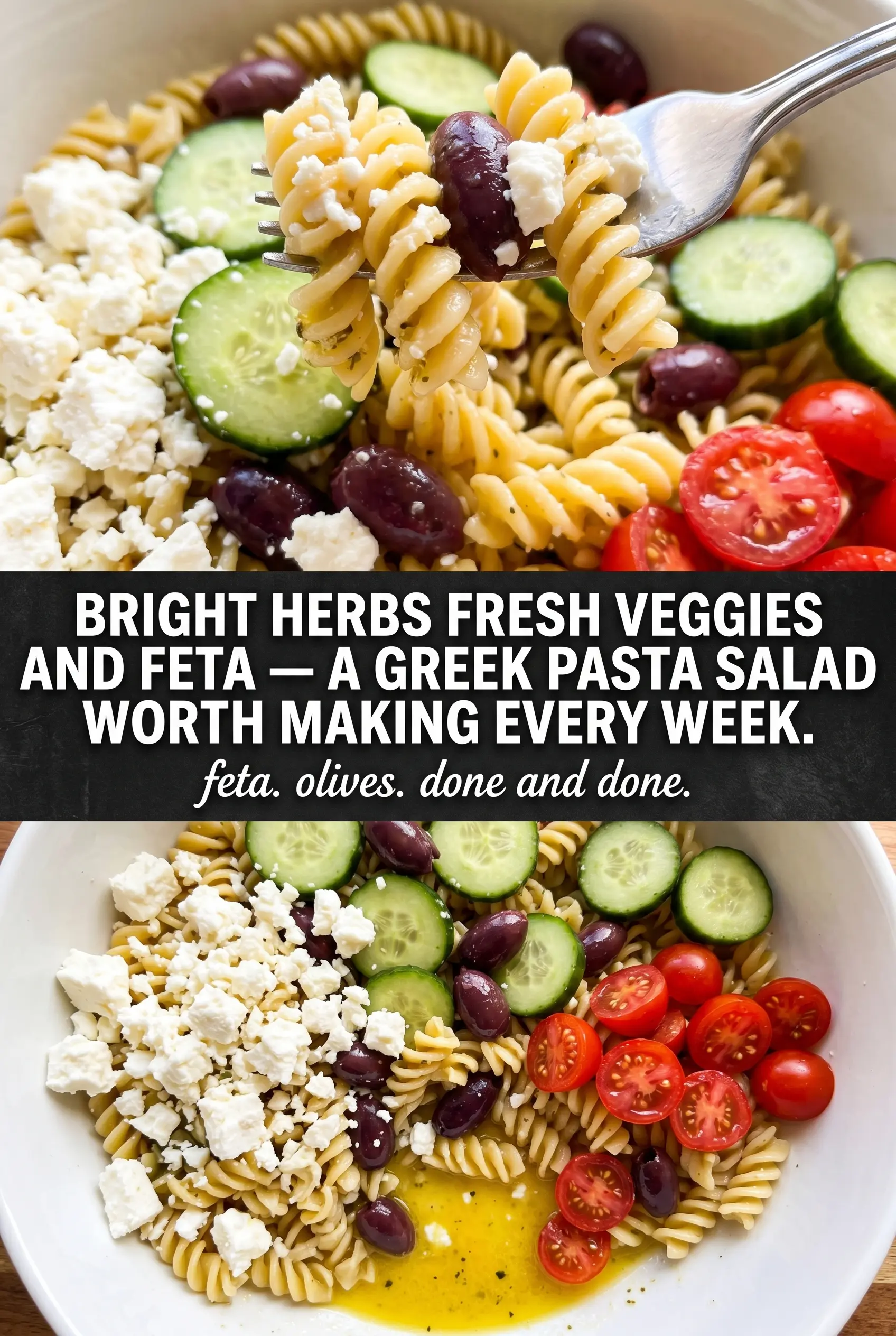
- Halve cherry tomatoes, dice the cucumber, thinly slice the red onion, pit and halve Kalamata olives, and crumble the feta.
- Whisk olive oil, lemon juice, red wine vinegar, garlic, oregano, salt, and pepper until the dressing looks evenly combined and fragrant.
- Combine pasta, cherry tomatoes, cucumber, Kalamata olives, red onion, and most of the feta in a large bowl.
- Pour the lemon-oregano dressing over the salad and toss gently until everything is coated.
- Refrigerate the Greek pasta salad for at least 2 hours to let the flavors meld.
- Top with the remaining feta before serving.