Golden potatoes hold onto a lemony dressing better than most people expect, and that’s what makes this salad worth keeping in the regular rotation. The cubes soften enough to take on flavor, but they don’t collapse into mash, so every bite still has structure: creamy potato, briny feta, juicy tomatoes, and the salty pop of olives.
The part that makes this version work is the balance. The potatoes are cooked until just tender, then cooled before the dressing goes on, which keeps the feta from melting and the herbs from turning dull. A generous pour of olive oil and lemon juice gives the salad enough richness to feel complete without weighing it down, and the chill time lets the potatoes soak up the dressing instead of letting it sit on the surface.
Below, I’ve added the little details that matter here: how to keep the potatoes from getting waterlogged, why the dressing tastes better after a short rest, and which swaps still keep the salad bright and satisfying.
The potatoes held their shape after chilling and the lemon dressing soaked in overnight without getting greasy. I loved the salty feta with the olives — it tasted even better the next day.
Save this lemon-herb Potato and Feta Salad for the days when you want a bright Greek-style side that holds up beautifully after chilling.
The Part That Keeps Potato Salad From Turning Heavy
The biggest mistake with potato salad is treating it like a mash-in-progress. Once potatoes are overcooked, they absorb dressing unevenly and go past creamy into dense and sticky. Red potatoes are the right choice here because they stay intact after boiling, and that clean bite matters when you’re mixing in feta and olives.
Cooling the potatoes before dressing them changes the whole dish. Warm potatoes drink in flavor, but they also soften the feta too quickly and make the herbs taste flat. Chill them just long enough to lose the steam, then toss while they’re still slightly warm if you want the lemon and olive oil to sink in a little deeper.
- Red potatoes — Their waxy texture keeps the salad from falling apart. Yukon Golds work in a pinch, but they’ll be a little softer and richer.
- Feta — Use a block of feta and crumble it yourself if you can. Pre-crumbled feta is drier and less creamy, which matters in a salad like this.
- Kalamata olives — They bring the briny, savory edge that makes the dressing taste more complete. If you use green olives, the salad gets sharper and less round.
- Fresh oregano and parsley — Fresh herbs keep the dressing bright. Dried oregano can stand in for the oregano, but the parsley should stay fresh if possible.
What Each Ingredient Is Doing in the Bowl

- 3 pounds red potatoes — These are the backbone of the salad. Cut them into even cubes so they cook at the same pace; uneven pieces leave you with some collapsing before others are tender.
- Feta cheese — Feta gives the salad its salty, creamy contrast. If you’re buying a cheaper feta, keep it in the block format and crumble it yourself for better texture.
- Kalamata olives — They deepen the flavor without needing much extra seasoning. Slice them in half so they spread through the salad instead of sinking to the bottom of the bowl.
- Cherry tomatoes — They add juice and sweetness, which keeps the salad from tasting one-note. Use ripe ones; bland tomatoes make the whole dish feel flatter.
- Red onion — Thin slices bring sharpness. If yours tastes aggressive, soak the slices in cold water for 10 minutes, then drain well before adding them.
- Olive oil and lemon juice — This is the dressing’s structure and brightness. Use a good olive oil here; the flavor comes through because there isn’t much else masking it.
- Fresh oregano and parsley — Oregano gives the Greek-style backbone, while parsley keeps it from feeling too heavy. Chop them just before mixing so they stay fragrant.
How to Keep the Dressing Bright Instead of Greasy
Cooking the Potatoes Just Right
Boil the potatoes until a knife slips in easily, but stop before they start breaking at the edges. If they’re too soft, they’ll crumble when you toss the salad and the dressing will turn muddy. Drain them well and spread them out for a minute or two so the steam escapes instead of collecting in the bowl.
Building the Salad in the Right Order
Add the cooled potatoes first, then fold in the feta, olives, tomatoes, and onion. If you toss too aggressively, the feta dissolves and the potatoes get smashed along the sides of the bowl. Use a wide spoon or spatula and lift from the bottom so everything stays distinct.
Finishing with the Lemon-Herb Dressing
Whisk the olive oil, lemon juice, oregano, parsley, salt, and pepper until the dressing looks glossy and slightly thickened. Pour it over while the potatoes are still a little warm, then toss gently and let the salad chill for an hour. That rest is when the potatoes take on the seasoning; if you serve it immediately, the flavor sits mostly on the surface.
Three Ways to Adjust This Salad Without Losing What Makes It Work
Dairy-Free Version
Leave out the feta and add a handful of chopped cucumbers or extra olives for texture. You lose the creamy-salty bite, so bump up the lemon juice and olive oil a little to keep the salad lively.
Make It Heartier for Dinner
Add chickpeas or diced grilled chicken after the potatoes cool. Chickpeas keep the Mediterranean feel and soak up the dressing, while chicken turns this from a side dish into a full meal.
How to Make It Ahead
Mix everything except the tomatoes and herbs up to a day ahead, then fold those in just before serving. That keeps the tomatoes from going soft and the herbs from looking wilted after sitting in the dressing.
Gluten-Free by Default
This salad is naturally gluten-free as written, which makes it an easy side for mixed tables. Just check your feta and olives if you’re using packaged brands with additives or marinades.
Storage and Reheating
- Refrigerator: Store in an airtight container for up to 3 days. The potatoes will soak up more dressing as it sits, so it tastes a little more seasoned on day two.
- Freezer: I don’t recommend freezing this salad. The potatoes and tomatoes lose their texture after thawing, and the feta turns grainy.
- Reheating: Serve it cold or let it sit at room temperature for 20 to 30 minutes before serving. Don’t heat it; the feta softens too much and the vegetables lose their fresh bite.
Questions I Get Asked About This Recipe
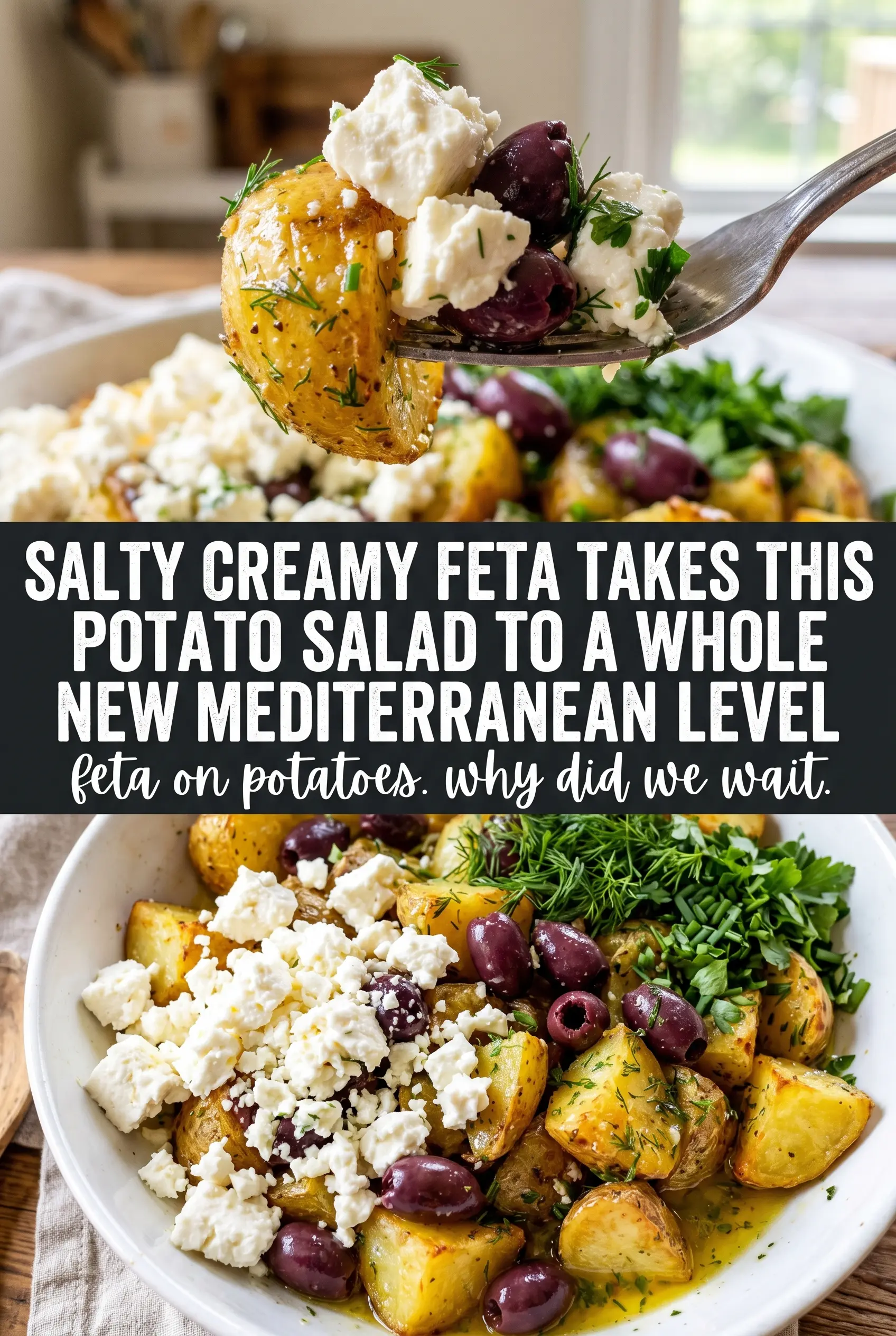
Potato and Feta Salad
Ingredients
Equipment
Method
- Bring a pot of water to a boil in a Dutch oven. Add the cubed red potatoes and boil until tender, about 15–20 minutes, until a fork slides in easily.
- Drain the potatoes and spread them on a sheet pan to cool. Let them come to room temperature for about 10 minutes so they don’t melt the feta.
- Whisk olive oil, lemon juice, chopped fresh oregano, chopped fresh parsley, salt, and pepper in a bowl until the dressing looks evenly blended, about 30–60 seconds. Season more if needed until it tastes balanced.
- In a large bowl, combine the cooled potatoes, crumbled feta cheese, halved Kalamata olives, halved cherry tomatoes, and thinly sliced red onion. Toss gently just until the ingredients are evenly distributed.
- Pour the lemon-herb dressing over the potato mixture and toss gently to coat. Keep tossing with a light hand so the potatoes stay in cubes.
- Refrigerate the salad for 1 hour before serving. Chill until the flavors meld and the salad is cold throughout.