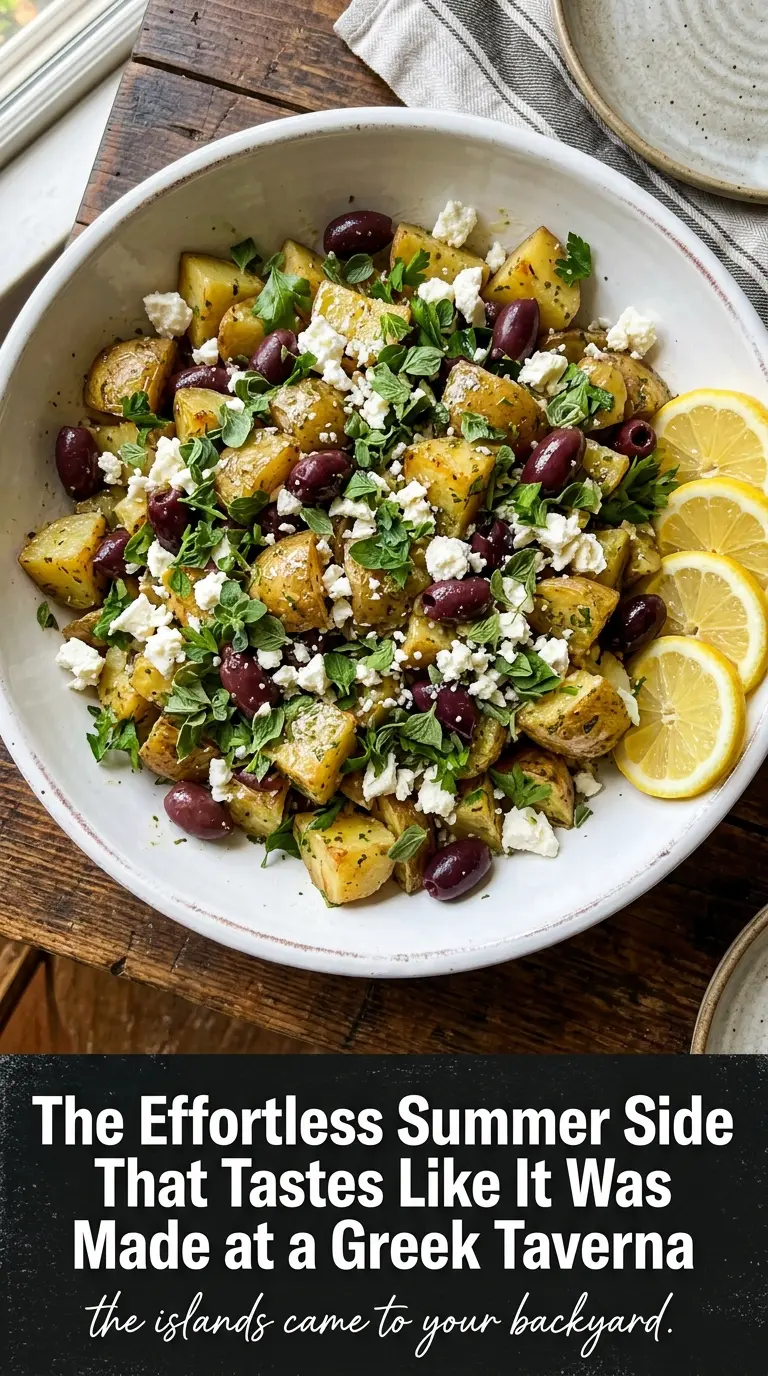
Greek potato salad lands on the table with the kind of bright, salty, olive-oil finish that keeps people reaching back in for another scoop. The potatoes stay tender but not mushy, the feta turns creamy against the warm dressing, and the olives and lemon keep every bite sharp enough to stay interesting. It eats more like a complete side than a filler bowl, which is why it disappears fast at cookouts and weeknight dinners alike.
The trick is treating the potatoes gently from the start. Red potatoes hold their shape better than starchy varieties, and they soak up the lemon-oregano dressing without falling apart. I also like to let the potatoes cool just enough before tossing so they absorb flavor instead of turning the feta into paste. The salad needs that resting time in the fridge, too. That’s when the dressing settles into the potatoes and the whole bowl tastes like it was made hours ahead on purpose.
Below you’ll find the small choices that matter most, from how to keep the onion from taking over to the best way to handle leftovers once the potatoes have chilled through.
The dressing soaked into the potatoes after chilling, and the feta stayed in little creamy bits instead of disappearing. I used it for meal prep and it held up for lunch the next day without getting watery.
Save this Greek potato salad for the bowls with feta, Kalamata olives, and lemon-oregano dressing that taste even better after a good chill.
The One Step That Keeps This Potato Salad From Turning Heavy
Potato salad gets dull when the potatoes go in hot, the dressing gets absorbed unevenly, and everything collapses into a dense, greasy bowl. This version avoids that by balancing three things at once: warm potatoes, a sharp dressing, and a light hand when tossing. You want the potatoes cooked through but still firm at the edges so they can hold up after chilling.
The other mistake is overmixing after the feta goes in. Crumbled feta should stay in distinct pieces, not disappear into the potatoes. If you toss hard, the salad turns cloudy and thick instead of bright and textured. Gentle folding keeps the olives, tomatoes, and onion intact, which is what gives each bite a clean Greek-style contrast.
- Red potatoes — Their waxy texture is the reason this salad holds together after chilling. Russets break down too easily and turn the dressing muddy.
- Feta — Use a block if you can and crumble it yourself. Pre-crumbled feta is drier and usually less creamy, though it still works in a pinch.
- Kalamata olives — Their briny, winey flavor gives the salad its backbone. No other olive tastes quite the same, but sliced black olives can step in if that’s what you have.
- Lemon juice and red wine vinegar — The two acids work together: lemon brings brightness, vinegar adds structure. Using both keeps the dressing from tasting flat once it chills.
- Fresh parsley — Add it at the end so it stays green and lively. If it sits in the dressing too long, it loses the fresh finish that makes the salad taste awake.
What Each Ingredient Is Actually Doing to Keep This Salad Light
- Oil-based dressing instead of mayo-heavy — A lighter dressing with more vinegar and less mayo keeps the salad from feeling heavy. It still coats everything without weighing it down.
- Fresh vegetables with high water content — Lettuce, cucumber, and fresh tomatoes add volume without heaviness. They also keep the salad from tasting like just potatoes and mayo.
- Lemon juice or vinegar as the acid — These brighten the salad and prevent it from tasting one-dimensional or rich. They also help preserve the fresh vegetables.
- Fresh herbs (not heavy or oily) — Light herbs like basil, parsley, or dill add freshness without adding bulk. They should feel crisp, not wilted.
- Optional protein (fish or chickpeas instead of mayo-heavy meat) — Light proteins keep the salad from feeling like a heavy, rich dish. They should be well-seasoned so the whole salad tastes full.
- Minimal cheese or none at all — If using cheese, choose a sharp variety in small amounts. This adds flavor without heaviness.
- Cold serving temperature — Cold food feels lighter than warm food. Serve straight from the fridge so it feels refreshing instead of heavy.
- Ratio of dressing to salad — Use just enough dressing to coat. Excess dressing makes the salad feel saturated and heavy.
How to Build the Dressing So It Soaks In, Not Sits On Top
Cooking the Potatoes Until Just Tender
Start the potatoes in well-salted water and cook them until a fork slides in with little resistance, but the cubes still hold their shape when nudged. If they’re falling apart in the pot, they’re already past the point where they’ll make a good salad. Drain them well and let the steam escape for a few minutes so the dressing doesn’t get watered down the second it hits the bowl.
Whisking the Bright, Salty Dressing
Whisk the olive oil, lemon juice, red wine vinegar, oregano, salt, and pepper until the mixture looks slightly thickened and emulsified. That quick whisk matters because oil and acid need a little help staying together long enough to coat the potatoes evenly. Taste it now. It should be assertive, since chilled potatoes mute seasoning a bit once everything rests.
Folding Everything Together Without Crushing It
Add the potatoes to the feta, olives, tomatoes, and onion, then pour the dressing over the top and toss with a gentle lifting motion. A sturdy spoon will mash the cubes before you notice it, so use a wide spatula or clean hands if needed. The salad should look glossy and mixed, but you should still see separate ingredients, not a broken mash.
Letting the Fridge Do the Final Work
Stir in the parsley, then chill the bowl for at least 2 hours before serving. That rest gives the potatoes time to drink up the dressing and lets the onion soften just enough to stop tasting sharp. If you serve it right away, the salad will taste underdeveloped; after chilling, it tastes fully seasoned and much more balanced.
What to Change When You Want a Lighter, Dairy-Free, or Bigger-Batch Version
Dairy-Free Greek Potato Salad
Leave out the feta and add a little extra salt, plus a handful of chopped cucumber or more tomatoes for freshness. You lose the creamy, tangy bite that feta brings, so the dressing needs to carry more of the flavor load. This version still tastes bright and Mediterranean, just cleaner and lighter.
Lower-Carb Side Dish with More Crunch
Swap half the potatoes for blanched cauliflower florets if you want a lighter bowl with fewer starches. Cauliflower absorbs the dressing well, but it won’t hold up as long as potatoes, so serve it the same day. The texture shifts from hearty to crisp-tender, which works especially well with grilled mains.
Make-Ahead for a Crowd
Boil the potatoes and mix the dressing a day ahead, but wait to add the tomatoes, parsley, and feta until a few hours before serving. That keeps the tomatoes from softening too much and preserves the clean white crumbles of feta. This is the version I’d use for a potluck because it holds its shape and still tastes fresh after chilling.
Storage and Reheating
- Refrigerator: Store covered for up to 3 days. The potatoes will absorb more dressing over time, so the salad gets a little tighter and less glossy by day two.
- Freezer: Don’t freeze this one. The potatoes turn grainy and the tomatoes go mushy after thawing.
- Reheating: Serve it cold or let it sit at room temperature for 15 to 20 minutes. Reheating changes the texture in the wrong direction and softens the feta into pasty bits.
Questions I Get Asked About This Recipe

Greek Potato Salad
Ingredients
Equipment
Method
- Bring a pot of water to a boil and cook the cubed red potatoes until tender, about 20 minutes. Visual cue: a fork should slide in easily without resistance.
- Drain the potatoes and cool them until no longer hot, then set aside. Visual cue: the cubes look firm and dry, not steaming.
- Combine the cooled potatoes with crumbled feta, Kalamata olives, halved cherry tomatoes, and thinly sliced red onion. Visual cue: the mixture is evenly speckled with feta and olives.
- Whisk olive oil, lemon juice, red wine vinegar, dried oregano, salt, and pepper until the dressing looks cohesive. Visual cue: the dressing turns slightly cloudy and uniform.
- Pour the dressing over the potato mixture and toss gently to coat. Visual cue: the potatoes look glossy and evenly dressed rather than dry.
- Fold in the chopped fresh parsley. Visual cue: green flecks are distributed throughout the salad.
- Refrigerate the salad for 2 hours before serving. Visual cue: the flavors tighten and the salad chills evenly throughout.