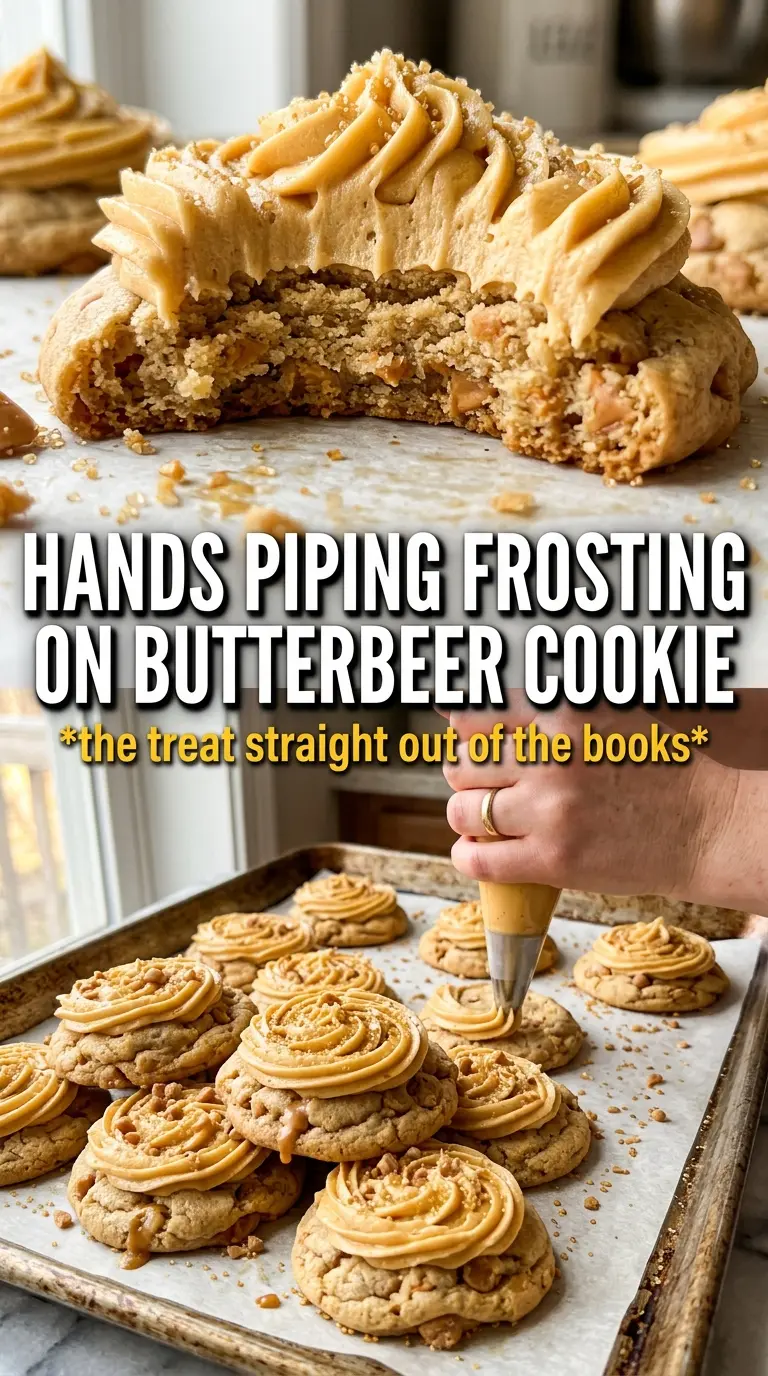
Soft, golden butterbeer cookies with a warm butterscotch note and a creamy frosting on top are the kind of treat people remember after the tray is empty. The cookies stay tender in the center with lightly set edges, and the frosting adds that unmistakable cream soda sweetness without turning the whole thing cloying. A little gold sugar on top finishes them with the right sparkle.
What makes this version work is the balance. Melted butterscotch chips go into the dough for a deeper, rounder flavor than extracts alone can give, while cream soda keeps the crumb soft and gives the cookie a true butterbeer feel. The frosting is built with real butter and just enough butterscotch sauce to taste rich without sliding off the cookie.
If you’ve ever ended up with butterbeer cookies that spread too much or frosting that tastes flat, the notes below will help. I’ve included the texture cue to watch for at the oven and the easiest way to keep the frosting fluffy instead of greasy.
The cookies baked up soft and thick, and the cream soda frosting set just enough to pipe cleanly without sliding off. My kids kept picking off the gold sugar before I could even put the tray away.
Like these soft butterbeer cookies? Save them to Pinterest for the next time you want golden cookies with cream soda frosting and a butterscotch finish.
The Trick to Keeping Butterbeer Cookies Soft Instead of Spreading Flat
The biggest risk here is a cookie that tastes right but bakes up thin. That usually happens when the butter is too warm or the dough gets overmixed after the flour goes in. You want softened butter, not glossy and halfway melted, and you want to stop mixing as soon as the last streaks of flour disappear.
The melted butterscotch chips add flavor, but they also bring extra richness, so the dough benefits from a short rest while the oven heats. That little pause gives the flour time to absorb the cream soda and keeps the cookies from running too fast on the pan. Pull them when the centers look slightly underdone; they finish setting on the baking sheet.
What Each Ingredient Is Actually Doing in These Butterbeer Cookies
- Butterscotch chips — Melting a small amount into the dough gives these cookies a deeper caramel note than dry chips alone. If you skip this step, the flavor is still nice, but it loses that rounded butterbeer taste.
- Cream soda — This is the ingredient that makes the cookies taste like butterbeer instead of just butterscotch cookies. Use the real thing here, not sparkling water; the sweetness and vanilla note matter.
- Brown sugar — This keeps the crumb moist and adds molasses depth that works with the butterscotch. Light brown sugar is fine, but dark brown sugar makes the cookies a little richer and more toffee-like.
- Butter — Softened butter creams with the sugar and gives the cookies their tender texture. If it’s too warm, the cookies spread; if it’s too cold, the dough won’t whip properly.
- Butterscotch sauce — The frosting needs this for flavor and body. A thinner ice-cream topping works, but a thicker sauce gives you a more stable frosting.
- Gold sugar sprinkles — These are mostly for the look, but they also add a little crunch that makes the soft frosting more interesting.
Building the Dough and Frosting So Both Stay Balanced
Creting the Cookie Base
Beat the butter and brown sugar until the mixture looks fluffy and a shade lighter. That step traps air and helps the cookies bake up soft instead of dense. Add the melted butterscotch chips after the butter and sugar are combined, then mix in the egg, vanilla, and cream soda. If the mixture looks slightly curdled at this point, don’t panic; it will smooth out once the flour goes in.
Adding the Dry Ingredients Without Toughening the Dough
Stir the flour, baking soda, baking powder, cinnamon, and salt together first, then fold them into the wet mixture just until the dough comes together. Overmixing at this stage makes the cookies sturdier than they should be. Scoop 2-tablespoon rounds and keep them evenly sized so they bake at the same rate. A parchment-lined sheet helps them release cleanly and keeps the bottoms from over-browning.
Baking Until the Centers Look Just Set
Bake at 375°F for 10 to 12 minutes. The edges should look set and lightly golden, but the centers should still look soft and a little puffy. If you wait until the middle looks fully baked in the oven, the cookies will firm up too much as they cool. Let them sit on the pan for a few minutes before moving them to a rack so they finish setting without breaking.
Whipping the Frosting to Pipeable Texture
Beat the softened butter until smooth first, then add the butterscotch sauce, powdered sugar, vanilla, and cream soda. Add the cream soda a tablespoon at a time so the frosting stays thick enough to pipe or spread without sliding. If it turns loose, more powdered sugar will tighten it up; if it tastes too sweet, a tiny pinch of salt helps it taste fuller.
Dairy-Free Butterbeer Cookies
Use plant-based butter in both the cookies and frosting, and choose a dairy-free cream soda. The texture stays close, though the frosting may be a little softer, so chill it for 10 minutes before piping if needed.
Extra-Butterscotch Version
Stir a few extra butterscotch chips into the dough and drizzle a little more sauce over the frosted cookies. This pushes the flavor closer to caramel candy and gives the cookies a sweeter, more bakery-style finish.
Gluten-Free Swap
Use a cup-for-cup gluten-free flour blend that already includes xanthan gum. The cookies may spread a touch less, but the soft center and frosting hold up well if you don’t overbake them.
Make Them Ahead
Bake the cookies a day ahead and frost them after they cool completely. The cookie base stays soft overnight, and frosting later keeps the topping neat instead of smearing on the rack.
Storage and Reheating
- Refrigerator: Store frosted cookies in an airtight container for up to 4 days. The frosting firms up a bit in the fridge, but the cookies stay soft.
- Freezer: Freeze unfrosted cookies for up to 2 months. Frost after thawing for the cleanest look, since the topping can smear if you freeze them assembled.
- Reheating: Let chilled cookies sit at room temperature for 15 to 20 minutes. Warming them in the microwave makes the frosting too soft, so room-temp thawing is the safer choice.
Questions I Get Asked About This Recipe
Harry Potter Butterbeer Cookies
Ingredients
Equipment
Method
- Beat the softened butter and brown sugar until smooth and creamy, using a stand mixer. Mix at medium speed so the texture looks lighter in color and well combined.
- Add the melted butterscotch chips, then beat in the egg, vanilla, and cream soda until the batter is glossy. Stop and scrape the bowl once so no streaks remain.
- In a separate bowl, combine the flour, baking soda, baking powder, cinnamon, and salt, then fold the dry mixture into the wet ingredients. Mix just until no dry pockets of flour are visible.
- Scoop 2-tablespoon rounds of dough and place them on a baking sheet with space between cookies. Shape them so they’re even thickness for consistent baking.
- Bake at 375°F for 10-12 minutes, until the edges look set and the centers still look slightly soft. Keep an eye on color: the tops should stay light golden.
- Cool the cookies completely before frosting, so the frosting won’t melt or slide. Wait until the surface is fully cooled to room temperature.
- Beat the softened unsalted butter until creamy, then add butterscotch sauce and beat again until evenly colored. The frosting should look smooth without visible streaks.
- Add powdered sugar in additions, beating until thick and fluffy, then add cream soda (2-3 tablespoons) until it reaches pipeable or spreadable consistency. Stop when the frosting holds shape on a spatula.
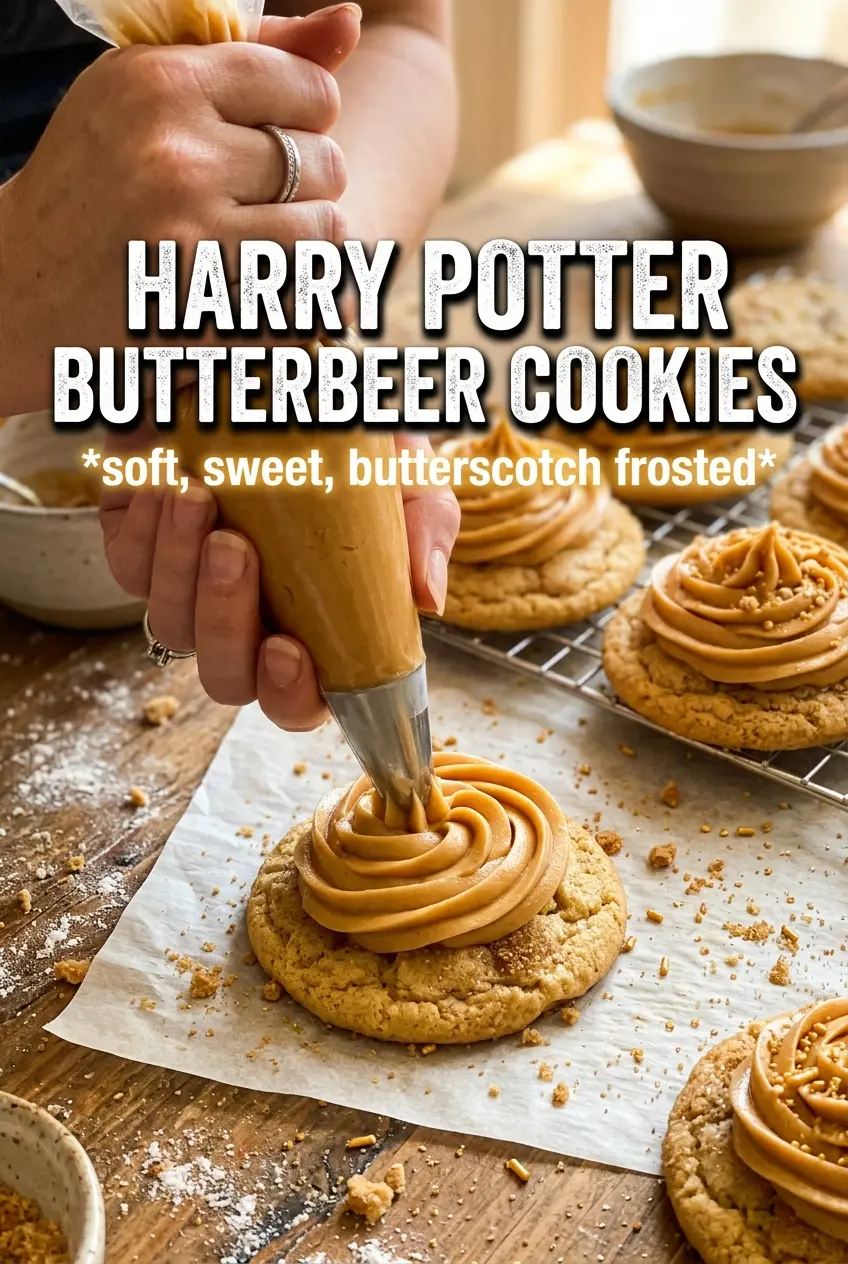
- Pipe or spread the butterbeer frosting onto each cooled cookie using a consistent swirl or layer. Cover the top evenly so every cookie gets a visible butterscotch-hued cap.
- Decorate with gold sugar sprinkles immediately after frosting. Add a light, even layer so the cookies sparkle.