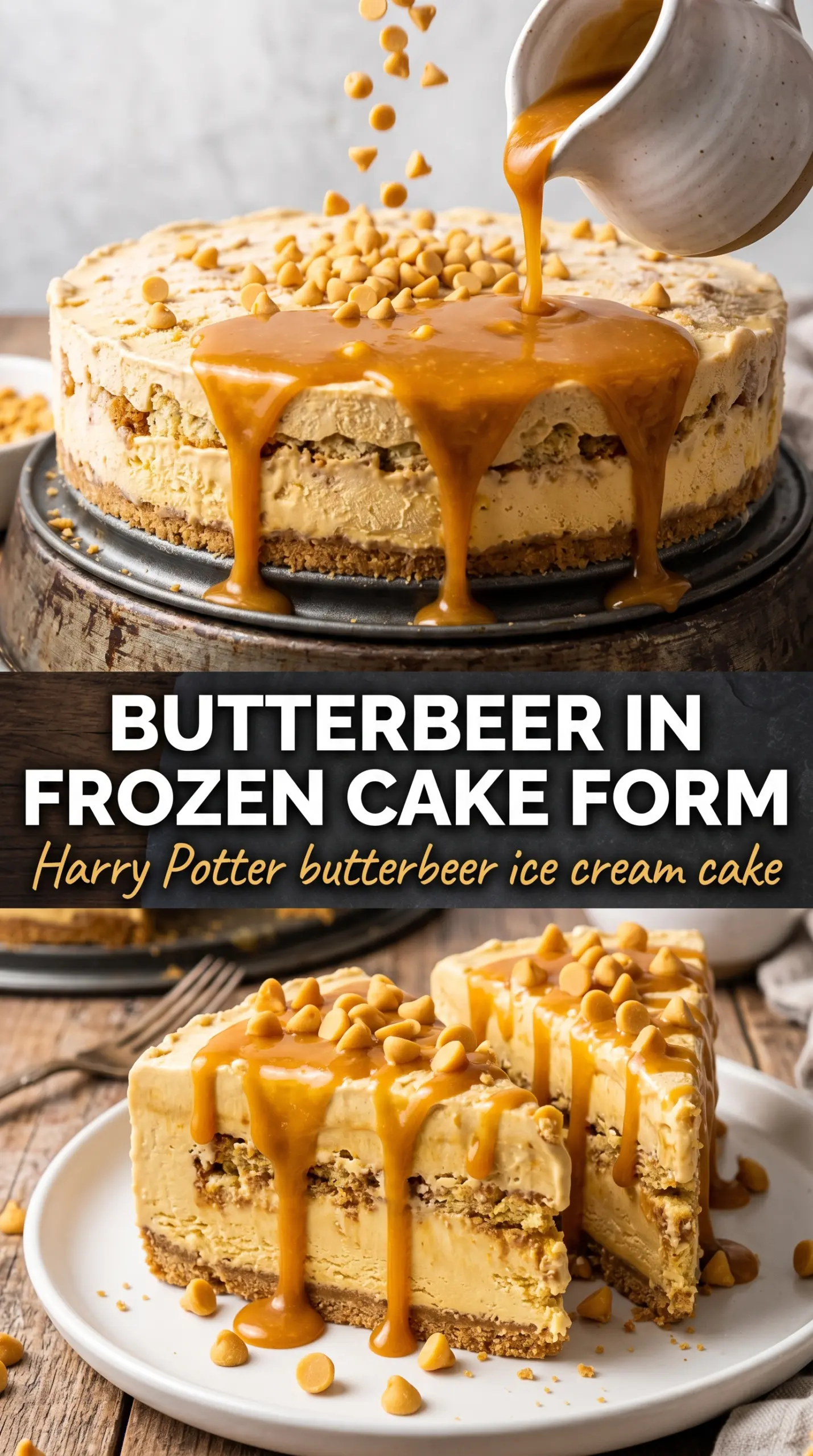
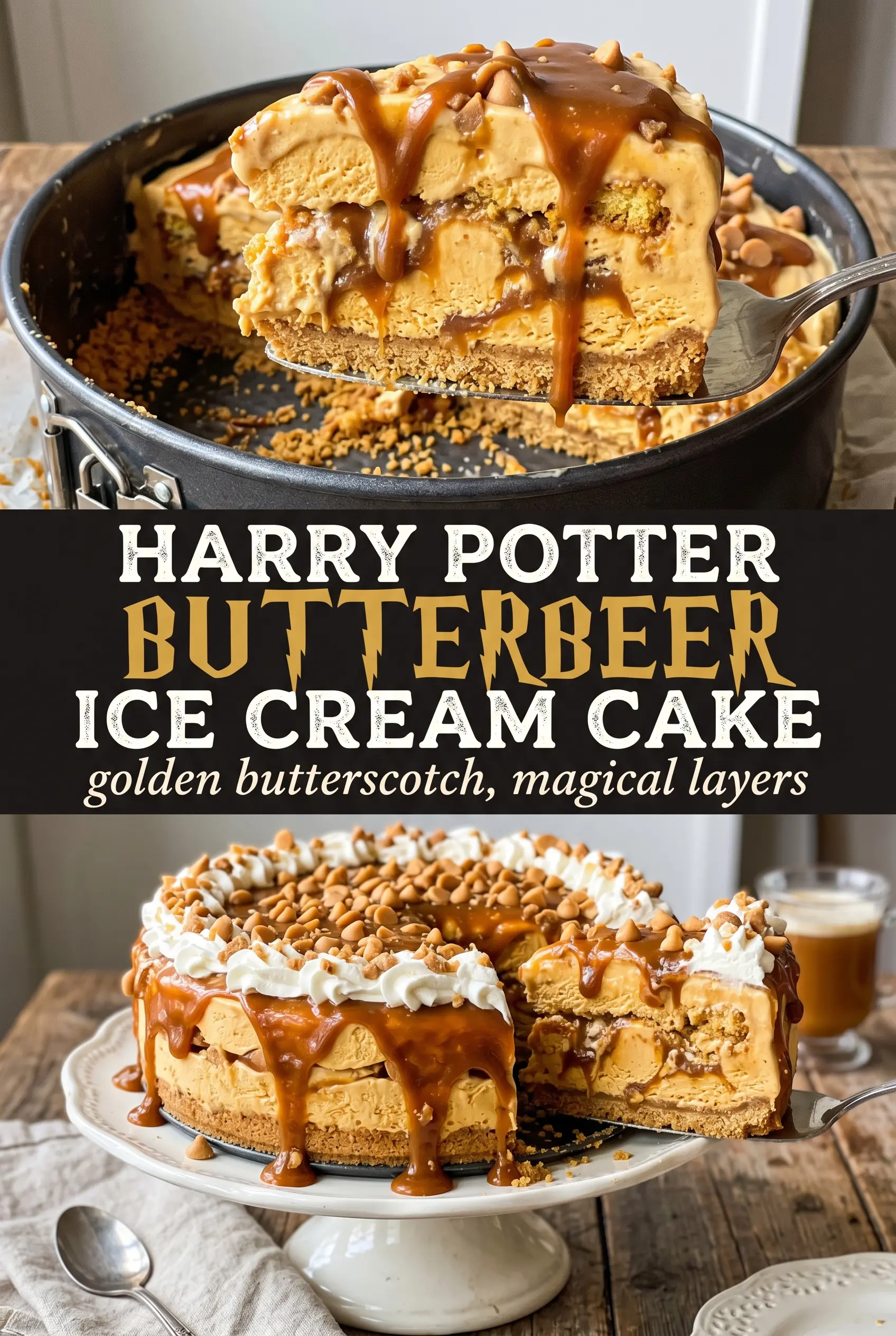
Golden graham cracker crust, butterscotch-kissed ice cream, and a foamy whipped topping make this Butterbeer ice cream cake taste like the drink turned into a celebration dessert. The crust stays crisp enough to slice cleanly, while the filling settles into that creamy, scoops-on-a-spoon texture that makes frozen cakes worth the wait. It’s playful, rich, and just nostalgic enough to feel special without being fussy.
The trick is building each layer with enough structure to hold up in the freezer. Softened ice cream gets folded with butterscotch sauce and butter flavoring, which gives you that Butterbeer note without turning the filling icy or overly sweet. The topping is whipped to stiff peaks and spread over a fully frozen base, so it keeps its shape instead of melting into the cake beneath it.
Below, I’ve included the little details that matter most: how to keep the crust from crumbling, why the ice cream needs to be softened and not melted, and a few smart variations if you want to change the flavor or make it ahead for a party.
The butterscotch flavor came through without being overpowering, and the whipped topping froze into these perfect fluffy slices. I made it the night before a birthday party and it cut beautifully after sitting out for just a few minutes.
Make this Butterbeer ice cream cake when you want a frozen dessert with crisp crust, fluffy topping, and that unmistakable butterscotch finish.
The Freeze Time That Keeps the Layers Distinct
The mistake most frozen cakes make is rushing the layers. If the crust is still warm, the ice cream softens too fast and seeps into the crumbs. If the filling isn’t fully firm before the whipped topping goes on, the top layer sinks and the whole cake turns messy at the first slice.
Freezing in stages solves both problems. The crust gets a short bake, then a full cool, which helps it set into a firm base instead of a sandy one. The ice cream layer needs the long freeze because the butterscotch sauce adds softness; that’s a good thing for texture, but only if the cake has time to fully reset before you add the topping.
- Graham crackers — They give the crust that classic sweet, toasty base. Crushed finely, they pack tightly and slice cleanly once frozen.
- Butter — This is what binds the crust and gives it flavor. Melted butter is the right choice here; anything cooler won’t coat the crumbs evenly.
- Butter pecan or vanilla ice cream — Butter pecan gives the deepest butterscotch-adjacent flavor, while vanilla keeps the cake cleaner and lets the sauce stand out. Use ice cream softened just enough to fold, not melted into soup.
- Butterscotch sauce — This carries the Butterbeer note through both the filling and the topping. A thicker sauce works best because thin syrup can make the filling icy.
- Butter flavoring or extract — This is the part that makes the dessert taste like Butterbeer instead of just butterscotch ice cream. Don’t skip it if you want that unmistakable theme-park style finish.
- Heavy cream — There’s no shortcut here. It whips into a stable topping that stays fluffy after freezing, which is exactly what keeps the cake from tasting flat.
What Each Ingredient Is Actually Doing in This Ice Cream
- Base ingredient (cream, milk, or custard) — This provides the foundation and richness. Quality matters.
- Sweetener (sugar, honey, or condensed milk) — This sweetens and prevents ice crystals. The ratio is critical.
- Flavor element (vanilla, fruit, chocolate, or other) — This defines the ice cream personality. Use quality ingredients.
- Egg yolks (if making custard base) — These create richness and silky texture. Optional but elevates ice cream.
- Churning (if using ice cream maker) — This incorporates air and prevents ice crystals. Critical for smooth texture.
- Freezing temperature and time — Proper freezing prevents rock-hard texture. Store at 0°F or below.
- Mix-ins (chocolate, cookies, fruit, or swirls) — These add texture and prevent one-dimensional flavor. Add near end of churning.
- Serving temperature (slightly soft, not rock hard) — This provides creamy mouthfeel. Remove from freezer 5 minutes before serving.
Building the Butterbeer Layers Without Losing the Texture
Pressing and Baking the Crust
Mix the graham crumbs, melted butter, and brown sugar until every crumb looks lightly moistened, then press it firmly into the springform pan. Use the bottom of a measuring cup to pack it tight, especially around the edges, because a loose crust breaks when you slice the cake. Bake it just long enough to smell toasted and look set at the surface. Then cool it completely before anything cold touches it.
Flavoring the Ice Cream Filling
Let the ice cream soften on the counter until it bends when stirred but still holds shape. Fold in the butterscotch sauce, butter flavoring, and vanilla with a spatula so you don’t knock out all the air. If you stir too aggressively, the filling turns dense and sticky instead of creamy. Spread it over the crust in an even layer and smooth the top, then freeze until it’s firm all the way through.
Whipping the Topping to Stiff Peaks
Beat the heavy cream, butterscotch sauce, powdered sugar, and butter extract until you get stiff peaks that stand straight when you lift the beaters. Stop as soon as the cream holds shape; if you go too far, it turns grainy and starts looking buttery. Pile it high over the frozen cake for that dramatic Butterbeer look, then drizzle the extra sauce in ribbons so it stays visible on top instead of sinking in.
Finishing and Serving Clean Slices
Add your Harry Potter-themed decorations while the topping is still soft enough to hold them in place, then freeze the cake again until everything is solid. For the cleanest slices, let the cake sit at room temperature for 8 to 10 minutes before cutting. Run a sharp knife under hot water, wipe it dry, and slice in one confident motion so the crust doesn’t shatter.
Three Ways to Make This Butterbeer Ice Cream Cake Your Own
Make it dairy-free
Use a dairy-free vanilla frozen dessert and swap in a plant-based whipping cream that’s made for stable peaks. The texture won’t be quite as rich, but the butterscotch flavor still reads clearly if your dairy-free toppings are cold before whipping.
Swap the crust for chocolate wafers
Chocolate wafer crumbs bring a deeper, darker base that plays well with butterscotch. The cake tastes a little less like a classic Butterbeer copy and a little more like a bakery-style ice cream pie, which works beautifully if you want a richer finish.
Turn it into a birthday sheet cake
Line a 9×13-inch pan with parchment and build the layers there instead of using a springform pan. You’ll lose the tall, dramatic sides, but you gain easy serving for a crowd and less stress when it’s time to slice.
Storage and Reheating
- Refrigerator: Don’t store this in the fridge; it will melt and collapse. Keep leftovers frozen between servings.
- Freezer: Wrap the pan tightly or transfer slices to an airtight container. It keeps well for up to 1 week, though the whipped topping is best within the first 2 to 3 days.
- Reheating: There’s no reheating here. Let slices sit at room temperature for a few minutes before serving so the crust softens just enough to cut cleanly.
Answers to the Questions Worth Asking
Harry Potter Butterbeer Ice Cream Cake
Ingredients
Equipment
Method
- Combine the graham cracker crumbs, melted butter, and brown sugar until evenly moistened, then press firmly into a 10-inch springform pan to form an even layer. Bake at 350F for 8 minutes, then cool completely so the ice cream won’t melt on contact.
- Fold butterscotch sauce, butter flavoring, and vanilla extract into the softened ice cream until smooth, then spread the mixture over the cooled crust and smooth the top. Freeze for 6 hours until completely firm.
- Whip the heavy cream with butterscotch sauce, powdered sugar, and butter extract until it reaches stiff peaks. Pile the whipped topping dramatically high on top of the firm frozen cake.
- Drizzle extra butterscotch sauce in ribbons over the cream topping, then add any Harry Potter-themed decorations. Freeze for 2 more hours before releasing from the springform and serving.