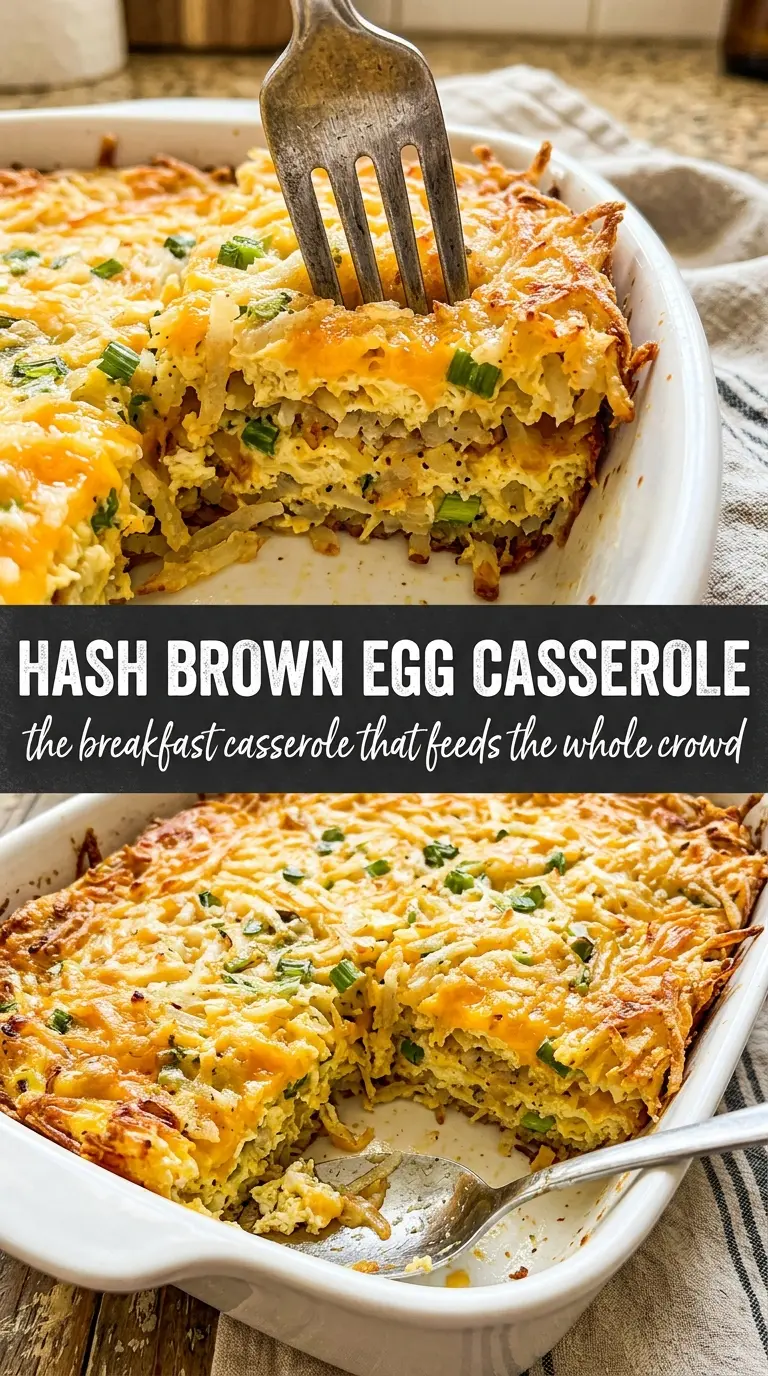
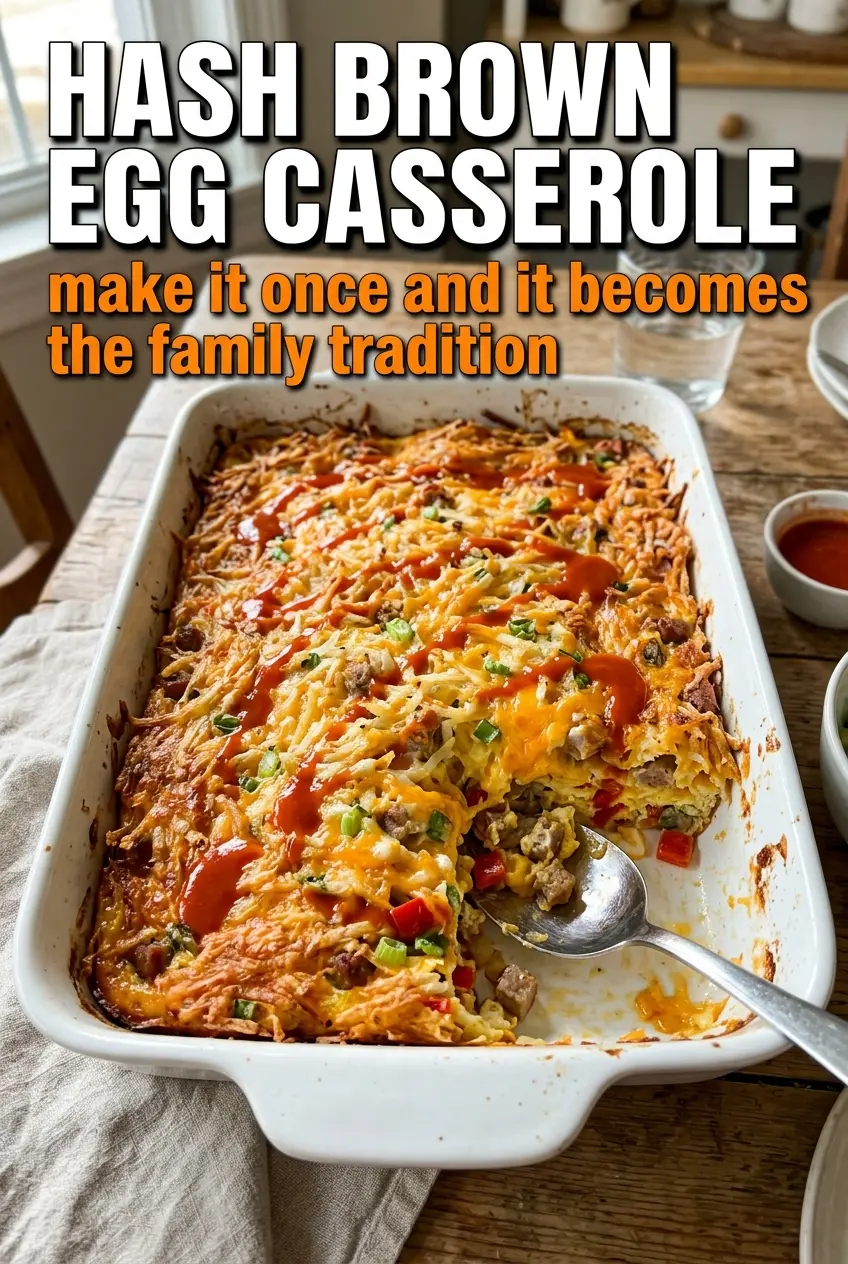
Golden hash brown egg casserole comes out with crisp edges, a creamy middle, and enough savory sausage and cheese in every bite to make breakfast feel handled. The best part is the contrast: the potatoes on the bottom soak up the custard just enough to stay tender, while the top turns lightly bronzed and puffy in the oven.
What keeps this version from turning watery is starting with thawed hash browns and a custard that isn’t overloaded with milk. The eggs, cream, and milk bake into a sliceable base without tasting heavy, and the cheese goes in with the sausage so it melts through the casserole instead of sitting on top in one bland layer. That rest at the end matters too; it gives the center time to set so you get clean squares instead of a spoonable pan.
Below you’ll find the small details that make this breakfast casserole dependable, plus a few swaps for changing up the filling or making it fit what you’ve got in the fridge.
The casserole set up beautifully and sliced clean after the 10-minute rest. The hash browns stayed tender underneath, and the sausage-cheddar layer made every bite taste balanced instead of eggy.
Save this hash brown egg casserole for the mornings when you want a crisp-topped, creamy breakfast bake with sausage and cheddar.
The Reason Most Egg Casseroles Turn Soft Instead of Set
The problem with a lot of hash brown casseroles is that they start out promising and end up loose in the middle. That usually happens when the potatoes are still carrying extra moisture or the custard is too thin for the amount of filling in the pan. Frozen hash browns are convenient, but they need to be fully thawed so they can bake instead of steaming.
This casserole also works because the ratio of eggs to dairy is sturdy enough to set under a full layer of potatoes and sausage. If you’ve ever cut into a breakfast bake and watched the center slump, the fix is usually not more baking time alone. It’s giving the eggs enough structure from the start and letting the casserole rest after it comes out of the oven.
What Each Ingredient Is Doing in the Pan
- Frozen hash browns — These form the base and give the casserole its signature texture. Thawed potatoes bake up tender instead of icy, and they’re much less likely to release water into the eggs. If yours are still damp, pat them dry with a clean towel before they go into the dish.
- Breakfast sausage — This brings the savory backbone. Cook it first and drain off the excess fat so the casserole doesn’t turn greasy. Turkey sausage works too, but it gives a leaner result and a slightly drier bite.
- Cheddar cheese — Cheddar melts into the custard and helps season the whole pan. Sharp cheddar gives the most flavor, but any good melting cheese will work. Pre-shredded is fine here, though freshly grated melts a little smoother.
- Eggs, milk, and heavy cream — This is the custard that holds everything together. The cream adds richness and helps the casserole bake up silky, while the milk keeps it from feeling too dense. Don’t swap in only milk unless you want a lighter, less custardy finish.
- Onion and chives — The onion bakes down into the custard and keeps the casserole from tasting flat. Chives give a fresh finish at the end. If you only have yellow onion, dice it small so it softens fully in the bake.
- Butter — Butter is doing more than greasing the pan; it adds flavor at the edges and helps the bottom brown. Use it generously on the baking dish so the potatoes release cleanly.
Building the Layers So the Center Sets and the Top Browns
Start with a well-buttered dish and dry potatoes
Coat the baking dish with butter all the way into the corners, then spread the thawed hash browns in an even layer. If the potatoes clump or feel wet, break them up first and blot away any extra moisture. Uneven potato coverage creates soft spots, and extra water is the fastest way to end up with a casserole that won’t set cleanly.
Cook the sausage before it goes into the pan
Browning the sausage first does two things: it builds flavor and keeps the casserole from getting oily. Drain off the grease after cooking, then scatter the crumbles over the potatoes with the cheese. If you add raw sausage here, the bake time becomes unpredictable and the finished casserole can taste heavy.
Whisk the custard until it looks uniform
Beat the eggs with the milk, cream, onion, chives, salt, and pepper until the mixture looks smooth and evenly flecked with onion and herbs. Pour it over the layers slowly so it seeps through the casserole instead of pooling in one corner. If the custard sits on top in a thick layer, tilt the pan gently to help it move between the potatoes.
Bake until the center no longer wobbles
Slide the dish into a 350°F oven and bake until the top is lightly golden and the center is set, 40 to 45 minutes. The middle should only give a slight jiggle when you tap the pan, not slosh. If the top browns before the center is done, lay a loose sheet of foil over it for the last stretch.
Let it rest before slicing
The 10-minute rest is part of the recipe, not an extra. The eggs finish firming up as the casserole cools, which makes the slices hold together. Cutting too soon turns the first serving into a pile instead of a square.
How to Adapt This for Different Pans, Diets, and Leftover Fridge Staples
Make it vegetarian
Skip the sausage and add sautéed mushrooms, spinach, or bell peppers instead. That keeps the casserole hearty, but the flavor will be a little lighter and less salty, so taste the custard before it goes in and season it well.
Make it gluten-free without changing a thing
This recipe is naturally gluten-free as written, as long as your sausage is certified gluten-free. That’s the one ingredient worth checking, since some breakfast sausage blends use fillers or seasoning mixes that include gluten.
Use a different cheese if that’s what you have
Monterey Jack, Colby, or a mild cheddar all melt nicely here. A softer cheese gives a creamier finish, while a sharper cheese gives the casserole more bite. Avoid very oily cheeses, which can separate and leave the top slick.
Storage and Reheating
- Refrigerator: Store leftovers in an airtight container for up to 4 days. The potatoes soften a little after chilling, but the flavor holds well.
- Freezer: It freezes well in individual portions. Wrap slices tightly and freeze for up to 2 months, then thaw overnight in the fridge before reheating.
- Reheating: Warm slices in a 325°F oven, covered loosely with foil, until hot through. The common mistake is blasting it in the microwave until the eggs turn rubbery and the edges go dry.
Answers to the Questions Worth Asking
Hash Brown Egg Casserole
Ingredients
Equipment
Method
- Preheat oven to 350°F. Grease a 9x13 inch baking dish with butter, then spread the thawed hash browns evenly in the bottom so they form an even layer.
- Sprinkle the cooked sausage and cheddar cheese over the hash browns. Make sure the cheese is distributed so each slice gets a cheesy spot.
- In a bowl, whisk together the eggs, whole milk, heavy cream, diced onion, chopped chives, salt, and pepper until smooth. Visually check that the onion and chives are suspended and no dry pockets remain.
- Pour the egg mixture evenly over the hash browns and sausage. Tap the dish once to help the liquid settle toward the bottom.
- Bake for 40-45 minutes at 350°F until the egg mixture is set and the top is lightly golden. Look for gentle bubbling at the edges and a center that no longer jiggles when nudged.
- Let the casserole rest for 10 minutes before serving. This waiting step helps the interior turn creamy but firm enough to slice cleanly.