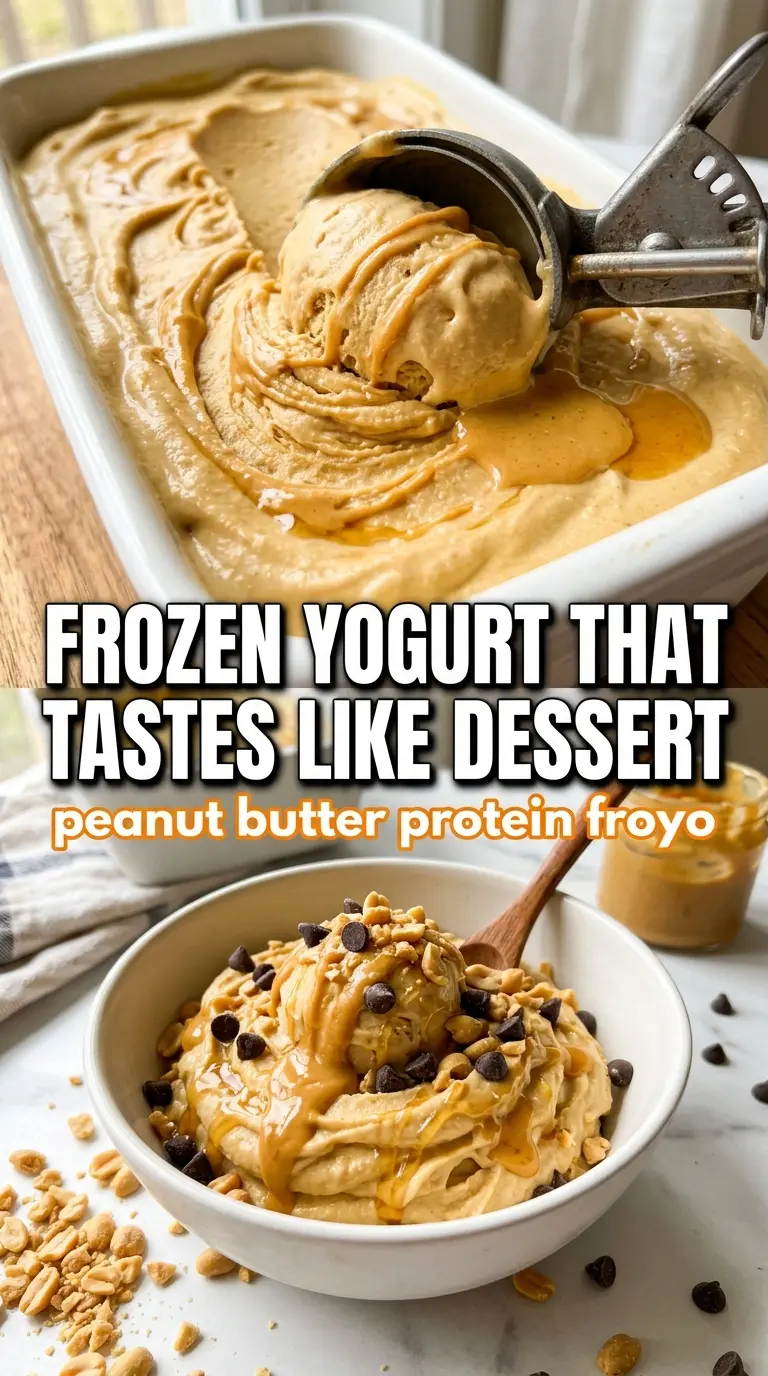
Thick, tangy frozen yogurt with peanut butter running through every bite earns its place as the kind of dessert you keep making on repeat. It scoops like ice cream after a short rest on the counter, but the flavor stays bright from the Greek yogurt and deep from the peanut butter, so it never tastes flat or overly sweet.
The trick here is balance. Greek yogurt gives the base enough body to freeze into a creamy spoonable dessert, while peanut butter brings fat and protein that keep the texture from turning icy. Honey or maple syrup does more than sweeten; it helps soften the final freeze just enough that the yogurt stays scoopable instead of hardening into a block. Stirring during the first part of freezing matters too, because it breaks up ice crystals before they get a chance to set.
Below, you’ll find the best way to mix the base until it’s completely smooth, what to do if you want a softer churned version, and a few easy swaps if you’re working with what’s already in the kitchen.
The texture came out surprisingly creamy for frozen yogurt, and stirring it the first two hours kept the peanut butter base from getting icy. I topped it with banana and honey like suggested, and it tasted like a richer version of soft serve.
Save this peanut butter frozen yogurt for the nights when you want a creamy, high-protein dessert with almost no effort.
The Part That Keeps Frozen Yogurt Creamy Instead of Icy
Most frozen yogurt turns icy because it’s too lean and gets frozen too fast. Greek yogurt alone doesn’t have enough fat to behave like ice cream, so the peanut butter here matters more than flavor. It adds richness, but it also gives the base enough body that the frozen yogurt holds onto a smoother texture after freezing.
The other thing that helps is stirring during the first two hours. That interrupts big ice crystals before they lock in. If you skip that part, the edges freeze hard first and the center lags behind, which is how you end up with a container full of gritty spoonfuls instead of a creamy dessert. A short rest at room temperature before scooping finishes the job.
- Greek yogurt — Plain Greek yogurt is the backbone of the recipe. Full-fat gives the best texture, but low-fat works if you accept a slightly firmer freeze. Regular yogurt is too loose and usually freezes icier.
- Creamy peanut butter — Use a smooth, stir-able peanut butter for the cleanest texture. Natural peanut butter works, but if the oil has separated badly, mix it very well first so the base doesn’t freeze in streaks.
- Honey or maple syrup — This is doing more than sweetening. It helps keep the frozen yogurt from setting rock hard. Honey gives a rounder, deeper sweetness; maple syrup reads a little lighter.
- Vanilla — Vanilla softens the tang of the yogurt and makes the peanut butter taste fuller. It doesn’t need to be fancy, but it should be real vanilla extract, not imitation, because the base is simple enough that you taste everything.
- Salt — A small amount sharpens the peanut butter and keeps the yogurt from tasting one-note. Skip it and the dessert lands flatter than it should.
What Each Ingredient Is Actually Doing in This Recipe
- Primary ingredient (the star) — Quality matters most. Choose the best you can find.
- Cooking medium (oil, butter, or broth) — This carries flavors and prevents dryness.
- Seasonings (salt, pepper, spices, herbs) — Layer flavors so nothing overpowers. Build depth gradually.
- Aromatics (garlic, onion, herbs) — Cook with fat to bloom flavors. Become the foundation.
- Supporting ingredients — Complement the main ingredient without overpowering it.
- Sauce or liquid (if applicable) — Brings flavors together. Balance richness with acid.
- Acid (lemon, vinegar, wine, or other) — Brightens and prevents flat-tasting results.
- Final finish (garnish, glaze, or sauce) — Prevents one-dimensional taste and adds visual appeal.
How to Mix, Freeze, and Scoop Without Fighting the Texture
Whisking the Base Until It’s Completely Smooth
Start with the yogurt and peanut butter first, and keep whisking until you don’t see any streaks. The peanut butter needs to disappear into the yogurt before the sweetener goes in, or you’ll end up chasing little pockets of paste around the bowl. If your peanut butter is stiff, warm it for a few seconds so it loosens and blends cleanly. The finished base should look thick, glossy, and uniform.
Freezing in a Way That Prevents Ice Crystals
Pour the mixture into a freezer-safe container with a lid, then freeze it for 4 hours. Stir it every hour for the first 2 hours, scraping the edges into the center each time. That motion matters most while the yogurt is still soft enough to move. If the container freezes solid around the sides before you stir, the texture gets grainy, and you can’t fully fix that later.
Letting It Sit Before You Scoop
After the full freeze, let the container sit at room temperature for about 5 minutes. That short rest makes the difference between a clean scoop and a chipped spoon. If it still feels too firm, give it another minute or two rather than digging in right away. The goal is pliable frozen yogurt, not melted edges.
Finishing With Toppings That Add Contrast
Banana slices and a drizzle of honey work because they soften the tang and add a little fresh sweetness. Crushed peanuts are excellent too if you want crunch against the creamy base. Add toppings right before serving so they stay distinct instead of sinking into the surface.
Ways to Adjust the Base for Different Freezers and Diets
Use maple syrup for a dairy-forward, slightly less sweet finish
Maple syrup gives the frozen yogurt a softer, cleaner sweetness that lets the peanut butter and yogurt come forward more clearly. Honey adds a thicker floral note and can taste a little richer, so choose maple if you want the tang of the yogurt to stay brighter.
Make it dairy-free with thick coconut yogurt
A thick unsweetened coconut yogurt works best here, but the flavor will shift toward coconut and the freeze will be a touch softer. Use the same method, and know that you may need a few extra minutes in the freezer for the texture to set enough to scoop.
Swap in almond butter for a lighter nutty flavor
Almond butter makes the base a little milder and less deeply roasted than peanut butter. It still gives body, but the finished dessert won’t taste as bold. If you use it, add a pinch more salt because almond butter can read flatter in frozen form.
Use an ice cream maker for the smoothest result
Churning gives you the creamiest texture with the smallest ice crystals, and it’s the best choice if you want something closest to soft serve. Freeze the base in your machine according to the manufacturer’s directions, then transfer it to a container and let it firm up for a short finish in the freezer.
Storage and Re-Freezing
- Refrigerator: This dessert doesn’t hold in the fridge as a finished product; it melts into a thick sauce within an hour or so.
- Freezer: Store covered for up to 2 weeks. It gets firmer over time, so press a piece of parchment directly onto the surface to reduce ice crystals.
- Reheating: There’s no reheating here. Let it sit at room temperature until it loosens enough to scoop, stirring the surface once if it looks frozen hard on top.
Answers to the Questions Worth Asking
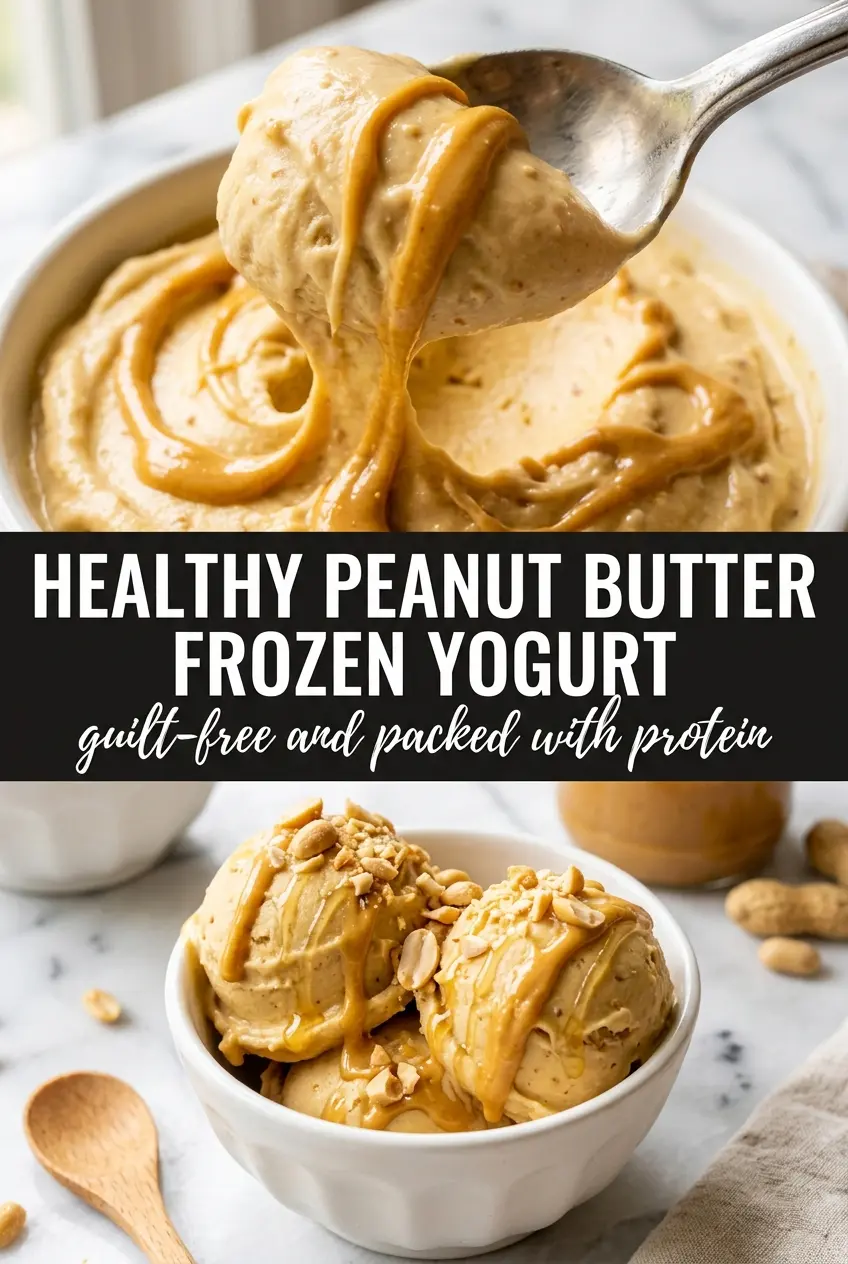
Healthy Peanut Butter Frozen Yogurt
Ingredients
Equipment
Method
- Whisk plain Greek yogurt, creamy peanut butter, honey or maple syrup, vanilla extract, and salt together until completely smooth and no peanut butter streaks remain.
- Taste the mixture and adjust sweetness by adding a little more honey or maple syrup if needed.
- Pour the mixture into a freezer-safe container and freeze for 4 hours, stirring every hour for the first 2 hours to prevent large ice crystals.
- After 4 hours, let the frozen yogurt sit at room temperature for 5 minutes before scooping so it softens slightly for easier serving.
- Top with banana slices and a drizzle of honey right before eating.
- If using an ice cream maker, churn the mixture until thickened for a smoother result, then transfer to a container and proceed with scooping after a 5-minute room-temperature rest.