Cold pasta salad lives or dies by texture, and this version gets it right: tender protein pasta, juicy tomatoes, crisp cucumber, creamy mozzarella, and enough chicken and chickpeas to make it a full meal instead of a side dish. The dressing clings to every piece without turning heavy, so each bite tastes bright, savory, and balanced.
The trick is using protein pasta that holds its shape after chilling, then rinsing it cold so it stops cooking and doesn’t go gummy. The chickpeas add a little extra bite and another layer of protein, while the Parmesan seasons the dressing from the inside out. Nothing here is fussy, but the order matters if you want a salad that still tastes fresh after an hour in the fridge.
Below you’ll find the small details that keep this salad from getting dry or dull, plus a few smart swaps for making it work with what you already have in the kitchen.
The pasta stayed springy after chilling, and the dressing soaked in just enough that it wasn’t dry the next day. I loved how the chickpeas and chicken made it feel like a complete lunch.
Save this high-protein Italian pasta salad for meal prep lunches, cookouts, or an easy dinner that still feels fresh the next day.
The Part Most Pasta Salads Get Wrong: Too Much Softness
The biggest problem with pasta salad is that it keeps absorbing dressing while it sits, which can leave you with soft noodles and a bowl that tastes flat by the time you serve it. Protein pasta is even more sensitive than regular pasta, so the cold rinse isn’t optional here. It stops the cooking fast and removes surface starch that would otherwise make the salad sticky.
Chilling also changes the texture in a good way, as long as you don’t drown the salad right away. A modest amount of dressing up front gets everything coated, then a small splash after resting wakes the whole dish back up. That’s the difference between a salad that feels dressed and one that feels soggy.
- Protein pasta — Chickpea or lentil pasta holds up better than delicate wheat pasta in this kind of salad because it brings a firmer bite and keeps the dish in the high-protein lane. Cook it just to al dente; overcooked protein pasta turns mealy fast.
- Grilled chicken — Use chicken that’s already cooked and cooled before mixing so it doesn’t steam the pasta or melt the cheese. Rotisserie chicken works in a pinch, but grilled chicken gives the cleanest savory flavor.
- Mozzarella — Cubed mozzarella adds creamy pockets throughout the salad. Fresh mozzarella can be used, but the firmer block style is less likely to weep and dilute the dressing.
- Italian dressing — A good bottled dressing is fine here because it’s doing a lot of heavy lifting quickly. If yours tastes sharp, whisk in a little extra Parmesan; if it’s thick, loosen it with a spoonful of water so it coats the pasta evenly.
What Each Ingredient Is Actually Doing in This Sturdy Pasta Salad
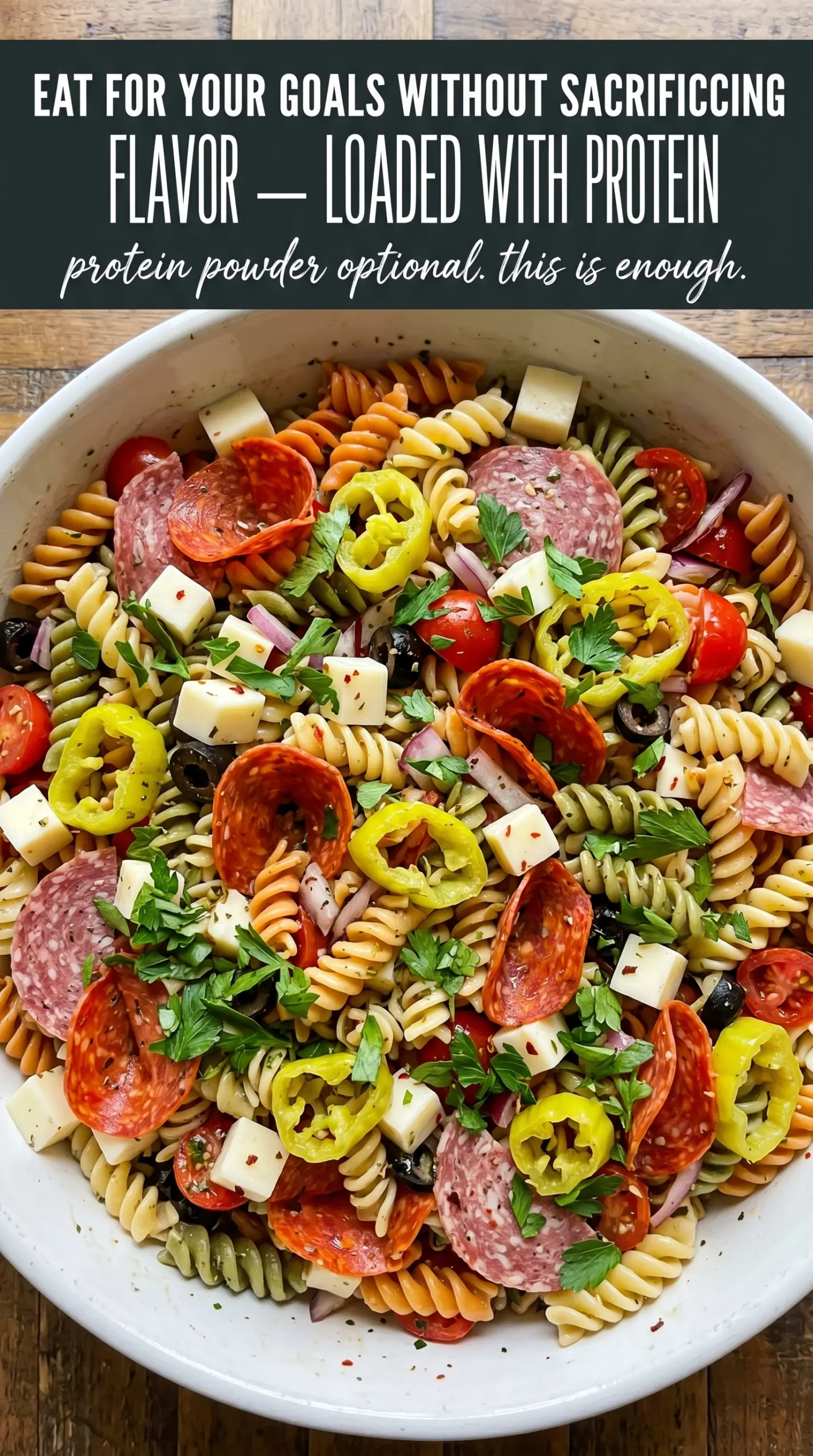
- Pasta cooked al dente (or one minute under) — The pasta should have a slight resistance when you bite it. It will continue to soften as the dressing sits, so starting firmer is the key to avoiding mush.
- Fresh vegetables with structure (celery, bell pepper, radish) — These stay firm and crunchy even after hours in the dressing. Soft vegetables like tomatoes should be added closer to serving time.
- Herbs and aromatics — Fresh herbs add flavor without adding bulk or moisture. Minced garlic, shallot, and fresh dill keep the salad from tasting like plain pasta.
- Good quality olive oil — This should be a main ingredient, not just a thin coating. The oil keeps the pasta from clumping and adds richness that heavier dressings would.
- Vinegar or citrus juice — The acid prevents the salad from tasting one-dimensional and cuts through the richness of the oil. A balance of both is better than heavy on one.
- Cheese (Parmesan, feta, or similar) — Sharp, salty cheese adds umami and prevents the salad from needing heavy dressing. A little goes a long way.
- Protein (chickpeas, beans, or cooked chicken) — These add substance and keep the salad filling without making it heavy. They should be flavorful on their own, not bland.
- Salt and pepper — Season boldly at every step. The dressing needs strong seasoning so the pasta absorbs balanced flavor as it sits.
Building the Salad So It Stays Fresh After Chilling
Cooking the Pasta to the Right Bite
Cook the protein pasta according to the package and stop when it still has a little firmness in the center. Drain it, then rinse under cold water until it feels cool all the way through. If you leave it warm, it keeps softening and the dressing won’t cling the same way.
Mixing the Main Components
Combine the pasta with the chicken, mozzarella, chickpeas, tomatoes, and cucumber in a large bowl so everything has room to move. Cut the chicken and cucumber into similar-sized pieces so you get a balanced forkful instead of one ingredient dominating the bite. If the tomatoes are very juicy, let them drain for a minute before adding them so the salad doesn’t get watery.
Finishing With Dressing and Chill Time
Stir in the Italian dressing, Parmesan, and Italian seasoning until every piece is lightly coated. The salad should look glossy, not soupy. Refrigerate it for at least an hour, then taste again before serving; cold pasta mutes salt and acid, so a final pinch of salt or splash of dressing is often what brings it back to life.
How to Adapt This for a Different Pantry or a Different Crowd
Gluten-Free and High-Protein
Use chickpea or lentil pasta, which already fits the gluten-free lane if the brand is certified. The texture is a little firmer than wheat pasta, which actually helps in a chilled salad, but it does need careful cooking so it doesn’t split or turn grainy.
Dairy-Free Version
Skip the mozzarella and Parmesan and add extra chickpeas or diced grilled chicken for body. The salad will lose some creaminess, so use a dressing with a little more oil-based richness instead of a sharp, watery one.
Make It Vegetarian
Leave out the chicken and double the chickpeas, or add white beans for a softer texture. You’ll still get a filling salad, but it leans more toward creamy and bean-forward than meaty and savory.
Storage and Reheating
- Refrigerator: Keeps for 3 to 4 days in a sealed container. The pasta will absorb some dressing, so expect it to look a little drier by day two.
- Freezer: I don’t recommend freezing this salad. The pasta turns soft, and the cucumber and mozzarella lose their texture after thawing.
- Reheating: Don’t reheat it; this one is meant to be served chilled. If it tightens up in the fridge, stir in a spoonful or two of dressing and let it sit at room temperature for 10 to 15 minutes before serving.
Questions I Get Asked About This Recipe
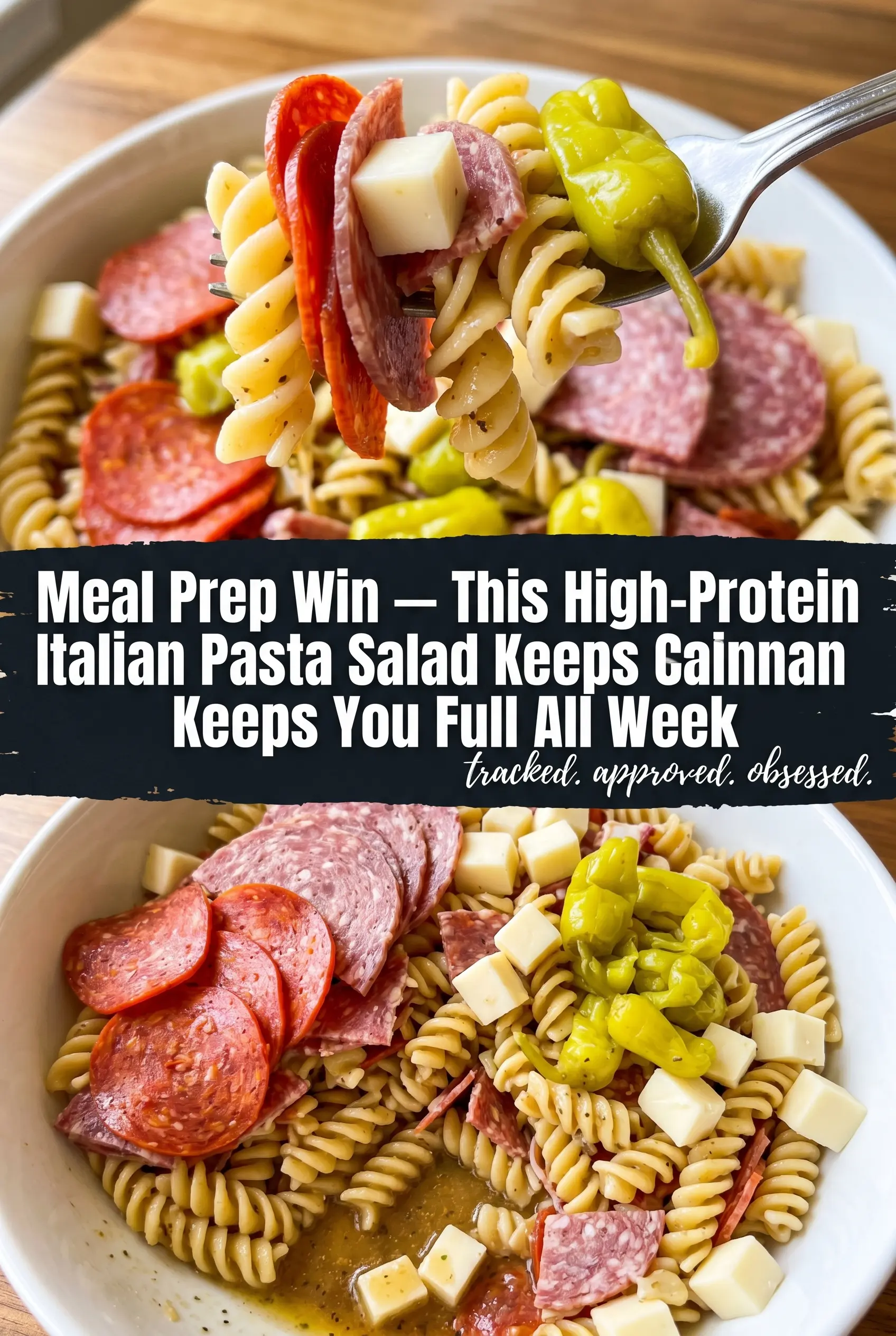
High-Protein Italian Pasta Salad
Ingredients
Equipment
Method
- Cook protein pasta according to package directions, then drain and rinse with cold water.
- Spread the pasta out briefly to cool, then set aside until fully cool to the touch.
- Combine pasta, diced grilled chicken, mozzarella cubes, chickpeas, halved cherry tomatoes, and diced cucumber in a large bowl.
- Add Italian dressing, grated Parmesan, and Italian seasoning.
- Toss until everything is well coated, then season with salt and pepper.
- Refrigerate for at least 1 hour before serving so the flavors meld.
- Adjust dressing if needed, then serve chilled.