Salted caramel cottage cheese ice cream hits that rare middle ground where a frozen dessert can taste indulgent and still feel practical enough to keep in the freezer for a weeknight craving. The texture turns surprisingly velvety when the cottage cheese is blended long enough, and the caramel flavor comes through rich and rounded instead of sharp or icy. A little sea salt keeps the sweetness in check and makes the whole bowl taste deeper.
The key is blending until the mixture is completely smooth before it ever goes near the freezer. Cottage cheese needs time to break down, and if you stop too soon, the final ice cream will read grainy instead of creamy. Brown sugar helps soften the freeze and gives the caramel note a more cooked, almost toffee-like edge, while a spoonful of cream cheese adds body if you want a denser scoop.
Below, you’ll find the small details that matter here: how to judge the blend by sight, what to do if your caramel tastes flat, and a few smart variations for when you want this dessert a little lighter, saltier, or richer.
The blender took all the curds out, and after four hours in the freezer it scooped like real ice cream. The caramel and flaky salt on top made it taste like something from an actual dessert shop.
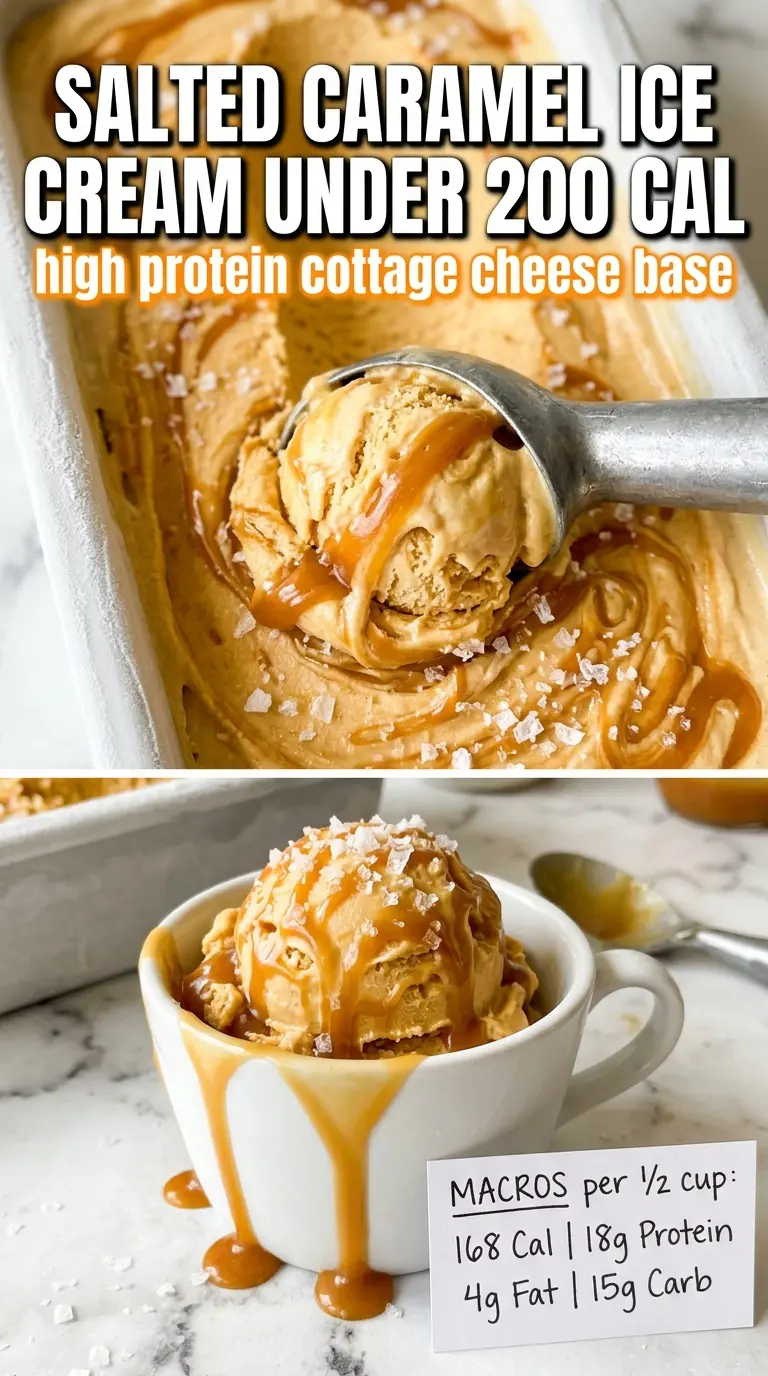
Save this salted caramel cottage cheese ice cream for the nights when you want a creamy, high-protein dessert with just enough salty caramel bite.
The Blend Time Is What Keeps This from Turning Grainy
Most cottage cheese ice creams fail in the blender stage, not the freezer. If the curds are still visible when you pour the mixture into the container, those little bits will freeze into a chalky texture instead of melting into a creamy scoop. Two full minutes is a starting point, not a suggestion, and with some blenders it takes closer to three.
The other thing that matters is balance. Caramel sauce gives you flavor, but brown sugar gives you a softer freeze and a fuller caramel taste that doesn’t disappear once it gets cold. Salt is not just a garnish here; it sharpens the caramel and keeps the dessert from tasting flat after freezing.
- Full-fat cottage cheese — The fat content gives this ice cream a smoother, richer base. Low-fat cottage cheese will freeze harder and taste icier, even if you blend it well.
- Caramel sauce — This is where the main flavor comes from, so use one you’d actually enjoy spooning. A thick jarred sauce works fine, but if it’s extremely thin, the final mixture can freeze a little softer and less intensely caramel-forward.
- Brown sugar — It deepens the caramel note and keeps the texture from setting up too firmly. You can reduce it slightly, but cutting it too much makes the ice cream taste more like sweetened cottage cheese than caramel dessert.
- Cream cheese — Optional, but it adds density and a little tang that makes the finished ice cream taste more like cheesecake-caramel than a frozen protein shake. Soften it first so it disappears cleanly in the blender.
- Flaky sea salt — Use this at the end, not in the base. The little crystals give you that bright salted-caramel finish that makes each bite pop.
What Each Ingredient Is Actually Doing in This Ice Cream
- Base ingredient (cream, milk, or custard) — This provides the foundation and richness. Quality matters.
- Sweetener (sugar, honey, or condensed milk) — This sweetens and prevents ice crystals. The ratio is critical.
- Flavor element (vanilla, fruit, chocolate, coffee, or other) — This defines the ice cream personality. Use quality ingredients.
- Egg yolks (if making custard base) — These create richness and silky texture. Optional but elevates ice cream.
- Churning (if using ice cream maker) — This incorporates air and prevents ice crystals. Critical for smooth texture.
- Freezing temperature and time — Proper freezing prevents rock-hard texture. Store at 0°F or below.
- Mix-ins (chocolate, cookies, fruit, or swirls) — These add texture and prevent one-dimensional flavor. Add near end of churning.
- Serving temperature (slightly soft, not rock hard) — This provides creamy mouthfeel. Remove from freezer 5 minutes before serving.
Freezing It at the Right Point So It Scoops Cleanly
Blend Until the Curds Vanish
Add everything to the blender and let it run long enough for the mixture to look glossy and uniform. Stop and scrape the sides once or twice if needed, because cottage cheese likes to hide little lumps around the edges. The base should look like a smooth caramel milkshake before it goes into the freezer.
Taste Before It Freezes
The sweetness and salt read differently once the mixture is cold, so this is the moment to adjust. If it tastes a little muted, add a touch more caramel sauce or a pinch more salt. If it tastes too sharp or salty at room temperature, don’t panic; freezing softens both, and the final result usually lands right where it should.
Freeze in a Shallow Container
Pour the base into a freezer-safe container with a wide surface area so it chills evenly. A deep, narrow container takes longer to set and can leave the center softer than the edges. Four hours is usually enough for a scoopable texture, though a longer freeze will make it firmer and more like classic ice cream.
Let It Stand Before Scooping
Pull the container out and let it sit for about five minutes before serving. That short rest is what turns a brick-like surface into something you can scoop without fighting it. Finish with extra caramel drizzle and flaky salt right before serving so the top stays glossy and the salt stays crisp.
How to Adjust the Base Without Losing the Creamy Texture
Dairy-Free Direction
This recipe depends on dairy for its creamy body, so a true dairy-free swap changes the dessert a lot. The closest route is a thick dairy-free yogurt base with a little nut butter for richness, but it won’t have the same neutral tang or custardy finish. It becomes more like frozen dessert than ice cream.
Less Sweet, More Salted
Drop the brown sugar by 1 tablespoon and keep the salt the same if you want the caramel to taste darker and less candy-like. The texture will freeze a little firmer, so the five-minute rest before scooping matters even more.
Extra-Rich Dessert Bowl
Use the optional cream cheese and add an extra tablespoon of caramel sauce if you want a denser, more luxurious scoop. This version freezes a touch softer and tastes closer to a caramel cheesecake ice cream.
Storage and Reheating
- Refrigerator: Not recommended. This is a freezer dessert and it will melt into a loose, sweet base in the fridge.
- Freezer: Keeps well for about 2 weeks in a tightly sealed container. After that, ice crystals start to show up and the texture gets less smooth.
- Reheating: No reheating needed. For serving leftovers, let the container sit at room temperature for 5 to 10 minutes so the edges soften before scooping. If it gets very hard, don’t microwave it; that creates melted patches and icy spots instead of a creamy scoop.
Answers to the Questions Worth Asking
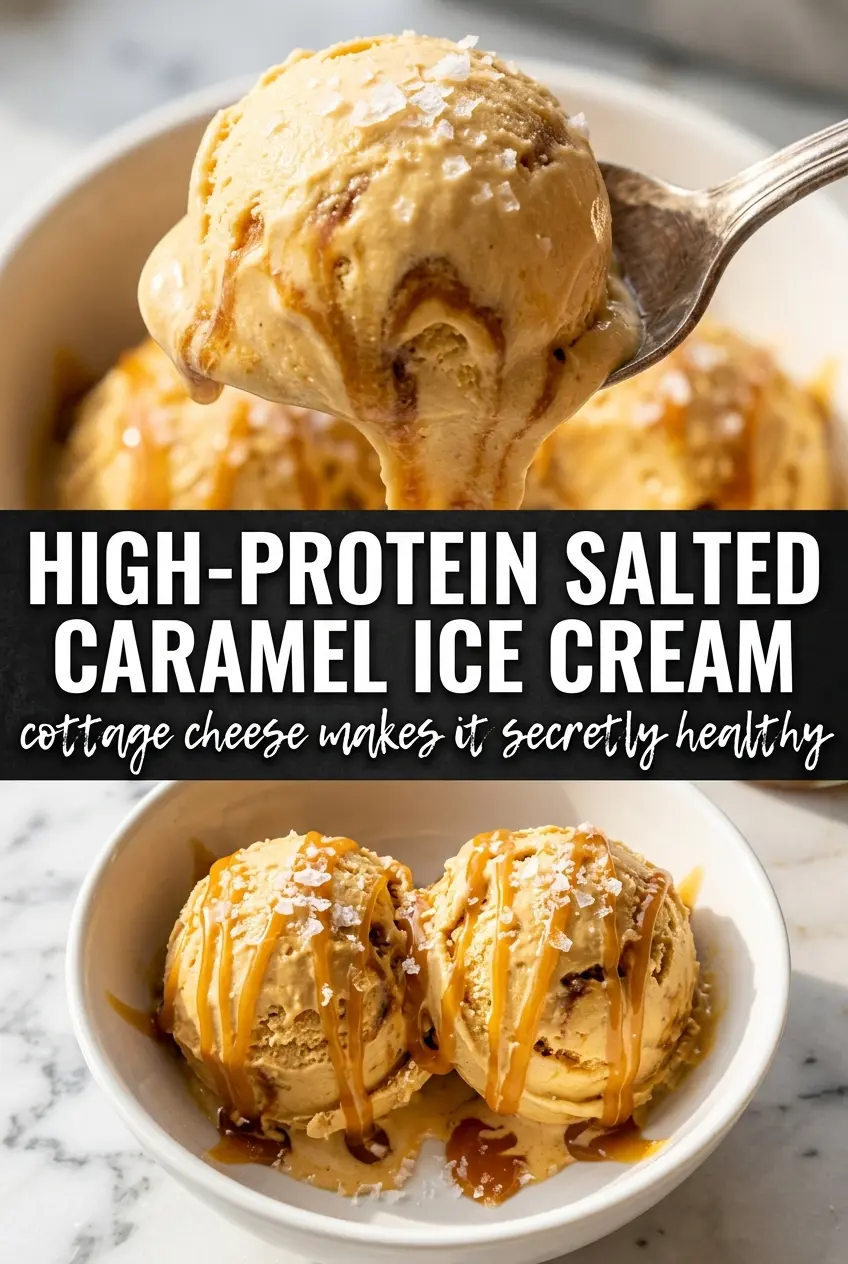
High-Protein Salted Caramel Cottage Cheese Ice Cream
Ingredients
Equipment
Method
- Blend full-fat cottage cheese, caramel sauce, brown sugar, vanilla extract, sea salt, and cream cheese (if using) until completely smooth; blend at least 2 minutes until no lumps remain.
- Taste the mixture and adjust caramel or salt level to your preference.
- Pour the blended mixture into a freezer-safe container and freeze for 4 hours, until firm.
- Remove from the freezer and let sit 5 minutes before scooping, so it softens slightly for easy portioning.
- Drizzle with extra caramel sauce and top with a pinch of flaky sea salt before serving for a salted caramel finish.