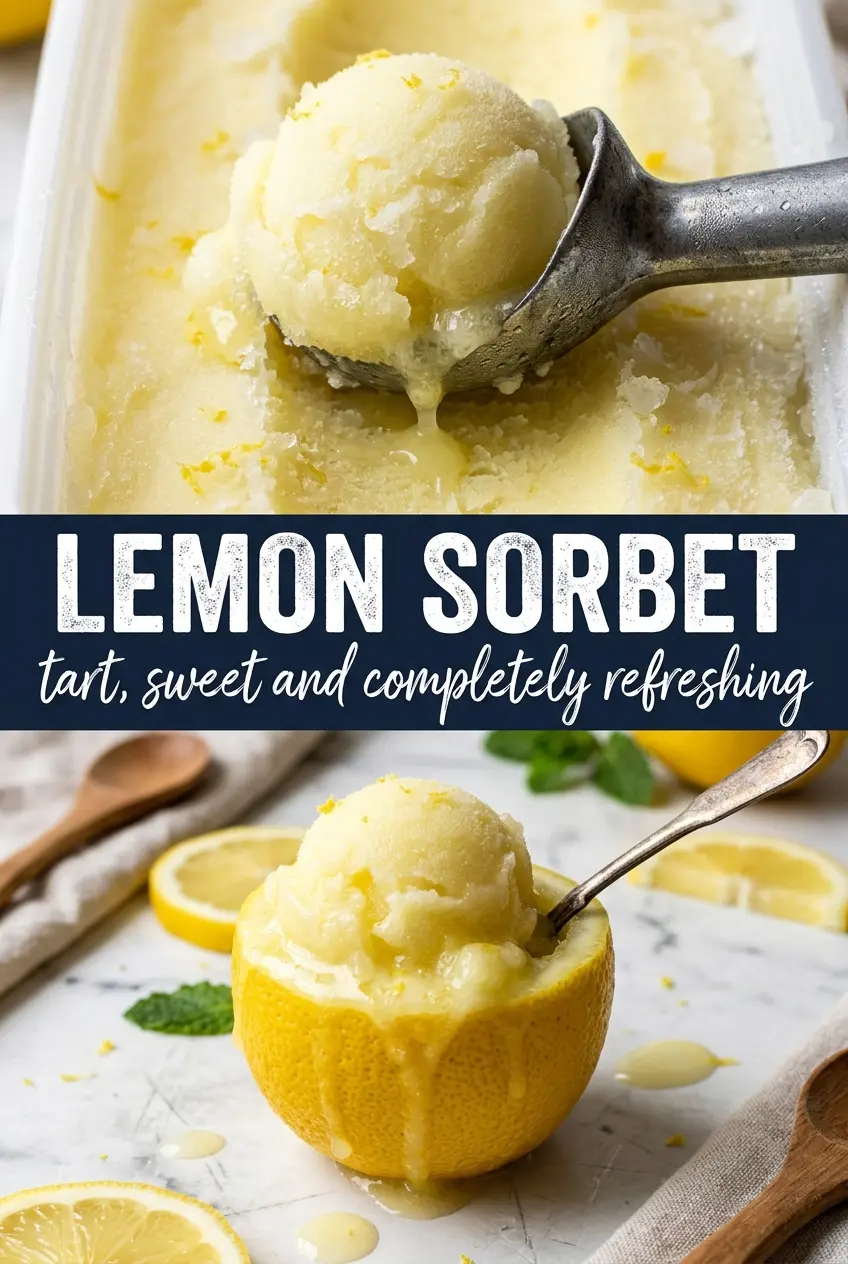
Bright, sharp lemon sorbet has a way of resetting everything on the table. It’s icy and clean on the tongue, with enough sweetness to round off the edges of the citrus so the flavor stays vivid instead of sour. The best batches don’t taste like frozen lemonade; they taste like pure lemon, distilled down to a spoonable dessert with a pale, shimmering finish.
This version leans on fresh juice and zest, which matter more here than in most desserts because there’s nowhere for weak citrus flavor to hide. The simple syrup is cooled before it meets the lemon juice, which keeps the mixture tasting fresh and keeps the machine from starting with a warm base. If you use the optional egg white, it softens the texture just enough to make the sorbet a little less brittle without turning it creamy in the dairy sense.
Below, I’ve included the one detail that keeps lemon sorbet bright instead of icy and flat, plus a few variations for making it fit what you’ve got on hand.
The texture came out like the lemon sorbet I used to get at a little trattoria — icy in the best way, not hard or flaky, and the zest made the flavor pop after it had been in the freezer overnight.
Save this lemon sorbet for the days when you want a tart, icy dessert with pure citrus flavor and a scoopable texture.
The Part That Keeps Lemon Sorbet Bright Instead of Icy
Lemon sorbet fails when the sugar balance is off or the base goes into the freezer too warm. Too little sugar and it freezes into a hard, powdery block; too much and it turns soft and slushy. The goal is a base that tastes a touch sweeter than you want in the bowl, because freezing mutes sweetness and acidity at the same time.
The other mistake is rushing the chilling step. A cold base churns faster and forms smaller ice crystals, which is what gives sorbet that fine, clean texture instead of rough shards. If the mixture still feels even slightly warm after the syrup is made, wait. That extra time pays off in the freezer.
- Fresh lemon juice — Bottled juice tastes flat here and can pick up a cooked note. Fresh lemons give the sharpness and perfume that make the sorbet taste alive.
- Lemon zest — The zest carries the oils that make the flavor linger. Stir it into the chilled base so it has time to infuse before churning.
- Granulated sugar — This isn’t just for sweetness; it controls texture. If you cut it too much, the sorbet freezes hard and icy.
- Egg white, optional — Whipping in a little air makes the sorbet less dense and slightly smoother. Skip it for a cleaner, more traditional icier finish.
What Each Ingredient Is Actually Doing in This Ice Cream

- Base ingredient (cream, milk, or custard) — This provides the foundation and richness. Quality matters.
- Sweetener (sugar, honey, or condensed milk) — This sweetens and prevents ice crystals. The ratio is critical.
- Flavor element (vanilla, fruit, chocolate, coffee, or other) — This defines the ice cream personality. Use quality ingredients.
- Egg yolks (if making custard base) — These create richness and silky texture. Optional but elevates ice cream.
- Churning (if using ice cream maker) — This incorporates air and prevents ice crystals. Critical for smooth texture.
- Freezing temperature and time — Proper freezing prevents rock-hard texture. Store at 0°F or below.
- Mix-ins (chocolate, cookies, fruit, or swirls) — These add texture and prevent one-dimensional flavor. Add near end of churning.
- Serving temperature (slightly soft, not rock hard) — This provides creamy mouthfeel. Remove from freezer 5 minutes before serving.
Building the Base So It Churns Cleanly
Making the Syrup
Combine the sugar and water in a saucepan and heat it just until the sugar disappears. You don’t need a boil; you need a clear syrup with no graininess at the bottom of the pan. If any sugar crystals remain, they can make the finished sorbet feel sandy. Cool the syrup all the way before moving on, because warm syrup dulls the lemon and slows down freezing.
Bringing in the Citrus
Stir the lemon juice, zest, and salt into the cooled syrup, then refrigerate the mixture until it’s very cold. The salt doesn’t make it salty; it sharpens the lemon and keeps the sweetness from reading one-note. If the base isn’t cold enough going into the machine, churn time stretches and the texture gets coarser.
Adding Air, Then Freezing
If you’re using egg white, whip it to soft peaks and fold it in gently. You’re not trying to make meringue; you’re loosening the base just enough for a smoother scoop. Churn until the mixture looks thick and slushy, then transfer it to a container and freeze until firm. If your sorbet hardens like ice, the base likely needed a little more sugar or a longer chill before churning.
How to Adapt Lemon Sorbet When You Need to
Dairy-Free and Naturally Vegan
Leave out the egg white and the sorbet stays fully dairy-free and vegan. The texture will be a little firmer and more crystalline, which many people prefer in a classic sorbet. Just let it sit at room temperature for a few minutes before scooping.
A Sweeter, Softer Scoop
If your lemons are especially sharp, add 1 to 2 tablespoons more sugar. That tiny shift makes the sorbet freeze a little softer and keeps the citrus from tasting aggressively tart. The tradeoff is a less bracing finish, but the texture usually improves.
No Ice Cream Maker
Pour the cold mixture into a shallow metal pan and freeze it, stirring every 30 minutes with a fork or whisk as it sets. This won’t be as airy as machine-churned sorbet, but it breaks up the ice crystals enough to keep the texture spoonable. The more often you stir in the first few hours, the finer the result.
Storage and Reheating
- Refrigerator: Don’t store finished sorbet in the fridge; it melts into citrus syrup and won’t return to the right texture.
- Freezer: Keep it in an airtight container for up to 2 weeks. Press a piece of parchment directly on the surface to slow ice crystals.
- Reheating: Not applicable. Let the sorbet sit at room temperature for 5 to 10 minutes before scooping so it softens just enough to serve cleanly.
Questions I Get Asked About This Recipe
Lemon Sorbet
Ingredients
Equipment
Method
- Make simple syrup by combining granulated sugar and water in a saucepan, then heat over medium while stirring until the sugar is fully dissolved, about 3-4 minutes. The mixture should look clear with no visible sugar grains.
- Remove the saucepan from heat and let the simple syrup cool completely, then stir it once to keep it uniform. Chill readiness looks like room-temperature syrup with no warmth.
- Combine the cooled simple syrup with fresh lemon juice, lemon zest, and salt, then stir until evenly blended. The mixture should turn a pale, concentrated yellow and smell sharply of lemon.
- Refrigerate the lemon mixture until very cold, at least 4 hours. It should feel icy-cold throughout with no neutralized warmth remaining.
- If using egg white, whip it to soft peaks, then fold it into the cold lemon mixture gently. It should look slightly lighter and airy, with streaks disappearing.
- Churn in an ice cream maker until thick and slushy, about 20-25 minutes. The sorbet should visibly thicken as it turns in the machine.
- Transfer the churned sorbet to a container, cover, and freeze at least 2 hours until firm. It should hold shape when scooped and look fully set around the edges.
- Serve in chilled bowls or scoop into hollowed lemon halves. The surface should look lightly frosted and the texture should be scoopable immediately.