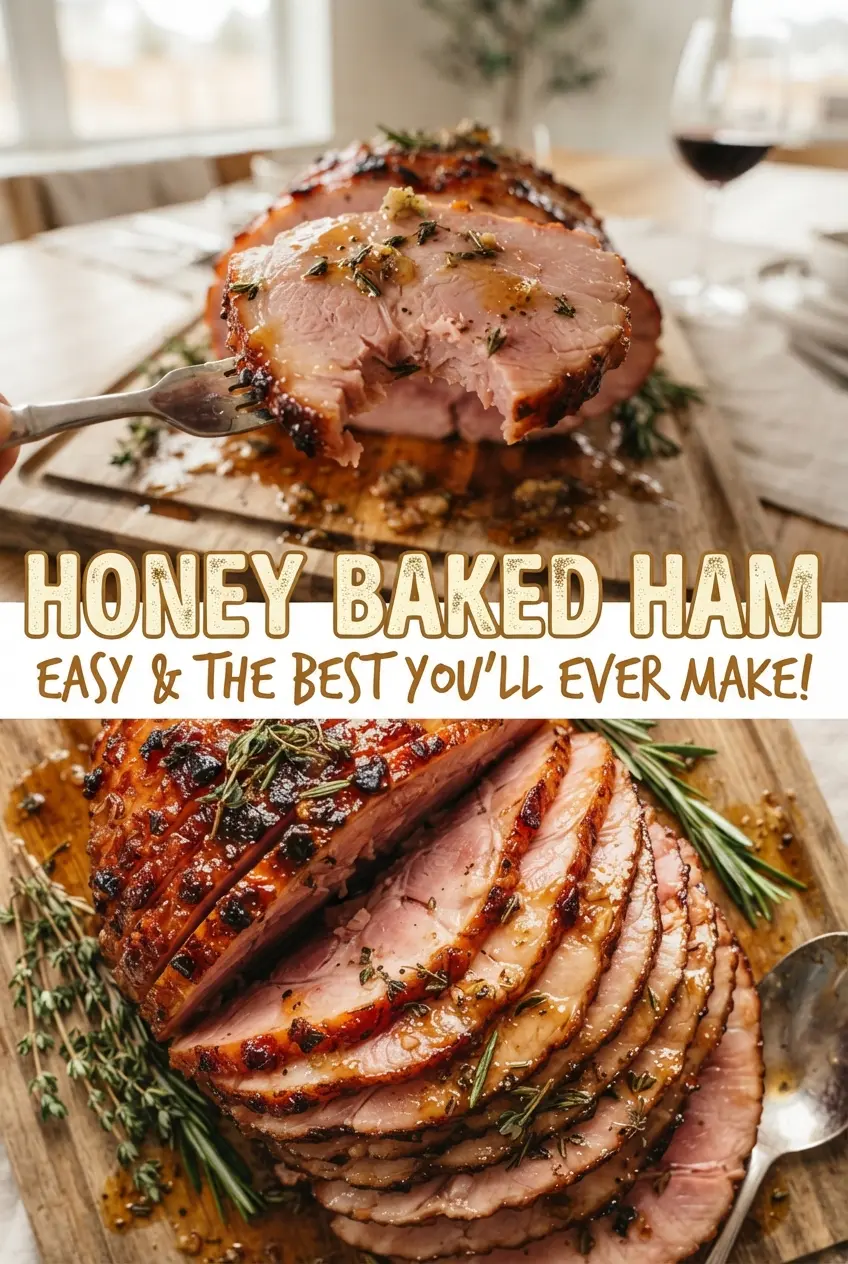
Honey baked ham comes out with a crackly, glossy crust and slices that stay juicy all the way through. The sweet-spiced shell clings to the outside just enough to give you that signature sticky bite, while the spiral cut lets the glaze seep between the layers. It’s the kind of main dish that looks like it took all day, even though the work is mostly in the glaze and the timing.
What makes this version work is the balance: honey and butter carry the glaze, while the sugar mixture bakes into a thin crust instead of sliding off. The spices are warm, not heavy, so they support the ham instead of burying it. Baking the ham low and slow first keeps it from drying out, then the short high-heat bursts at the end give you that crackly caramelized finish.
Below, I’ve included the part that matters most: how to keep the glaze on the ham instead of on the pan, plus a few smart swaps if you need them.
The glaze set up with that shiny crackly crust instead of sliding right off, and the slices stayed moist even on the ends. My dad went back for seconds before dinner was even cleared.
Save this honey baked ham for a glossy caramel crust and juicy spiral-sliced slices that carve beautifully every time.
The Trick to Keeping the Glaze on the Ham, Not in the Pan
The biggest mistake with honey baked ham is rushing the glaze too early or putting it on before the surface has had time to warm through. A cold ham straight from the fridge can make the honey mixture loosen and run, which is how you end up with a sticky pan and a pale crust. Start with the ham cut-side down and wrapped tightly, then let the first long bake do the gentle heating work.
The final high-heat bakes are where the crust happens. Brushing, sugaring, and returning it to the oven in short rounds lets each layer melt, cling, and caramelize instead of burning. That repeated layering is what gives you that shattery outer crust and those glossy, browned edges in the spiral cuts.
What the Honey, Butter, and Spices Are Actually Doing Here

- Fully cooked bone-in spiral-sliced ham — Bone-in ham holds onto moisture better than boneless, and the spiral cut gives the glaze places to settle. A pre-sliced ham also means the seasoning gets between the slices, which makes every bite taste seasoned, not just the outside.
- Honey — This is the glossy backbone of the glaze. Nothing else gives quite the same floral sweetness and shine, and it helps the sugar crust brown fast without tasting flat.
- Butter — Butter softens the sweetness and helps the glaze spread evenly. You can use salted or unsalted; salted just adds a little extra savory balance.
- Brown sugar and granulated sugar — The brown sugar adds depth and a slightly chewy melt, while the white sugar helps the crust dry into that crackly finish. If you use only brown sugar, the crust stays softer and a little stickier.
- Cinnamon, cloves, ginger, nutmeg, allspice, and paprika — These warm spices make the glaze taste round and aromatic instead of one-note sweet. Paprika doesn’t make it spicy; it deepens the color and adds a faint savory edge.
The Bake-and-Glaze Cycle That Builds the Crust
Starting Low and Covered
Set the ham cut-side down in the roasting pan and cover it tightly with foil before it goes into the oven. That first long bake warms the meat through gently and protects the cut edges from drying out. Pulling the foil too early is what usually leaves the slices dry before the crust has even started.
Mixing the Glaze While the Ham Warms
Melt the honey and butter together, then stir the sugars and spices in a separate bowl. You want the honey mixture fluid and the sugar mixture loose enough to pat on, not clumped into hard lumps. If the butter separates a little, that’s fine; it will come together again once it hits the warm ham.
Layering on the Crust
Remove the foil and brush the ham generously with the honey-butter mixture, then pat on a thick layer of the spiced sugar. The heat from the ham will start melting the sugar right away, so work quickly and get it into the spiral cuts too. If the sugar looks wet and paste-like, that’s exactly what you want before it goes back into the oven.
The Final Caramelization
Raise the oven to 400F and bake in short bursts, brushing and sugaring two more times. Watch for the crust to turn deep golden and crackly, with little dark edges where the sugar has caramelized. The ham is done when the center reaches 140F; any longer and the meat starts drying out while the crust hardens too far.
Maple-Mustard Glaze
Swap half the honey for maple syrup and whisk in a spoonful of Dijon before brushing it on. You’ll get a less candy-sweet crust with a little tang, and the mustard helps the glaze cling to the spiral cuts.
Lower-Sugar Version
Cut the granulated sugar in half and keep the brown sugar for depth. The crust will be a little less thick and crackly, but you’ll still get good caramelization from the honey and the high-heat finish.
Gluten-Free and Naturally Dairy-Free
This recipe is naturally gluten-free if your ham is gluten-free, and it can be dairy-free by swapping the butter for a neutral plant-based butter. The glaze still browns well, though the finish may look a touch less rich than with real butter.
Storage and Reheating
- Refrigerator: Store leftovers tightly covered for up to 4 days. The crust softens, but the flavor stays excellent.
- Freezer: Freeze sliced ham in airtight containers or freezer bags for up to 2 months. Wrap portions well so the glaze doesn’t pick up freezer burn.
- Reheating: Reheat slices covered with a splash of water or pan juices at 300F until just warm. High heat dries ham fast, so warm it gently and only long enough to take the chill off.
Answers to the Questions Worth Asking
Honey Baked Ham
Ingredients
Equipment
Method
- Preheat the oven to 325F. Place the ham cut-side down in a roasting pan and cover tightly with foil.
- Bake for 12 to 14 minutes per pound, until the center registers 120F inside. The ham should be hot all the way through with steam visible under the foil.
- Melt the honey and butter together. Stir until smooth so the glaze brushes on easily.
- In a separate bowl, mix the granulated sugar and brown sugar with the cinnamon, cloves, ginger, nutmeg, allspice, and paprika. The mixture should look evenly speckled.
- Remove the foil, brush the ham generously with honey butter, and pat on a layer of the spiced sugar. Coat the ridges so the crust forms everywhere.
- Raise the oven to 400F and bake for 5 minutes. Look for the top to start setting and lightly caramelizing.
- Brush the ham again with honey butter and pat on another layer of spiced sugar. Keep the coating thick for a crackly crust.
- Bake for 5 minutes at 400F. The sugar should deepen in color but not burn.
- Brush the ham again with honey butter and pat on the remaining spiced sugar. Press gently so the sugar adheres.
- Bake until the crust is deep golden, crackly, and the ham reaches 140F. The glaze should look glossy and caramelized, with crisp edges in the spiral grooves.
- Rest the ham for 15 minutes before serving. The juices should settle and the crust should firm up slightly.