Honey mustard potatoes hit the table with crisp edges, creamy centers, and a glossy glaze that clings to every cut side. The honey caramelizes in the oven, the mustard sharpens the sweetness, and the potatoes pick up enough browned bits to taste like they spent a lot more time than they did. This is the kind of side dish that disappears first, even next to a main that took all day.
What makes this version work is the balance in the glaze and the way the potatoes are cut. Baby potatoes or Yukon golds give you enough starch for a soft middle, while the mustard mixture is loose enough to coat but not so wet that it steams the pan. A little apple cider vinegar keeps the honey from turning flat, and the rosemary plus smoked paprika add depth without stealing the spotlight.
Below, I’ll walk through the small details that keep the potatoes caramelized instead of soggy, plus a few swaps that still give you that same sweet-savory finish.
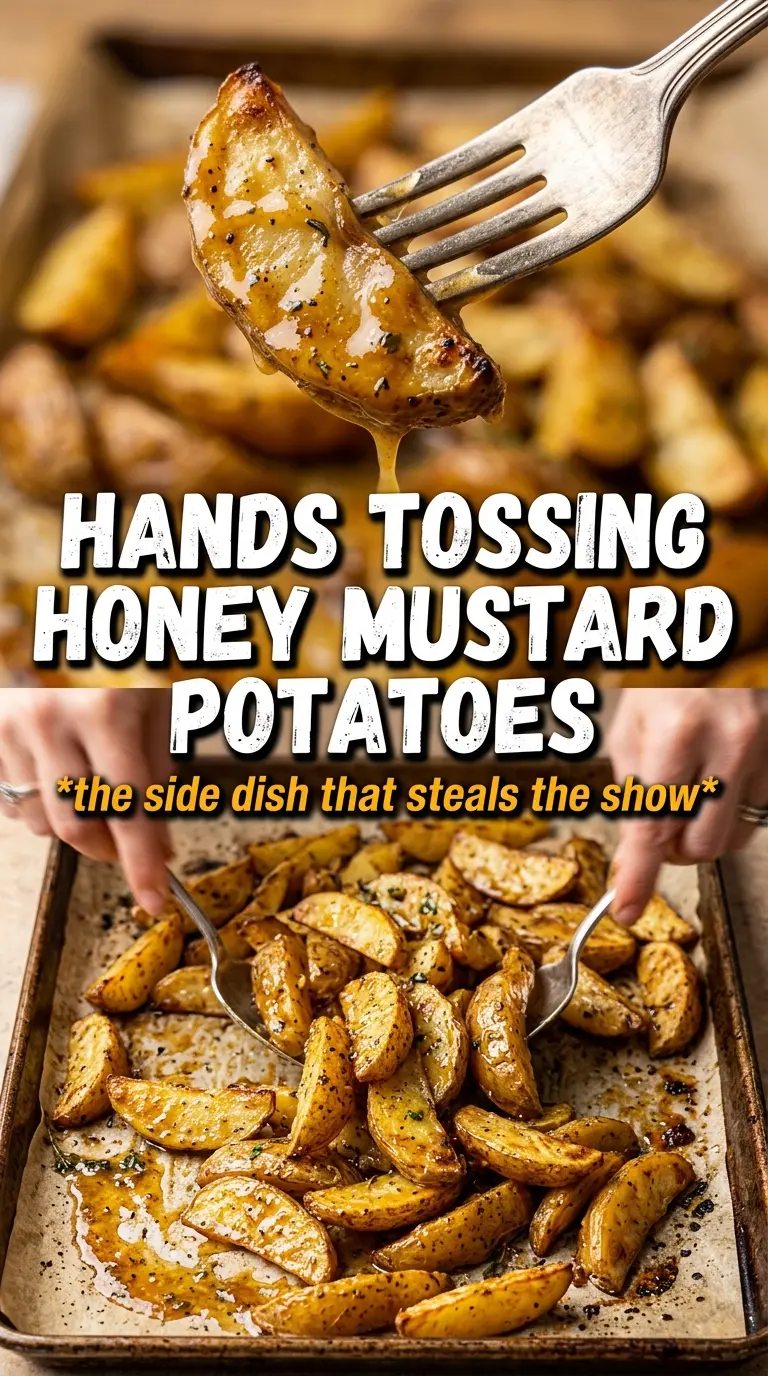
The glaze coated every potato wedge and the edges caramelized instead of burning. I tossed them halfway through and they came out crisp on the outside with soft centers, just like the recipe promised.
Crispy honey mustard potatoes with caramelized edges are the kind of side dish worth pinning for roasted chicken, pork, or any weeknight dinner that needs a little extra lift.
The Secret to Caramelized Potatoes Instead of Sticky Ones
The biggest mistake with honey mustard potatoes is treating the glaze like a marinade and expecting the oven to do all the work. Honey brings sugar, and sugar browns fast. If the potatoes are crowded or the coating is too thick, they’ll soften before they caramelize. A hot oven and a single layer are what give you those crisp, lacquered edges.
Cut size matters more than people think. Halved baby potatoes or evenly cut Yukon gold pieces roast at the same rate, which means you don’t end up with some pieces collapsing while others are still firm in the center. Tossing halfway through exposes fresh sides to the hot pan, and that’s where the best browning happens.
- Single layer on the pan — this keeps the potatoes roasting instead of steaming.
- Halved baby potatoes or Yukon golds — both hold their shape and turn creamy inside.
- Honey in moderation — enough to glaze, not so much that the potatoes burn before they cook through.
- Hot oven, not a moderate one — 425°F gives you browning before the potatoes dry out.
What Each Ingredient Is Actually Doing in the Glaze
- Dijon mustard — this is the backbone of the glaze. It brings sharpness and helps the sauce emulsify so it coats the potatoes instead of sliding off.
- Whole grain mustard — adds texture and a gentler mustard bite. Dijon alone tastes flatter here, so the combination gives the glaze more depth.
- Honey — gives the potatoes their glossy finish and helps them caramelize. Maple syrup works in a pinch, but the flavor turns darker and less sharp.
- Apple cider vinegar — cuts the sweetness and keeps the glaze lively. Without it, the potatoes can taste one-note.
- Fresh rosemary — brings a piney, savory note that stands up to roasting. Dried rosemary can work, but use less because it tastes stronger once baked.
- Smoked paprika — adds a little warmth and color. It doesn’t make the potatoes taste smoky in a barbecue way; it just rounds out the glaze.
The Part of the Roast That Changes Everything
Whisking the Glaze Until It Looks Smooth
Whisk the Dijon, whole grain mustard, honey, olive oil, vinegar, garlic, rosemary, paprika, salt, and pepper until the mixture looks glossy and fully combined. It should be loose enough to coat every cut surface, not thick like a dip. If the honey is stubborn, whisk a few extra seconds and it will come together. Any uneven streaks now will show up as uneven browning later.
Coating the Potatoes Without Drowning Them
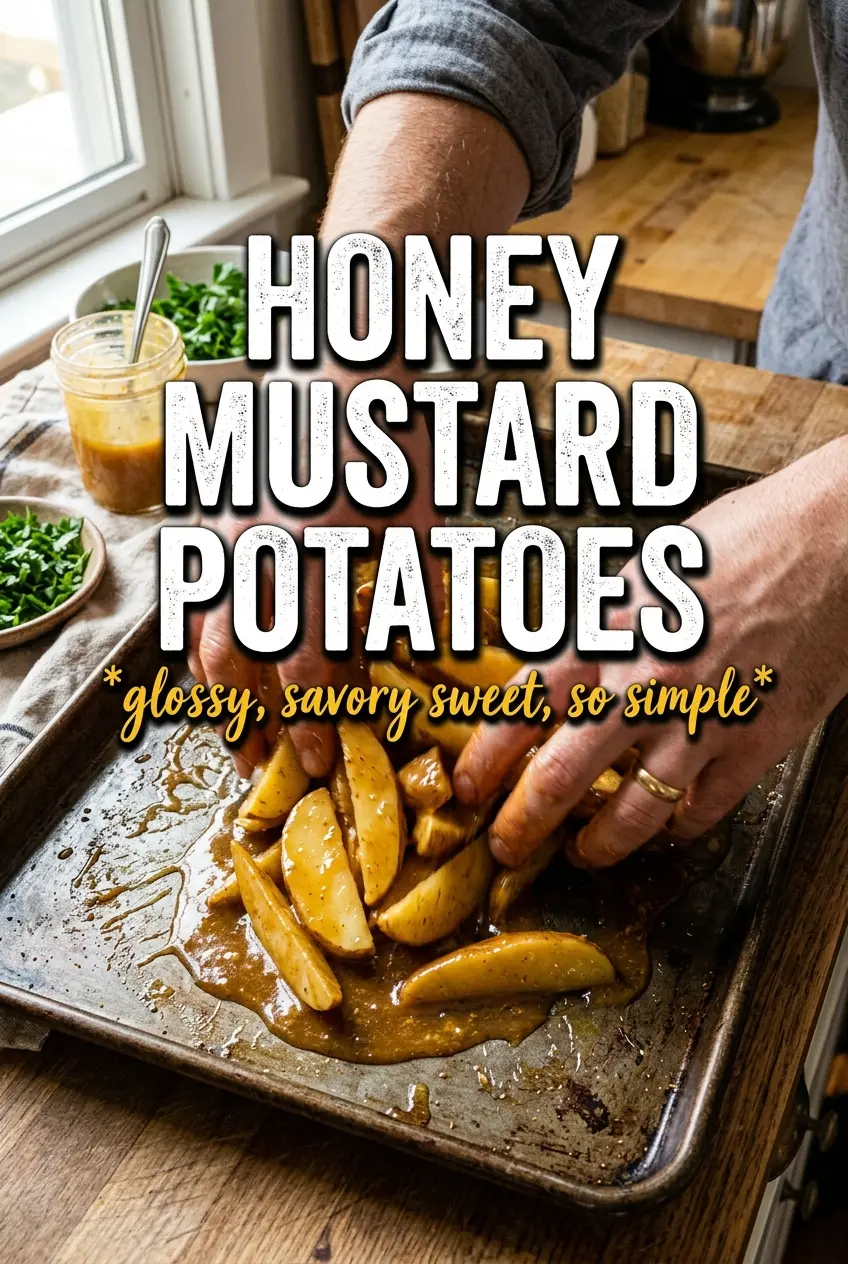
Toss the halved potatoes in the glaze until every piece is lightly coated. You want a thin film, not a pool in the bowl. If the potatoes look drenched, scrape off the excess before they go on the pan or the glaze will slide off and burn in spots instead of roasting evenly. Use your hands or a sturdy spoon and get the cut sides well covered.
Roasting Until the Edges Turn Deep Gold
Spread the potatoes in a single layer on the baking sheet and roast at 425°F for 30 to 35 minutes, tossing halfway through. The cut sides should turn deep golden and the glaze should look sticky and browned at the edges. If the potatoes are pale at the end, they need more space or more heat. If the honey starts to darken too fast, move the pan up one rack and give it a stir.
Finishing With Fresh Herbs and Salt
Scatter parsley and flaky salt over the potatoes as soon as they come out of the oven. The salt lands on the glaze while it’s still tacky, so it sticks instead of bouncing off. Fresh parsley adds a clean note that keeps the dish from feeling heavy. Serve them hot, while the edges still have some crunch.
How to Adapt These Potatoes Without Losing the Glaze
Make Them Dairy-Free or Naturally Gluten-Free
This recipe already fits both of those needs as written. The key is checking your mustard labels, since a few brands add thickeners or flavorings you may not want. The texture and flavor stay exactly the same, so this is an easy one to put on repeat.
Swap the Potatoes for Sweet Potatoes
Sweet potatoes work, but they brown faster because of their sugar content. Cut them into larger chunks and start checking them a few minutes early so the glaze doesn’t go from caramelized to too dark. The result is softer and sweeter, with a more dessert-adjacent finish.
Use Maple Syrup Instead of Honey
Maple syrup gives a deeper, woodsy sweetness and works well if that’s what you have on hand. It won’t glaze quite as brightly as honey, and the finished potatoes taste a little less sharp. Keep the vinegar in place so the sauce still has enough contrast.
Add More Heat
A pinch of cayenne or red pepper flakes gives the glaze a little bite without changing the texture. Add it with the paprika so it disperses evenly. This is the version I reach for when the potatoes are going alongside richer meats or creamy mains.
Storage and Reheating
- Refrigerator: Store leftovers in an airtight container for up to 4 days. The potatoes soften a bit, but the flavor holds well.
- Freezer: These freeze, but the texture gets mealy after thawing, so I don’t recommend it.
- Reheating: Reheat on a baking sheet in a 400°F oven until hot and the edges crisp back up. The biggest mistake is microwaving them, which turns the glaze loose and the potatoes soft.
Answers to the Questions Worth Asking
Honey Mustard Potatoes
Ingredients
Equipment
Method
- Preheat oven to 425F and line a sheet pan with parchment or a light coating of oil for easy release.
- Whisk Dijon mustard, whole grain mustard, honey, olive oil, apple cider vinegar, garlic, fresh rosemary, smoked paprika, salt, and pepper until smooth.
- Toss halved baby potatoes or Yukon golds in the honey mustard mixture until evenly coated and shiny.
- Spread potatoes in a single layer on the sheet pan and roast 30-35 minutes, tossing halfway, until caramelized and golden.
- Sprinkle roasted honey mustard potatoes with fresh parsley and flaky salt right after roasting to highlight the glaze.