Hot buttered applesauce turns soft apples into something richer, smoother, and a little more grown-up than the jarred version most of us remember. The butter rounds out the apple flavor instead of hiding it, while cinnamon and nutmeg give the sauce a warm finish that tastes balanced, not loud. Served warm, it lands somewhere between comfort food and a simple side dish you’ll keep reaching for.
The trick here is starting the apples in butter that’s just barely browning. That tiny bit of nuttiness carries through the whole pot and makes the sauce taste fuller without needing a long ingredient list. A splash of cider keeps the apples from sticking at the start, brown sugar or maple syrup softens sharp fruit, and vanilla goes in at the end so it stays fragrant instead of cooking away.
Below, I’ll walk through the texture choices, the ingredients that matter most, and the one point where people usually overcook apple sauce into something flat. You’ll also find a few easy ways to adjust the sweetness and texture depending on what apples you’ve got on hand.
The apples broke down into the smoothest sauce, and the browned butter gave it this deep, almost caramel taste. I served it with pork chops and my kids ate the leftovers cold from the fridge.
Save this hot buttered applesauce for the days when you want a warm, silky side dish with browned butter and cinnamon.
The Browning Step That Keeps Applesauce from Tasting Flat
Most applesauce starts with fruit and sugar simmered together, which works fine but can taste a little one-note. Here, the butter goes in first and gets just a hint of color before the apples hit the pan. That small head start adds depth, and it also gives the apples a richer coating as they soften.
The other important piece is not rushing the simmer. Apples need time to collapse fully before you mash or blend them, or you end up with a sauce that tastes sharp and unfinished. If the pan looks dry before the fruit softens, a splash more cider keeps things moving without washing out the spice.
What the Apples, Butter, and Spice Each Bring to the Pot
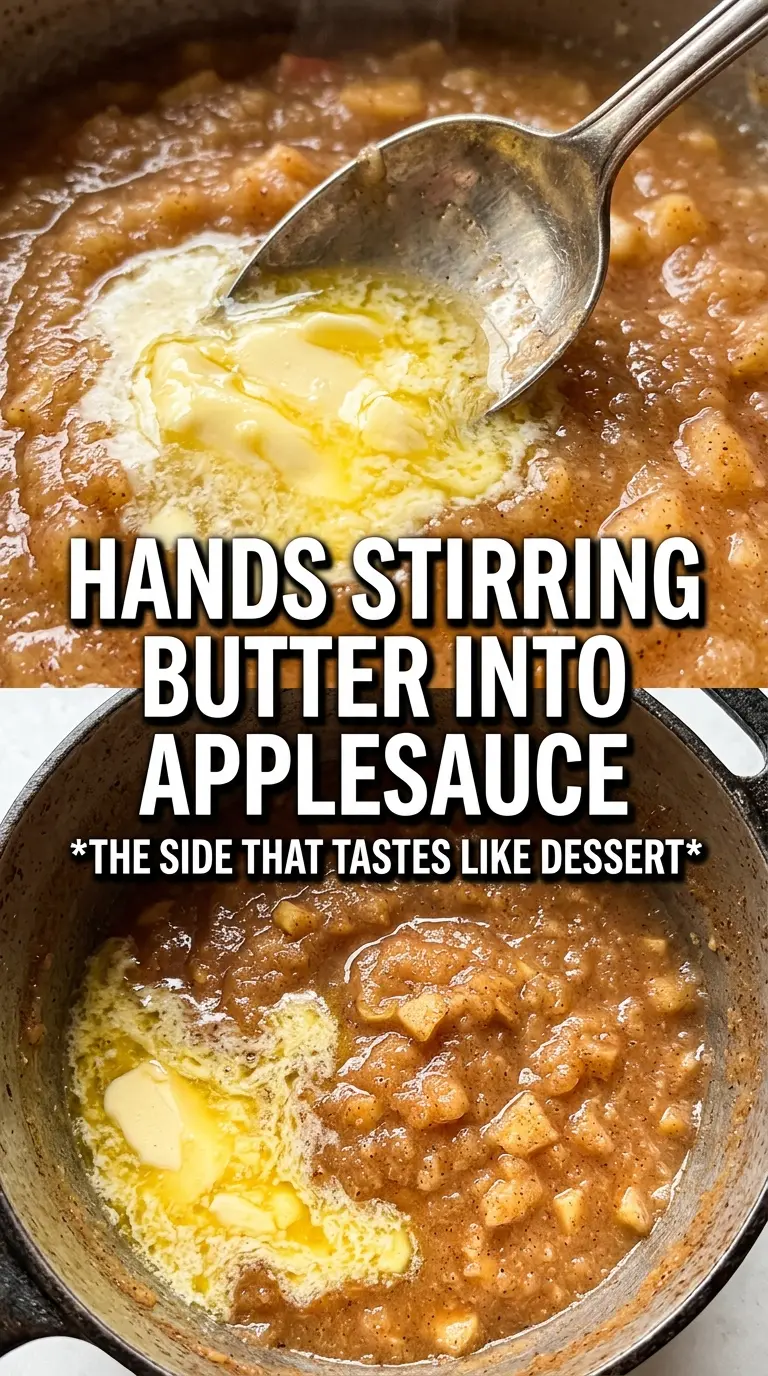
- Apples — Honeycrisp, Fuji, or McIntosh all break down well, but they behave a little differently. Honeycrisp keeps some body, McIntosh turns soft faster, and Fuji lands in the middle. Mixing varieties gives the best balance of flavor and texture if you have them.
- Butter — Unsalted butter lets you control the salt and gives you a clean browned-butter flavor. If you skip browning and just melt it, the sauce still works, but you lose the nutty edge that makes this version stand out.
- Apple cider or juice — This is the moisture that helps the apples start cooking without scorching. Cider brings more apple depth; juice is sweeter and lighter. Either one works, but cider gives the sauce a fuller finish.
- Brown sugar or maple syrup — Use brown sugar for a deeper, molasses-like sweetness, or maple syrup for a softer, rounder taste. Start with the listed amount and adjust at the end, since ripe apples can need less sweetening than you’d expect.
- Vanilla and spices — Cinnamon and nutmeg need the full simmer to blend into the fruit, while vanilla should go in after cooking so it stays bright. Freshly grated nutmeg matters here because a small amount makes a noticeable difference.
Getting the Apples Soft Before the Sauce Goes Mushy
Let the butter just begin to brown
Melt the butter in a large saucepan over medium heat and watch for the foam to settle and the color to turn pale gold with a nutty smell. That’s your signal to add the apples right away. If the butter goes from golden to dark brown too fast, the heat is too high and the flavor will turn bitter instead of rich.
Simmer with the lid on
Once the cider, sugar, spices, and salt are in the pan, cover it and keep the heat low enough for a steady simmer. You want the apples to steam and soften until they collapse when pressed with a spoon. If the mixture boils hard, the liquid will evaporate before the apples are tender and you’ll have to rescue it with more cider.
Choose the texture at the end
When the apples are fully soft, mash them for a rustic sauce or use an immersion blender for a smoother finish. Blend only until you like the texture; going too far can make the sauce gluey. Stir in the vanilla after blending, then taste for sweetness and salt before serving warm with an extra pat of butter.
Ways to Adjust the Sweetness, Texture, and Dietary Needs
Make it dairy-free
Swap the butter for a plant-based butter that browns well, or use coconut oil if you don’t mind a faint coconut note. You’ll lose a little of the nutty richness from browned dairy butter, but the apples, cinnamon, and nutmeg still carry the dish.
Keep it naturally lighter
Use ripe sweet apples and cut the brown sugar back a little, then taste after the apples soften. The sauce will still feel full because the butter gives it body, so you don’t need as much sweetener as you might think.
Make it completely smooth
Blend the apples while they’re still hot with an immersion blender, then stop as soon as the texture looks silky. If you keep blending after it’s already smooth, the sauce can turn loose and foamy instead of glossy.
Storage and Reheating
- Refrigerator: Store in a covered container for up to 5 days. The sauce thickens as it chills, so expect a firmer texture the next day.
- Freezer: It freezes well for up to 3 months. Cool completely, portion into freezer-safe containers, and leave a little headspace for expansion.
- Reheating: Warm gently on the stove or in the microwave with a splash of cider or water if it looks too thick. Don’t boil it hard, or the butter can separate and the texture can turn loose.
Questions I Get Asked About This Recipe
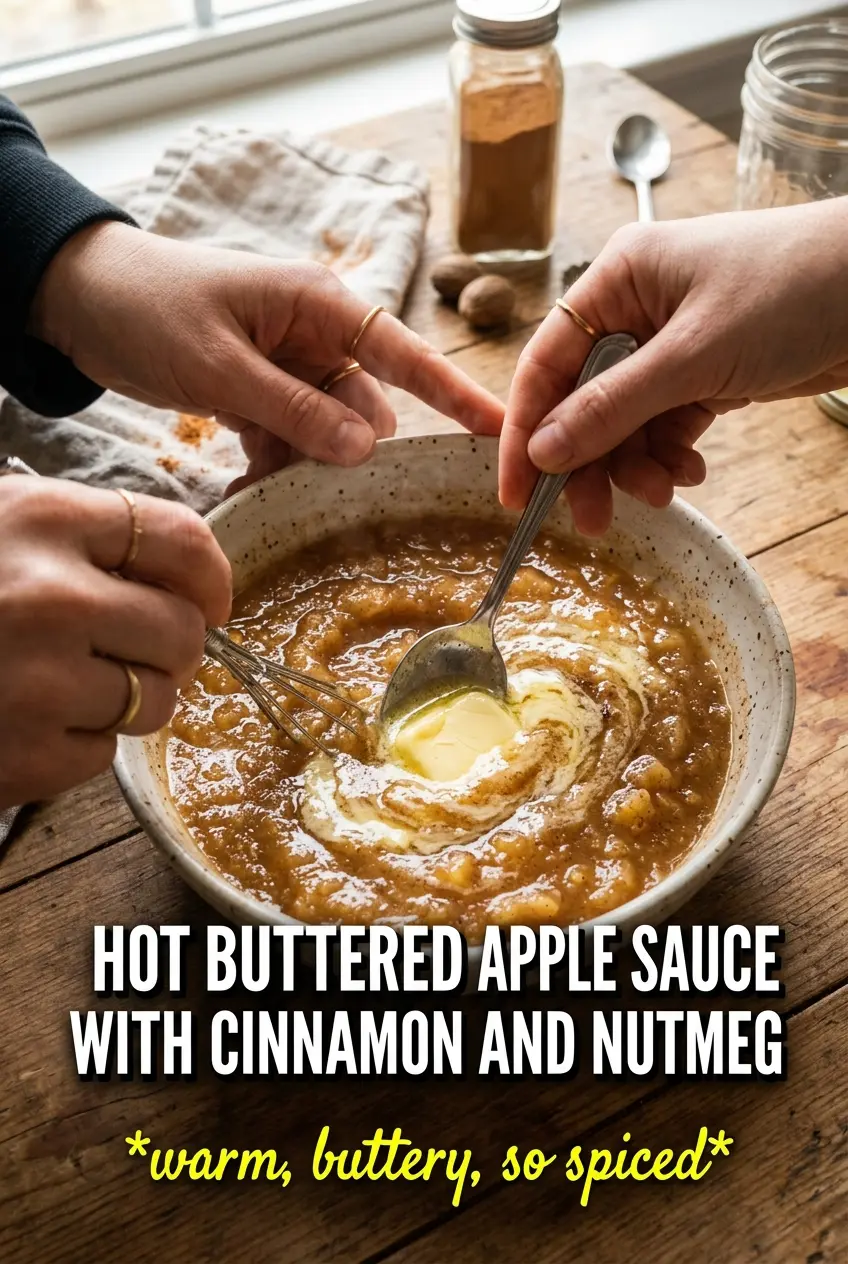
Hot Buttered Apple Sauce With Cinnamon And Nutmeg
Ingredients
Equipment
Method
- Melt the unsalted butter in a large saucepan over medium heat until it is just starting to brown, then add the chopped apples immediately for even coating.
- Cook for 3-4 minutes, stirring occasionally, until the apples are glossy and slightly softened.
- Add apple cider or apple juice, brown sugar or maple syrup, cinnamon, nutmeg, and salt, then stir to combine.
- Cover and simmer for 20-25 minutes until the apples are completely soft, with gentle bubbling under the lid.
- Mash the apples to your desired texture—chunky or smooth—using a masher while they are hot.
- For smooth applesauce, blend with an immersion blender until silky, without any visible apple pieces.
- Stir in the vanilla extract, then taste and adjust sweetness if needed.
- Serve warm with an extra pat of brown butter and a dusting of cinnamon on top.