Italian pasta salad earns its spot because it stays bold, colorful, and satisfying even after it chills. The pasta soaks up enough dressing to taste seasoned all the way through, but it still keeps its shape, and the mix of salami, mozzarella, olives, and peppers gives every bite a little salt, a little tang, and a little crunch.
The trick is in the timing. Tossing the warm pasta with dressing first lets it absorb flavor before it cools, which keeps the salad from tasting flat later. The other piece that matters is balance: enough dressing to coat, but not so much that the bowl turns greasy or the pasta goes soggy after a few hours in the fridge.
Below, I’ve included the few details that matter most when you’re making this for a potluck, picnic, or make-ahead dinner side. There’s also a small adjustment that keeps the salad from drying out once it’s been chilled, which is the part most people miss.
I made this the night before our cookout and the pasta held up perfectly after chilling. The dressing soaked in without making it mushy, and the mozzarella cubes stayed firm and creamy instead of getting watery.
Save this Italian pasta salad for potlucks, picnics, and make-ahead dinners when you need something cold, colorful, and sturdy enough to sit in the fridge.
The pasta has to drink in the dressing before the fridge does
The biggest mistake with Italian pasta salad is treating it like a last-minute toss-and-serve dish. Cold pasta tightens up and the flavors stay on the surface, which is why so many versions taste fine on day one and dull by day two. Tossing the pasta with dressing while it’s still slightly warm lets the starch on the surface grab onto the vinaigrette, so the whole bowl tastes seasoned instead of slick.
The second thing that changes everything is using enough texture. Salami, mozzarella, peppers, and olives each bring a different kind of bite, and that matters more than it sounds. If everything in the bowl is soft, the salad eats heavy. If you keep the pieces fairly even and don’t dice them too small, each forkful stays balanced.
What the dressing, pasta shape, and mix-ins are each doing here
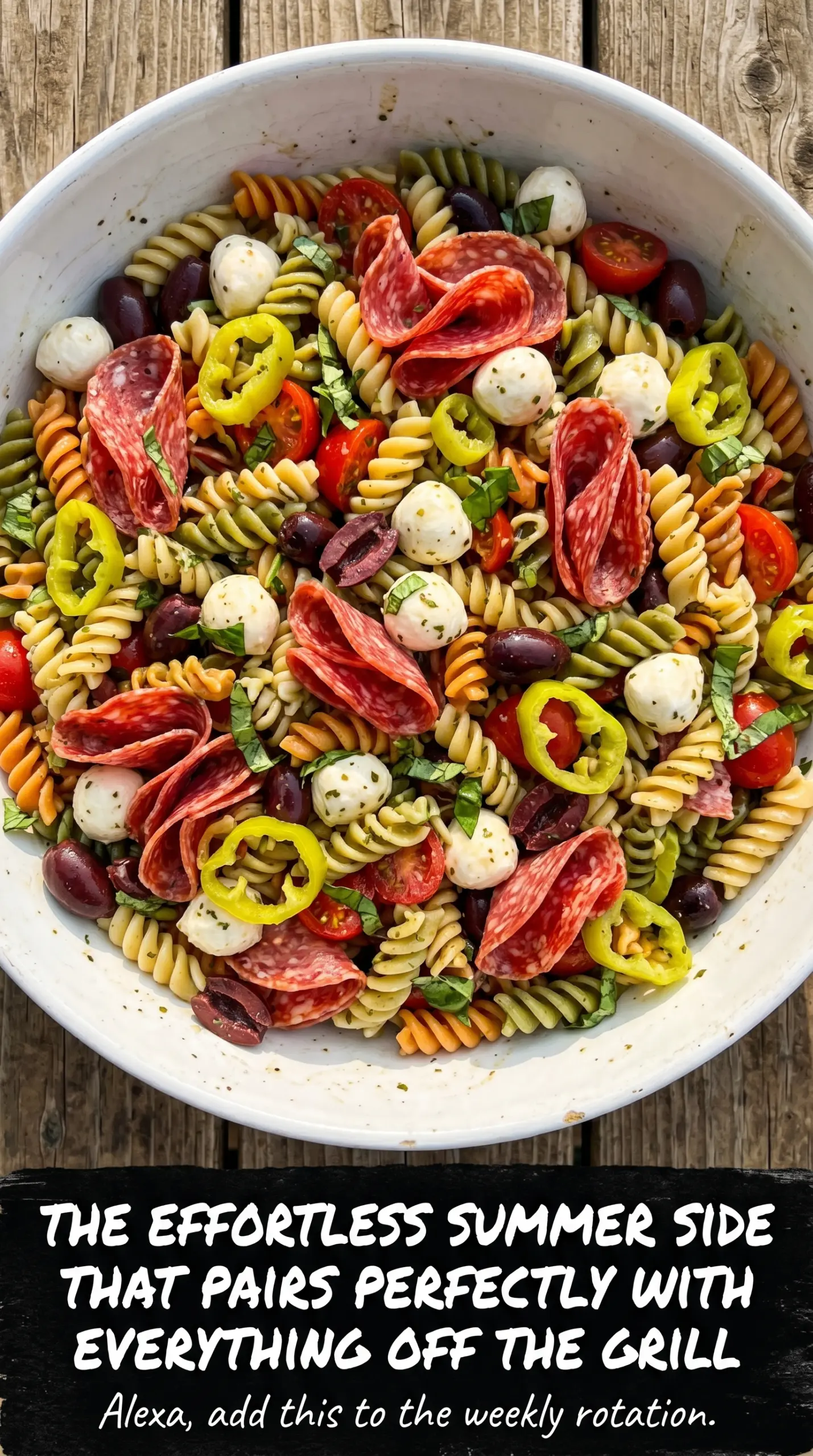
- Rotini pasta — The spirals hold onto dressing better than straight pasta, and that little twist keeps the salad from feeling slippery. Any short pasta with ridges or curves will work, but rotini gives you the best coating for the least effort.
- Italian dressing — This is the backbone of the salad, so use one you’d actually eat on a green salad. A sharper dressing works better than a sweet one because the salami and mozzarella already bring richness.
- Salami — Cubed salami gives you salt, chew, and a little savory punch in every bite. If you swap in pepperoni, the salad gets spicier and a little oilier, which is fine if that’s what you want.
- Mozzarella cheese — Use a firm block mozzarella and cube it yourself. Fresh mozzarella turns watery in the bowl, while low-moisture mozzarella stays neat and creamy after chilling.
- Cherry tomatoes, peppers, olives, and red onion — These are here for contrast. Tomatoes add juice, peppers add crunch, olives add briny depth, and onion keeps the salad from tasting one-note. Dice the onion small enough that it seasons the bowl without dominating it.
Building the bowl so it tastes better after chilling
Cooking the pasta just past firm
Boil the rotini until it’s just tender, then drain and rinse it under cold water to stop the cooking. You want the pasta cooled enough to handle, but not icy at the start, because a little warmth helps it absorb the dressing. If you overcook it here, the salad turns soft once it sits in the fridge and there’s no way to fix that later.
Coating the pasta first
Put the drained pasta in a large bowl and add the Italian dressing before anything else. Toss until every spiral is glossy, then let it sit for a minute so the dressing starts settling into the surface of the pasta. This step keeps the salad flavorful through the center instead of leaving all the seasoning on the vegetables and meat.
Adding the mix-ins without smashing them
Fold in the salami, mozzarella, tomatoes, olives, peppers, onion, Parmesan, and Italian seasoning gently so the cheese cubes stay intact and the tomatoes don’t burst. The goal is an even distribution, not aggressive mixing. If the bowl looks dry after everything is combined, add a small splash more dressing now instead of waiting until serving time.
Chilling and adjusting before serving
Refrigerate the salad for at least 2 hours, and give it a toss once or twice while it chills if you can. Pasta absorbs a lot in the fridge, so the salad often needs a little refresh before it hits the table. A final spoonful or two of dressing right before serving wakes everything back up and keeps the texture lively.
How to adapt this for lighter, sharper, or more make-ahead versions
Gluten-Free Pasta Salad
Use a sturdy gluten-free rotini made from rice, corn, or a blend that holds its shape after chilling. Cook it just until tender and rinse well, since gluten-free pasta can go from firm to fragile fast. The flavor stays the same, but you’ll want to toss more gently so the noodles don’t break apart.
Vegetarian Version With the Same Big Bite
Leave out the salami and add more olives, extra tomatoes, or chopped artichoke hearts for depth. You’ll lose the salty chew from the meat, so lean on the Parmesan and a slightly bolder dressing to keep the salad from tasting flat. This version still holds up well for potlucks because the vegetables and cheese keep the texture interesting.
Sharper, Less Creamy Tasting Salad
If your dressing runs sweet, cut it with a spoonful of red wine vinegar or a squeeze of lemon. That extra acidity keeps the salad from tasting heavy after it chills and works especially well if you’re serving it alongside grilled meat or burgers. Add the acid a little at a time so you brighten the bowl without making it harsh.
Storage and Reheating
- Refrigerator: Store covered for up to 4 days. The pasta will soak up more dressing over time, so the salad gets a little drier each day.
- Freezer: Don’t freeze this salad. The pasta turns mushy and the cheese and vegetables lose their texture after thawing.
- Reheating: This salad is served cold, not reheated. If it’s been in the fridge overnight, let it sit at room temperature for 15 to 20 minutes and add a small splash of dressing before serving so the flavors open back up.
Questions I Get Asked About This Recipe
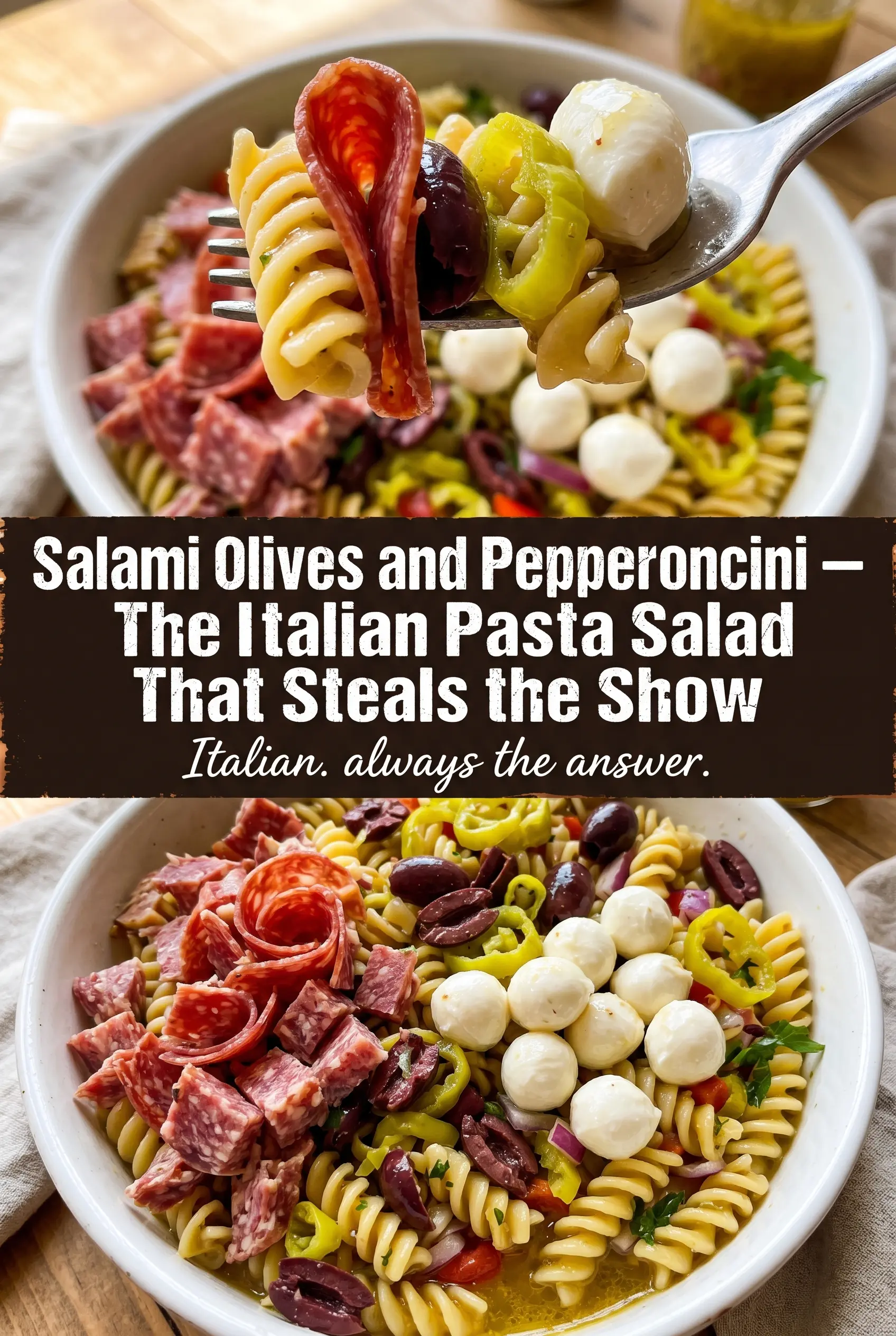
Italian Pasta Salad
Ingredients
Equipment
Method
- Cook rotini pasta according to package directions until al dente, then drain and rinse with cold water to cool it down fast.
- In a large bowl, combine the pasta with Italian dressing and toss until every piece is coated.
- Add salami, mozzarella cheese, cherry tomatoes, black olives, green bell pepper, red bell pepper, and red onion to the dressed pasta.
- Sprinkle with Parmesan cheese and Italian seasoning, then toss until the salad is evenly combined.
- Refrigerate for at least 2 hours, tossing occasionally during chilling so the pasta absorbs more dressing.
- Before serving, taste and add more Italian dressing if needed to loosen and re-coat the pasta.