Italian potato salad brings the kind of hearty, tangy bite that disappears fast at a potluck because it eats like a meal, not a side that just sits politely on the plate. The potatoes stay tender and substantial, the salami gives each forkful a little salt and chew, and the mozzarella softens the edges with creamy little pockets throughout.
What makes this version work is the balance. Red potatoes hold their shape after boiling, so they don’t collapse once the dressing goes in. The salad also needs a chill time that isn’t optional — that rest lets the potatoes absorb the dressing and gives the flavors time to settle into something cohesive instead of tasting like separate ingredients tossed together at the last minute.
Below, you’ll find the one timing detail that keeps the potatoes from getting mushy, plus a few smart swaps if you want to adjust the mix without losing the Italian deli-salad feel that makes this dish memorable.
The potatoes held their shape after chilling, and the dressing soaked into everything without making it heavy. I took it to a family cookout and there wasn’t a spoonful left.
Save this Italian potato salad for cookouts, picnics, and any table that needs a chilled side with salami, mozzarella, and pepperoncini.
The Trick That Keeps the Potatoes from Turning Mealy Once the Dressing Goes In
The biggest mistake with potato salad like this is rushing the potatoes while they’re still hot enough to steam the whole bowl. If you toss in salami, cheese, and dressing before the potatoes have cooled down, the mozzarella gets slick, the tomatoes soften too fast, and the dressing thins out instead of clinging. You want the potatoes warm at most, then fully chilled before the final rest.
Red potatoes are the right choice here because they stay waxy and firm after boiling. Russets fall apart and turn the salad starchy. The other detail that matters is the cut: keep the cubes fairly even so they cook at the same rate and hold a clean shape when mixed with the heavier ingredients.
- Red potatoes — Their waxy texture is what keeps this salad from going soft. Peel them only if you want a smoother look; the skins add a little texture and help the pieces stay intact.
- Salami — This brings the savory backbone. A firmer salami works best because it holds its bite after chilling instead of getting lost in the dressing.
- Mozzarella — Use low-moisture mozzarella, not fresh mozzarella packed in water. Fresh mozzarella can leak and make the bowl watery.
- Italian dressing — Bottled dressing is fine here if it has a sharp, herby profile. A thicker dressing coats the potatoes better than a thin vinaigrette.
- Pepperoncini — These wake up the whole salad. Their briny heat cuts through the richness, and the sliced peppers also add a little crunch.
- Basil — Add it at the end so it stays bright instead of turning dark and muddy in the bowl.
What Each Ingredient Is Actually Doing to Keep Potatoes Tender
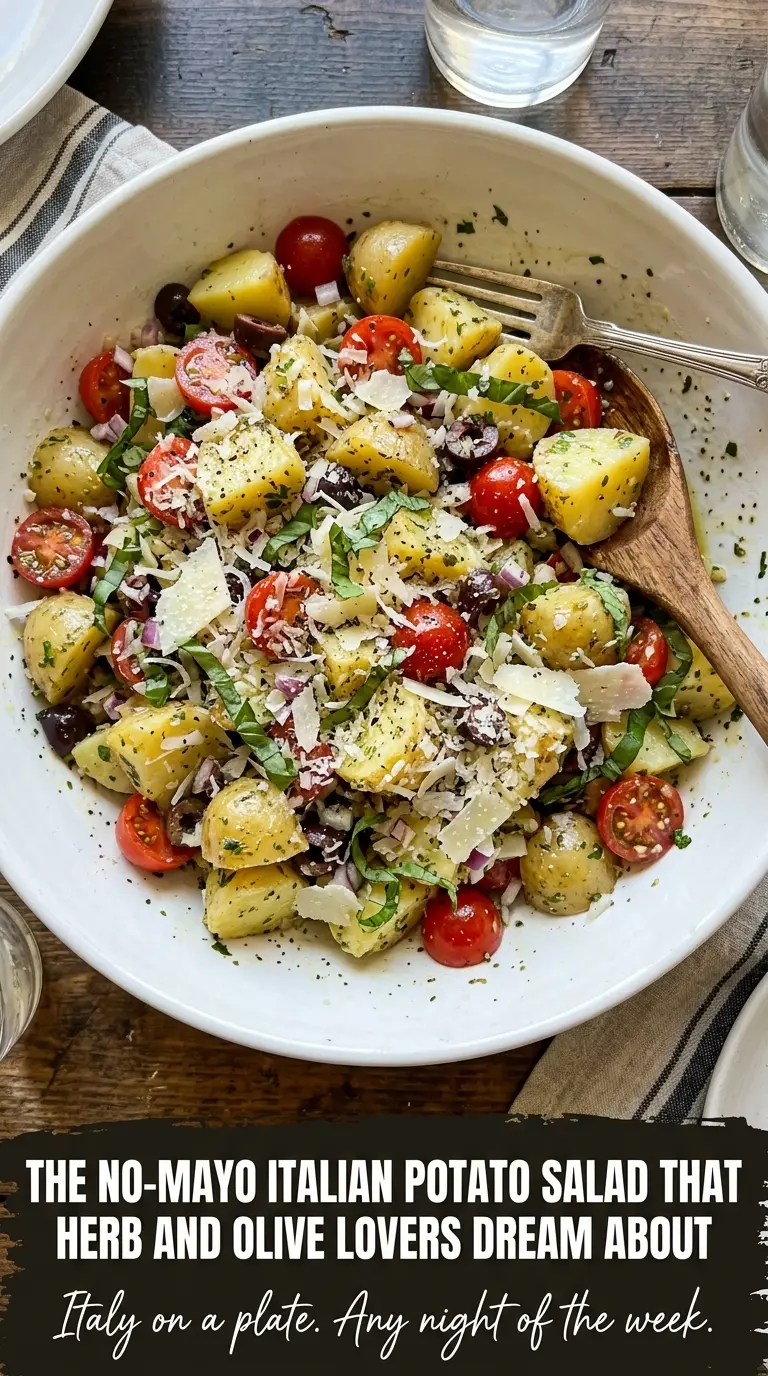
- Potato variety (waxy, not starchy) — Waxy potatoes like red potatoes or Yukon Golds stay creamy and don’t turn mealy. Russets are too starchy and break down easily.
- Gentle cooking method — A rolling boil, not a hard boil, cooks potatoes evenly. Hard boiling batters them and breaks down the structure.
- Salt in the cooking water — This seasons the potato from inside and helps it hold its shape. Unsalted water lets potatoes absorb too much liquid and become waterlogged.
- Ice bath immediately after cooking — Stopping the cooking instantly preserves the texture. Warm potatoes continue to soften even after draining.
- Cool completely before dressing — Cold potatoes hold their shape better when dressed. Warm potatoes absorb dressing too fast and can turn mushy or mealy.
- Mayonnaise-based dressing — The thick dressing coats the potatoes without making them waterlogged. Thin dressing leaves them soggy and weak.
- Fold gently instead of stirring — Aggressive stirring breaks down the potato structure. Gentle folding keeps the cubes distinct and whole.
- Minimal mixing after dressing is added — Stop stirring once everything is coated. Extra mixing breaks down the potatoes further.
How to Build the Bowl So the Flavors Taste Deliberate, Not Tossed Together
Cooking the Potatoes Just to Tender
Start the potato cubes in cold salted water and bring them up together so the centers cook evenly. Pull them the moment a knife slides through without resistance; if they go much farther, the edges break down before the dressing has a chance to do its job. Drain them well and let the steam escape for a few minutes so extra water doesn’t dilute the salad.
Mixing the Heavier Ingredients First
Combine the potatoes with salami, mozzarella, tomatoes, pepperoncini, and red onion before adding the dressing. That gives the dressing something to grab onto, and it keeps the cheese from clumping at the bottom of the bowl. Stir gently with a wide spoon so the potatoes stay in chunks instead of getting mashed.
Letting the Dressing Soak In
Add the Italian dressing while the potatoes are fully cooled, then fold everything together until the surfaces look glossy. The bowl should look lightly coated, not soupy. If it looks wet right after tossing, don’t panic — the potatoes absorb a fair amount of dressing during the chill time.
The Final Chill
Refrigerate the salad for at least 2 hours before serving. That pause is what makes the flavors settle into each other, and it also firms the potatoes back up after mixing. Right before serving, fold in the basil and Parmesan so they stay fresh and don’t disappear into the dressing.
Make It a Little Spicier
Add extra pepperoncini or a spoonful of the brine for more bite. The acid sharpens the dressing and makes the salami taste even richer, but too much can push the salad from bright into salty, so add it in small amounts.
Dairy-Free Version
Skip the mozzarella and Parmesan, then add a handful of chopped olives or extra tomatoes for more body. You’ll lose the creamy, mellow pockets of cheese, but the salad will still read as a sturdy Italian-style side instead of a plain vinaigrette potato salad.
Gluten-Free Check
This is naturally close to gluten-free, but the dressing and salami need a quick label check. Some bottled dressings and deli meats hide wheat-based additives, so use brands that are clearly marked gluten-free if that’s important for your table.
Turn It Into a Main-Dish Lunch
Add chickpeas, diced provolone, or extra salami to make the bowl more substantial. Chickpeas bring extra heft and make the salad stretch farther, while more cured meat pushes it closer to a deli-style lunch salad.
Storage and Reheating
- Refrigerator: Store covered for up to 3 days. The potatoes will keep absorbing dressing, so the salad may taste a little sharper on day two.
- Freezer: I don’t recommend freezing this one. Potatoes, mozzarella, and tomatoes all change texture in a way that turns the salad grainy and watery after thawing.
- Reheating: This salad is meant to be served cold. If it has been in the fridge a while, let it sit on the counter for 10 to 15 minutes so the dressing loosens up and the flavors open back up.
Questions I Get Asked About This Recipe
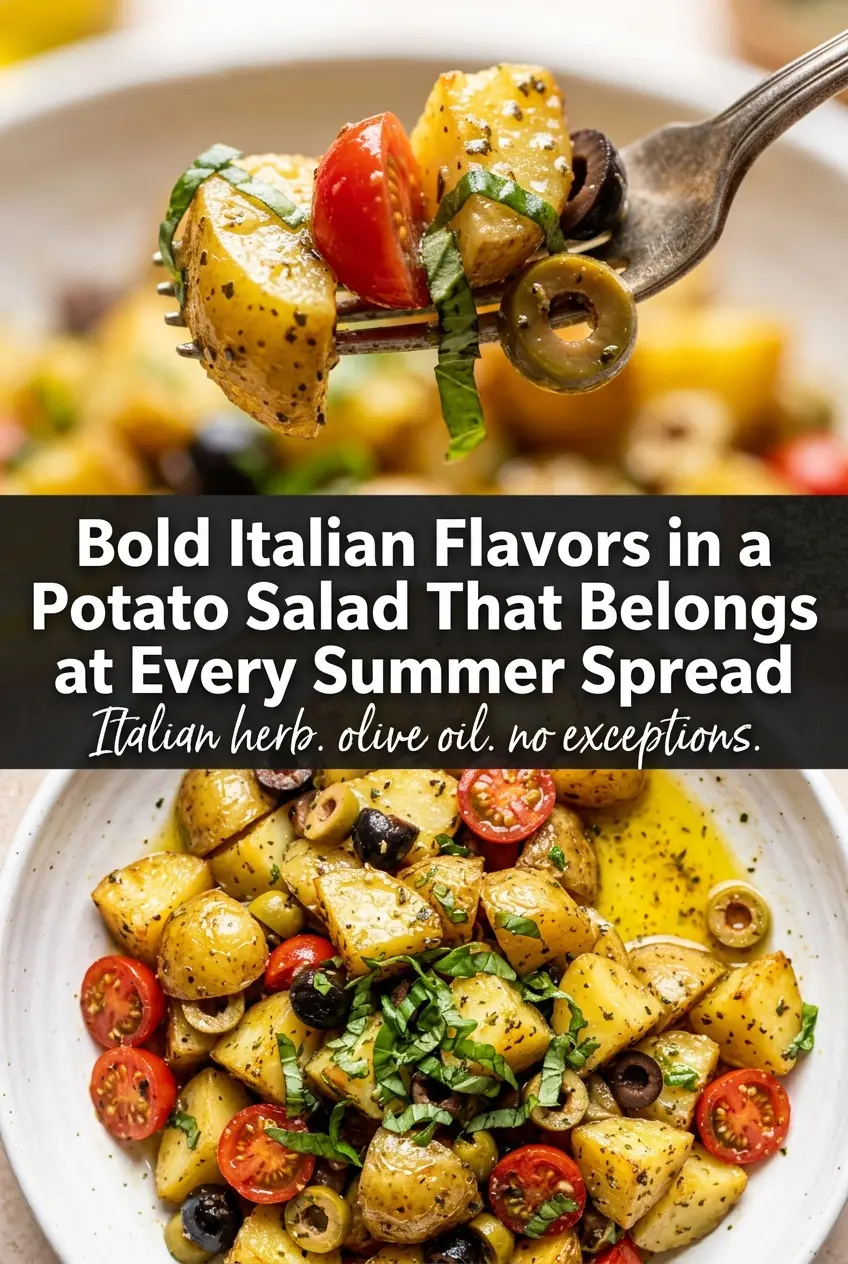
Italian Potato Salad
Ingredients
Equipment
Method
- Bring a pot of water to a boil (100°C/212°F). Add cubed red potatoes and boil for 10-15 minutes until tender when pierced.
- Drain the potatoes in a colander and let them cool at room temperature for 10 minutes, until no longer steaming.
- Combine cooled potatoes with diced salami, cubed mozzarella, halved cherry tomatoes, sliced pepperoncini, and finely diced red onion, tossing gently to distribute.
- Pour Italian dressing over the mixture and toss until all the potatoes are glossy and coated.
- Add chopped fresh basil and grated Parmesan cheese, then toss again so the herbs and cheese are evenly speckled throughout.
- Season with salt and pepper to taste, then toss once more and taste for balance.
- Refrigerate the Italian potato salad for 2 hours before serving, so the flavors meld and the dressing thickens slightly.