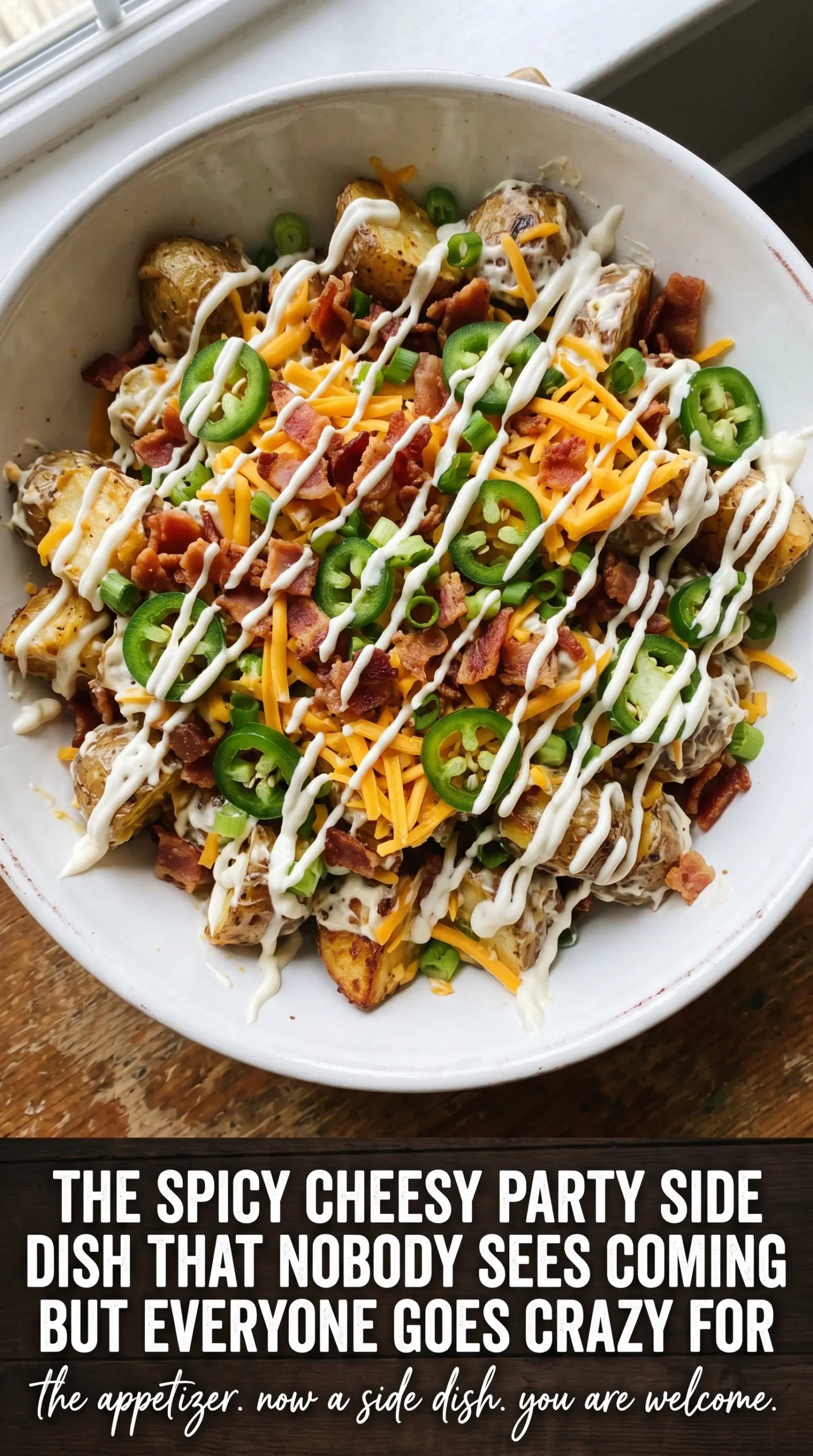
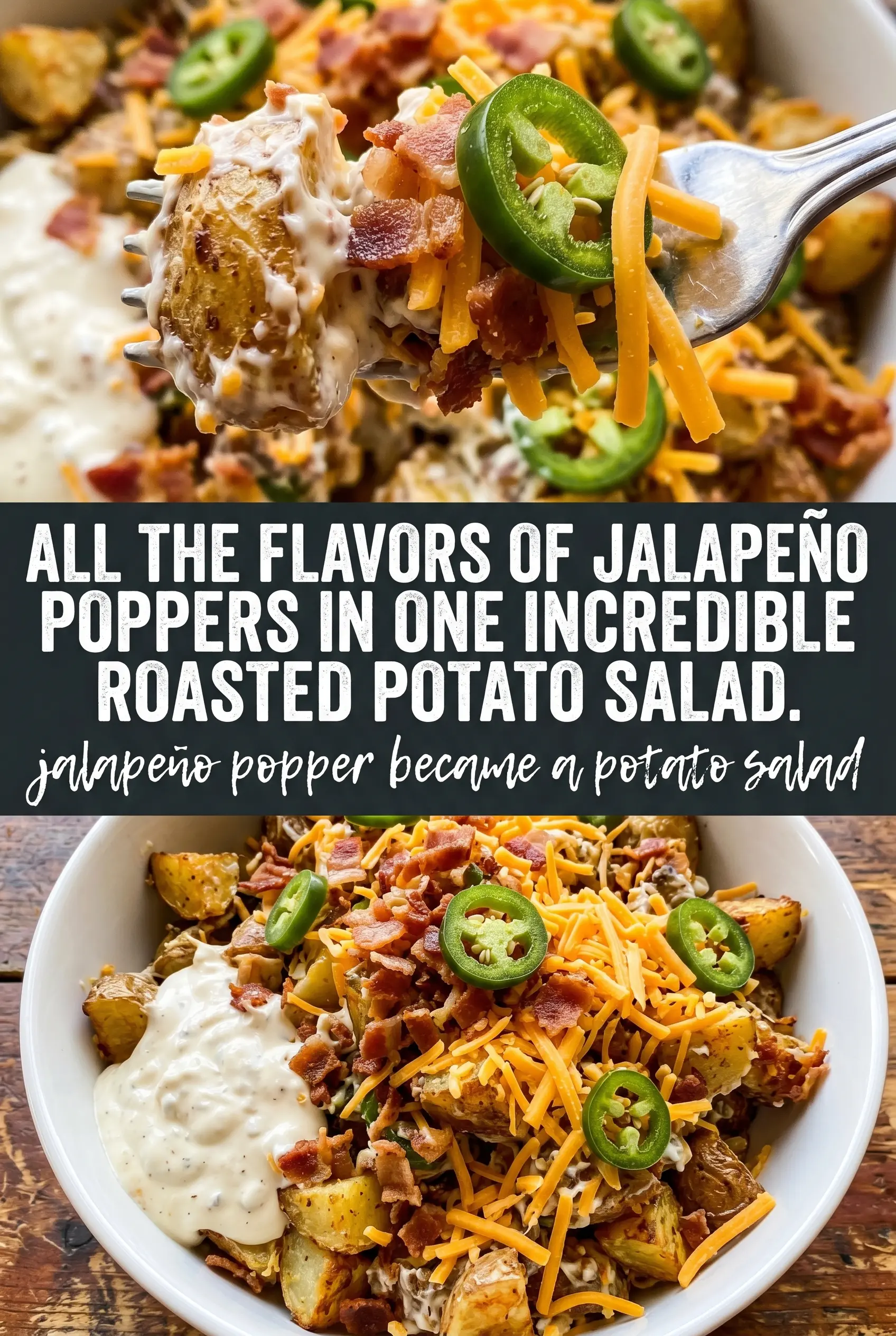
Roasted potato salad gets a bold upgrade here: crisp-edged baby potatoes, smoky bacon, mellow heat from jalapeños, and a creamy dressing that clings instead of sliding off the bowl. It eats like a cross between a cookout potato salad and a jalapeño popper, which is exactly why it disappears fast.
The key is roasting the potatoes until they’re deeply golden before they ever meet the dressing. That gives you actual texture in the finished salad, not a soft, soggy pile. Letting the potatoes cool for an hour matters too; warm potatoes melt the cream cheese mixture into grease instead of a smooth, tangy coating.
Below, I’ll walk through the parts that matter most: how to get the potatoes browned without steaming them, how to keep the dressing smooth, and a few smart swaps if you want to adjust the heat or make it ahead.
The potatoes got those crisp edges in the oven, and once I mixed in the bacon and cheddar, the dressing coated everything instead of turning watery. Even after chilling, it stayed creamy.
Love the crispy-roasted potatoes and jalapeño popper dressing? Save this potato salad for your next cookout or potluck.
The Trick Most Potato Salads Miss: Roasting First, Dressing Later
Most potato salads start with boiled potatoes, which is fine if you want soft and mild. This one works because the oven gives the potatoes browned edges and a dry surface that can actually grab the dressing. If you add the cream cheese mixture before the potatoes cool, the whole bowl turns loose and greasy instead of creamy.
There’s another benefit to roasting: baby potatoes hold their shape better than bigger russets once they’ve been tossed with bacon and cheese. You get pieces that stay intact after mixing, so every bite has a little crisp edge, a little softness, and enough structure to carry the heat from the jalapeños.
- Baby potatoes — They roast evenly and stay tender without collapsing. Halving them gives more cut surface for browning, which matters more here than in a standard boiled potato salad.
- Jalapeños — Seeded and diced jalapeños give bright heat without overwhelming the salad. If yours run hot, use one full jalapeño and one only half-diced; that keeps the spice present but manageable.
- Cream cheese and sour cream — The cream cheese gives the body and the sour cream loosens it into something spreadable. Full-fat versions hold up best; lower-fat cream cheese can turn grainy and thin once it meets warm potatoes.
- Bacon and cheddar — These are the jalapeño popper part of the story. Use cheddar that you shred yourself if you can, because pre-shredded cheese is coated and doesn’t melt into the dressing as smoothly.
What Each Ingredient Is Actually Doing in Roasted Potato Salad
- Cubed potatoes tossed in oil — Roasting requires enough oil to coat every piece so they crisp and brown. This builds flavor that boiling alone can’t create.
- High heat in the oven — A hot oven (425°F or higher) creates crispy, caramelized edges while keeping the insides tender. Lower heat just roasts without browning.
- Seasoning before roasting — Salt and seasonings added before roasting penetrate the potatoes and build flavor from the inside. Post-roasting salt only sits on the surface.
- Tossing halfway through — This ensures even browning on all sides. Untossed potatoes brown on the bottom and stay pale on top.
- Cool completely before dressing — Roasted potatoes are denser than boiled, but they still need to cool completely before dressing so they don’t fall apart.
- Acid in the dressing — Roasted potatoes benefit from bright acid that cuts through the richness of the roasted exterior. Vinegar or lemon juice brightens the whole salad.
- Fresh herbs as contrast — Fresh herbs add a cool, bright element that balances the warm, rich roasted potato flavor.
- Optional: crispy components like bacon or fried onions — Roasted potatoes pair well with other crispy, crunchy elements. The texture contrast keeps the salad interesting.
Building the Salad So the Creamy Dressing Stays Smooth
Roasting the Potatoes Until They Brown, Not Steam
Spread the halved potatoes in a single layer on the pan so they roast instead of trap steam. At 425°F, the cut sides should turn deeply golden and the edges should look blistered and crisp before you pull them out. If they’re pale, they’ll taste flat in the finished salad, and if they’re crowded, they’ll go soft before they brown.
Cooling Before the Dressing Goes In
Let the potatoes sit for a full hour after roasting. That pause is not wasted time; it keeps the cream cheese mixture from melting out and pooling at the bottom of the bowl. The potatoes should be warm or fully cool to the touch, not hot, when you toss everything together.
Loosening the Cream Cheese the Right Way
Stir the softened cream cheese with the sour cream until it’s completely smooth before adding anything else. If the cream cheese still has little lumps at this stage, they won’t disappear later, and the dressing will coat unevenly. A spoon or sturdy whisk works fine as long as the cream cheese is genuinely softened, not just barely room temperature.
Bringing It All Together Without Crushing the Potatoes
Add the bacon, jalapeños, cheddar, and cooled potatoes to a large bowl, then fold in the dressing gently. Use a broad spatula or large spoon and turn the mixture from the bottom up so the potatoes keep their shape. Top with green onions at the end for a fresh, sharp finish that cuts through the richness.
How to Adjust the Heat, the Richness, and the Make-Ahead Plan
Milder Version for a Broader Crowd
Use one jalapeño instead of two, and remove every seed and bit of white membrane. You’ll still get that popper-style flavor, but the heat stays in the background instead of taking over the bowl.
Dairy-Free Swap
Use a dairy-free cream cheese and an unsweetened plain dairy-free sour cream. The texture will be a little lighter and less tangy than the original, but it still clings nicely to the roasted potatoes if you keep the potatoes fully cooled before mixing.
No-Bacon Option
Skip the bacon and add extra salt plus a little smoked paprika to bring back some of the savory depth. You won’t get the same salty crunch, but the roasted potatoes, cheddar, and jalapeño still give the salad enough backbone to stand on its own.
Storage and Reheating
- Refrigerator: Store covered for up to 3 days. The potatoes soften a bit as they sit, but the flavor gets even better after a few hours in the fridge.
- Freezer: I don’t recommend freezing this salad. The cream cheese and sour cream separate when thawed, and the potatoes turn mealy.
- Reheating: Serve it cold or let it sit at room temperature for 20 to 30 minutes. Don’t microwave it; the dressing can break and the potatoes lose the texture you worked to build.
Questions I Get Asked About This Recipe
Jalapeño Popper Roasted Potato Salad
Ingredients
Equipment
Method
- Preheat the oven to 425°F so it’s hot when the potatoes go in. Use a sheet pan for space to spread them out.
- Toss the baby potatoes with olive oil, salt, and pepper until evenly coated. Spread them on the sheet pan in a single layer.
- Roast for 30-35 minutes at 425°F until the potatoes are golden and browned at the edges. Flip or stir once during roasting if needed for even color.
- Let the roasted potatoes cool for 1 hour at room temperature so they don’t melt the dairy dressing. Keep them on the sheet pan during cooling.
- Mix the cream cheese and sour cream until smooth. Stir until there are no lumps.
- Combine the potatoes, bacon, jalapeños, and cheddar in a mixing bowl for even distribution. Make sure the jalapeños are spread throughout.
- Toss everything with the cream cheese dressing until coated. Add more seasoning if needed after tasting.
- Top with green onions before serving for fresh flavor and crunch. Serve immediately or at a cool temperature.