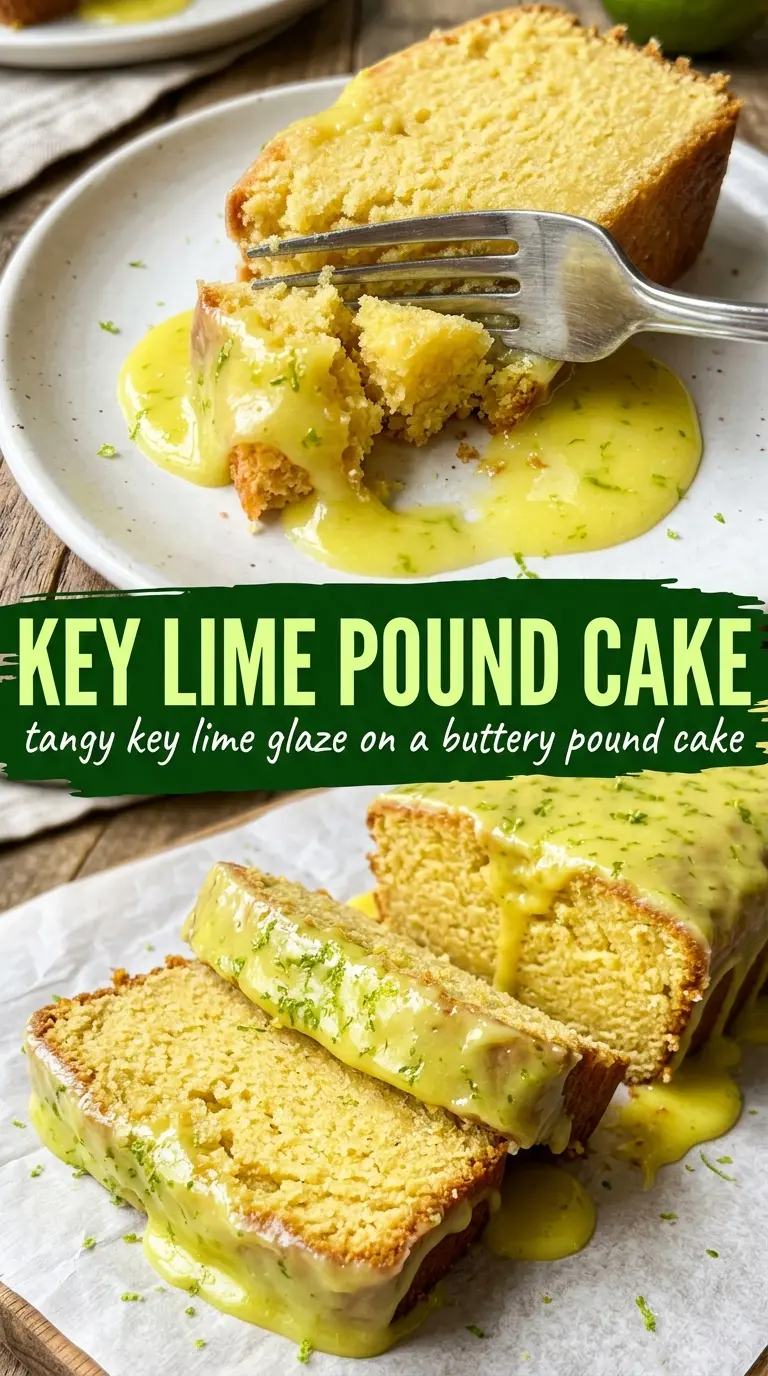
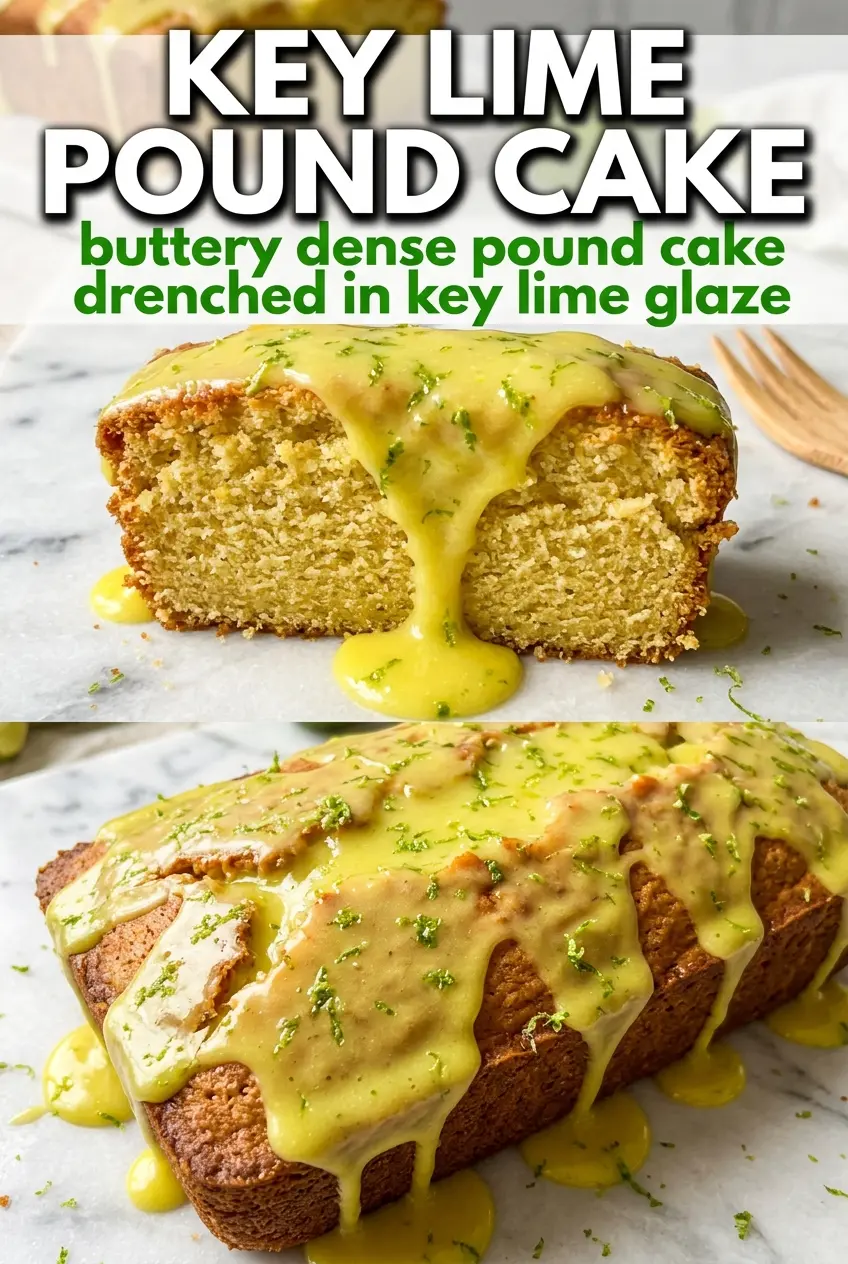
Dense, buttery pound cake gets a bright lift here from fresh key lime juice and zest, and that contrast is what keeps this cake from feeling heavy. The crumb stays tight and velvety, the top bakes into a deep golden crust, and the glaze slips into every ridge of the Bundt pan for a finish that tastes as sharp and sunny as it looks.
The trick is keeping the batter in pound cake territory while still getting enough citrus to come through. Sour cream brings the richness and moisture, while the key lime juice and zest go in near the end so the flavor stays fresh instead of baking off. The cake needs that long, slow bake at 325°F; higher heat will brown the outside before the middle has set, and pound cake rewards patience.
Below, I’m walking through the few details that matter most: how to avoid a dense, greasy batter, why the glaze should go on only after the cake is completely cool, and the one texture cue that tells you the cake is done without drying it out.
The glaze soaked into the little cracks on top and the cake sliced cleanly after it cooled. The key lime flavor came through without tasting bitter, and the crumb stayed tender for days.
Save this key lime pound cake for the days when you want a buttery Bundt cake with a sharp citrus glaze and a tight, tender crumb.
The Batter Needs Air Before It Needs Citrus
The most common mistake with pound cake is rushing the mixing. If the butter and sugar aren’t beaten until they look pale and fluffy, the cake ends up tight and heavy instead of fine-crumbed. That long creaming stage traps air, and that air gives the batter room to rise without turning the cake dry.
The other place people go wrong is adding the citrus too early or too aggressively. Key lime juice is acidic, and acidic batter can turn grainy if it’s worked too much after the flour goes in. Mix just until the batter comes together, then stop. Pound cake should look thick and satiny, not whipped like frosting.
- Butter — Use softened butter, not melted. Soft butter creams with the sugar and creates the structure that makes this cake slice cleanly.
- Sour cream — This adds moisture and a slight tang that keeps the lime flavor sharp. Full-fat sour cream gives the best texture.
- Key lime juice and zest — The juice brings brightness, but the zest carries the real aroma. If you only use bottled juice, the cake will taste flatter and less fragrant.
- All-purpose flour — Cake flour can make the crumb a little too delicate here. All-purpose flour keeps the cake sturdy enough for the glaze and for neat slices.
What Each Ingredient Is Actually Doing in This Cake
- Granulated sugar — This does more than sweeten. It helps whip air into the butter during creaming, which is a big part of how the cake gets its lift.
- Eggs — Add them one at a time so the batter stays smooth and emulsified. If you dump them in all at once, the batter can look curdled and bake up unevenly.
- Baking soda — There isn’t much here, and that’s intentional. It reacts with the sour cream and lime juice just enough to soften the crumb without making the cake taste cakey.
- Powdered sugar for the glaze — It dissolves instantly and gives you a smooth drizzle instead of a gritty topping. Add the juice slowly so the glaze stays thick enough to cling to the cake.
How to Keep the Center Tender While the Crust Turns Golden
Building the Base
Preheat the oven to 325°F and really grease and flour the Bundt pan, getting into every ridge. Pound cake loves decorative pans, but it will also cling to them if you leave even one dry spot. Beat the butter and sugar for about 5 minutes until the mixture turns noticeably lighter in color and looks almost fluffy. If it still looks dense and yellow, keep going.
Adding the Eggs and Dry Ingredients
Add the eggs one at a time, mixing just until each one disappears before adding the next. This keeps the batter stable and smooth. Stir the flour mixture into the batter in alternating additions with the sour cream so the mixture stays emulsified. If the batter starts to look broken, stop and scrape the bowl; it usually comes back together once the next addition goes in.
Finishing with Lime
Stir in the key lime juice, zest, and vanilla at the end, just until combined. The batter will smell bright and buttery, and that’s your cue you’ve got enough lime in there. Pour it into the pan and smooth the top. Don’t tap the pan hard on the counter; you want to settle the batter, not knock out all the air you just built.
Baking and Cooling
Bake for 60 to 70 minutes until a toothpick comes out clean or with a few moist crumbs, and the top springs back when gently pressed. If the top browns too quickly, lay a loose piece of foil over it for the last 15 minutes. Cool the cake in the pan for 15 minutes only, then invert it onto a rack. Wait too long and the glaze sticks; turn it out too early and it can tear.
The Glaze Finish
Whisk the powdered sugar, key lime juice, and zest until smooth, then drizzle it over the completely cooled cake. A warm cake will drink in the glaze and leave you with a pale, thin coating instead of that glossy top layer. Let the glaze set before slicing so each piece holds its shape and the icing doesn’t slide off the cut edges.
Three Small Changes That Still Keep the Cake Honest
Regular Lime Instead of Key Lime
If key limes are hard to find, use fresh Persian lime juice and zest in the same amount. The cake will still be bright and citrusy, but the flavor reads a little less floral and a little more straightforward. The glaze still works the same way.
Dairy-Free Version
Swap the butter for a high-quality plant butter stick and use a thick dairy-free coconut or almond-based yogurt in place of the sour cream. The cake will still bake up tender, though the crumb may be a touch less rich and the flavor slightly less buttery. Pick a neutral-tasting substitute so the lime stays front and center.
A Less Sweet Finish
If you want the lime to taste sharper, cut the glaze in half or drizzle only part of it over the cake. The crumb stays the same, but the finish becomes more citrus-forward and less dessert-sweet. This is the version I make when the cake is headed for brunch instead of a full dessert table.
Storage and Reheating
- Refrigerator: Store covered for up to 5 days. The crumb stays moist, but the glaze may lose a little shine.
- Freezer: This freezes well. Wrap individual slices tightly in plastic and then foil, or freeze the unglazed cake for the cleanest finish after thawing.
- Reheating: Let slices come to room temperature, or warm them briefly in the microwave in 10-second bursts. Don’t heat glazed slices for too long or the icing will melt into the cake instead of staying distinct.
Answers to the Questions Worth Asking
Key Lime Pound Cake
Ingredients
Equipment
Method
- Preheat the oven to 325°F and grease and flour a Bundt pan so the cake releases cleanly.
- Beat butter and granulated sugar until very light and fluffy, about 5 minutes, for a tight golden crumb.
- Add the eggs one at a time, mixing after each addition until the batter looks smooth.
- In three additions, alternately add the flour mixture (all-purpose flour, baking soda, and salt) and the sour cream, stirring just until combined after each addition.
- Stir in the fresh key lime juice, key lime zest, and vanilla extract until evenly distributed and fragrant.
- Pour the batter into the prepared Bundt pan and bake at 325°F for 60-70 minutes until a toothpick comes out clean.
- Cool the cake in the pan for 15 minutes, then invert to remove it and let it finish cooling completely.
- Whisk powdered sugar with fresh key lime juice and key lime zest until smooth, with no dry lumps.
- Drizzle the glaze over the completely cooled cake so it pools into every crack and crevice.
- Let the glaze set before slicing for clean slices and a glossy finish.