Golden-browned kielbasa and tender cabbage hit the skillet with the kind of low-effort comfort that earns a permanent spot in the weeknight rotation. The sausage brings salt, smoke, and a little crisp edge, while the cabbage softens into sweet, savory strands that soak up every bit of flavor left in the pan. It cooks fast, but it doesn’t taste rushed.
The trick is giving the kielbasa time to brown before the cabbage goes in. That first sear builds the savory base for the whole dish, and the butter helps the onions pick up color without scorching. Caraway seeds are the quiet detail that makes this taste unmistakably Polish; they don’t shout, but if you leave them out, you’ll notice the difference.
Below, I’ll walk through the one pan move that keeps the cabbage from turning watery, plus a few smart swaps if you want to lighten it up or stretch it into leftovers for tomorrow.
The cabbage got silky without getting mushy, and the caraway with the browned kielbasa tasted like something I’d order at a little neighborhood restaurant. Even my picky eater went back for seconds.
Save this kielbasa and cabbage skillet for the nights when you want browned sausage, sweet cabbage, and one pan to wash.
Why the Cabbage Needs the Kielbasa Drippings First
The biggest mistake in skillet cabbage is adding everything together and hoping the pan does the work for you. Cabbage gives off moisture as it cooks, and if the sausage hasn’t browned first, you lose the chance to build the deep savory flavor that makes this dish worth making. Browning the kielbasa in butter gives you fond on the bottom of the pan, and that’s what the onion and cabbage pick up next.
There’s another small but important detail here: the broth goes in after the cabbage starts to wilt, not before. If you add too much liquid too early, the cabbage steams into limp strands instead of softening with a little edge left to it. This version keeps enough moisture in the pan to tenderize the cabbage without washing out the flavor.
What Each Ingredient Is Actually Doing in This Skillet
- Kielbasa — This is the backbone of the dish, so use a sausage you actually like eating on its own. A smoked kielbasa gives the best savory depth. If you only have fresh sausage, it won’t give the same flavor or browned edges, so you’ll need to cook it longer and expect a softer result.
- Green cabbage — Green cabbage holds its shape better than red cabbage and turns sweet as it cooks. Chop it into bite-size pieces so it wilts evenly. If the pieces are too large, the top softens before the thicker ribs do.
- Caraway seeds — These are the ingredient that makes the skillet taste grounded and traditional. Toasting happens right in the pan as they warm through, which wakes up their flavor. If you don’t love caraway, start with half the amount rather than skipping it entirely.
- Vegetable broth — This loosens the browned bits from the pan and gives the cabbage just enough steam to turn tender. Chicken broth works too if that’s what you have. Water will work in a pinch, but the finished skillet tastes flatter.
- Butter — Butter helps the onion soften and gives the sausage a richer browning surface. Olive oil can replace it, but you’ll lose a little of that round, savory finish.
The 20 Minutes That Give This Skillet Its Shape
Browning the Kielbasa
Melt the butter over medium-high heat, then add the sliced kielbasa in a single layer. Let it sit long enough to get deep golden spots before stirring, because constant movement steals the browning you want. The slices should look crisp at the edges and release easily from the pan when they’re ready. Pull them out with a slotted spoon so they don’t overcook while the onion goes in.
Softening the Onion and Garlic
Add the diced onion to the same skillet and cook it in the sausage fat until it turns translucent and picks up a little color. That step scrapes up flavor left behind from the kielbasa. Garlic goes in late and only for a minute, because it burns fast and turns bitter if you let it sit in the pan too long. If the pan looks dry, don’t add more butter yet; the onion will release enough moisture to keep things moving.
Steaming the Cabbage Without Turning It to Mush
Return the kielbasa to the pan, add the cabbage, broth, and caraway seeds, then stir until everything is coated. Cover the skillet and cook until the cabbage is tender but still has a little bite at the thicker ribs. If the lid traps too much water and the pan looks soupy, uncover it for the last few minutes so the liquid cooks down and the flavor concentrates. Season at the end so the sausage doesn’t make the whole dish taste oversalted.
How to Adapt This for Different Plates and Leftovers
Make It Dairy-Free
Swap the butter for olive oil or a plant-based butter. You’ll lose a little richness, but the browned kielbasa still carries the dish. If you use olive oil, keep the heat moderate so the sausage browns without scorching the fat.
Make It Heavier on Vegetables
Add sliced carrots or a handful of shredded Brussels sprouts with the cabbage. They’ll cook in the same time frame and bring more texture to the pan. Just keep the pieces thin enough that they soften before the kielbasa dries out.
Use Turkey Kielbasa
Turkey kielbasa works if you want a lighter skillet, but it won’t release as much fat or smoky richness. Brown it well and don’t skip the butter or oil, because that extra fat helps the cabbage and onions carry the flavor.
Storage and Reheating
- Refrigerator: Store in an airtight container for up to 4 days. The cabbage softens a bit more as it sits, but the flavor holds up well.
- Freezer: It freezes reasonably well for up to 2 months, though the cabbage will be softer after thawing. Cool it completely before freezing, and use a flat, shallow container for quicker thawing.
- Reheating: Warm it in a skillet over medium-low heat with a splash of broth or water. The main mistake is blasting it over high heat, which toughens the sausage and can dry out the cabbage before the center is hot.
Questions I Get Asked About This Recipe
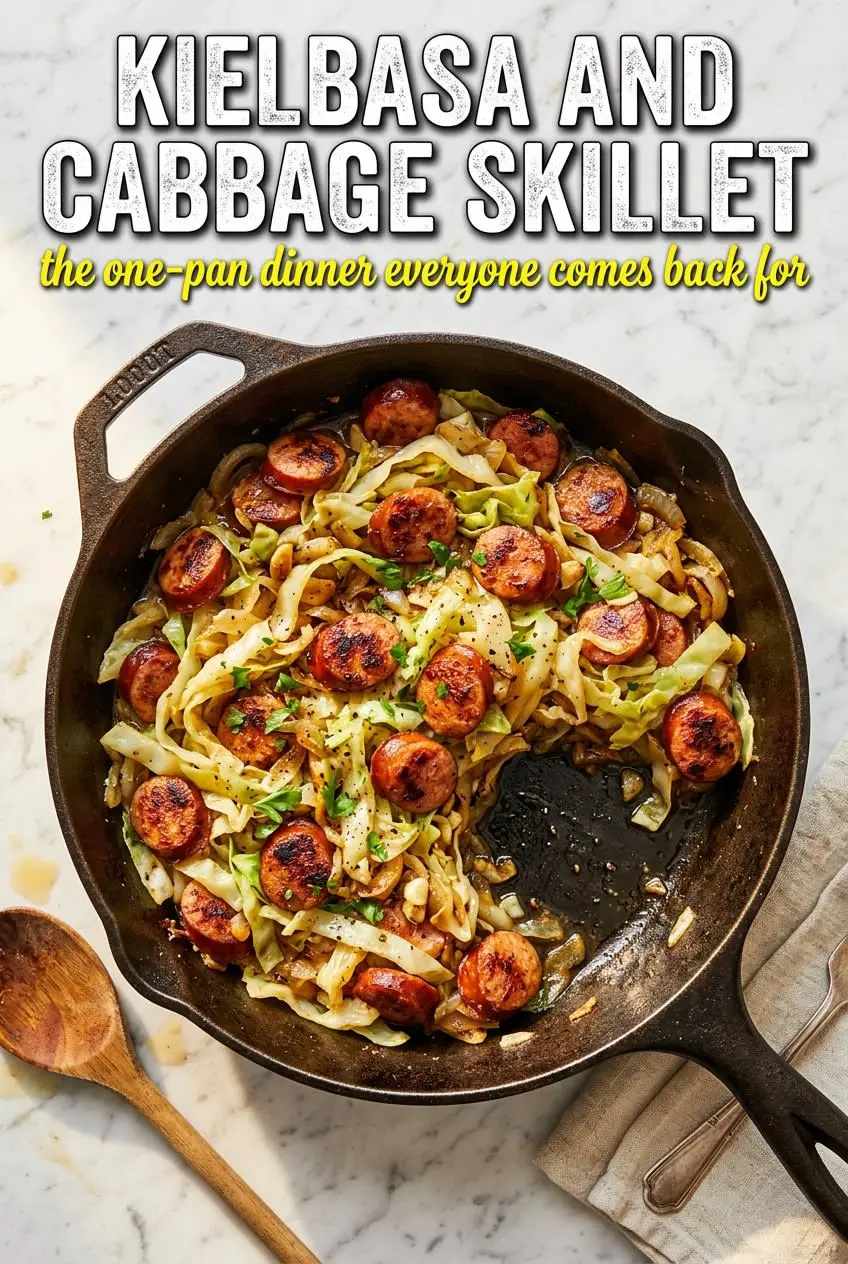
Kielbasa and Cabbage Skillet
Ingredients
Equipment
Method
- Melt butter in a large cast iron skillet over medium-high heat. Add sliced kielbasa and cook until browned, about 5 minutes, then remove with a slotted spoon and set aside.
- Add diced onion to the same skillet and cook until softened, about 4 minutes. Stir in minced garlic and cook for 1 minute.
- Return kielbasa to the skillet and add chopped cabbage, vegetable broth, and caraway seeds. Stir to combine, cover, and cook over medium heat for 12-15 minutes until the cabbage is tender, then uncover to let the juices reduce slightly.
- Season with salt and pepper to taste, garnish with fresh thyme, and serve hot.