Fluffy ricotta pancakes get a fragrant lift from crushed lavender and a glossy finish of honey, and the combination lands somewhere between breakfast and a special-occasion brunch without any extra fuss. The ricotta keeps the crumb tender and rich, while the lavender stays subtle when it’s measured carefully and blended through the flour instead of steeped too long. The result is pancakes that cook up golden at the edges, soft in the middle, and light enough to stack high.
The trick here is restraint. Culinary lavender can turn perfumey fast, so a small amount goes a long way, especially once it’s crushed and distributed with the dry ingredients. Blending the ricotta mixture first also helps the batter come together smoothly without overworking it, which keeps the pancakes from turning dense. Honey goes in the batter and again over the top, where it adds warmth instead of just sweetness.
Below, you’ll find the small details that matter most: how to keep the lavender balanced, what the batter should look like before it hits the pan, and the best way to get that soft center with a deep golden crust.
The pancakes came out incredibly light, and the lavender was just right — present but not perfume-y. I loved how the honey softened the flavor and the ricotta kept the centers moist even after flipping.
Save these lavender honey ricotta pancakes for a brunch that tastes delicate, fluffy, and just sweet enough.
The Trick to Keeping Ricotta Pancakes Light Instead of Heavy
Ricotta adds richness, but it can also make pancakes feel dense if the batter is overworked or the heat runs too high. The blender step helps break up the cheese so it disappears into the batter instead of sitting in little pockets, and that’s what gives these pancakes a smooth, tender interior. Once the flour goes in, stop stirring as soon as the streaks disappear. A few lumps are better than a batter that turns elastic.
The other thing that matters is the pan temperature. If the heat is too low, the pancakes spread before they set; too high, and the outside darkens before the center cooks through. Medium heat gives you that sweet spot: the edges go matte, bubbles form on top, and the first side releases cleanly when it’s ready to flip.
What the Lavender, Ricotta, and Honey Are Each Doing Here
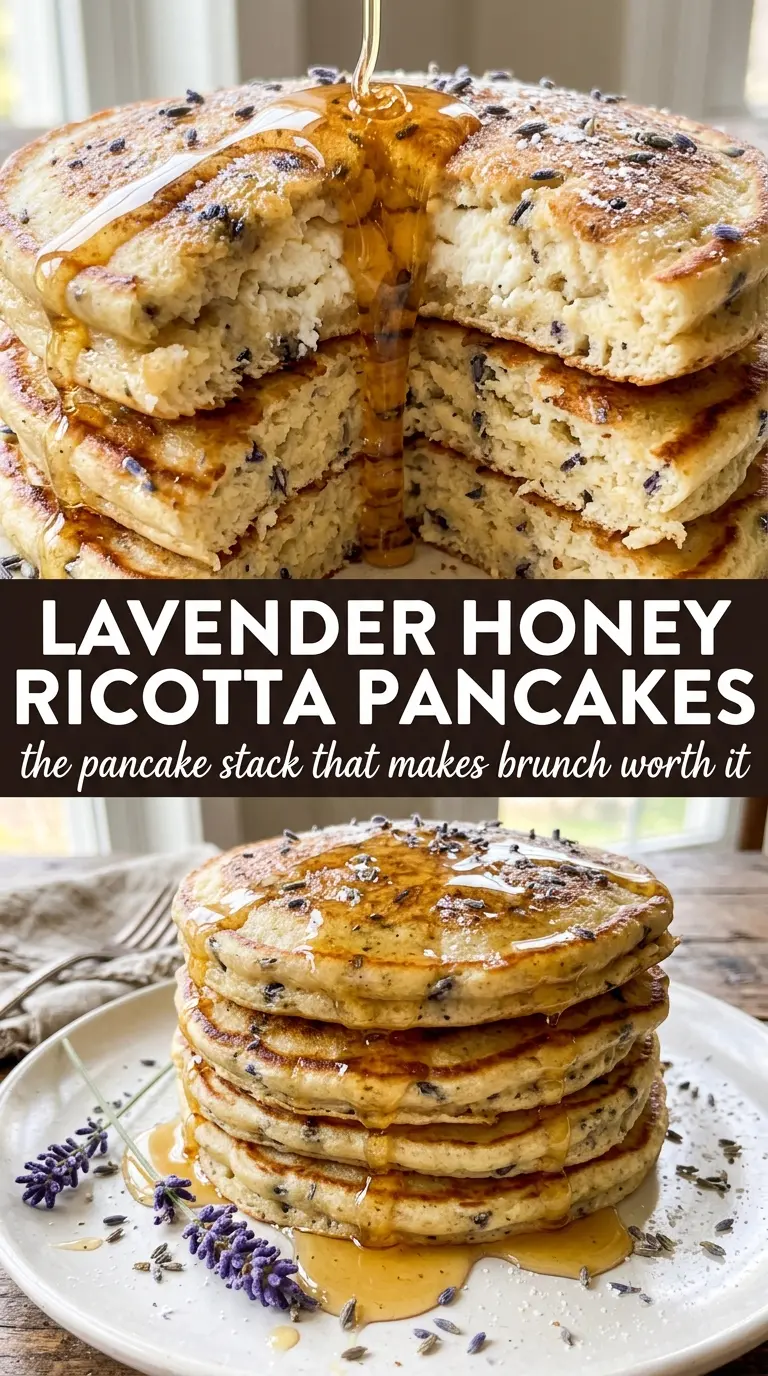
- Ricotta cheese — This is what gives the pancakes their soft, custardy texture. Whole-milk ricotta works best because it’s thicker and richer; if yours looks wet, drain it briefly before blending so the batter doesn’t thin out.
- Culinary lavender buds — Use culinary lavender only, and crush it finely so it blends into the flour instead of popping up in bitter little bits. The difference between pleasant and soap-like is mostly about quantity, so keep the measure modest.
- Honey — Honey belongs in the batter and on the finished stack. In the batter, it rounds out the floral note and helps the pancakes brown; on top, it adds shine and warmth without needing syrup.
- Butter — Melted butter enriches the batter and helps with browning. If you swap in oil, the pancakes will still cook well, but you’ll lose some of that bakery-style flavor.
- All-purpose flour — This gives the pancakes enough structure to hold the ricotta without turning gummy. A 1:1 gluten-free baking blend can work here if it contains xanthan gum, though the texture will be a little more delicate.
How to Mix, Rest, and Flip for the Softest Center
Blending the Wet Ingredients
Combine the ricotta, eggs, milk, and vanilla in a blender and process until smooth and slightly airy. You’re not looking for a whipped mousse, just a batter base that doesn’t have lumps of cheese hiding in it. If the mixture looks too thick to pour, add a tablespoon of milk at a time until it loosens enough to accept the dry ingredients easily.
Bringing the Batter Together
Whisk the flour, baking powder, salt, and crushed lavender in a separate bowl so the leavening and lavender are evenly distributed. Add the dry ingredients to the blender mixture and stir only until the flour disappears, then fold in the honey and melted butter. Overmixing here is the fastest way to get tough pancakes, especially because ricotta batter can seem looser than it really is.
Cooking to Golden Edges
Heat a lightly buttered skillet or griddle over medium heat and portion the batter in 1/4-cup scoops. The pancakes are ready to flip when the edges look set, bubbles form across the top, and the bottoms are a deep golden color. If they brown too fast before the tops lose their wet sheen, lower the heat; that means the pan is running hot enough to scorch before the centers cook.
Finishing the Stack
Serve the pancakes right away with a generous drizzle of honey and a few fresh lavender sprigs for garnish. They’re at their best straight from the pan, when the outsides still have a light crispness and the centers stay soft. If you’re holding them for a crowd, keep them on a baking sheet in a low oven instead of stacking tightly, which traps steam and softens the crust.
How to Adapt These Pancakes Without Losing the Texture
Dairy-Free Version
Swap the ricotta for a thick dairy-free yogurt and use plant-based butter. The pancakes won’t have quite the same custardy richness, but the batter will still cook up tender if the yogurt is thick enough to hold its shape.
Gluten-Free Option
Use a cup-for-cup gluten-free flour blend with xanthan gum. The pancakes will be a little more fragile when you flip them, so let the first side set fully before turning.
No Lavender, Just Honey Ricotta Pancakes
Leave out the lavender and add an extra teaspoon of vanilla for a softer, more classic brunch pancake. You’ll lose the floral note, but the ricotta and honey still make the batter taste special.
Make-Ahead Batter
You can mix the wet and dry ingredients separately the night before, then combine them in the morning. Once the baking powder hits the liquid, the batter should go straight to the pan so you don’t lose lift.
Storage and Reheating
- Refrigerator: Store cooled pancakes in an airtight container for up to 3 days. They’ll soften a little, but the flavor stays lovely.
- Freezer: Freeze in a single layer, then stack with parchment between each pancake. They thaw and reheat well, which makes them a smart batch-cook breakfast.
- Reheating: Warm in a 325°F oven or toaster oven until heated through. Skip the microwave if you want to keep the edges from turning rubbery and the center from going soggy.
Questions I Get Asked About This Recipe
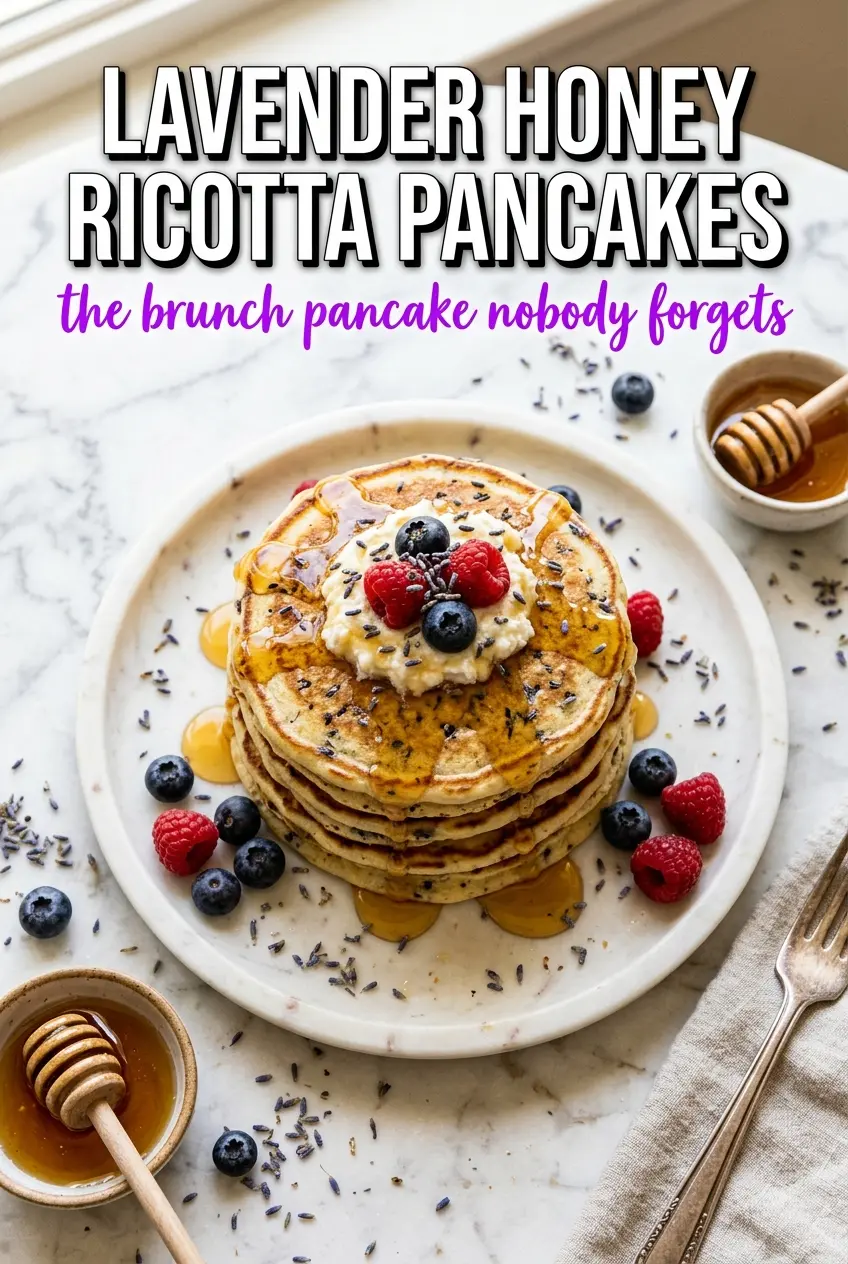
Lavender Honey Ricotta Pancakes
Ingredients
Equipment
Method
- Combine ricotta cheese, eggs, milk, and vanilla extract in a blender. Blend until smooth and slightly fluffy.
- In a separate bowl, whisk together all-purpose flour, baking powder, salt, and crushed culinary lavender buds. Whisk until the lavender is evenly dispersed.
- Add the flour mixture to the ricotta mixture and stir until just combined. Do not overmix.
- Fold in honey, plus more for drizzling, and melted butter. Mix just until streaks disappear.
- Heat a griddle or skillet over medium heat and lightly butter or oil the surface. Make sure the surface is ready before pouring batter.
- Pour batter in 1/4 cup portions onto the griddle. Cook for 2-3 minutes until the bottoms are golden.
- Flip the pancakes and cook for another 1-2 minutes. Cook until the second side is lightly golden and the centers look set.
- Stack the warm pancakes and drizzle generously with additional honey. Garnish with fresh lavender sprigs and serve immediately.