Layered cornbread cake lands somewhere between a celebration cake and a warm slice of cornbread, and that mix is exactly what makes it hard to stop eating. The crumb is tender but sturdy, with enough cornmeal texture to keep each bite interesting, and the honey butter frosting drapes over the layers with a soft, whipped sweetness that doesn’t drown the cake itself. A drizzle of honey and a little flaky salt on top pulls everything into focus.
What makes this version work is the balance. The batter uses both milk and buttermilk, so the crumb stays moist without turning heavy, and the combination of baking powder and baking soda gives the layers enough lift to stay tall in the pan. The melted butter and honey go into the cake batter for flavor and tenderness, while the frosting is built with softened butter and a small splash of cream so it beats up light instead of greasy.
Below, I’ll walk through the part that matters most: keeping the layers even, frosting them before the cake dries out, and finishing with the honey-salt topping so every slice tastes intentional, not just sweet.
The layers baked up flat and the frosting stayed fluffy enough to spread without tearing the cake. The honey and flaky salt on top made it taste like cornbread and dessert had the best possible argument.
Like this layered cornbread cake with honey butter frosting? Save it to Pinterest for the dessert table when you want something golden, fluffy, and just salty enough on top.
The One Thing That Keeps Cornbread Cake from Eating Like Dry Cornbread
Most cornbread cakes go wrong in the same place: they lean too far into the cornbread side and forget they still need to behave like cake. That usually means too much cornmeal, not enough fat, or overbaking by a few minutes. Once that happens, the layers still taste good, but they crumble before the fork gets to the plate.
This recipe stays on the cake side because the flour does enough structural work to soften the cornmeal, and the honey brings moisture that plain sugar can’t quite replace. The other detail that matters is the bake time. Pull the layers when the centers are set and a toothpick comes out clean, not when the tops look aggressively browned. Cornbread can take more heat than cake, but cornbread cake still dries out if you chase color.
- Cornmeal gives the cake its texture and that faint corn flavor, but too much makes the crumb sandy. Fine or medium grind works best here; coarse cornmeal gets a little gritty in a layered cake.
- Buttermilk keeps the crumb tender and adds enough acidity to help the baking soda do its job. If you only have milk, add 1 teaspoon lemon juice or vinegar to the 1/2 cup and let it sit for a few minutes.
- Honey adds moisture and rounds out the corn flavor. It doesn’t replace sugar entirely, but it makes the cake taste softer and more integrated instead of sharply sweet.
- Butter, melted in the cake and softened in the frosting gives you two different textures: tender layers and a fluffy finish. Don’t swap in oil for the frosting; it won’t whip the same way.
What Each Ingredient Is Actually Doing in the Layers and Frosting
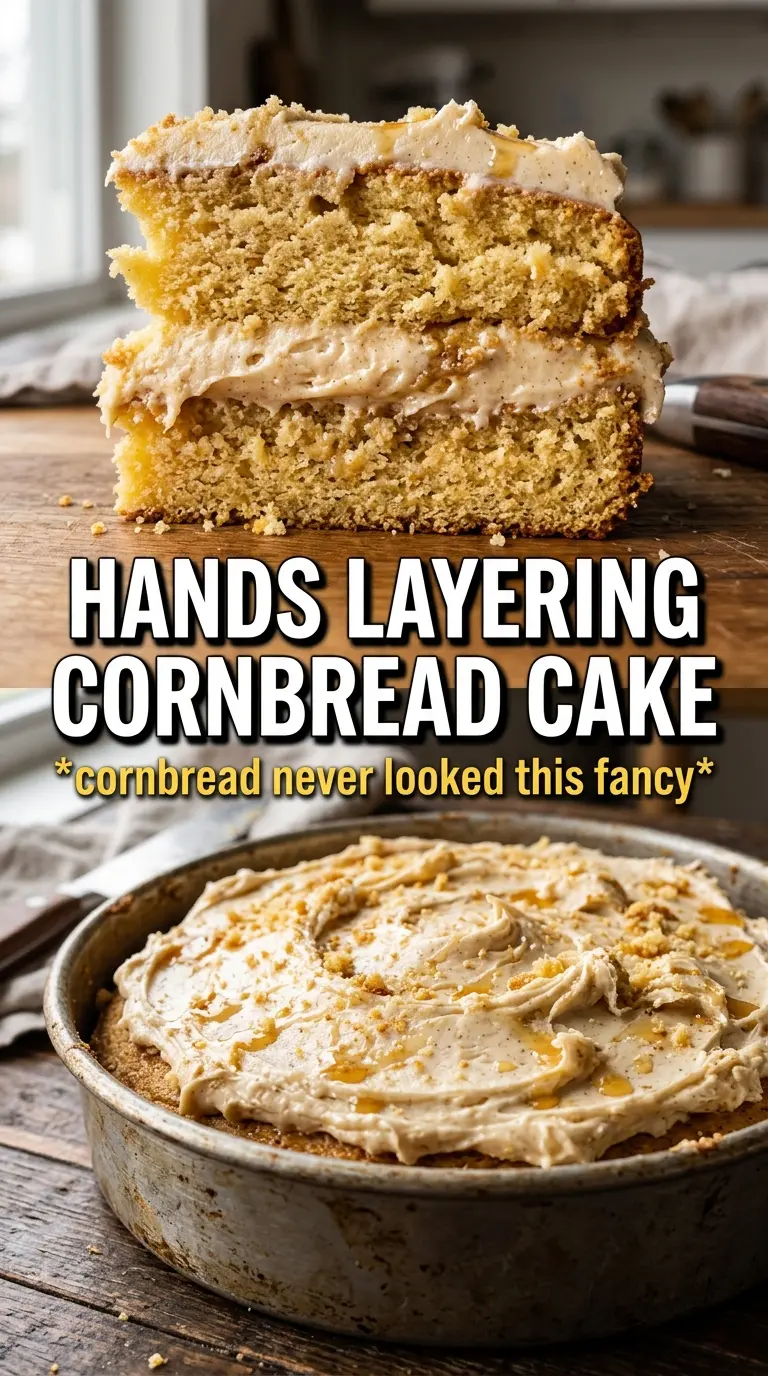
These ingredients are working in two separate jobs, and that’s why the cake has a better texture than a one-bowl shortcut version. The batter needs enough flour to hold the layers together, while the cornmeal supplies the flavor and a little grain. In the frosting, butter is the structure, honey is the aroma, and powdered sugar turns everything from loose whipped butter into something that can actually sit between layers.
- All-purpose flour is what keeps the slices neat. If you cut back too far, the layers get fragile and start breaking when you frost them.
- Eggs add richness and help the batter set into a sliceable cake. Room-temperature eggs mix in more evenly and keep the batter from looking curdled after the butter goes in.
- Vanilla smooths out the corn flavor and keeps the cake tasting round instead of one-note sweet. It matters more here than it would in a plain yellow cake because the cornmeal needs a little softness around the edges.
- Heavy cream in the frosting is there for texture, not flavor. Add it a tablespoon at a time if needed so the frosting stays thick enough to hold between layers.
- Flaky salt on top is not decoration. It sharpens the honey and keeps the final bite from turning cloying.
Building the Layers So the Cake Stays Tender
Whisk the Dry Ingredients First
Start by combining the flour, cornmeal, sugar, baking powder, baking soda, and salt in a large bowl. That even distribution matters because the leaveners need to be spread through the batter before any liquid goes in. If you skip the whisking and dump everything together loosely, you can end up with bitter little pockets of baking soda or uneven rise.
Bring the Wet Ingredients Together Separately
Whisk the eggs, milk, buttermilk, melted butter, honey, and vanilla in another bowl until the mixture looks smooth and unified. The butter should be melted but not hot enough to cook the eggs. If the melted butter goes in scorching hot, it can seize into tiny bits and give you an uneven batter.
Fold, Don’t Beat, the Batter
Pour the wet mixture into the dry ingredients and stir just until the flour disappears. The batter should look thick and slightly textured from the cornmeal, but you shouldn’t see dry streaks at the bottom of the bowl. Overmixing here tightens the crumb, and that turns the cake from tender to tough.
Watch the Centers, Not the Color
Divide the batter between three greased 8-inch pans and bake until the tops spring back and a toothpick comes out clean, about 22 to 25 minutes. The edges will take on a deeper gold before the centers are fully set, and that’s normal. Pull them too late and the layers lose the soft crumb that makes the frosting worth it.
Make It Without Dairy
Use unsweetened almond milk mixed with 1 teaspoon vinegar in place of the milk and buttermilk, and swap the butter for a good plant-based butter with a firm texture. The cake will still rise and hold together, but the frosting won’t whip quite as airy, so add the cream substitute slowly and stop as soon as it spreads easily.
Use a Two-Layer Cake Instead of Three
Bake the batter in two 9-inch pans and check them a few minutes earlier since the layers will be thicker. You’ll get a taller-looking slice with a little more frosting per bite, but the cake will bake more slowly in the center, so don’t rely on the timer alone.
Make It Gluten-Free
Use a cup-for-cup gluten-free flour blend in place of the all-purpose flour and keep the cornmeal the same. The texture will be a touch more delicate, so let the layers cool completely before moving them, and don’t frost while they’re even slightly warm.
Add a Little Extra Corn Flavor
Fold 1/2 cup of finely ground cornmeal into the batter for a more pronounced corn taste, or brush the cooled layers with a thin layer of warm honey before frosting. Both changes push the dessert further toward cornbread, but the cake will read less like a standard layer cake and more like a Southern-style celebration dessert.
Storage and Reheating
- Refrigerator: Store covered for up to 4 days. The frosting firms up in the fridge, but the cake stays moist.
- Freezer: Freeze unfrosted layers tightly wrapped for up to 2 months. Frosted slices freeze, but the whipped frosting loses some of its light texture after thawing.
- Reheating: Bring slices to room temperature, or warm them for just 10 to 15 seconds in the microwave. Too much heat melts the frosting and makes the crumb seem drier than it is.
Questions I Get Asked About This Recipe
Layered Cornbread Cake With Honey Butter Frosting
Ingredients
Equipment
Method
- Preheat oven to 350F and grease three 8-inch round pans.
- Whisk together all-purpose flour, yellow cornmeal, granulated sugar, baking powder, baking soda, and salt.
- Whisk together eggs, whole milk, buttermilk, melted unsalted butter, honey, and vanilla in a separate bowl.
- Fold the wet mixture into the dry mixture until just combined, then divide batter evenly between the three pans.
- Bake at 350F for 22-25 minutes, until a toothpick comes out clean.
- Cool the baked cakes completely before frosting.
- Beat softened unsalted butter and honey until smooth, then gradually mix in powdered sugar.
- Beat in heavy cream, vanilla, and salt until very light and fluffy.
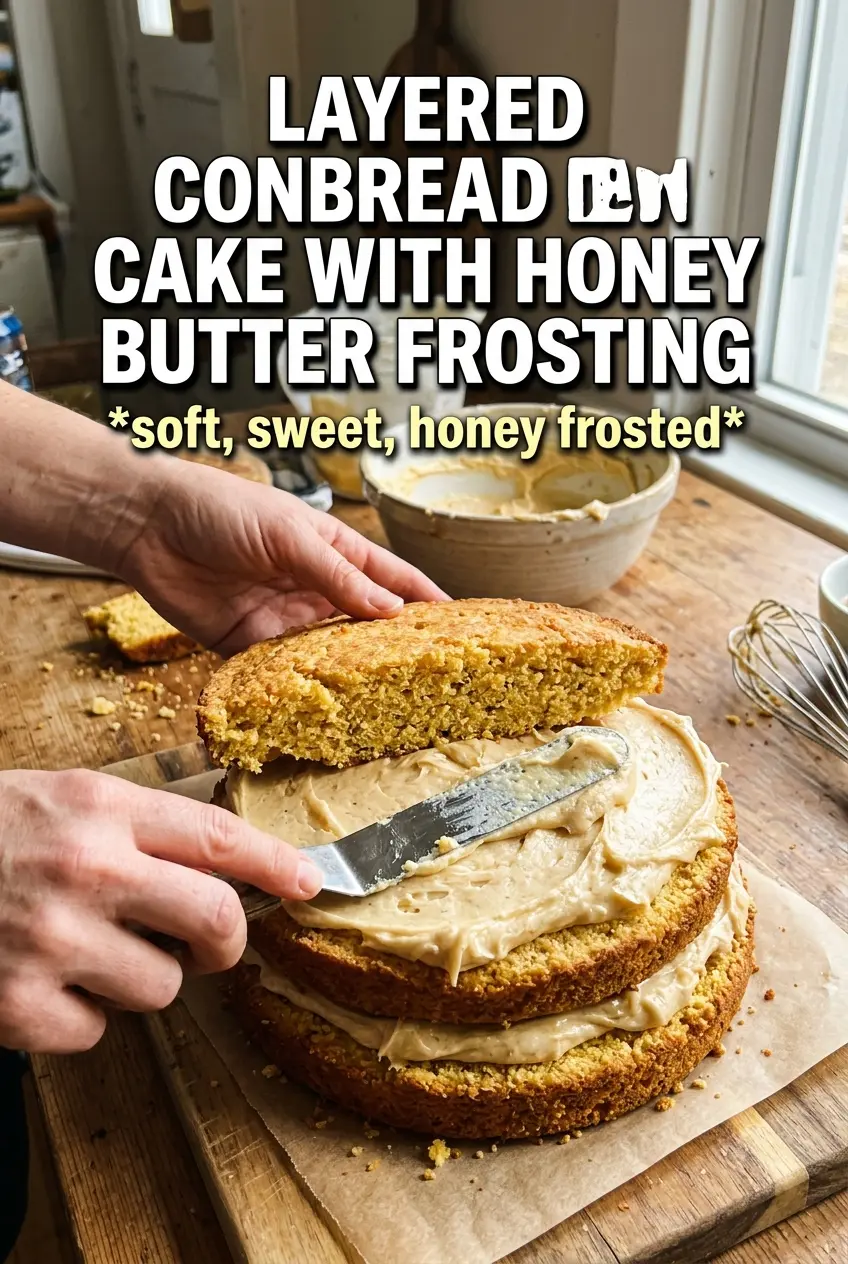
- Frost generously between all layers and spread frosting over the outside of the stacked cake.
- Drizzle with honey and sprinkle flaky sea salt over the top to finish.