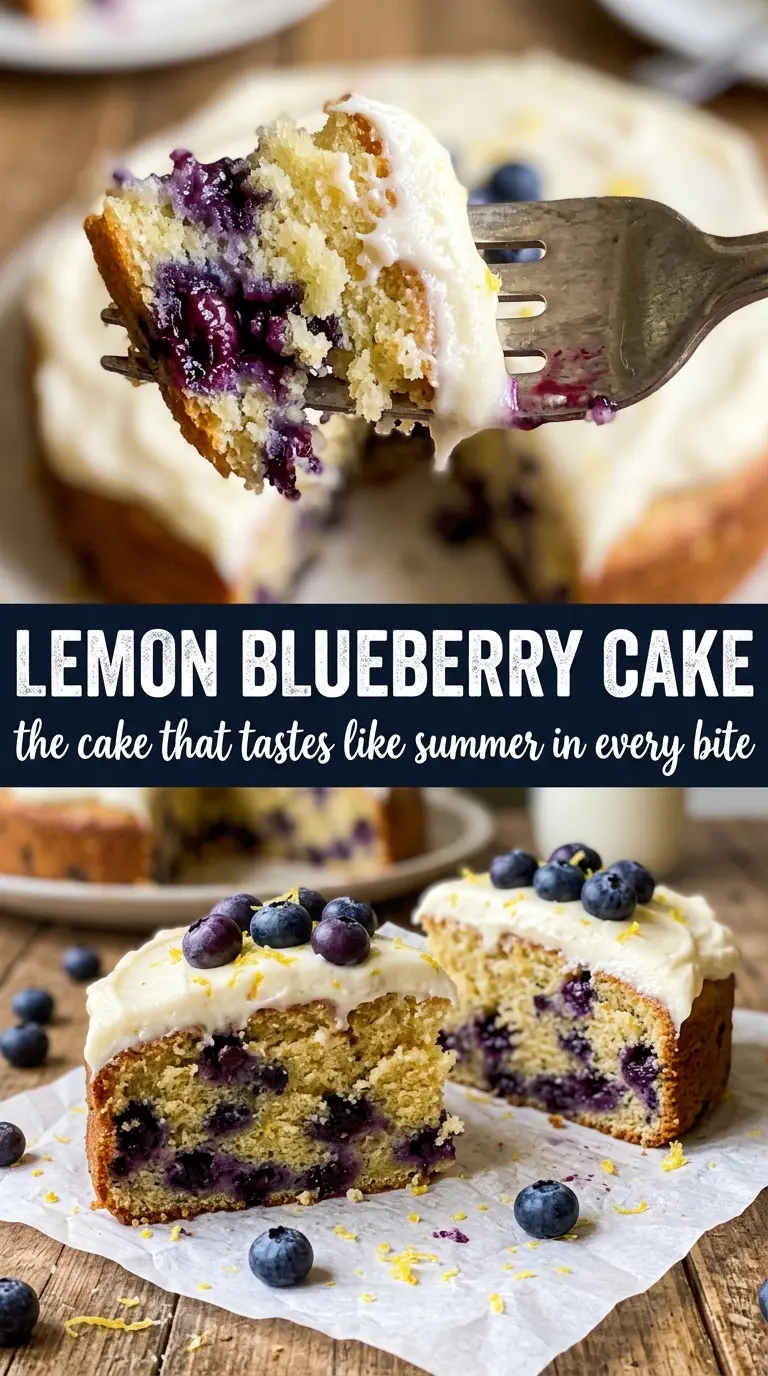
Lemon blueberry cake lands in that sweet spot between bright and comforting: tender layers, juicy berry pockets, and a frosting that tastes tangy instead of heavy. The crumb stays soft and plush, but it still slices cleanly enough for a proper layer cake, which is exactly why this one earns repeat status. The blueberries don’t just sit on top for decoration; they bake into the batter and leave little bursts of color and flavor all the way through.
The trick is in the balance. Lemon zest goes into the batter for real citrus perfume, while the juice adds sharpness without making the cake sour. Tossing the blueberries with a little flour keeps them from sinking to the bottom, and that small step makes a visible difference in every slice. The frosting stays in the same bright lane, with cream cheese for tang and enough butter to keep it smooth and spreadable.
Below, you’ll find the small details that keep the layers light, the berries suspended, and the frosting from turning sloppy. There’s also a note on substitutions, because the difference between a good lemon blueberry cake and a great one usually comes down to a few quiet decisions.
The berries stayed evenly distributed and the frosting set up thick enough to slice cleanly after chilling. I used buttermilk and the cake came out super tender with a bright lemon flavor that wasn’t too sweet.
Save this lemon blueberry cake for the day you want tall layers, fresh berries, and a tangy cream cheese frosting that slices beautifully.
The Part That Keeps the Berries From Sinking
Most blueberry cakes fail in the same way: the fruit drops to the bottom and the top layer ends up pale and plain. Flour-coating the berries helps, but it only works if the batter is thick enough to support them. This batter has enough structure from the butter, eggs, and flour to hold the berries in place without turning dense.
Another thing that matters here is mixing order. Lemon juice goes in with the wet ingredients, but the batter still needs alternating additions of dry ingredients and milk so it stays smooth. If you dump everything in at once, the batter can curdle slightly and the cake bakes up unevenly. That small bit of patience gives you even layers and a soft crumb instead of a heavy one.
What Each Ingredient Is Actually Doing in This Cake
- Butter — This is what gives the cake its rich, tender crumb. Use softened butter, not melted, so it can trap air when you beat it with the sugar.
- Fresh lemon zest — Zest carries the brightest lemon flavor in the whole cake. Juice gives tang, but zest gives the perfume that makes the cake taste fresh instead of flat.
- Buttermilk or whole milk — Buttermilk brings a little extra tang and tenderness, which works beautifully with the lemon cream cheese frosting. Whole milk still works if that’s what you have, but the cake will be a touch less sharp.
- Fresh blueberries — Fresh berries hold their shape better than frozen ones and bleed less into the batter. If you use frozen, add them straight from the freezer and expect more purple streaks in the crumb.
- Cream cheese — This frosting needs cream cheese for the tang that keeps it from tasting like plain buttercream. Use full-fat block cream cheese, not the whipped tub kind, or the frosting can turn loose.
Building the Batter and Frosting Without Losing the Texture
Beating the Butter and Sugar Until It Lifts
Start with butter that gives slightly when pressed but doesn’t look greasy. Beat it with the sugar until the mixture looks pale and fluffy, not just combined. This is where the cake gets some of its lift, so shortchanging this step makes the crumb tighter than it should be.
Adding the Eggs and Citrus in the Right Order
Add the eggs one at a time and beat just until they disappear into the batter. Then mix in the lemon zest, lemon juice, and vanilla. If the batter looks a little curdled after the juice goes in, don’t panic; it comes back together once the flour and milk are added. The goal is smooth, not overworked.
Folding in the Flour and Blueberries
Add the flour mixture and milk in alternating additions, beginning and ending with flour. That keeps the batter from breaking or looking oily. Fold in the floured blueberries by hand at the end, and stop as soon as they’re distributed. Overmixing at this point can crush the berries and turn the crumb streaky.
Baking Until the Center Springs Back
Divide the batter evenly between the pans and bake until the tops are lightly golden and a toothpick comes out with a few moist crumbs. If the centers still jiggle, they need more time; if they’re dry, the cake will feel crumbly once cooled. Let the layers cool completely before frosting, or the cream cheese frosting will slide right off.
Whipping the Frosting to a Spreadable Finish
Beat the cream cheese and butter until no lumps remain, then add the powdered sugar, lemon juice, and zest. The frosting should be fluffy but thick enough to hold swirls. If it looks loose, chill it for 10 to 15 minutes before assembling. That little pause makes the whole cake easier to stack neatly.
How to Adapt This Cake for Different Kitchens and Different Cravings
Make It With Buttermilk for a Tangier Crumb
Use buttermilk instead of whole milk if you want a tighter, more tender crumb with a little extra tang. It plays especially well with the lemon frosting and helps the cake taste brighter without adding more juice, which could throw off the batter balance.
Use Frozen Blueberries When Fresh Aren’t Available
Frozen blueberries work, but don’t thaw them first. Toss them in flour while still frozen and fold them in quickly so the color doesn’t bleed too much. The cake will taste the same, though the crumb will usually be a little more marbled.
Make It Gluten-Free With a 1:1 Baking Blend
A good 1:1 gluten-free flour blend can work here, especially one that already contains xanthan gum. The cake may bake up a little more delicate, so let the layers cool fully before moving them. That patience keeps the layers from breaking.
Skip the Layer Finish and Bake It as a Sheet Cake
If you want something lower-fuss, bake the batter in a greased 9×13-inch pan and spread the frosting over the top once it’s cool. You’ll lose the tall layer look, but the cake stays just as soft and is easier to serve for a crowd.
Storage and Reheating
- Refrigerator: Store covered for up to 4 days. The frosting firms up in the fridge, but the cake stays moist.
- Freezer: Freeze unfrosted layers tightly wrapped for up to 2 months. Frosted slices can be frozen, but the cream cheese frosting softens a little after thawing.
- Reheating: Let refrigerated slices sit at room temperature for 20 to 30 minutes before serving. Don’t microwave a frosted slice unless you want the frosting to melt and slide.
Answers to the Questions Worth Asking
Lemon Blueberry Cake
Ingredients
Equipment
Method
- Preheat the oven to 350°F, then grease two 9-inch round pans.
- Beat the softened butter and granulated sugar until fluffy.
- Add the eggs one at a time, then mix in lemon zest, lemon juice, and vanilla extract.
- Alternately add the flour mixture and whole milk (or buttermilk), mixing just until combined.
- Toss the fresh blueberries with 1 tablespoon of flour, then fold them gently into the batter.
- Bake for 32 to 35 minutes, until the centers spring back when lightly pressed and a toothpick comes out with moist crumbs.
- Cool the cakes completely in the pans, then remove and prepare for frosting.
- Beat the softened cream cheese and butter until smooth.
- Add powdered sugar, lemon juice, and lemon zest, then beat until fluffy.
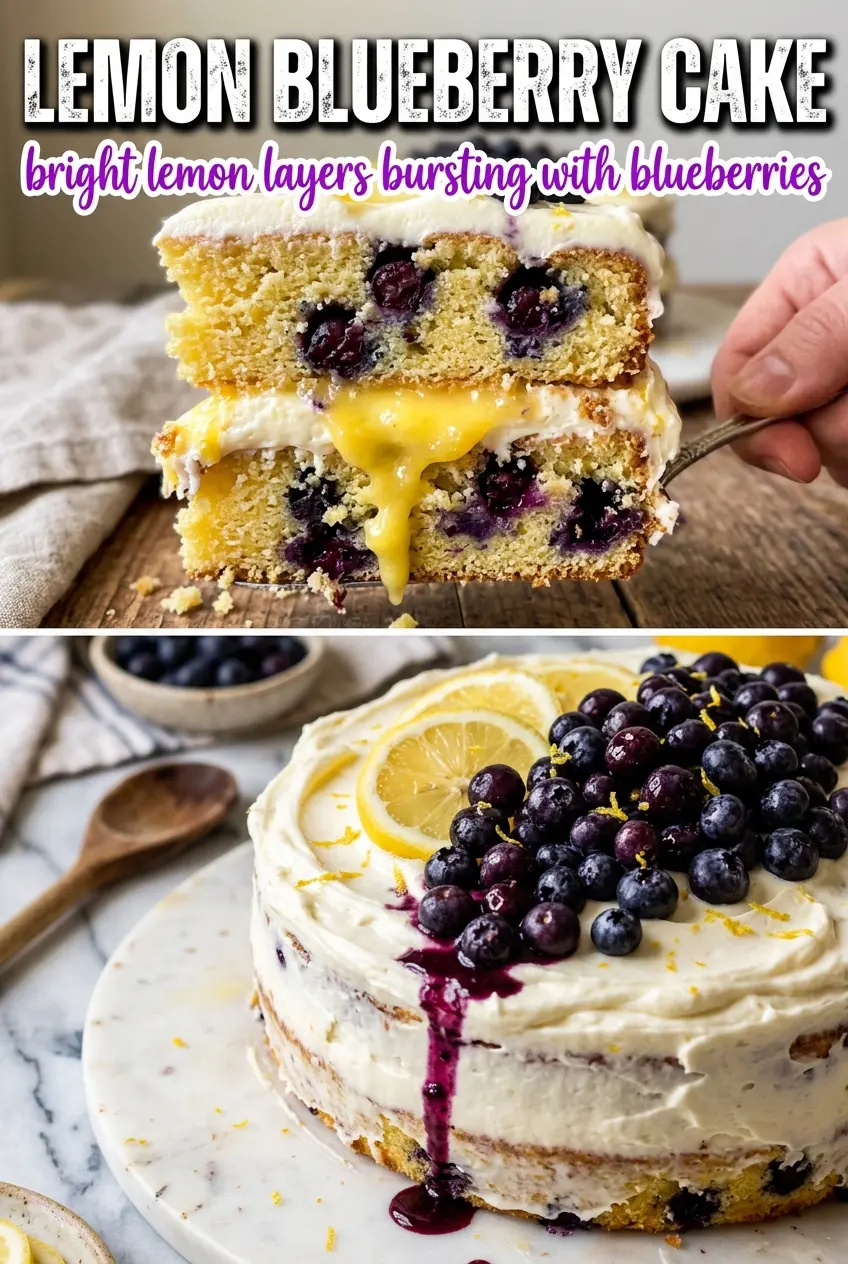
- Level the cooled cake layers if needed, then fill and frost with the lemon cream cheese frosting.
- Pile fresh blueberries on top and drizzle with a simple lemon glaze made from 1 cup powdered sugar and 2 tablespoons lemon juice.
- Scatter extra lemon zest over the top and serve.