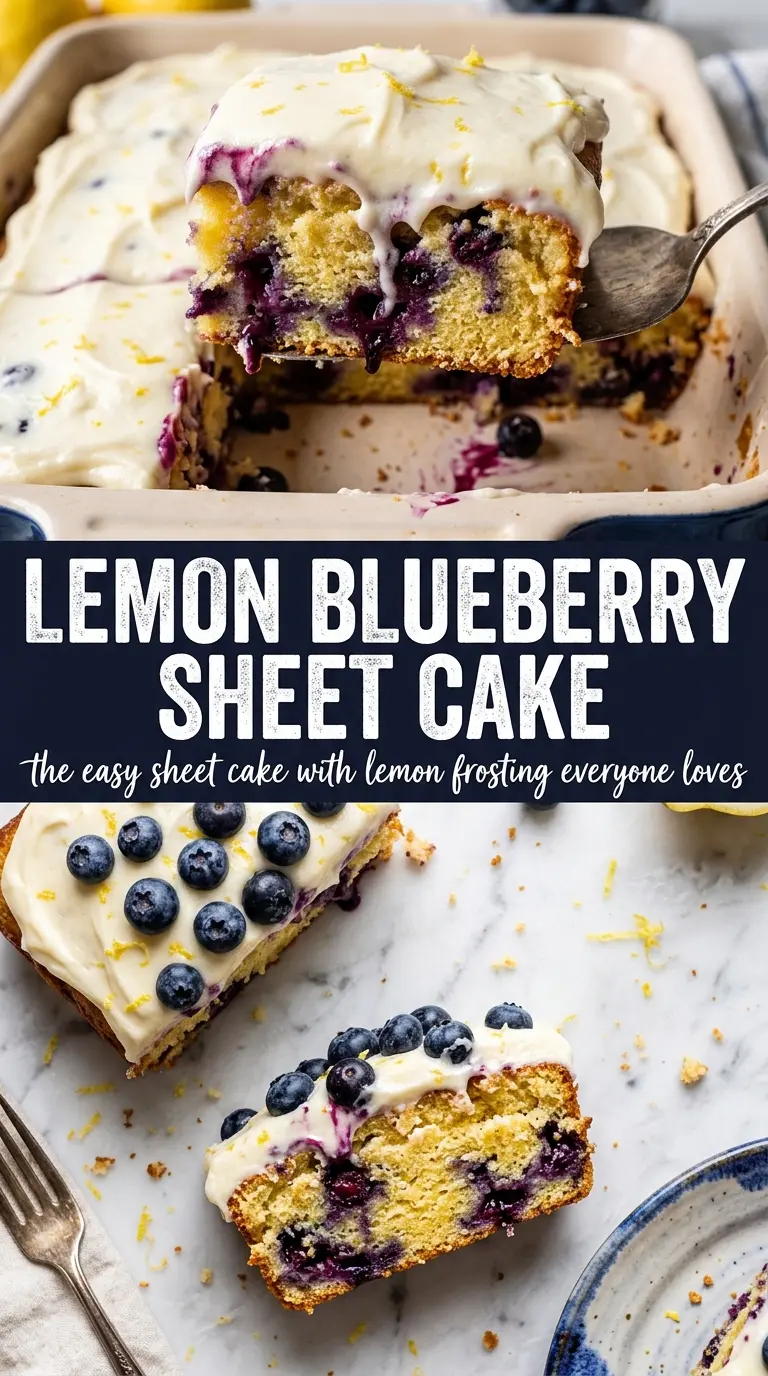
Soft crumb, bright lemon, and blueberries that stay juicy instead of sinking to the bottom make this sheet cake the kind of dessert people go back for before the pan is even halfway empty. The frosting is thick and tangy enough to stand up to the sweet cake, and the whole thing slices cleanly for potlucks, birthdays, or any table that needs a cake with a little more presence than a plain layer cake.
The trick is balance. Lemon shows up in the zest, juice, and frosting, but none of it gets sharp or thin because the butter and cream cheese round it out. Tossing the blueberries with a little flour helps them hold in place through the batter, and using buttermilk keeps the crumb tender without turning it heavy. You get a cake that tastes bright and bakery-style, but still bakes up in a simple sheet pan.
Below you’ll find the small details that keep the cake from turning dense, plus a couple of easy swaps if you need to work with what you have on hand.
The blueberries stayed suspended in the crumb and the frosting set up thick enough to slice cleanly. I brought it to a church lunch and there wasn't a crumb left.
Like this lemon blueberry sheet cake? Save it to Pinterest for a bright, crowd-pleasing dessert with thick lemon cream cheese frosting.
The Main Reason This Cake Stays Tender Instead of Heavy
Sheet cakes can turn dense fast when the batter gets overmixed or the fruit drags everything down. This one avoids both problems by using buttermilk for a soft crumb and by folding in flour-coated blueberries at the very end, after the batter is already mixed. That little bit of flour gives the berries something to cling to, so they don’t all drop into the bottom layer while the cake bakes.
The other thing that matters here is the frosting balance. Cream cheese frosting can taste flat if it’s only sweet, but the lemon juice and zest cut through the richness and keep every bite bright. Since the cake itself is already lemony, the frosting doesn’t need to shout; it just needs to finish the cake with a clean, tangy edge.
What Each Ingredient Is Doing in the Batter and Frosting
- All-purpose flour — Gives the cake its structure without making it dry. Spoon it into the measuring cup and level it off so you don’t pack in too much and end up with a tight crumb.
- Butter — Softened butter helps trap air when you beat it with the sugar, which is what gives the cake a lighter texture. Cold butter won’t cream properly, and melted butter will make the cake greasy and flat.
- Buttermilk — This is what keeps the crumb tender and gives the lemon a little extra brightness. If you don’t have it, use 1 cup milk mixed with 1 tablespoon lemon juice, let it sit for 5 minutes, and use it right away.
- Fresh blueberries — Fresh berries hold their shape better than frozen and don’t streak the batter as much. If you only have frozen blueberries, use them straight from the freezer and don’t thaw them, or they’ll bleed and sink more easily.
- Cream cheese — Full-fat cream cheese gives the frosting body and that tangy finish that keeps it from tasting like straight sugar. Softened cream cheese is nonnegotiable here; if it’s cold, you’ll get little lumps that never fully smooth out.
- Lemon zest — Zest carries the strongest lemon flavor in the whole recipe. Juice adds sharpness, but the zest is what makes the cake taste boldly lemony instead of just sweet.
The Mixing Order That Keeps the Cake Light
Cream the Butter and Sugar Until It Fluffs Up
Beat the butter and sugar until the mixture looks pale and a little fluffy, not just blended. That step matters because it’s where the cake gets most of its lift. If you stop too soon, the cake bakes up tighter and more compact than it should. Scrape the bowl once or twice so the butter at the bottom doesn’t stay dense while the top looks ready.
Add the Eggs and Lemon Before the Flour
Beat in the eggs one at a time, then add the lemon zest, lemon juice, and vanilla. The batter may look slightly curdled after the juice goes in, and that’s fine; it comes back together once the flour and buttermilk are mixed in. Add the dry ingredients and buttermilk in alternating additions so the batter stays smooth and doesn’t get overworked.
Fold the Blueberries in by Hand
Once the batter is mixed, switch to a spatula and fold in the flour-coated blueberries gently. If you beat them in with the mixer, you’ll crush them and turn the batter purple. Spread the batter evenly in the pan, especially into the corners, so the cake bakes level and the frosting sits on a flat surface later.
Cool Completely Before Frosting
Let the cake cool all the way through before you start the frosting. If it’s even warm in the center, the cream cheese frosting will melt and slide. A fully cooled cake gives you a thick, clean layer that stays put when you cut into it.
How to Adapt This Cake for Different Pans and Different Needs
Use Two 9×13 Pans for Easy Serving
If you don’t have a 12×18 sheet pan, divide the batter between two 9×13 pans. The cakes will bake a little faster and give you more edges, which is great when you want cleaner slices for a crowd. Start checking a few minutes early so you don’t dry them out.
Make It Gluten-Free Without Losing the Soft Crumb
Use a cup-for-cup gluten-free flour blend that contains xanthan gum. The cake will still be tender, but it may need an extra minute or two in the oven to set fully, and it won’t be quite as springy as the original.
Swap in Frozen Blueberries When That’s What You Have
Frozen berries work fine if you add them straight from the freezer and fold them in quickly. Do not thaw them, or they’ll bleed into the batter and create wet pockets. The cake may need a minute or two more in the oven, but the texture will still hold.
Storage and Reheating
- Refrigerator: Store covered for up to 4 days. The frosting firms up in the fridge, but the cake stays moist.
- Freezer: Freeze unfrosted cake layers tightly wrapped for up to 2 months. Frosted cake can be frozen, but the topping loses some of its smoothness after thawing.
- Reheating: Let refrigerated slices sit at room temperature for 20 to 30 minutes before serving. Microwaving softens the frosting too much and can make the crumb gummy.
Answers to the Questions Worth Asking
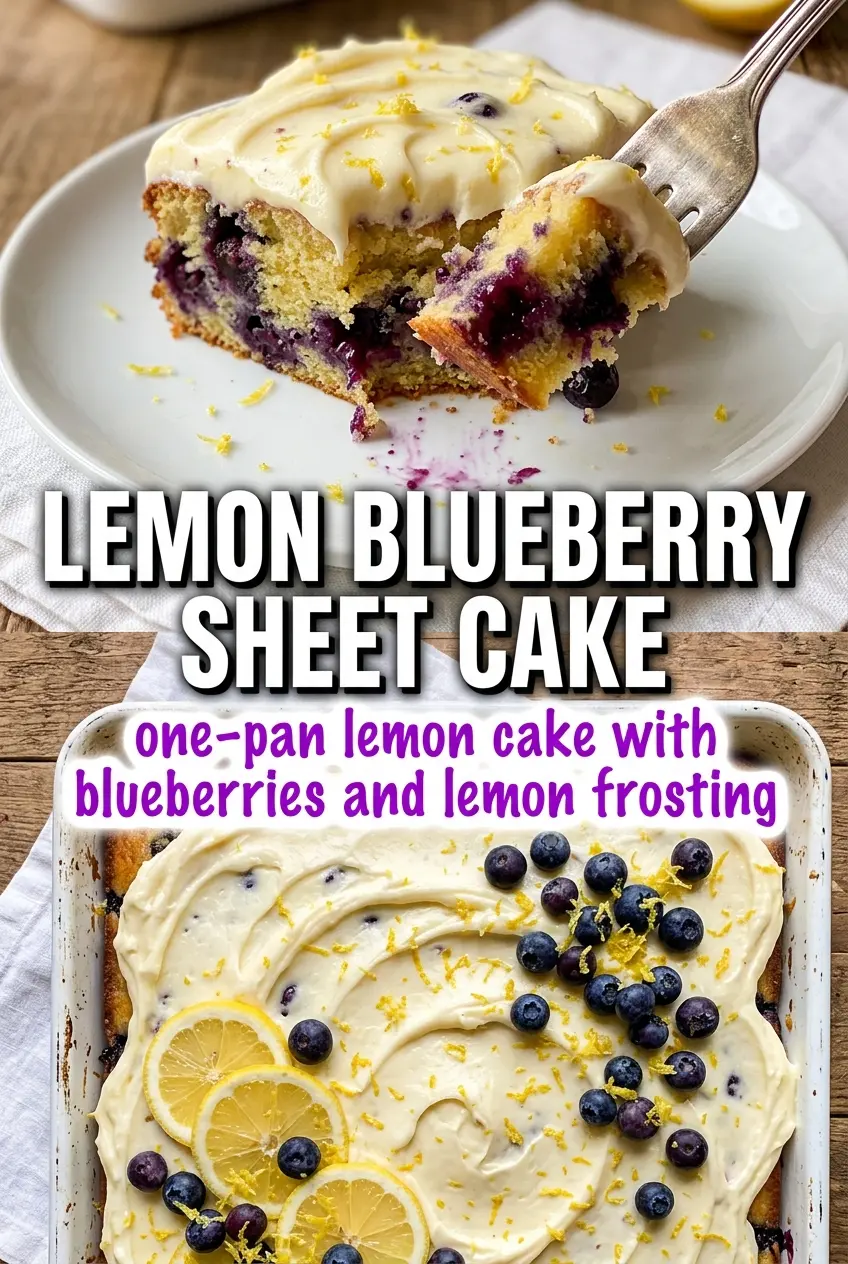
Lemon Blueberry Sheet Cake
Ingredients
Equipment
Method
- Preheat oven to 350°F and grease a 12x18 sheet pan (or two 9x13 pans); line with parchment so the cake releases cleanly.
- Beat butter and granulated sugar until fluffy, stopping to scrape the bowl for an even, lighter batter.
- Add eggs one at a time, then mix in lemon zest, fresh lemon juice, and vanilla extract until smooth and glossy.
- Whisk all-purpose flour, baking powder, and salt together, then alternately mix the flour mixture and buttermilk into the batter just until combined.
- Fold in fresh blueberries that have been tossed in 1 tablespoon flour so they stay suspended through the tender crumb.
- Spread batter evenly in the prepared pan, smoothing the top so it bakes uniformly.
- Bake at 350°F for 25-30 minutes, until a toothpick comes out clean and the edges look lightly golden.
- Cool the cake completely before frosting, leaving it at room temperature until fully set to prevent melt-through.
- Beat cream cheese and butter until smooth, using a steady mixing motion to remove any lumps.
- Add powdered sugar, then mix in fresh lemon juice and lemon zest until fluffy and thick enough to hold shape.
- Spread the frosting generously over the cooled cake so it covers the surface with an even layer.
- Scatter fresh blueberries and lemon zest curls over the frosted top before serving for a bright, speckled finish.