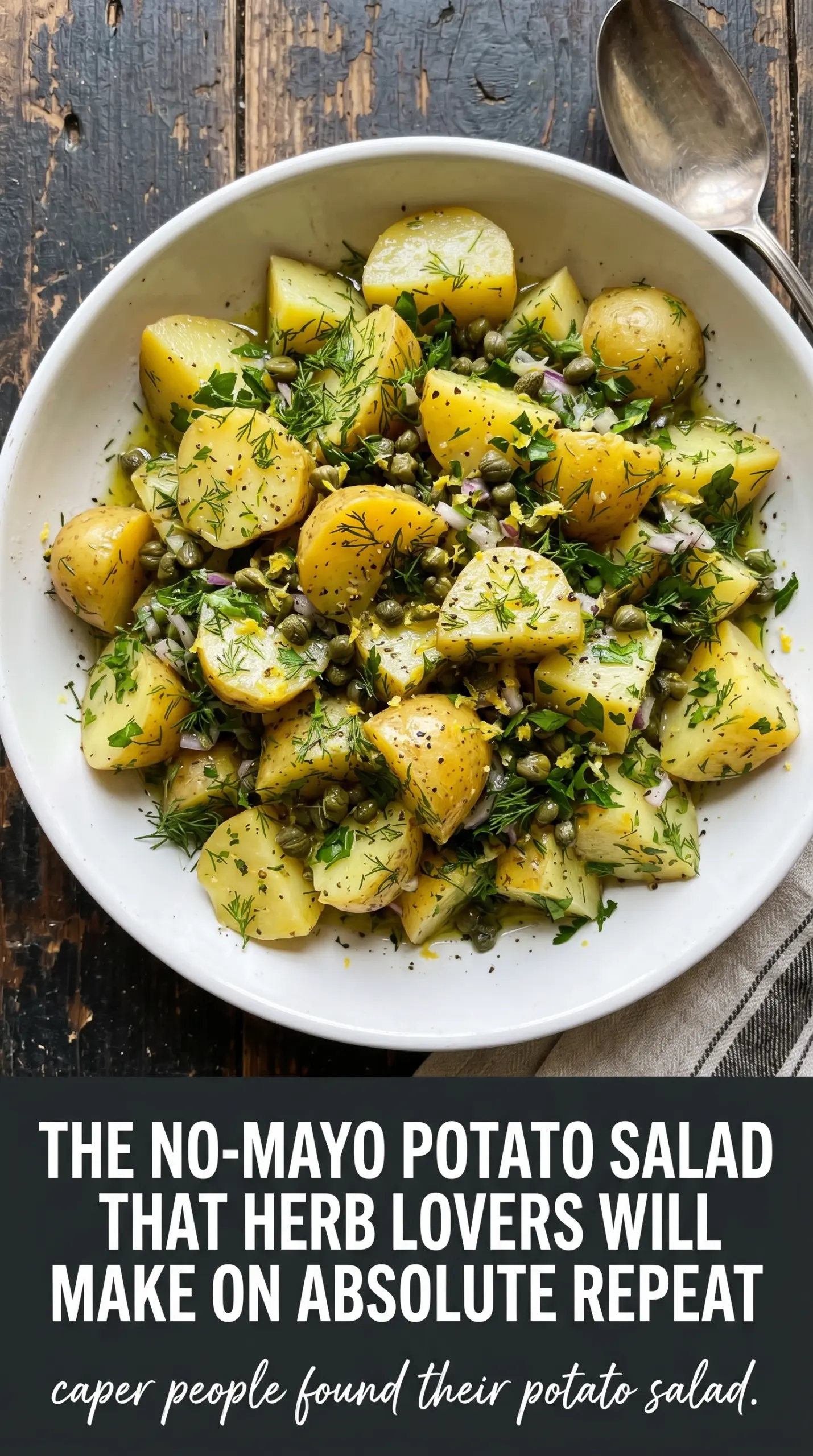
Bright, tender potatoes, a sharp lemon dressing, and briny capers make this potato salad taste awake from the first bite. It’s the kind of side dish that doesn’t sit quietly on the table; the dill lifts it, the mustard keeps the dressing from feeling flat, and the chilled finish makes every flavor snap into place.
What makes this version work is balance. Baby potatoes hold their shape after boiling, so the salad stays intact instead of turning soft and paste-like. The dressing leans on lemon juice, zest, and Dijon, which gives you acidity, aroma, and a little body without any mayo at all. That keeps it light enough for grilled fish, chicken, or anything coming off the barbecue, but still satisfying on its own.
Below, I’ll show you why the potatoes need to cool before they meet the dressing, which herb changes the texture of the whole salad, and how to make it ahead without losing that bright, fresh edge.
The potatoes stayed perfectly tender after chilling, and the lemon-dijon dressing soaked in without making the salad heavy. I loved the pop from the capers with the dill.
Save this lemon herb potato salad for the next picnic, cookout, or make-ahead dinner side when you want something bright, briny, and fresh from the fridge.
The trick to keeping the potatoes from turning mushy
The biggest mistake in potato salad is overcooking the potatoes and then tossing them while they’re still hot and fragile. Baby potatoes are the right choice here because their waxy texture holds together after boiling, but they still need to be checked early. You want them tender enough for a fork to slide in without resistance, not soft enough to collapse when you lift them.
Letting the potatoes cool before mixing matters just as much as the boil itself. Hot potatoes drink in dressing faster, which sounds helpful until the salad turns greasy in spots and flat in others. Cooling them first gives you a cleaner, more even coating, and chilling after tossing lets the lemon and Dijon settle into the potatoes instead of sitting on the outside.
- Baby potatoes — Their waxy texture is what keeps the salad from turning starchy or gluey. If you use larger potatoes, cut them into even pieces so they cook at the same rate.
- Capers — These bring the salty, briny edge that keeps the salad from tasting like dressed potatoes. Drain them well so they don’t water down the dressing.
- Lemon juice and zest — Juice gives the sharpness; zest gives the aroma. You need both for a dressing that tastes complete instead of just sour.
- Dijon mustard — This helps the dressing emulsify and cling to the potatoes. Yellow mustard won’t give the same depth or texture.
What each ingredient is doing in the bowl
- Olive oil — Use a good-tasting one here because it’s a big part of the dressing. Since there’s no mayo to hide behind, the oil needs enough flavor to carry the lemon and herbs.
- Fresh dill — Dill is the herb that makes this salad taste Mediterranean rather than generic. Dried dill won’t give the same fresh green lift, so keep the fresh herb if you can.
- Parsley — Parsley softens the dill and keeps the salad from leaning too heavily into one note. It also adds a little freshness that holds up after chilling.
- Salt and pepper — Salt wakes up the lemon and capers, but add it with care because the capers already bring saltiness. Taste after chilling and adjust again if needed, since cold food needs a little more seasoning than hot food.
Building the salad so the dressing actually clings
Boiling the potatoes to the right point
Put the halved potatoes in salted water and cook them until a paring knife slips in cleanly, but the pieces still hold their edges. If they’re falling apart in the pot, they’ve gone too far and the salad will turn dense instead of tender. Drain them well and let steam escape for a few minutes so the dressing doesn’t slide off a wet surface.
Whisking the lemon dressing
Combine the olive oil, lemon juice, zest, Dijon, salt, and pepper until the mixture looks slightly thickened and unified. If the dressing tastes sharp on its own, that’s fine; the potatoes will mellow it once they’re coated. The Dijon is doing the heavy lifting here, so whisk until it’s fully dispersed and not sitting in streaks at the bottom.
Tossing in the herbs and capers
Add the capers, dill, and parsley to the cooled potatoes before the dressing goes in. That way the herbs get distributed evenly instead of clumping in one spot, and the capers stay visible in the finished salad. Stir gently with a wide spoon or spatula so the potatoes stay intact and don’t smear into the bowl.
Chilling before serving
Cover the salad and chill it for at least 2 hours. That resting time isn’t optional if you want the flavor to come together, because the lemon settles into the potatoes and the herbs stop tasting separate from the dressing. Give it one last toss before serving, then taste for salt and pepper while it’s cold, since chilling dulls seasoning a bit.
How to adapt this salad without losing what makes it work
Make it dairy-free as written
This recipe already skips dairy, which is part of why it feels so light and clean on the plate. If you’re used to creamy potato salad, the Dijon and olive oil give enough body to keep it satisfying without needing yogurt or mayo.
Swap in red potatoes when that’s what you have
Red potatoes work well because they’re also waxy and hold their shape. Don’t use russets here unless you want a much softer salad, since their starchy texture can break down and turn the dressing cloudy.
Add chopped cucumber or celery for extra crunch
A handful of finely chopped cucumber or celery brings a crisp bite that plays well against the tender potatoes. Add it just before chilling so it stays fresh and doesn’t lose too much water into the bowl.
Use less lemon if you want a softer finish
Cut the lemon juice back slightly and keep the zest in place if you want the flavor to be less sharp but still fragrant. That change makes the salad gentler, especially if you’re serving it alongside something already tangy or salty.
Storage and Reheating
- Refrigerator: Store covered for up to 4 days. The potatoes will absorb more dressing as they sit, so the salad tastes a little more seasoned on day two.
- Freezer: Don’t freeze this salad. The potatoes turn grainy and the herbs lose their fresh texture after thawing.
- Reheating: This salad is meant to be served cold or cool from the fridge. If you want to take the chill off, let it sit at room temperature for 20 to 30 minutes; microwaving will make the potatoes unpleasantly soft and can dull the lemon.
Answers to the questions worth asking

Lemon & Herb Potato Salad with Dill and Capers
Ingredients
Equipment
Method
- Bring a Dutch oven of salted water to a boil, then add halved baby potatoes and cook until tender, 12-15 minutes. Visual cue: potatoes should easily pierce with a fork.
- Drain the potatoes and let them cool until just warm or room temperature, 10 minutes. Visual cue: surfaces look matte and the steam fades.
- Whisk olive oil, lemon juice, lemon zest, Dijon mustard, salt, and black pepper until smooth and slightly thick, 1-2 minutes. Visual cue: the mixture turns glossy and uniform.
- In a large bowl, combine the cooled potatoes with capers, fresh dill, and fresh parsley. Visual cue: herbs and capers are evenly distributed across the potatoes.
- Pour the lemon-Dijon dressing over the potato mixture and toss well until every piece is coated, 2-3 minutes. Visual cue: potatoes look lightly glazed with yellow flecks of zest.
- Refrigerate the potato salad for 2 hours before serving. Visual cue: flavors meld and the salad chills through, with dressing clinging to the potatoes.