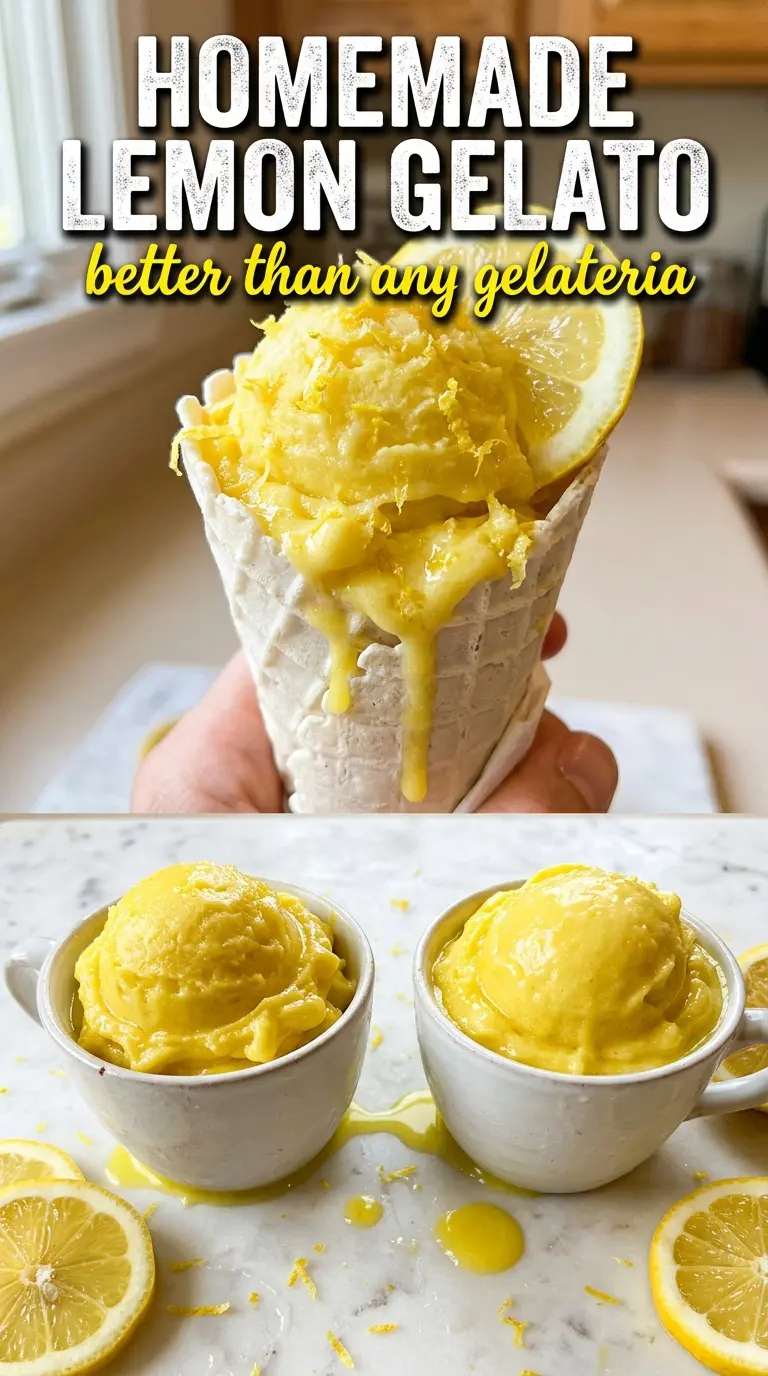
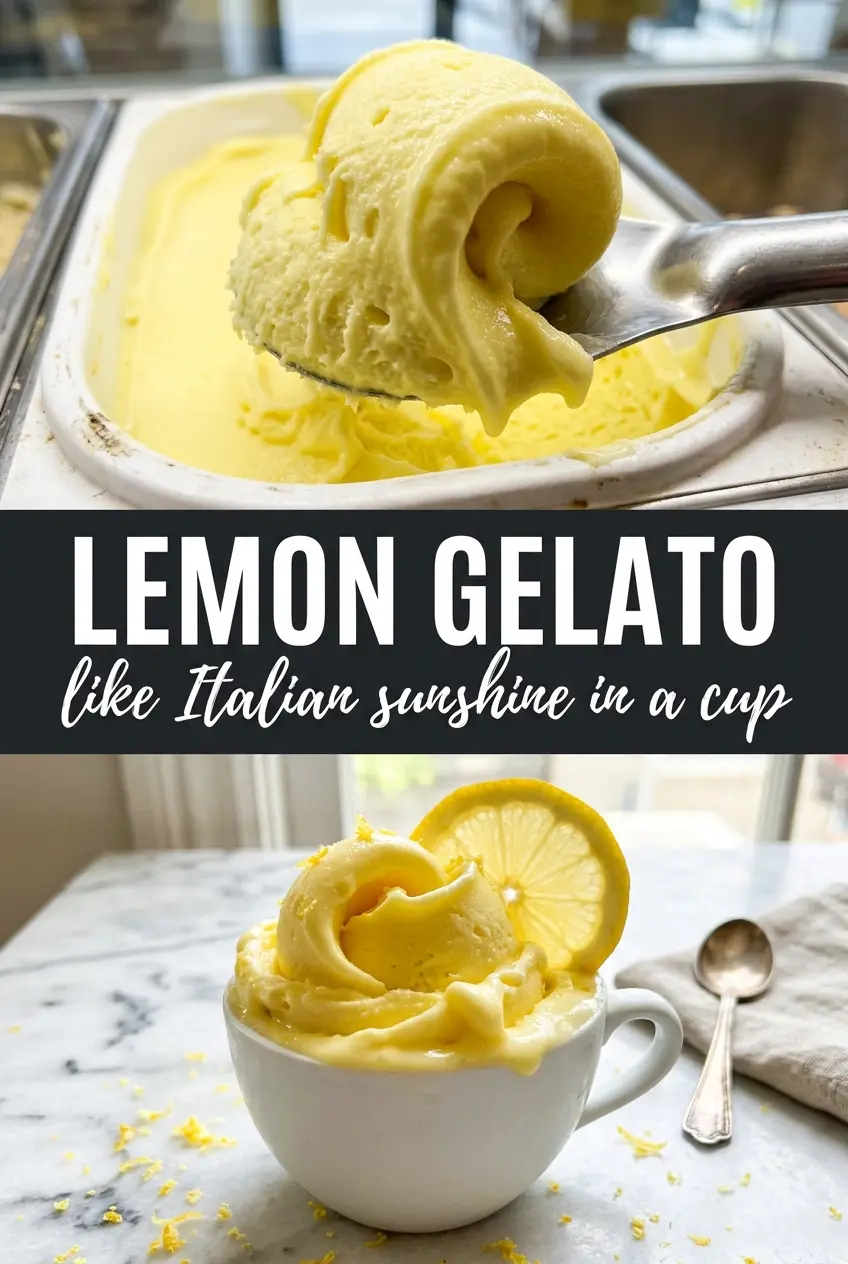
Dense, pale yellow lemon gelato lands somewhere between custard and sorbet, which is exactly why it earns a permanent spot in the freezer. The flavor is bright and direct, but the texture stays silkier than a shaved ice-style dessert because the base is cooked with egg yolks and a little cornstarch before it ever gets near the churn. That combination gives you a spoonful that feels creamy without tasting heavy.
The lemon juice goes in after the custard is cooked, not before. That matters. Acid added too early can make dairy behave badly, and cooking the lemon along with the milk would flatten the flavor anyway. Here, the custard is built first, then the zest and juice are stirred in off the heat so the lemon stays sharp and fresh.
Below, I’ve included the exact cue for when the base is thick enough, what to do if you don’t have an ice cream maker, and the one detail that keeps the gelato from turning icy in the freezer.
The custard thickened up exactly like pudding, and the lemon flavor stayed bright instead of turning dull. I served it after dinner and everyone kept going back for “just one more spoonful.”
Save this lemon gelato for the nights when you want a bright, creamy frozen dessert with that silky custard texture.
The Part That Keeps Lemon Gelato Creamy Instead of Icy
The biggest mistake with homemade lemon gelato is treating it like a no-cook citrus dessert. That sounds faster, but it gives you a thinner base with more water and less structure, and the freezer turns that into iciness. This version uses a cooked custard, which gives the sugar time to dissolve fully and the yolks time to emulsify the dairy into something stable enough to churn.
Cornstarch might look unnecessary in a custard dessert, but here it pulls real weight. It gives the gelato a little more body and helps it hold a dense scoop after freezing, which is what separates gelato from a soft lemon ice. If your base ever tastes eggy, it usually means it wasn’t cooked long enough to thicken properly before the lemon went in.
- Whole milk — This gives the gelato its main body. Lower-fat milk will still work, but the finished texture will lean more icy and less plush.
- Heavy cream — You only need a half cup, but it matters for that smooth, rounded finish. More cream would mute the lemon and push this closer to ice cream than gelato.
- Fresh lemon juice and zest — Bottled juice won’t taste the same. The zest carries the fragrant lemon oils that make the flavor smell fresh instead of sour.
- Egg yolks — They enrich the base and help it emulsify. Whole eggs won’t give the same silkiness.
- Cornstarch — This is the texture insurance. Whisk it in with the sugar before adding milk so it disperses evenly and doesn’t clump.
What Each Ingredient Is Actually Doing in This Ice Cream
- Base ingredient (cream, milk, or custard) — This provides the foundation and richness. Quality matters.
- Sweetener (sugar, honey, or condensed milk) — This sweetens and prevents ice crystals. The ratio is critical.
- Flavor element (vanilla, fruit, chocolate, coffee, or other) — This defines the ice cream personality. Use quality ingredients.
- Egg yolks (if making custard base) — These create richness and silky texture. Optional but elevates ice cream.
- Churning (if using ice cream maker) — This incorporates air and prevents ice crystals. Critical for smooth texture.
- Freezing temperature and time — Proper freezing prevents rock-hard texture. Store at 0°F or below.
- Mix-ins (chocolate, cookies, fruit, or swirls) — These add texture and prevent one-dimensional flavor. Add near end of churning.
- Serving temperature (slightly soft, not rock hard) — This provides creamy mouthfeel. Remove from freezer 5 minutes before serving.
How to Build the Custard Without Scrambling the Yolks
Warming the Dairy First
Heat the milk and cream until steaming, not boiling. You want small bubbles around the edge and a lot of heat coming off the pan, but no real simmer. If the dairy boils, it can make the yolk mixture seize too fast when you combine them, which makes whisking out lumps much harder.
Tempering the Yolks
Whisk the yolks, sugar, and cornstarch until pale and thick, then stream in the hot dairy slowly while whisking constantly. That slow pour is what protects the eggs. If you dump it all in at once, the yolks can curdle on contact and you’ll feel little bits in the base before it even goes back on the stove.
Cooking to the Right Thickness
Return the mixture to the saucepan and cook over medium heat, stirring constantly, until it looks like thin pudding. The spoon should leave a clear track across the bottom of the pan, and the custard should coat the back of the spoon instead of running off immediately. Pull it early and the gelato freezes soft and loose; push it too hard and you risk a grainy custard.
Adding Lemon at the End
Take the pan off the heat before stirring in the lemon juice, zest, vanilla, and salt. The base may loosen slightly when the acid goes in, and that’s normal. What you don’t want is a hard boil after the lemon is added, because that’s when the dairy can turn rough instead of staying smooth.
Chilling and Churning
Cool the custard over an ice bath first, then refrigerate it for at least 4 hours. A cold base churns with finer ice crystals, which is what gives you that dense, bakery-style scoop. Churn on the lowest setting if your machine gives you that option, then serve right away for the softest texture or freeze it briefly for cleaner scoops.
What to Change When You Need a Different Finish
Dairy-Free Lemon Gelato
Use full-fat canned coconut milk in place of the milk and cream. The texture will still be creamy, but it will carry a light coconut note that sits nicely with lemon. Keep the rest of the method the same, and don’t skip the chilling step since plant-based bases benefit even more from a long cold rest.
Extra-Bright Lemon Gelato
Add an extra teaspoon of zest, not more juice. Juice pushes the acidity up fast, but zest gives you the fragrant lemon aroma without thinning the base or throwing off the custard balance. This is the better move if you want the flavor to pop without making the gelato sharper.
No-Ice-Cream-Maker Version
Pour the chilled base into a shallow metal pan and freeze it, stirring every 30 minutes for the first 2 to 3 hours. You won’t get the same density as churned gelato, but you’ll break up the ice crystals enough to keep it scoopable. Without those stirrings, the edges freeze hard before the center sets.
Storage and Reheating
- Refrigerator: The base can sit covered for up to 2 days before churning, and the flavor actually improves after the citrus settles in.
- Freezer: Finished gelato keeps for about 1 week with the best texture. After that, it gets harder and loses some of its silkiness.
- Reheating: Let it stand at room temperature for 5 to 10 minutes before scooping. Microwaving melts the edges fast and leaves the center icy, which defeats the whole point.
Questions I Get Asked About This Recipe
Lemon Gelato
Ingredients
Equipment
Method
- Heat whole milk and heavy cream in a saucepan until steaming, stirring occasionally so nothing scorches.
- Whisk egg yolks, granulated sugar, and cornstarch in a bowl until pale and thick.
- Slowly whisk the hot milk into the egg mixture to temper, then return everything to the saucepan.
- Cook over medium heat, stirring constantly, until thickened to a pudding consistency.
- Remove from heat and whisk in fresh lemon juice, lemon zest, vanilla extract, and salt until smooth.
- Cool the mixture completely using an ice bath, stirring to prevent a skin from forming.
- Refrigerate at least 4 hours (or until very cold) before churning.
- Churn in an ice cream maker on the lowest setting for a dense texture.
- Serve immediately for soft gelato, or freeze 1-2 hours to firm up for firmer scoops.