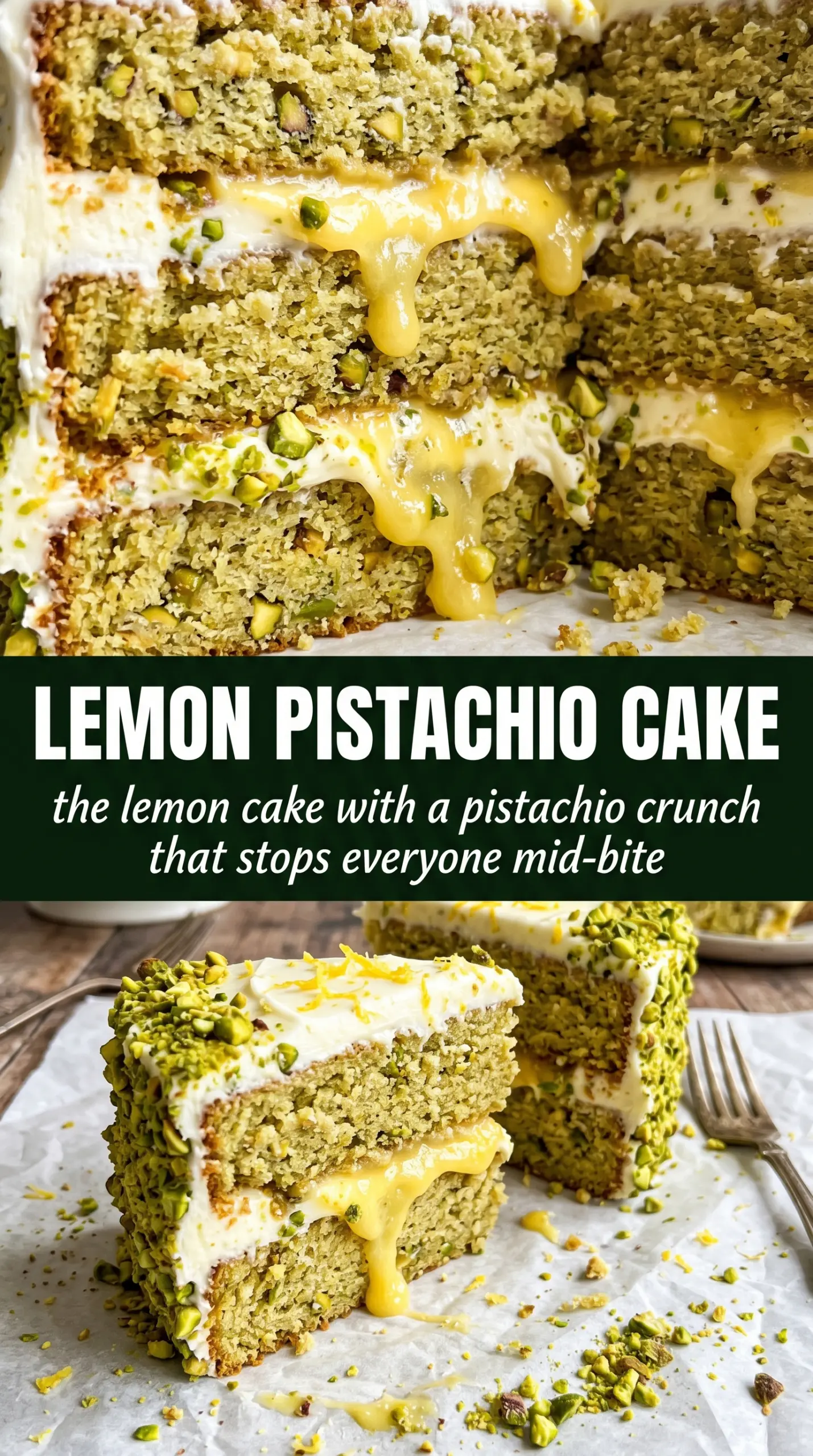
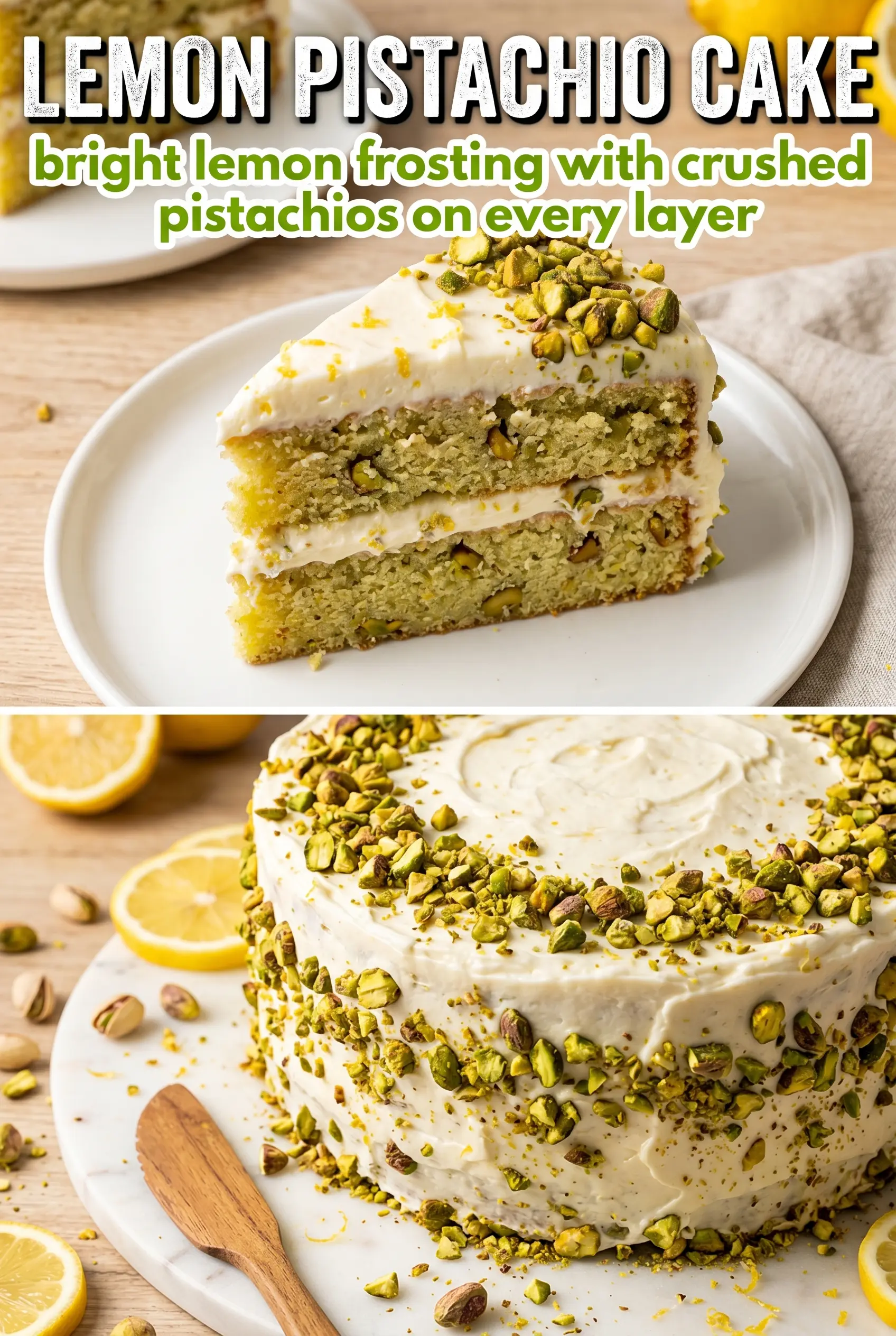
Bright lemon and buttery pistachio make a cake that tastes polished without losing that homemade tenderness. The crumb stays soft and slightly dense in the best way, with enough structure to slice cleanly and enough moisture to keep each layer from feeling dry. The frosting brings the whole thing into focus: tangy, creamy, and just sweet enough to let the nuts and citrus stay front and center.
What makes this version work is the balance between ground pistachios and flour. Too much nut meal and the cake can turn heavy; too little and you lose the flavor that gives it character. Sour cream keeps the crumb plush, while the lemon zest and juice are added in the batter and the frosting so the citrus shows up from the first bite to the last.
You’ll find a few practical notes below on getting the pistachios finely ground without making pistachio butter, how to keep cream cheese frosting smooth, and the easiest way to get those clean, bakery-style layers. It’s the kind of cake that looks elaborate but bakes up with straightforward steps.
The pistachio flavor came through beautifully and the frosting stayed smooth instead of running. I loved that the crumb held together when I sliced it, and the lemon zest on top made it look like something from a bakery.
Love the bright lemon frosting and pistachio-speckled layers? Save this lemon pistachio cake for your next special dessert.
The Secret to Keeping Pistachio Cake Tender Instead of Gritty
Ground pistachios add incredible flavor, but they can also make the crumb feel sandy if they’re processed too far or packed in too tightly. The goal is a fine meal, not a paste. Once the pistachios look like a coarse flour with a little texture left behind, stop the processor and move on. That texture gives the cake its character without making it heavy.
This cake also depends on a light hand once the dry mixture goes into the batter. Overmixing after the flour and pistachios are added will tighten the crumb and make the cake bake up tougher than it should. Stir just until the dry streaks disappear, then stop. The batter should look thick and plush, not whipped or elastic.
- Pistachios — These do the heavy lifting for flavor, so use fresh shelled pistachios if you can. Stale nuts taste flat and can read oily once baked. A food processor works best; pulse in short bursts so you don’t accidentally make pistachio butter.
- Sour cream — This is what keeps the cake moist enough to stay tender for a couple of days. Plain full-fat Greek yogurt works in a pinch, but the crumb will be a little less rich and slightly tangier.
- Lemon zest and juice — Zest carries the stronger lemon aroma, while the juice sharpens the flavor. Don’t skip the zest. Juice alone makes the cake taste tart, not bright.
- Cream cheese — Full-fat cream cheese gives the frosting its tang and structure. Use it softened, but not warm, or the frosting can turn loose and hard to spread cleanly.
What Each Ingredient Is Actually Doing in This Dessert
- Sugar (the sweetness and structure) — Sugar tenderizes baked goods and creams with butter to create air. Don’t reduce too much.
- Butter (the richness and crumb) — Proper creaming adds air and creates tender texture. Use room temperature butter.
- Eggs (the binder and lift) — These create structure and help baked goods rise. Beat in gradually for volume.
- Flour (the structure base) — Don’t overmix or the dessert becomes tough and dense. Mix just until combined.
- Leavening (baking powder or soda) — This creates rise and light crumb. Too much makes it taste bitter.
- Liquid (milk, yogurt, or other) — This hydrates the flour and carries flavors. Balance is key.
- Flavorings (vanilla, spices, extract) — These define personality. Use quality flavorings.
- Mix-ins or layers (fruit, chocolate, filling) — These add texture and prevent one-dimensional taste.
Building the Batter and Frosting the Cake Without Losing the Texture
Preparing the pistachio meal
Pulse the pistachios with the flour, baking powder, and salt until the nuts are finely ground and evenly distributed. Mixing them with the flour first helps prevent clumps and keeps the nuts from turning oily. If you see a shiny paste forming, stop immediately; that means the processor ran too long. The mixture should look pale green and sandy, not damp.
Creaming the butter and sugar
Beat the butter and sugar until the mixture is pale, fluffy, and noticeably lighter in volume. That step builds the structure that gives the cake lift before the eggs go in. Add the eggs one at a time so the batter stays smooth instead of curdling. If it looks slightly broken after an egg, keep beating; it usually comes back together once the dry ingredients are added.
Bringing the batter together
Stir in the lemon zest, lemon juice, and sour cream, then fold in the pistachio-flour mixture just until combined. The batter will look thick and a little speckled. That’s right. Divide it evenly between the pans so the layers bake at the same rate, and tap the pans once on the counter to release big air bubbles before they hit the oven.
Cooling and finishing cleanly
Let the cakes cool completely before frosting them. If they’re even slightly warm, the cream cheese frosting softens and slides, and the crushed pistachios won’t cling neatly to the sides. Chill the frosted cake briefly if you want cleaner slices. A short rest firms everything up and gives you that sharp, bakery-style cut.
Make It More Citrusy
Add an extra teaspoon of lemon zest to the batter and another teaspoon to the frosting if you want the citrus to read brighter. The cake will taste a little fresher and more aromatic, but don’t increase the juice too much or the frosting can loosen.
Gluten-Free Version
Swap the all-purpose flour for a 1:1 gluten-free baking blend that includes xanthan gum. The pistachios already add body, so the texture still bakes up nicely, though the crumb may be a touch more delicate when sliced.
Cupcake Swap
Portion the batter into lined muffin cups and bake until the tops spring back and a tester comes out clean, usually around 18 to 22 minutes. You’ll get a slightly lighter crumb and much less frosting surface area per bite, which is great if you want a smaller, portable dessert.
Storage and Reheating
- Refrigerator: Store covered for up to 4 days. The frosting firms up in the fridge, but the cake stays moist.
- Freezer: Freeze unfrosted layers tightly wrapped for up to 2 months. Frosting freezes poorly once assembled, so build the cake after thawing for the best texture.
- Reheating: This cake is best served at cool room temperature, not reheated. Let chilled slices sit out for 20 to 30 minutes so the frosting softens and the pistachio flavor opens up again.
Questions I Get Asked About This Recipe
Lemon Pistachio Cake
Ingredients
Equipment
Method
- Preheat oven to 350°F and grease two 9-inch round pans; line with parchment, then grease the parchment. This prevents sticking and helps the layers release cleanly.
- Whisk ground shelled pistachios, all-purpose flour, baking powder, and salt together. Mix until the dry ingredients look evenly speckled.
- Beat softened butter and granulated sugar until fluffy, 2–3 minutes. The mixture should look lighter in color and aerated.
- Add eggs one at a time, beating after each addition. Scrape the bowl as needed so the batter stays smooth.
- Stir in lemon zest, fresh lemon juice, and sour cream until fully combined. The batter will turn pale and glossy.
- Fold the pistachio flour mixture into the wet ingredients just until no dry streaks remain. Stop mixing as soon as the batter looks uniform.
- Divide the batter between the pans and smooth the tops. Tap once on the counter to release large air bubbles.
- Bake at 350°F for 30–35 minutes, until a toothpick comes out clean. The centers should spring back slightly when pressed.
- Cool the cakes completely in the pans. This usually takes about 1 hour for proper frosting and clean layers.
- Beat softened cream cheese and softened butter until smooth. The mixture should be creamy with no visible lumps.
- Add powdered sugar, fresh lemon juice, and lemon zest, then beat until fluffy. Mix until the frosting looks thick and holds soft peaks.
- Fill and frost the cooled cake with the lemon cream cheese frosting. Spread a thick, even layer between the cake layers and over the top.
- Press crushed pistachios around the sides of the cake. Keep a gentle, firm pressure so the pistachios adhere in an even ring.
- Arrange lemon zest curls on top. Place them in a loose cluster so the curls sit clearly above the frosting.