Lemon potato salad lands with a cleaner, brighter finish than the usual picnic bowl, and that makes it easy to keep coming back to. The potatoes stay tender and intact, the dressing clings instead of pooling, and each bite has enough lemon to wake everything up without tasting sharp or thin. It’s the kind of side dish that works next to grilled chicken, burgers, or anything rich that needs a little lift.
What makes this version work is the balance between creaminess and acidity. Mayo gives the dressing body, but lemon juice and zest keep it lively, and a little Dijon helps everything emulsify so the dressing coats the potatoes instead of sliding off. Yukon golds are the right choice here because they turn creamy when cooked but still hold their shape after tossing. Let the salad chill for a couple of hours before serving and the flavors settle into each other instead of tasting separate and abrupt.
Below, I’ve included the timing that keeps the potatoes from turning mushy, a few smart swaps, and the one mistake that makes lemon potato salad taste flat instead of bright.
The dressing clung to every potato instead of running to the bottom of the bowl, and the lemon stayed bright even after chilling. My husband kept going back for “just one more spoonful.”
Save this lemon potato salad for the next cookout when you want a bright, tangy side that still feels creamy and satisfying.
The Trick to Keeping the Lemon Flavor Bright Instead of Harsh
The biggest mistake with lemon potato salad is dumping in too much acid while the potatoes are still hot. Hot potatoes drink up the dressing fast, and if the lemon is doing all the work without enough fat or seasoning behind it, the whole bowl can taste sharp and one-note. This version avoids that by building a balanced dressing first, then letting it soak into potatoes that have cooled just enough to hold their shape but still absorb flavor.
Another thing that matters here is the cut. Cubed Yukon golds give you more surface area for the dressing, but they don’t fall apart the way starchy potatoes can. If you want a salad that tastes cohesive instead of greasy or watery, let the potatoes drain well before dressing them, then chill the finished bowl so the lemon settles into the mayo instead of sitting on top of it.
What Each Ingredient Is Actually Doing in This Dish
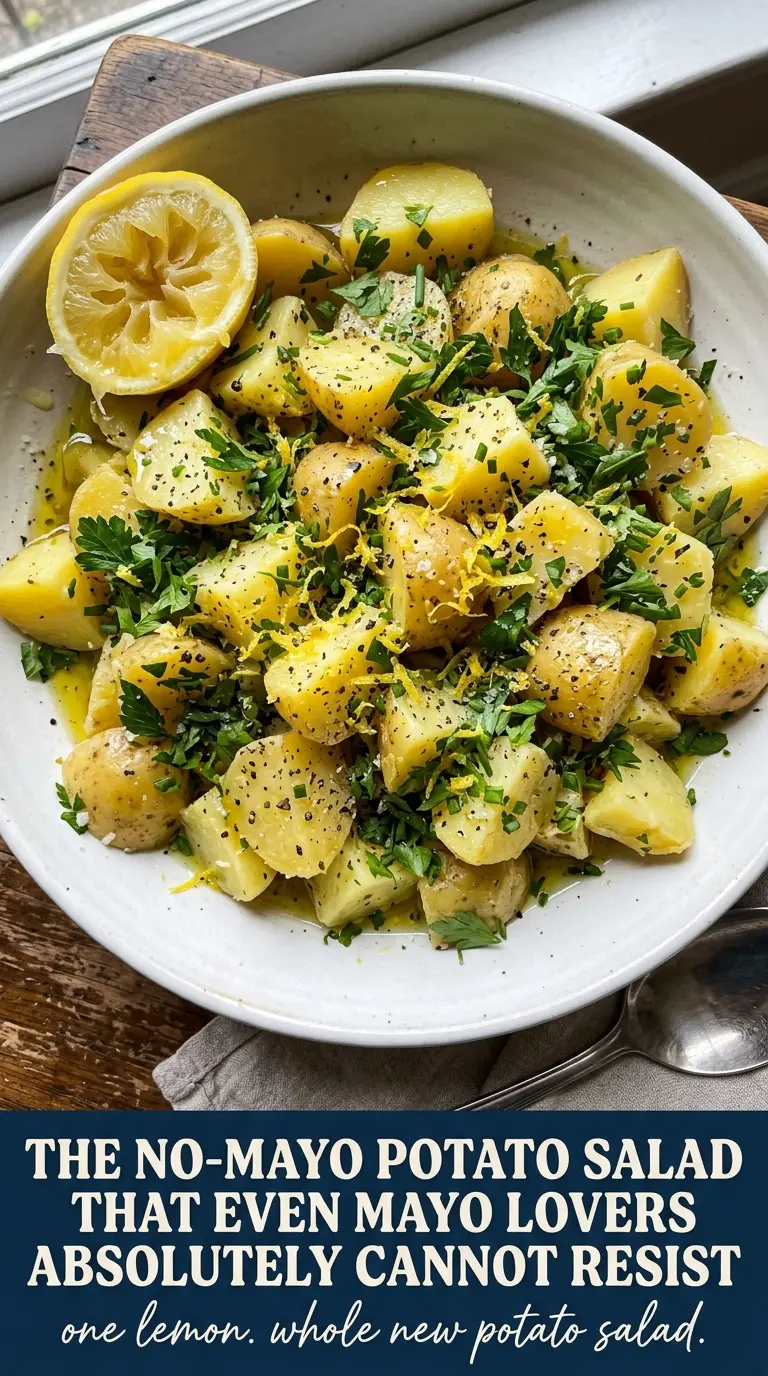
- Yukon gold potatoes — These are the best choice because they hold their shape and turn creamy at the same time. Russets get too soft and crumbly, while waxy potatoes can feel a little tight. Cube them evenly so they cook at the same rate.
- Mayonnaise — This gives the salad body and helps the lemon cling to the potatoes. A lighter mayo works fine here, but don’t swap in plain yogurt alone or the dressing turns thin and more prone to breaking.
- Lemon juice and zest — The juice brings the acidity, and the zest carries the bright citrus aroma that makes the salad taste fresh instead of flat. Fresh lemons matter here; bottled juice tastes dull and can make the dressing lean sour instead of clean.
- Dijon mustard — Dijon sharpens the dressing and helps it emulsify, which keeps it silky. Yellow mustard won’t give the same depth, and leaving it out makes the dressing feel less connected.
- Olive oil — Just enough oil rounds out the dressing and softens the lemon. Use a mild one; a peppery, aggressive oil can overpower the potatoes.
- Parsley and green onions — These give the salad freshness and a little bite so the flavor doesn’t stay one-dimensional. Add them after the potatoes cool slightly so they keep their color and stay crisp.
Building the Salad So the Dressing Actually Clings
Cooking the Potatoes Evenly
Start the potatoes in cold water and bring them up together so the outsides don’t turn soft before the centers are done. You want tender cubes that give easily with a fork but still hold their edges when stirred. If the potatoes are falling apart in the pot, they’re already too far gone for a clean salad.
Whisking the Dressing Until It Looks Unified
Whisk the mayonnaise, lemon juice, zest, olive oil, and Dijon until the mixture turns smooth and loose enough to pour. If it looks separated at first, keep whisking for another few seconds; the mustard is doing the work of pulling everything together. A dressing that looks broken in the bowl usually means the oil went in too fast or the ingredients were too cold.
Tossing at the Right Temperature
Combine the potatoes with the parsley and green onions before adding the dressing, then toss gently so the pieces stay intact. The potatoes should be warm or room temperature, not steaming hot. Too much heat dulls the lemon and can make the herbs wilt into the bowl instead of staying fresh-looking.
Chilling for the Flavor to Settle
Refrigerate the salad for at least 2 hours before serving. That resting time matters because the potatoes absorb the dressing and the lemon mellows into the mayo. If you taste it straight away, it can seem a little loud; after chilling, the flavors come together and the texture tightens up in a good way.
How to Adapt This for Different Tables and Diets
Dairy-Free and Egg-Free Version
This salad is already dairy-free if your mayo is egg-based and not made with butter or sour cream, so the only thing to check is the label. If you want a fully egg-free version, use a vegan mayonnaise with the same measurements. The texture stays creamy, though the flavor will be a little cleaner and less rich.
More Herb-Forward and Fresh
Swap half the parsley for dill or chives if you want a more garden-fresh finish. Dill pushes the salad toward a classic picnic feel, while chives keep the flavor mild but a little more savory. Don’t replace all the parsley unless you want the lemon to feel sharper.
Lighter Dressing
Replace half the mayonnaise with plain Greek yogurt for a tangier, lighter salad. The texture will be a little less silky and the dressing will taste brighter, almost like a lemony potato salad with a sharper edge. Keep the yogurt partly balanced by the mayo or it can turn loose after chilling.
Storage and Reheating
- Refrigerator: Store covered for up to 4 days. The potatoes hold up well, though the salad gets a little thicker as it sits.
- Freezer: I don’t recommend freezing this salad. The potatoes turn grainy and the mayo-based dressing separates after thawing.
- Reheating: This salad is best served cold or cool. If it’s been chilled hard, let it sit at room temperature for 15 to 20 minutes before serving so the dressing loosens and the lemon comes through again.
Answers to the Questions Worth Asking

Lemon Potato Salad
Ingredients
Equipment
Method
- Bring a large pot of water to a boil, then add the cubed Yukon gold potatoes and boil for 12-15 minutes until tender when pierced with a fork.
- Drain the potatoes in a colander, then spread them out to cool to room temperature, about 15-20 minutes, so they don’t dilute the dressing.
- In a bowl, whisk together mayonnaise, lemon juice, lemon zest, olive oil, and Dijon mustard until smooth and glossy, with no visible mustard streaks.
- Add the cooled potatoes, chopped parsley, and sliced green onions to a bowl, then gently toss until evenly combined.
- Pour the lemon dressing over the potato mixture and toss thoroughly until every piece looks lightly coated and glistening.
- Season with salt and pepper to taste, then toss again briefly so the seasoning is distributed.
- Refrigerate the salad for 2 hours before serving, uncovered or lightly covered, so flavors meld and the dressing sets up slightly.