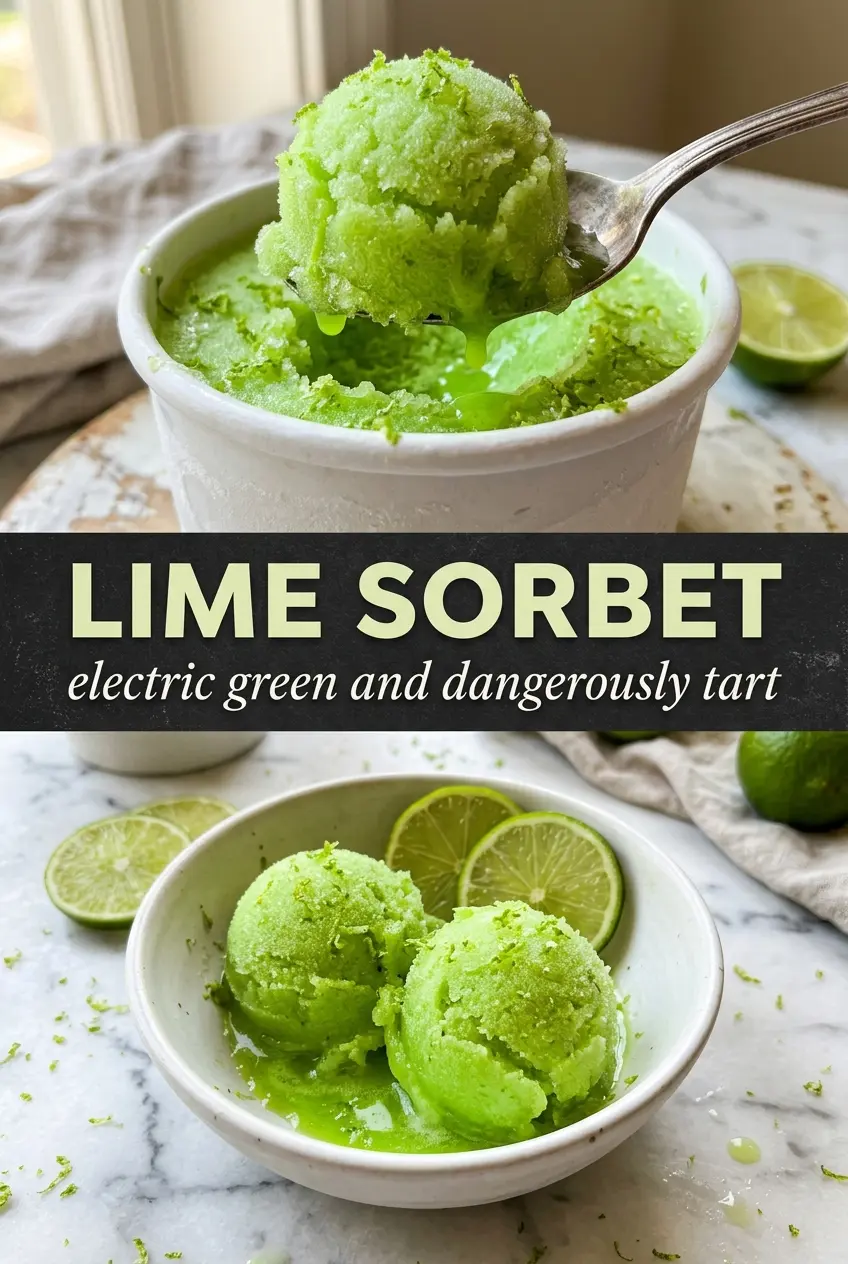
Lime sorbet lands with the kind of sharp, clean brightness that resets your palate after a heavy meal and wakes up the table at first spoonful. The texture should be icy and smooth, not hard as a brick or loose like a granita, with a tart lime flavor that stays crisp all the way through the finish. When it’s done right, you get that pale green scoop that tastes cold in the best possible way.
The part that makes this version work is balance. Lime juice brings the punch, but the simple syrup keeps the sorbet from freezing into a puck, and the zest carries the perfume that juice alone can’t give you. If you’re using an ice cream maker, the base needs to be fully chilled before it churns; warm mixture goes in, and the texture suffers every time. The optional egg white gives a little more body and softness, but the sorbet still tastes light and dairy-free either way.
Below, I’ve laid out the few details that matter most: how to keep the lime flavor bright instead of bitter, when the syrup should be cooled before mixing, and what changes when you skip the egg white. Those are the differences between a sorbet that’s merely frozen and one that scoops cleanly.
The lime flavor stayed bright and the texture was creamy enough to scoop straight from the freezer after a short sit on the counter. I loved that the zest came through without tasting bitter.
Save this lime sorbet for the days when you want something icy, tart, and cleanly scooped from the freezer.
The Step That Keeps Lime Sorbet Smooth Instead of Icy
The biggest mistake with homemade sorbet is rushing the base into the freezer while it’s still warm or under-sweetened. Sugar isn’t just there for sweetness; it lowers the freezing point so the sorbet stays scoopable instead of turning into a block of citrus ice. If the syrup doesn’t fully dissolve, you’ll get a gritty texture that never quite disappears.
This recipe also depends on chilling the lime mixture until it’s properly cold before churning. That does two things: it helps the machine freeze the base evenly, and it protects the bright citrus flavor from getting dull. If you add the optional egg white, fold it in only after the mixture is cold so it can lighten the texture without cooking or curdling.
- Simple syrup — This is the backbone of the texture. A granulated sugar substitute won’t behave the same way here, so if you need to adjust the sweetness, do it with less or more sugar, not a sugar replacement.
- Fresh lime juice — Bottled juice tastes flatter and often more bitter. Fresh juice gives the sorbet its clean edge, and the flavor reads much brighter once it’s frozen.
- Lime zest — The zest is where the perfume lives. Use a fine grater and stop at the green layer; once you hit the white pith, the bitterness jumps out.
- Egg white, optional — This adds a slightly softer, creamier scoop. If you skip it, the sorbet is still excellent; it just freezes a touch firmer and more like a classic dairy-free sorbet.
What Each Ingredient Is Actually Doing in This Ice Cream
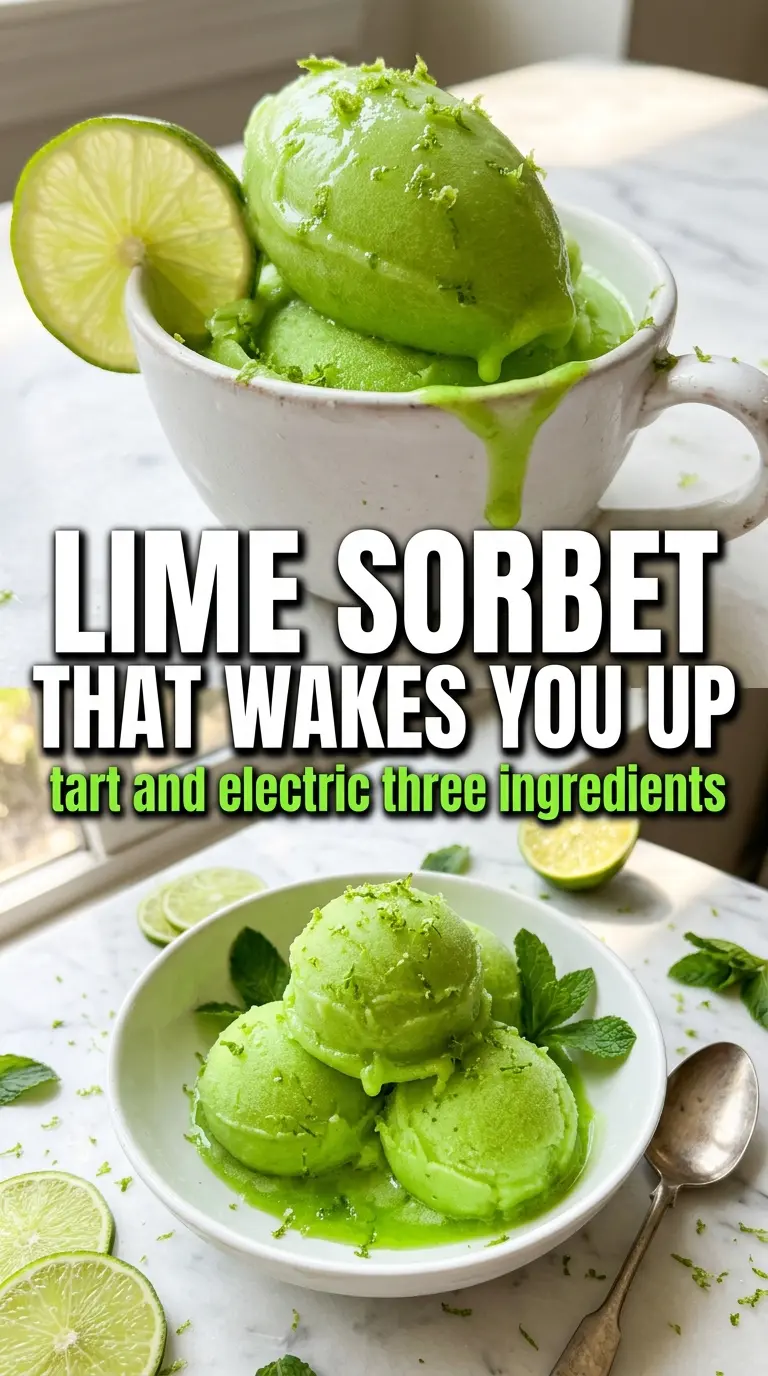
- Base ingredient (cream, milk, or custard) — This provides the foundation and richness. Quality matters.
- Sweetener (sugar, honey, or condensed milk) — This sweetens and prevents ice crystals. The ratio is critical.
- Flavor element (vanilla, fruit, chocolate, coffee, or other) — This defines the ice cream personality. Use quality ingredients.
- Egg yolks (if making custard base) — These create richness and silky texture. Optional but elevates ice cream.
- Churning (if using ice cream maker) — This incorporates air and prevents ice crystals. Critical for smooth texture.
- Freezing temperature and time — Proper freezing prevents rock-hard texture. Store at 0°F or below.
- Mix-ins (chocolate, cookies, fruit, or swirls) — These add texture and prevent one-dimensional flavor. Add near end of churning.
- Serving temperature (slightly soft, not rock hard) — This provides creamy mouthfeel. Remove from freezer 5 minutes before serving.
How to Build the Base So It Churns Cleanly
Dissolving the Sugar Completely
Combine the sugar and water in a saucepan and heat just until the liquid turns clear and the grains disappear. You’re not cooking it down or making a syrupy glaze; you’re dissolving the sugar so the sorbet freezes evenly later. If you still see crystals clinging to the pan or spoon, keep stirring over gentle heat until the mixture looks smooth and glossy. Then pull it off the burner and let it cool all the way.
Bringing in the Lime
Stir the cooled syrup with the lime juice, zest, and salt, then refrigerate the mixture until it’s cold enough to feel brisk when you stir it. The salt doesn’t make the sorbet salty; it sharpens the citrus and keeps the sweetness from flattening out. If the base tastes too tart before freezing, don’t panic — sorbet tastes less sweet once it’s frozen, so the balance should lean bright at this stage.
Churning to the Right Texture
Pour the cold mixture into your ice cream maker and churn until it looks thick, slushy, and able to hold soft ridges. That usually takes about 20 to 25 minutes, depending on the machine and how cold your base was going in. If you stop too early, the sorbet stays loose and icy; if you let it over-churn, it can start to get heavy. For the optional egg white, whip it to soft peaks first, then fold it in gently so you don’t knock out all the air.
Freezing Until Firm but Scoopable
Transfer the churned sorbet to a container and freeze it until set, about 2 hours. A shallow container helps it firm more evenly, and a sheet of parchment pressed against the surface can reduce ice crystals. If it freezes harder than you want, let it sit at room temperature for 5 to 10 minutes before scooping. That short rest is usually all it needs.
How to Adapt This Lime Sorbet for Different Kitchens
Dairy-Free and Vegan Version
Leave out the egg white and the sorbet stays fully dairy-free and vegan. The texture will be a little firmer and more straightforward, which actually suits a sharp lime sorbet well. Let it soften briefly before serving so the flavor opens up.
Key Lime Swap
If you want a more floral, slightly sweeter profile, replace some or all of the regular lime juice with key lime juice. The sorbet will taste less sharp and a little more rounded, but the yield can be smaller because key limes are less juicy. Strain well if there are seeds or pulp.
Lower-Sugar Adjustment
You can reduce the sugar a little, but don’t cut it aggressively or the sorbet will freeze too hard. Sugar is part of the texture here, not just the sweetness. If you want a lighter-tasting result, add a touch more zest instead of stripping out too much sugar.
Storage and Reheating
- Refrigerator: Not suitable for the fridge; it will melt and separate.
- Freezer: Store covered for up to 2 weeks for the best texture. After that, ice crystals start to build and the lime flavor softens.
- Reheating: No reheating needed. Let frozen sorbet sit at room temperature for 5 to 10 minutes before scooping. If it’s rock hard, the usual mistake is serving it straight from the freezer without that short rest.