Macaron ice cream sandwiches have the kind of texture contrast that makes people stop mid-bite: a crisp shell that gives way to a chewy center, then cold ice cream that melts into the almond cookie. When they’re made well, they look polished enough for a party tray but still eat like the kind of frozen treat you keep sneaking from the freezer for yourself.
The part that matters most here is the macaron shell. That means dry ingredients sifted well, meringue beaten to stiff glossy peaks, and a batter folded only until it ribbons off the spatula like slow lava. If the batter is undermixed, the shells stay lumpy and tall. If it’s overmixed, they spread too much and lose the little feet that make macarons look like macarons.
Below you’ll find the timing that keeps the shells intact, the resting step that prevents cracked tops, and the easiest way to match the ice cream flavor to the shell color without making the whole dessert taste one-note.
The shells baked with perfect little feet and the ice cream stayed neat instead of squishing out everywhere. I let them freeze overnight and they sliced cleanly straight from the freezer.
These macaron ice cream sandwiches need a full freeze to hold their shape, so they’re the dessert to make ahead when you want crisp shells and clean slices.
The Step That Keeps Macarons From Turning Hollow or Cracked
The biggest mistake with macarons is treating the batter like a quick cookie mix. It isn’t. The meringue needs to reach stiff, glossy peaks before the dry ingredients go in, and the folding has to stop at the exact moment the batter flows in a slow ribbon. That middle ground is what gives you shells with feet, smooth tops, and a chewy center instead of dry domes that crack in the oven.
The resting time matters just as much. When the piped rounds sit long enough to form a dry skin, the tops set before the inside expands in the oven. Skip that, and steam looks for the easiest escape route, which is usually a split shell. You’re looking for a surface that no longer feels tacky when lightly touched.
- Macaronage is the make-or-break technique. Fold with a spatula and use the bowl as a guide, stopping as soon as the batter falls off in thick ribbons and disappears back into itself after a few seconds.
- Banging the trays is worth it. Those firm taps pop trapped air bubbles and help prevent bald spots or hollow centers.
- Low, steady heat protects the shells. A 300°F oven lets the cookies dry and rise without browning too fast before the structure sets.
What Each Ingredient Is Actually Doing in the Shells
- Almond flour — This is the backbone of the macaron flavor and texture. Fine almond flour gives you the smoothest shells, while coarse meal can leave little flecks and rough tops, so sift it if it looks at all gritty.
- Powdered sugar — It helps the batter stay fine and tender and keeps the shells from baking up dry. There isn’t a true substitute here if you want classic macarons, since granulated sugar alone changes both texture and structure.
- Egg whites — Aged whites whip more predictably because some of the moisture has evaporated, which helps build a sturdier meringue. Room temperature also matters; cold whites take longer to foam and can be less stable.
- Cream of tartar — This gives the meringue a little insurance by stabilizing the proteins. If you don’t have it, a small squeeze of lemon juice works in a pinch, but the foam won’t be quite as forgiving.
- Gel food coloring — Gel keeps the batter from getting too wet, which liquid coloring can do. If you want distinct pink, green, or lavender shells, add the color while the meringue is still stiff so it disperses without extra folding.
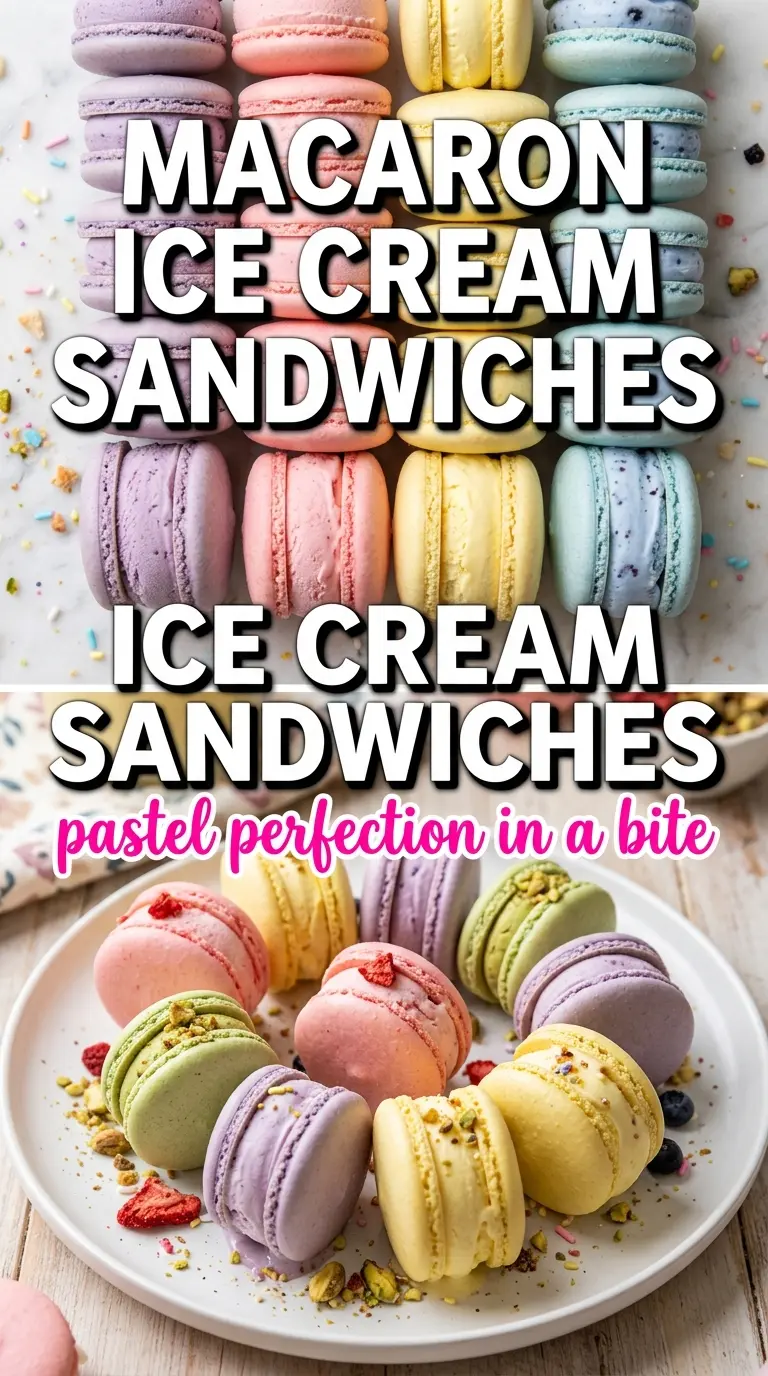
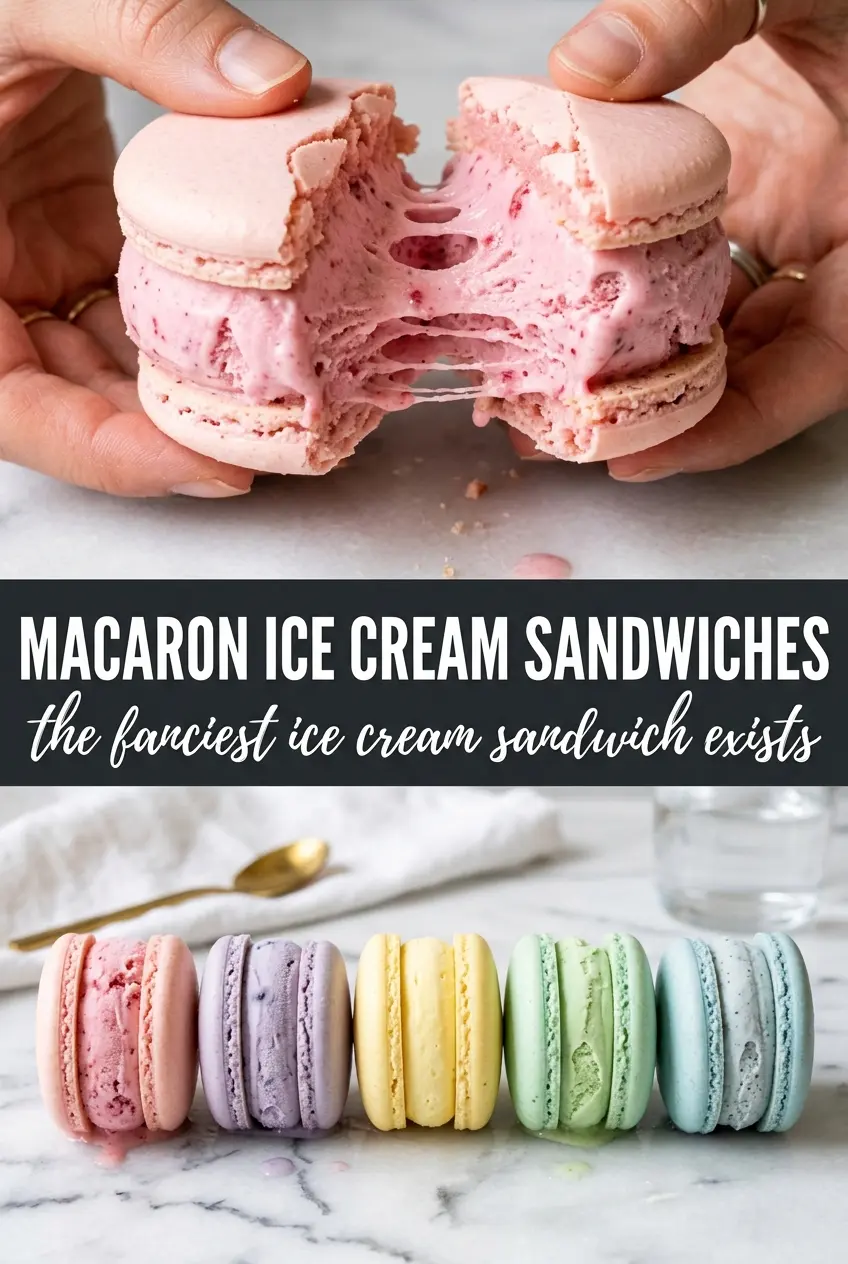
- Matching ice cream — The filling should echo the shell flavor, not fight it. Strawberry with pink shells, pistachio with green shells, or vanilla bean with a pale shell all work because the almond cookie stays elegant and doesn’t compete.
Building the Batter, Baking the Shells, and Freezing the Sandwiches
Whipping the Meringue to Stiff Glossy Peaks
Start with a clean bowl and beat the egg whites with cream of tartar until they look foamy, then add the sugar gradually. By the end, the meringue should stand in glossy peaks that point up when you lift the whisk. If it looks dull, loose, or grainy, it hasn’t been whipped long enough and the shells are more likely to spread or crack.
Folding to the Lava Stage
Gently fold the dry ingredients into the meringue, pressing the batter against the side of the bowl to deflate it just enough. The goal is a smooth batter that falls in a thick ribbon and settles back into the surface after a few seconds. If it stays in mounds, keep folding. If it turns runny, it’s gone too far and the shells won’t hold their shape.
Piping and Resting for a Dry Skin
Pipe 1.5-inch rounds onto parchment, keeping the size as even as you can so the sandwiches match later. Tap the pan firmly on the counter to knock out air bubbles, then let the trays sit until the tops no longer feel sticky. That dry skin is what helps the shells rise upward instead of bursting sideways.
Baking Until the Feet Appear
Bake at 300°F until the shells are set and little ruffled feet appear at the base, usually around 14 to 16 minutes. They should lift cleanly from the parchment once cool, but if they still stick, give them another minute or two next time. Pull them early and the centers can collapse; bake them too long and the chewy middle dries out.
Assembling and Freezing Without the Mess
Let the shells cool completely before filling them. If they’re even slightly warm, the ice cream melts at the edges and slides around instead of sitting neatly between the cookies. Work fast, press a generous scoop or disc of softened ice cream between two matching shells, then freeze until the sandwiches are firm enough to handle cleanly.
How to Adapt These Frozen Macaron Sandwiches Without Ruining the Texture
Dairy-Free Filling
Use a high-quality dairy-free ice cream that freezes firmly, not a soft frozen dessert that stays slushy. The shells are naturally dairy-free, so the main thing to watch is texture in the filling; a coconut-based or almond-based ice cream usually holds best.
Different Flavor Pairings
Change the shell color to match the ice cream flavor and keep the whole dessert cohesive. Strawberry, pistachio, blueberry, vanilla bean, or coffee ice cream all work; just keep the filling bold enough to taste through the almond shell.
Mini Sandwiches for a Crowd
Pipe smaller rounds and use a modest scoop of ice cream for bite-size sandwiches that are easier to serve at parties. They freeze faster, but they also soften quicker, so keep them on a chilled tray until guests are ready.
Storage and Reheating
- Refrigerator: These don’t belong in the fridge for long; the shells soften fast and the ice cream melts. If you need to hold them briefly, keep them only long enough to pack or plate.
- Freezer: Store tightly wrapped in an airtight container for up to 1 week. Separate layers with parchment so the shells don’t stick together or pick up freezer odors.
- Reheating: No reheating needed. Let them sit at room temperature for 2 to 4 minutes before serving so the shells lose their hard edge, but don’t leave them out long enough for the ice cream to slump.
Questions I Get Asked About This Recipe
Macaron Ice Cream Sandwiches
Ingredients
Equipment
Method
- Sift the powdered sugar and almond flour together, then discard any large almond pieces to keep the shells smooth and uniform.
- Beat the egg whites with the cream of tartar to soft peaks, then add the granulated sugar gradually and continue beating to stiff, glossy peaks.
- Add gel food coloring and mix until the meringue is evenly colored.
- Fold the dry ingredients into the meringue using the macaronage technique until the batter flows like lava and ribbons disappear slowly.
- Pipe 1.5-inch rounds onto parchment-lined baking sheets, then firmly bang the pan to release trapped air bubbles.
- Rest the piped macarons for 30-60 minutes until the tops form a dry skin that does not stick when gently touched.
- Bake at 300F for 14-16 minutes until the shells are set and have developed their classic feet.
- Cool the macarons completely before filling so the shells stay crisp outside and chewy within.
- Sandwich a generous disc of matching ice cream between two shells, pressing lightly so the ice cream slightly reaches the edges.
- Freeze for 2 hours until firm, then serve straight from the freezer for the cleanest bite and easiest portioning.