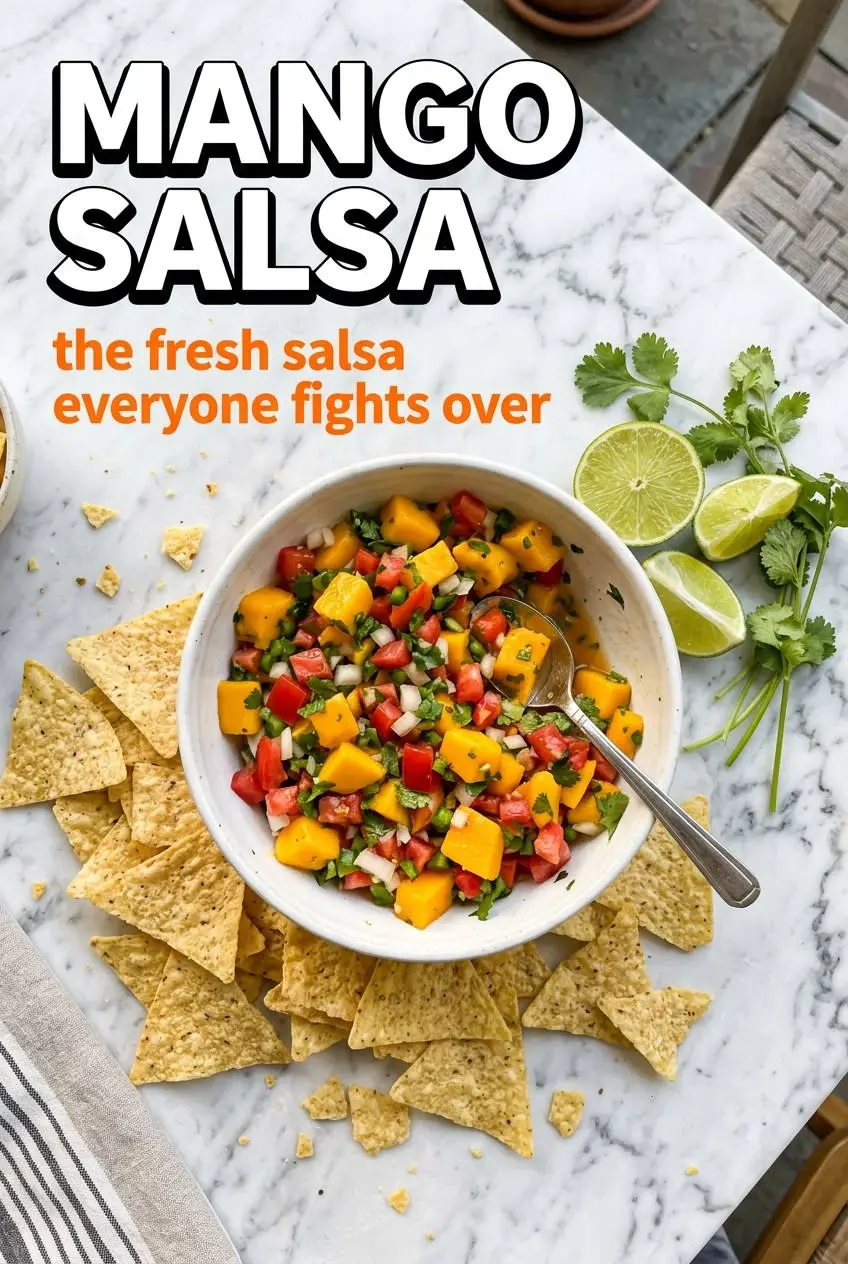
Bright mango salsa lives or dies on balance: juicy fruit, sharp onion, a little heat, and enough lime to keep everything tasting clean. When it’s done right, the mango stays in distinct pieces instead of turning soft and soupy, and every spoonful tastes fresh, sweet, tangy, and a little fiery at the finish.
The trick is simple. Use mangoes that are ripe enough to taste sweet, but still firm enough to hold their shape after tossing. Dice the onion small so it doesn’t bully the fruit, and add the lime early enough for the flavors to mingle without making the mango collapse. The rest time matters here, because the salt pulls the juices out and turns the bowl from a pile of chopped ingredients into actual salsa.
Below, you’ll find the one texture cue that matters most, a few smart ways to adjust the heat, and what to do if your mangoes are on the softer side. It’s the kind of condiment that disappears fast once it hits the table.
The mango stayed in perfect little cubes even after sitting, and the lime really woke everything up after the 30-minute rest. I served it with grilled chicken and the bowl was scraped clean.
Save this mango salsa for taco night, grilled fish, or anything that needs a bright, juicy finish with a little jalapeño heat.
The Reason Mango Salsa Stays Crisp Instead of Turning Watery
The biggest mistake with fruit salsa is treating it like a salad. If you cut the mango too small or stir too aggressively, the edges break down fast and the bowl turns mushy before it ever hits the table. Keep the dice tidy and the mixing gentle. You want the lime and salt to season the mango, not mash it into a purée.
Another common problem is overloading the bowl with onion or jalapeño. Red onion should support the fruit, not cover it up, and jalapeño works best when it gives a clean, bright heat instead of a full burn. Taste after the resting time, because the salt, lime, and mango juices change the balance once they sit together.
- Firm-ripe mangoes — These should yield slightly when pressed but still slice cleanly. If they’re too soft, the salsa gets loose fast. If mango is your only option, chilling it before dicing helps the cubes hold better.
- Fresh lime juice — Bottled lime juice tastes flat here. Fresh juice keeps the salsa sharp and bright and helps the fruit taste more like itself.
- Jalapeño — Mince it fine so the heat spreads through the bowl instead of landing in one hot bite. Remove the seeds if you want a softer burn; leave some in if you want more punch.
- Fresh cilantro — This adds the herbal note that makes the salsa taste complete. If you’re one of the people who tastes cilantro as soap, parsley works, but the result is cleaner and less layered.
How to Mix Mango Salsa Without Crushing the Fruit
Cutting the Mango Into Clean Cubes
Dice the mango into pieces that are small enough to spoon easily but large enough to survive folding. A medium dice gives the best texture because it keeps the salsa juicy without making it sloppy. If the mango is sliding around while you cut it, chill it for 15 minutes first and work with a sharp knife. Dull blades tear the fruit and leave you with ragged pieces that break down faster.
Bringing the Flavor Together
Combine the mango, onion, jalapeño, and cilantro in a bowl, then add the lime juice, salt, and black pepper. Stir with a spoon or spatula and stop as soon as everything looks evenly coated. The mango should still look like distinct cubes when you’re done. If you keep stirring after that, the juices will keep releasing and the salsa gets softer than it should.
Letting the Rest Time Do the Work
Thirty minutes in the refrigerator is where the salsa turns from chopped fruit into something cohesive. The onion loses some of its sharp edge, the lime wakes up the mango, and the salt pulls out just enough juice to make the bowl look glossy. Stir once more before serving and taste again. If it needs more salt or lime, add it in tiny increments so you don’t throw off the balance.
How to Adapt This Mango Salsa for Different Tables
Milder Mango Salsa
Remove the jalapeño seeds and membranes, or use just half the pepper. You’ll keep the fresh chile flavor without the sharper heat, which works better if you’re serving this with kids or pairing it with spicy main dishes.
Extra-Chunky for Tacos and Grilled Fish
Cut the mango into slightly larger pieces and keep the onion and jalapeño very fine. That gives you more contrast in each bite and keeps the salsa from running off the tortilla or fish fillet.
Cilantro-Free Version
Use chopped flat-leaf parsley instead of cilantro. The salsa will taste cleaner and less herbal, but the mango, lime, and jalapeño still carry the dish. This is the best swap when cilantro is the only thing keeping someone away from the bowl.
Make-Ahead Timing
You can prep the mango, onion, and jalapeño a few hours ahead, but add the lime and salt close to serving time for the best texture. Once salted, the mango starts releasing juices, which is great for flavor but not for keeping the cubes extra crisp.
Storage and Reheating
- Refrigerator: Store in an airtight container for up to 2 days. The mango will soften and release more juice as it sits.
- Freezer: Don’t freeze this salsa. The mango loses its fresh texture and turns watery when thawed.
- Reheating: No reheating needed. Serve it cold or lightly chilled, and drain off a little excess juice if the bowl looks loose before serving.
Questions I Get Asked About This Recipe
Mango Salsa
Ingredients
Method
- Combine diced mango, red onion, minced jalapeño, and chopped cilantro in a medium bowl.
- Add fresh lime juice, salt, and black pepper.
- Stir gently to combine, being careful not to crush the mango chunks.
- Let the salsa rest for at least 30 minutes in the refrigerator to allow flavors to meld.
- Stir again before serving and taste to adjust seasonings if needed.
- Store in an airtight container in the refrigerator for up to two days.