Maple Dijon roasted apples and carrots come out with the kind of contrast that keeps a side dish from fading into the background. The carrots turn tender at the edges and caramelized where they touch the pan, while the apples soften just enough to catch the glaze without collapsing into mush. You get sweetness, tang, and a little herbiness in every bite.
The trick is separating the cook times. Carrots need the full roast to lose their raw bite and pick up color, but apples only need the last stretch so they stay intact and glossy. The maple-Dijon mixture does double duty here: it coats everything early enough to build flavor, then concentrates in the oven into a sticky glaze that clings instead of sliding off.
Below, I’ve included the exact timing that keeps the apples from turning mealy, plus a few smart swaps if you want to work with what’s already in your kitchen.
The carrots were caramelized on the edges and the apples held their shape instead of turning to sauce. I loved that the glaze thickened right on the pan, and the thyme kept it from tasting too sweet.
Save these maple Dijon roasted apples and carrots for a side that lands sweet, tangy, and caramelized every single time.
The timing that keeps apples from turning soft
Roasting both ingredients from the start is the mistake that sinks this kind of dish. Apples break down faster than carrots, and once they sit in the oven too long, they lose their shape and the pan turns watery instead of glossy. Giving the carrots a head start lets them begin to caramelize before the apples join in, which keeps the texture balance intact.
The other thing that matters is the pan. Spread everything in a single layer and use a baking sheet with enough surface area that the vegetables roast instead of steam. If the pan is crowded, the glaze loosens from the moisture and you lose those browned edges that make the dish worth serving.
- Carrots — Slice them diagonally and keep the pieces close to the same thickness so they soften evenly. Thin coins can overcook before the apples are done.
- Apples — Use a firm, tart-sweet variety that holds its shape in the oven. Softer apples can work, but they’ll lean more jammy and won’t give you clean wedges.
- Maple syrup — This is the sweetness and the glaze. Honey will work in a pinch, but it tastes different and can read heavier than maple once it roasts.
- Dijon mustard — Dijon gives the glaze its sharp edge and keeps the sweetness from flattening out. Grainy mustard will work, but the sauce won’t emulsify as smoothly.
What each part of the glaze is doing
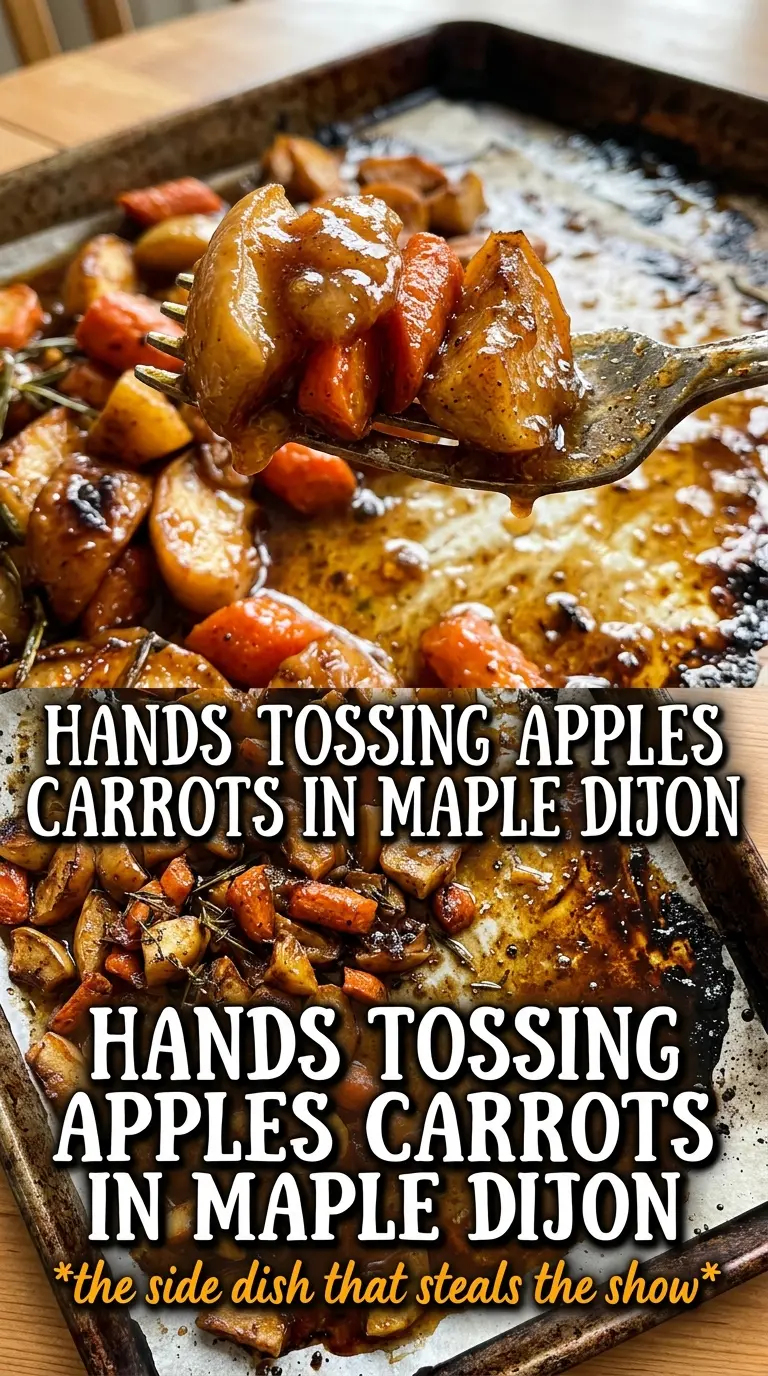
The maple syrup and Dijon mustard are the backbone here, but the vinegar is what keeps the whole pan from tasting flat. Apple cider vinegar sharpens the glaze just enough to wake up the sweetness in the apples and carrots. If you skip it, the dish can taste one-note, especially once it roasts down.
Olive oil helps the glaze coat evenly and encourages browning, while garlic and thyme push it out of dessert territory. Cinnamon is subtle, not obvious, but it rounds off the edges and makes the apples taste fuller. Fresh thyme at the end matters more than it looks like it should, because that last hit of herb keeps the finish clean.
- Apple cider vinegar — Use real cider vinegar here. White vinegar tastes harsher and doesn’t fit the glaze as naturally.
- Fresh thyme leaves — Fresh is worth it for the glaze and the garnish. Dried thyme can turn dusty and overpowering, so use less if that’s all you have.
- Garlic — Mince it finely so it softens into the glaze instead of catching on the pan. Big pieces can scorch at 425F.
- Cinnamon — Keep it measured. You want warmth in the background, not an apple-pie flavor that takes over the mustard.
Roasting in two stages for the right texture
Whisk the glaze until it looks unified
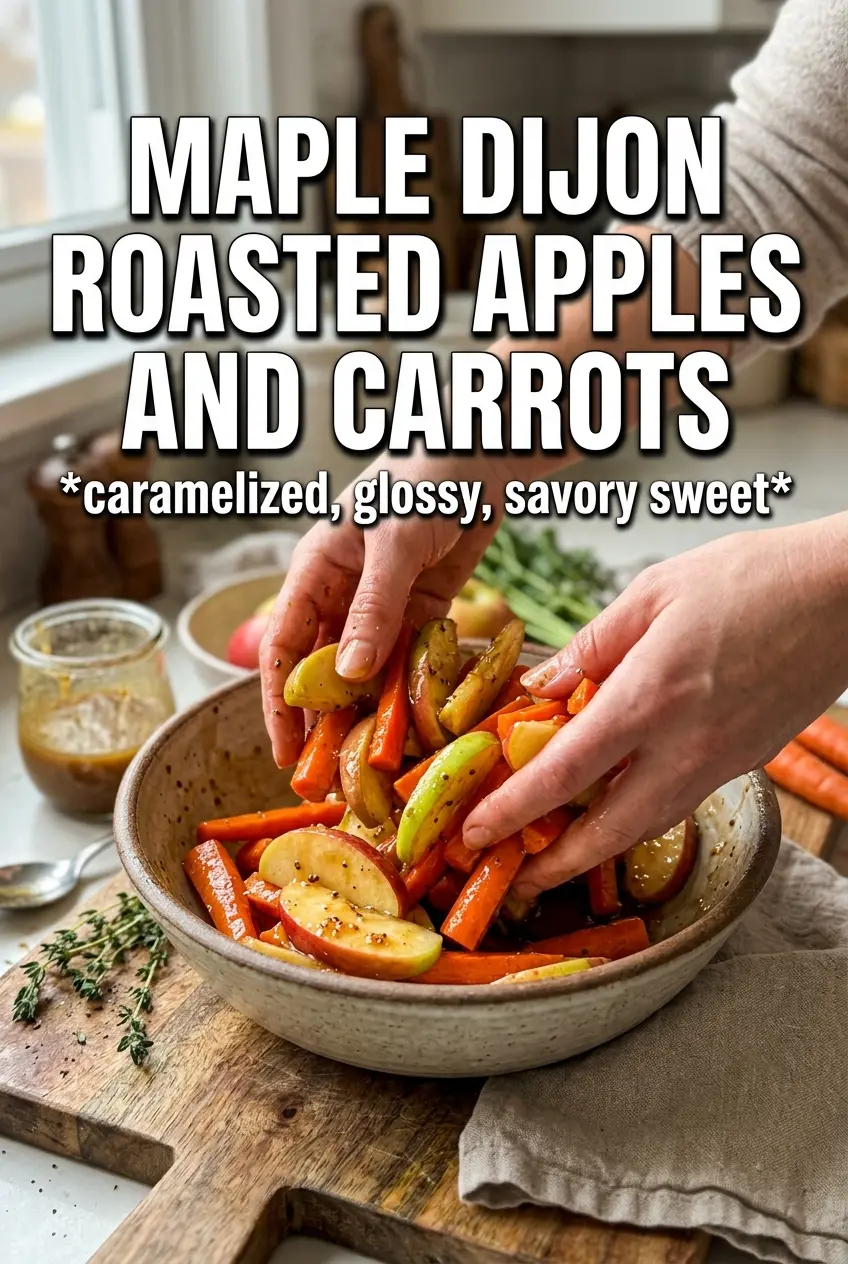
Start by whisking the maple syrup, Dijon, olive oil, vinegar, garlic, thyme, salt, pepper, and cinnamon until the mixture looks smooth and slightly thick. If the mustard looks streaky, keep whisking for another few seconds so the oil and syrup stop separating. That makes it coat the carrots evenly instead of pooling in the corners of the pan.
Give the carrots their first 15 minutes alone
Toss the carrots with the glaze and spread them across the parchment-lined sheet in a single layer. They should glisten, not swim. Roast for 15 minutes until they start to soften and pick up a little color on the edges; if they’re still pale and firm, don’t rush to add the apples yet.
Add the apples at the halfway point
Add the apple wedges and toss them gently in whatever glaze remains on the pan or in the bowl. Roast for another 15 minutes, but keep an eye on the apples near the end. You’re looking for tender carrots, golden apples, and sticky browned spots on the parchment, not collapsed fruit or burnt sugar.
Finish while the glaze is still glossy
Pull the pan as soon as the carrots are tender and the apples are just soft enough to pierce with a fork. The dish tastes best when it goes to the table immediately, while the glaze is still shiny and the thyme can perfume the whole pan. A final scatter of fresh thyme gives it the fresh finish the roasted glaze alone can’t provide.
How to adapt this when you need a different version
Make it dairy-free as written
This recipe already skips dairy, which is part of why the glaze stays clean and bright. If you’re serving it alongside a richer main dish, that contrast works in your favor because the carrots and apples won’t feel heavy.
Use pears instead of apples
Firm pears can take the place of apples, but they soften a little faster and bring a softer sweetness. Add them with the apples in the last 15 minutes, and choose pears that still feel slightly firm at the stem end.
Swap thyme for rosemary when you want a woodsy finish
Rosemary brings a stronger, more savory note, which works well if you’re serving this with pork or chicken. Use less than you would thyme, because rosemary can take over fast once it roasts.
Make it vegan for a fully plant-based side
This dish is already vegan if your Dijon mustard is egg-free, which most are. Check the label if you’re cooking for someone with strict dietary needs, then keep the rest of the method exactly the same.
Storage and Reheating
- Refrigerator: Store leftovers in an airtight container for up to 4 days. The apples soften more as they sit, so expect a gentler texture the next day.
- Freezer: I don’t recommend freezing this dish. The carrots can go soft and the apples tend to turn watery after thawing.
- Reheating: Warm on a sheet pan in a 375F oven for about 10 minutes, just until heated through. The microwave works in a pinch, but it makes the apples collapse and the glaze loosen.
Questions I Get Asked About This Recipe
Maple Dijon Roasted Apples and Carrots
Ingredients
Equipment
Method
- Preheat the oven to 425°F and line a large baking sheet with parchment. Visual cue: the tray should be ready to go as soon as the oven reaches temperature.
- Whisk maple syrup, Dijon mustard, olive oil, apple cider vinegar, garlic, thyme leaves, salt, black pepper, and cinnamon together until smooth. Visual cue: the mixture looks like a thick, uniform glaze.
- Toss the sliced carrots in the glaze and spread them in a single layer on the baking sheet. Visual cue: carrots look evenly coated and sit with cut sides mostly facing down.
- Roast for 15 minutes at 425°F, until the carrots begin to soften at the edges. Visual cue: you should see light browning and glossy glaze on the carrots.
- Add apple wedges to the pan, tossing gently in the remaining glaze so they’re coated without breaking. Visual cue: wedges are glossy and scattered among the carrots.
- Roast for 15 more minutes at 425°F until carrots are tender and apples are golden. Visual cue: apples should look caramelized and browned at the tips.
- Garnish with fresh thyme and serve immediately. Visual cue: green thyme sprigs sit on top of the warm, glazed vegetables.