Cold pasta salad only works when every bite still tastes bright after it chills, and this Mediterranean chicken pasta salad does that part beautifully. The pasta stays tender, the chicken brings enough substance to make it a full meal, and the lemon-herb dressing keeps the tomatoes, cucumber, olives, and feta tasting fresh instead of flat. It’s the kind of bowl that disappears fast at lunch and still holds up for dinner the next day.
The trick is in the balance. Rinsing the pasta cools it down fast and stops the cooking, which keeps it from getting mushy once it sits with the dressing. The dressing is lean on purpose: olive oil for body, lemon juice for lift, garlic for bite, and oregano for that unmistakable Mediterranean backbone. Feta goes in at the end so it stays crumbly instead of turning into paste when you toss everything together.
Below, I’ve included the small details that matter most, from the pasta shape that holds dressing well to the best way to keep the salad from drying out after it chills. There’s also a short section on swaps and storage, because this is one of those recipes that gets even more useful when you know how to bend it to what’s in your fridge.
The dressing soaked into the pasta after an hour in the fridge, but it still tasted fresh and the feta stayed nice and crumbly. My husband packed the leftovers for lunch and said the chicken stayed tender the whole next day.
Save this Mediterranean Chicken Pasta Salad for meal prep days when you want a chilled, protein-packed lunch with lemon, feta, and crisp vegetables.
The Part That Keeps Pasta Salad Fresh Instead of Heavy
The difference between a pasta salad that tastes bright and one that tastes dull usually comes down to temperature and timing. Warm pasta drinks up dressing too quickly and can turn soft before the salad even hits the table, which is why this version starts with a cold rinse and an hour of chill time. That rest gives the lemon, garlic, and oregano time to season the pasta itself instead of just coating the surface.
The other mistake people make is overloading the bowl with too much cheese or too much dressing right away. Feta should support the salad, not clump through it, and the olive oil-lemon dressing should coat each piece lightly without pooling at the bottom. If the salad looks a little dry after chilling, that’s easy to fix with a small splash of olive oil and lemon juice right before serving.
What Each Ingredient Is Actually Doing in This Bowl
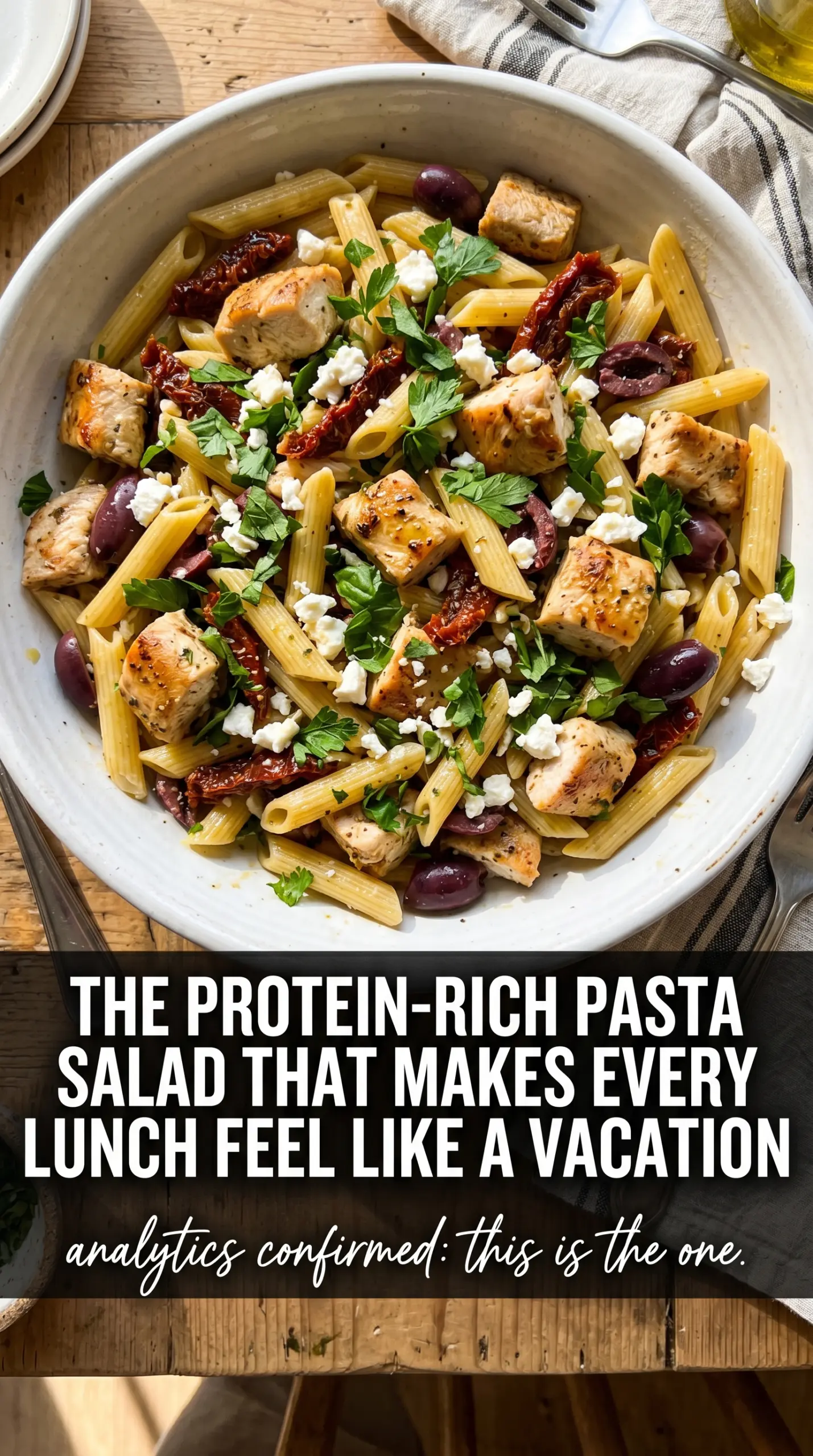
- Penne pasta — Penne holds onto the dressing better than slippery long pasta, and the ridges give the feta and herbs somewhere to cling. Rotini or farfalle also work if that’s what you have, but avoid tiny shapes that get lost among the vegetables.
- Grilled chicken breast — This is what turns the salad into a main dish. Leftover grilled chicken works perfectly here, and rotisserie chicken is the best shortcut when you want this on the table fast, though it won’t have the same smoky edge from the grill.
- Lemon juice and olive oil — This dressing doesn’t try to be creamy. The lemon keeps the pasta from tasting heavy, while the olive oil rounds out the sharpness and helps the salad stay glossy after chilling. Use a decent olive oil here because its flavor is front and center.
- Feta cheese — Feta adds salt, tang, and little creamy pockets without melting into the salad. Buy a block and crumble it yourself if you can; pre-crumbled feta is drier and tends to disappear faster into the dressing.
- Kalamata olives, cucumber, tomatoes, and red onion — These are the balance makers. The olives bring briny depth, the cucumber keeps things crisp, the tomatoes add juiciness, and the onion sharpens the whole bowl. Dice the cucumber small enough that it mixes evenly, and if your onion is strong, soak it in cold water for 10 minutes to take the edge off.
Building the Salad So It Stays Balanced After It Chills
Cooking and Cooling the Pasta
Cook the penne until just tender, not soft. You want it to still have a little bite because it will absorb dressing as it sits, and overcooked pasta turns bloated fast in a cold salad. Drain it well, then rinse under cold water until it loses all steam. If the pasta is still warm when you mix everything, the feta will soften too much and the vegetables lose their fresh snap.
Mixing the Dressing First
Whisk the olive oil, lemon juice, garlic, oregano, salt, and pepper before anything else goes into the bowl. Garlic needs that time in the acid and oil to spread through the dressing instead of landing in sharp little bursts. Taste it now, not later. Once the pasta and chicken go in, the salad can dull the dressing a bit, so this is where you want it to taste a touch brighter than you think you need.
Combining Without Crushing the Good Stuff
Toss the pasta, chicken, tomatoes, cucumber, olives, and red onion together first so the dressing can coat everything evenly. Add the feta last and fold it in gently so some pieces stay intact instead of disappearing into the dressing. If you stir too aggressively, the tomatoes will burst and the whole salad can start looking wet around the edges. A wide bowl and a soft hand keep the texture clean.
The Chill That Pulls It Together
Refrigerate the salad for at least an hour before serving. That rest is where the flavor settles in and the pasta takes on the dressing in a good way. If you’re making it ahead for later in the day, hold back a little feta and a spoonful of dressing, then fold them in right before serving to freshen the bowl back up.
How to Change This Salad Without Losing What Makes It Work
Make It Gluten-Free
Use a gluten-free penne that holds its shape after chilling. Cook it just to tender, then rinse well so it doesn’t turn gummy in the refrigerator. The rest of the recipe stays the same, though gluten-free pasta usually needs a little more dressing because it tends to drink up moisture faster.
Skip the Chicken and Keep It Vegetarian
Leave out the chicken and add a cup of chickpeas or white beans for a plant-based version with enough heft to still feel like lunch. You’ll lose the smoky grilled flavor, but the beans bring a creamy, sturdy texture that works well with the lemon, feta, and olives.
Swap the Herbs Based on What You Have
Fresh oregano gives the cleanest Mediterranean note, but dried oregano works fine if that’s what’s in the pantry. You can also add a little chopped parsley for a fresher finish, or a small pinch of dill if you want the salad to lean even brighter. Keep the herb amount modest so it doesn’t crowd out the lemon and feta.
Storage and Reheating
- Refrigerator: Store covered for up to 4 days. The vegetables will soften a little, but the flavor stays strong.
- Freezer: I don’t recommend freezing this salad. The cucumber, tomatoes, and feta break down badly after thawing.
- Reheating: This salad is meant to be served cold or at cool room temperature. If it has been in the fridge overnight and looks dry, toss in a small spoonful of olive oil and a squeeze of lemon instead of heating it.
Answers to the Questions Worth Asking
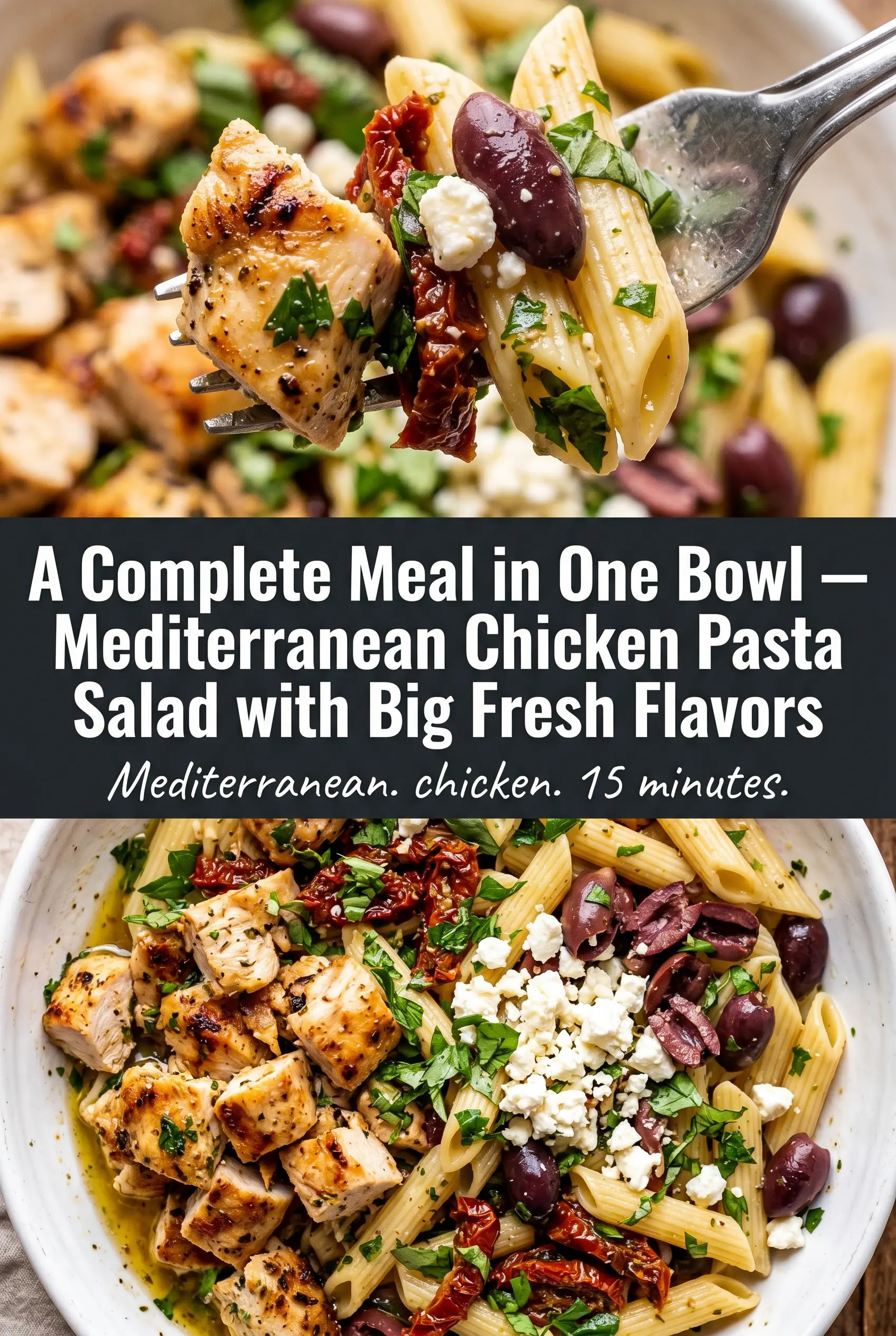
Mediterranean Chicken Pasta Salad
Ingredients
Equipment
Method
- Cook the penne pasta according to package directions, then drain and rinse with cold water to stop the cooking and cool it quickly.
- Whisk the olive oil, lemon juice, garlic, oregano, salt, and pepper until the mixture looks smooth and evenly combined.
- Combine the cooled pasta, sliced grilled chicken, cherry tomatoes, cucumber, Kalamata olives, and red onion in a large bowl.
- Pour the dressing over the salad and toss until the pasta and vegetables look evenly coated.
- Gently fold in the crumbled feta cheese so it distributes without breaking up too much.
- Refrigerate the Mediterranean chicken pasta salad for at least 1 hour before serving so the flavors meld and the salad firms up slightly.